


Patient satisfaction has gained notoriety since the Patient Protection and Affordable Care Act tied it to reimbursements in 2013. Formal surveys and online reviews increasingly assess how well physicians satisfy patients. This article explores building an ophthalmology practice in the age of satisfaction.
SUBSPECIALTY SATISFACTION
Although patient satisfaction is always important, its priority varies in different ophthalmic subspecialty clinics. All ophthalmologists try to provide quality medical care in a satisfying manner. In certain subspecialties, these goals of quality care and satisfaction coincide nicely. For example, the inherent aim of LASIK surgery, multifocal IOL implantation, and cosmetic blepharoplasty is to satisfy; quality care is the necessary vehicle to achieve that goal. In other subspecialties, however, quality care and satisfaction may not harmonize as smoothly. Restoring count fingers vision by repairing a total retinal detachment may not satisfy a patient. Taking away a driver’s license because of vision loss from end-stage glaucoma will likely dissatisfy the patient. When sound medical decisions anger patients, the “satisfaction movement” can frustrate physicians. The patient who lost his or her driver’s license could submit a hospital survey that decreases the physician’s income or write an online review that harms his or her reputation.
It is not surprising, therefore, that refractive and high-end practices tend to embrace and excel within the patient satisfaction movement. In our study comparing online reviews of ophthalmology subspecialties, my fellow investigators and I found that refractive surgeons had significantly more reviews and higher patient satisfaction scores than all other ophthalmology subspecialties.1 Refractive surgery practices have traditionally emphasized patient satisfaction and have achieved superb results.
SATISFACTION OF THE INSTITUTE
When I worked for a tech startup over 15 years ago, the company’s CEO surmised that the most important predictor of each employee’s success was the company’s success. (He was right. I lost my job when the company went bankrupt.) Likewise, physicians’ patient satisfaction scores largely reflect the institutes in which they work. In a study evaluating the content of online reviews, our group found that only half of patients’ comments about ophthalmologists were actually directed at the physician; moreover, 75% of negative comments were about nonphysician factors (Figure 1). These negative comments significantly predicted physician review score on multivariate analysis.2 Although a satisfaction survey may list a physician’s name in the header, the patient is evaluating the entire experience at the institute, including staff, location, parking, and even wallpaper.
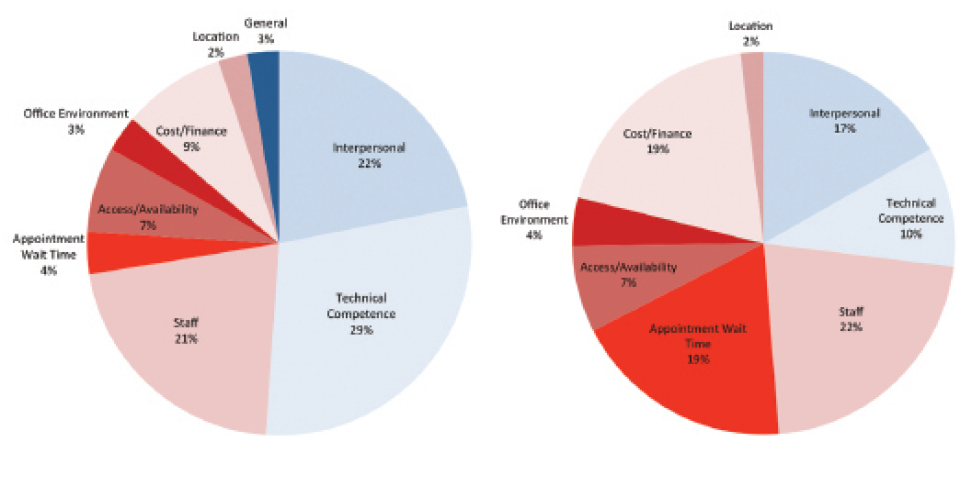
Figure 1. Yelp patient-review comments for ophthalmologists (blue = physician factors, red = office factors).2
My institute’s chairman, James Rosenbaum, MD, previously worked at two separate clinics within the same hospital system; the clinics were in different buildings and had different staffs. His Press-Ganey satisfaction surveys left him feeling of a split personality: he scored in the 22nd percentile in one clinic and the 99th percentile in the other.3 The level of patient satisfaction for a physician depends on many nonphysician factors (Figure 2).
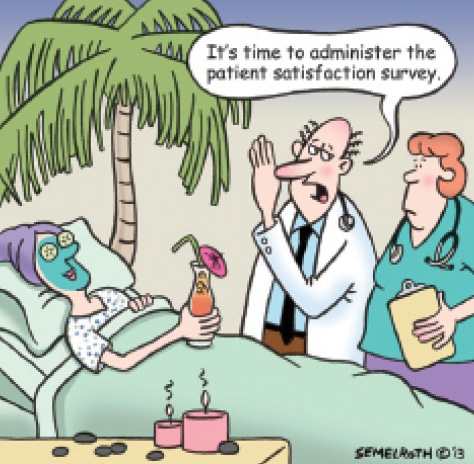
Figure 2. Patients’ satisfaction with a doctor depends on many nonphysician factors.
THE BUSINESS OF SATISFACTION
Investing in an institute’s nonphysician factors can help improve patient satisfaction scores and build a practice. Marketing directors understand the value of investing in additional quality staff, an appealing website, and an attractive waiting room. Patient satisfaction is good business. Hospitals surveyed patient satisfaction well before the Affordable Care Act tied it to reimbursement. In competing for patients, health care institutes are incentivized to maximize satisfaction: satisfied patients return and bring referrals.
Unfortunately, investments in patient satisfaction may not add value from a public health perspective, because they usually increase costs without improving health outcomes other than satisfaction itself. A prospective study, The Costs of Satisfaction, found that higher patient satisfaction was associated with higher health care expenditures, prescription drug costs, inpatient stays, and mortality.4 Simply put, patients dislike uncertainty and tend to like more stuff—diagnostic tests, treatment, modern office furniture, and so forth. Even if normal brain magnetic resonance imaging does not diagnose a cause of my persistent headache, I feel peace of mind knowing I do not have a tumor.
SATISFACTION OF COMMUNICATION
Communication is sometimes unfairly embraced as the panacea for all patient satisfaction woes (if you had just better explained to that gentleman why you were taking away his driver’s license). Nevertheless, as part of quality medical care, communication may be the most important modulator of patient satisfaction that physicians can improve with training and effort.
Quality physician communication and patient-centered care can improve satisfaction scores and health outcomes. Active listening, empathetic understanding, and shared decision making can boost patients’ perceptions of illness and recovery.5,6 As patients’ angst eases and trust in their doctors builds, patients become more accepting of uncertainty, and satisfaction flourishes. The advice of mentors helps in all aspects of building a practice, especially communication skills, in my experience.
In addition to communication with patients, I am working to improve correspondence as a member of the medical community. Although letter writing after clinic is exhausting, a successful team approach to patient care requires persistent communication among providers. Patients appreciate when all members of their medical team are on the same page.
A SATISFYING FUTURE
The factors outside of providing quality health care can be challenging for physicians. Many determinants of patient satisfaction are outside doctors’ influence, and pressure may rise to increase relative value units and grants or to avoid frivolous lawsuits. The advice I take to heart while building a practice comes from my hometown neighbor and family doctor in Canton, Ohio: “To enjoy the practice of medicine, worry about the patients, not the practice.” n
Robert M. Kinast, MD, is a glaucoma attending and associate director of the glaucoma fellowship at the Devers Eye Institute in Portland, Oregon. Dr. Kinast may be reached at (503) 413.8202; rkinast@deverseye.org.
1. Kinast RM, Day SH, Gardiner SK, Mansberger, SL. Online reviews of ophthalmologists compared by subspecialty. Paper presented at: ASCRS/ASOA Congress and Symposium; April 2014; Boston, MA.
2. Kinast RM, Barker GT, Day SH, et al. Factors related to online patient satisfaction with ophthalmologists. Ophthalmology. 2014;121(9):1843-5.e1.
3. Rosenbaum JT. Are independent measures of patient satisfaction reliable? May 1, 2014. The Rheumatologist: American College of Rheumatology. http://bit.ly/1HqmVI1. Accessed July 13, 2015.
4. Fenton JJ, Jerant AF, Bertakis KD, Franks P. The cost of satisfaction: a national study of patient satisfaction, health care utilization, expenditures, and mortality. Arch Intern Med. 2012;172(5):405-411.
5. Stewart M, Brown JB, Donner A, et al. The impact of patient-centered care on outcomes. J Fam Pract. 2000;49(9):796-804.
6. Tallman K, Janisse T, Frankel RM, et al. Communication practices of physicians with high patient-satisfaction ratings. Perm J. 2007;11(1):19-29.
