


There are many possible solutions to eliminating needless glaucoma blindness in less developed countries. In India, specifically, public institutions as well as private charity self-sufficient eye care centers such as Aravind, Shanka Netralya, and LV Prasad must play a role in both treating patients and training future doctors.
Currently, the general state of affairs in India is dreadful. A recent perspective in the New England Journal of Medicine documented the country's problems with disorganization and the lack of standards for quality of care.1 Medical costs drive over 60 million persons into poverty each year.1
Although national health programs have focused on maternal and childhood health, family planning, and infectious diseases, the Indian government has failed to consider the cost of health care for its citizens. Because of this, the public sector hospitals and eye care providers have flourished. Currently, the government pays for cataract surgery but not glaucoma therapy.
Managing glaucoma, a chronic disease, requires life-long follow-up visits. In her article, Ramanjit Sihota, MD, FRCS, FRCOphth, points out how the distances patients must travel for care are a detriment. In nations like India, traveling 6 hours involves multiple bus trips, leaving one's employment, and perhaps even having another family member lose a day's wages to accompany the patient. Many Indian centers have become global leaders in telemedicine, providing services in IOP measurement, disc evaluation, and even perimetry.
The private sector is leading the way in educating future eye care providers in India. One hopes this will raise the bar and produce leaders who can efficiently manage glaucoma in a self-sustaining manner with simple cost-effective technologies.
—Alan L. Robin, MD, section editor
India is spread over 3 million square kilometers and has over 600,000 villages. The ratio of ophthalmologists to the population is approximately 1 to 100,000.2 Although more than 70% of the population lives in rural India, more than 70% of ophthalmic services are concentrated in urban areas. Blindness occurs in about 1.4% of the older population, and ophthalmic diseases are a major health problem that needs to be addressed, both in terms of prevention and control. Only about 5% of the Indian population has health insurance; most pay for health care through the sale of assets.2
The public health system is one of the mainstays of ophthalmic care in India. It is a health resource for lower socioeconomic groups and is probably the sole path to universal and equitable ophthalmic care. The Dr. Rajendra Prasad Centre for Ophthalmic Sciences at the All India Institute of Medical Sciences in New Delhi (RP Centre) is a tertiary eye care hospital with 300 beds that is fully funded by the government. It has 27 ophthalmic faculty, 10 paraophthalmic faculty, 48 senior residents, and 72 postgraduate students in ophthalmology. The RP Centre is the national institute of excellence for ophthalmic care under the Ministry of Health. We provide state-of-the-art ophthalmic services to all patients, regardless of their socioeconomic status.
ACCESSIBILITY AND RESPONSIVENESS
The RP Centre is the ophthalmic referral hospital for almost all of northern India. My colleagues and I see approximately 450 to 500 new patients daily in the outpatient department and about 1,000 patients for follow-up. All patients undergo a slit-lamp and comprehensive ophthalmic examination. The examinations are done by junior residents who are undergoing postgraduate specialization in ophthalmology for 3 years or by senior residents who have completed their specialization in ophthalmology. Ultrasonography, biometry, and keratometry are also performed. A separate appointment is required for perimetry and electrophysiology. We only dilate the pupils of patients whose peripheral fundus needs to be evaluated or when the fundus is not visible without dilation. Patients with a specific or significant ocular disease are referred to specialized clinics.
In the afternoon, 12 ophthalmic subspecialities run speciality clinics in rotation. These include retina, medical ophthalmology, trauma, uveitis, cornea, cataract, glaucoma, refractive surgery, oculoplastics, strabismus, neuro-ophthalmology, and pediatric ophthalmology. The specialty clinics cater to an additional 750 to 800 patients, who each undergo a thorough evaluation by experienced subspecialists, who then examine the patient periodically in the same clinic. An emergency area is open 24 hours a day, with around-the-clock general anesthesia facilities.
Patients can make an appointment via the phone or Internet. Many are illiterate and arrive without having provided necessary information ahead of time. In that situation, immediate admission and/or surgery is not always possible.
FAIRNESS AND EQUITY
The government pays for all commonly used surgical equipment and consumables. The RP Centre levies a one-time charge of 10 rupees (approximately $0.20) for outpatient department registration and 35 rupees per day (approximately $0.50) for inpatient services, which includes the patient's stay, medications, examinations, and surgical procedures. Most of our patients can afford these costs. Phacoemulsification with IOL implantation is performed free of charge for poor patients.
Patients come from hundreds of miles away to this tertiary hospital, which caters to a vast swath of North India. We admit patients who have the burden of traveling far distances for evaluation and surgery. We also perform surgery on an outpatient basis for patients staying locally.
We do not turn patients away if they are unable to pay. Social workers are on staff to help patients with the cost of medication, surgery, travel, etc., and larger sums can be organized through various Indian government plans. Because we do not have a private outpatient department and staff is not allowed to be in private practice, all patients receive the same standard of care.
QUALITY AND OUTCOMES
The RP Centre has up-to-date facilities for examinations and research, with an emphasis on retina, cornea, glaucoma, strabismus, and neuro-ophthalmology. Four general anesthesia and eight local anesthesia ORs run daily, where all specialized, standard-of-care surgeries are performed. We perform 70 surgeries on average every day.
We encounter generally advanced, complex, and difficult surgical cases that many practitioners in the private sector are not able to manage. We also treat patients for whom a previous surgery has failed. Therefore, our ophthalmologists require a great deal of surgical expertise and have the reputation of being highly competent. We offer care in specialties that are not available in smaller towns or even in Delhi. All management is under the direct supervision of senior faculty, and surgeons monitor their own patients.
Long-term follow-up for chronic diseases such as glaucoma is difficult to conduct, because patients generally travel between 6 and 96 hours to the RP Centre.2 Our management protocols are designed to decrease follow-up visits to the bare minimum. Patients are aware that our physicians have neither the time nor the infrastructure for unnecessary examinations and procedures, so they frequently come for a second opinion after being seen in the private health sector.
The residency program runs for a fixed period, making turnover constant and long-term personalized care for all patients more difficult than in the private sector. Patients may not be able to choose their ophthalmologist or see the same one at all visits.
TRAINING AND RESEARCH
We train more than 100 ophthalmic residents, 35 ophthalmic technicians, and many other paramedical personnel at any given time (in general, the RP Centre trains 24-30 residents per year). Members of the faculty are experts in their respective fields and are sought after to speak at meetings and lead trainings nationally and internationally. Our fellows have taken jobs around the country and abroad. Physicians can practice cataract and vitreoretinal surgery with surgical simulators at a national surgical skill development center, and facilities are set up for surgery on animal eyes.
Research is a major part of the mandate at the RP Centre. Paramedical, ocular pharmacology, biochemistry, pathology, and microbiology have dedicated research departments. We are also privileged to have excellent facilities for clinical or basic sciences research in collaboration with the other departments of the All India Institute of Medical Sciences. The RP Centre publishes the largest number of ophthalmic research articles in India.3
EFFICIENCY
The large number of patients for each specialty, the outpatient department, clinics, and ORs places an immense strain on management protocols and infrastructure. The outpatient department is crowded on most days, there are waiting lists for surgery, and emergency surgeries continue through the night. Increasing the number of paramedical staff would greatly help to reduce the load on doctors and improve patient-to-doctor ratios, something easily accomplished in private hospitals but subject to government norms in the public sector.
The public's perception is that the private sector is more efficient and patient friendly. There are fewer patients, however, and the ratio of ophthalmologists to paramedical staff allows more judicious use of the ophthalmologist's time.4
CONCLUSION
I have worked in a public hospital for more than 35 years, and I get great satisfaction from providing the best possible care to everybody, regardless of economics. Teaching and research are a passion my institution allows me to pursue. It is wonderful to see our alumni heading large ophthalmic hospitals and providing quality, yeoman service around the country. It is a daily challenge to meet the expectations of patients, trainees, and our own standards, but the rewards are numerous. n
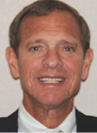
Section Editor Alan L. Robin, MD, is an associate professor of ophthalmology at the Wilmer Eye Institute and an associate professor of international health at the Bloomberg School of Public Health, both at Johns Hopkins University in Baltimore. He is also a professor at the University of Maryland and an adjunct professor at the University of Michigan. Dr. Robin may be reached at (410) 377-2422; arobin@glaucomaexpert.com.
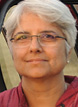
Ramanjit Sihota, MD, FRCS, FRCOphth, is head of the Glaucoma Research Facility and Clinical Services at the Dr. Rajendra Prasad Centre for Ophthalmic Sciences, All India Institute of Medical Sciences, in New Delhi, India. Dr. Sihota may be reached at rjsihota@hotmail.com.
1. Reddy KS. India's aspirations for universal health care coverage. N Engl J Med. 2015;373(1): 1-5.
2. Nayak B, Gupta S, Kumar G, et al. Socioeconomics of long-term glaucoma therapy in India. Indian J Ophthalmol. 2015;63(1):20-24.
3. Gupta R, Gupta BM, Kshitij A, Bala B. Glaucoma research: a scientometric study of Indian publications output, 2002-11. J Libr Inf Tech. 2014;34(1):35-45.
4. Basu S, Andrews J, Kishore S, et al. Comparative performance of private and public healthcare systems in low- and middle-income countries: a systematic review. PLoS Med. 2012;9(6):e1001244.
