


Only a year ago, I was sitting in the patients’ waiting room on interview day surrounded by nervous smiles and darting eyes, suits, and portfolios filled with careers and aspirations. I wondered if I could fit in at a place like Bascom Palmer Eye Institute.
I felt I had built a solid foundation during residency. I had been exposed to a broad range of ocular pathology, operated on a number of complex cases, and experienced a mix of independence and supervision. Still, I felt out of place at this esteemed institute with its distinguished speakers, landmark research, world-renowned care, and leaders in the field.
I arrived eager to learn the formula for success in glaucoma. As expected, patients in clinic were diverse. In between visits came a discussion of how to tackle each case and apply evidence-based medicine, but during Cuban espresso breaks, my mentors shared personal stories about patients’ triumphs and disappointments as if they were their own. Their notes described arcuate defects, notches, and retinal nerve fiber layer thinning, but tucked away were reminders of milestones to be celebrated—a wedding, a birthday, or a recent vacation. I was encouraged to offer my theories and solutions, and my ideas were always met with interest and consideration. As I developed my own style and clinical judgment, I slowly realized that learning the “formula” for glaucoma was just scratching the surface. I continued to learn from my mentors how to tailor treatments to patients, listen to their fears about surgery, and understand why they could not adhere to prescribed therapy or follow-up schedules. Perhaps most importantly, I was learning how to approach each patient with compassion and humility.
On my first day in the OR, I hoped to assist in cases, but when the patient was draped, my attending nonchalantly sat in the assistant’s seat. I therefore sat at the head of the bed. Hands trembling, I started the case. When I struggled, he calmly offered suggestions, and when I was able to perform certain tasks, he shared in my excitement. I soon felt comfortable and, with a steady hand, completed my first surgical day as a fellow. From day 1, I was an active member of the team.
I looked forward to our weekly journal club, where we discussed new research, innovations, and the merits and flaws of selected studies. Listening to enlightening, often hilarious, stories, I learned about the continuing evolution of our field. Difficult cases were presented, and more often than not, fellows’ input was elicited. As we all sat around the conference table sharing chocolate doughnuts, I was constantly impressed that my mentors sought help and advice from their colleagues, without ego and with the common goal of providing the best care to their patients.
Now, I have reached the other side on interview day. I field questions about schedules, surgical numbers, and the number of patients seen per clinic. Of course, these are all factors in choosing a fellowship, but more important is the sense of humility and curiosity that is instilled by example. Beyond their clinical acumen, surgical expertise, and groundbreaking research, my mentors excel because they continue to learn from their patients, their peers, and even their students. I recall a comment by Richard Parrish II, MD: “I’m here not to teach but to be a lifelong student.” I have realized that humility and the pursuit of knowledge are the foundation of a great physician and of this grand institution. n
Section Editor Albert S. Khouri, MD
• associate professor and program director of the ophthalmology residency as well as director of the Glaucoma Division at Rutgers New Jersey Medical School in Newark, New Jersey
• (973) 972-2045; albert.khouri@rutgers.edu
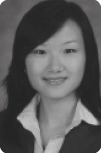
Linda Huang, MD
• completed her glaucoma fellowship at Bascom Palmer Eye Institute, University of Miami School of Medicine, in July
• private practice, The Glaucoma Institute of Northern New Jersey in Rochelle Park, New Jersey
• lindayhuangmd@gmail.com
