



Roughly half of China’s 1.4 billion people live in rural areas, and it is no exaggeration to say that China’s rural and urban segments are as different as two countries, particularly when it comes to health care access. The gap between infant mortality levels in urban and rural China, for example, is as great as those between Denmark and El Salvador. Health care is of poorer quality and is harder to obtain in the countryside than in China’s cities. Glaucoma care is no exception to that trend.
THE EXPERIENCE IN RURAL CHINA
Population studies have shown that only about 10% of patients with glaucoma in China’s rural areas are diagnosed and treated, and the experience of the small minority who do receive treatment is far from ideal. Both patients and doctors in rural areas lack a basic understanding that glaucoma is an asymptomatic disease requiring thorough examinations for timely detection and effective treatment.1
Due to the expense of topical medication and challenges to adherence among rural dwellers, the large majority of whom are busy farmers, incisional surgery remains the mainstay of glaucoma treatment in rural China. Patients generally do not understand, however, that the role of surgery in glaucoma treatment—unlike with cataract operations—is to prevent vision loss rather than to improve visual acuity. A recent study of 200 consecutive patients undergoing trabeculectomy surgery at a number of rural hospitals found that the large majority were already blind in the eye at the time they underwent the operation. Follow-up after surgery drops to less than one-third after 2 weeks, meaning that postoperative interventions that might improve results are rarely used.2 The overall result is that the most widely used treatments for glaucoma in rural China are not applied in a way that is likely to reduce the burden of disease. Thus, glaucoma remains the second or third leading cause of blindness in rural China.
BETTER TRAINING AND EXAMINATIONS
Zhongshan Ophthalmic Center, China’s largest eye hospital, and Orbis International, the organization with the greatest number of eye health programs in the country, have teamed up to provide a model to improve rural eye care. Comprehensive Rural Eye Service and Training (CREST) is a network of 10 rural government hospitals in southern Guangdong Province whose staff has been trained and equipped to provide a comprehensive approach to eye disease in rural settings, including the management of glaucoma, diabetic eye disease, and other complex but common conditions. Some 50 rural ophthalmologists in CREST have received hands-on training in the recognition of glaucomatous optic neuropathy and narrow angles as well as performing trabeculectomy and managing common postoperative complications (Figures 1 and 2). Such training has been extremely difficult to obtain in rural China. Orbis is also working now with the Ministry of Health and the Chinese Ophthalmic Society to produce and implement a national curriculum that can be used to train medical teams across China’s 2,500 rural county hospitals in the management of glaucoma and other conditions.
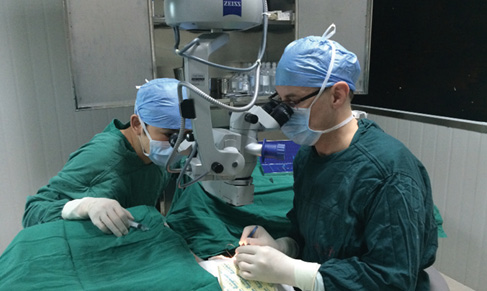
Figure 1. Surgical training in glaucoma in the CREST project.
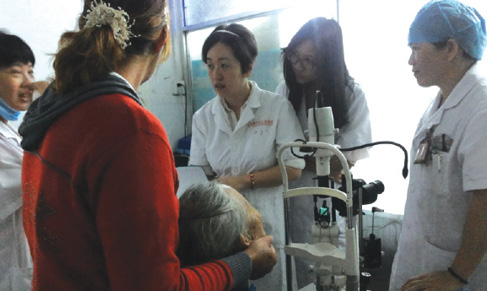
Figure 2. Trainees in glaucoma in the CREST project discuss a patient’s glaucoma with family members.
In addition, CREST provides doctors with the simple equipment needed to recognize disease, including fundus and gonioscopy lenses. A significant barrier to good care in the past has been the lack of any system of outpatient medical record keeping at rural government hospitals. CREST has worked with partners Commonwealth Scientific and Industrial Research Organisation in Australia to create a simple electronic medical records system to allow rural doctors to track their patients and to make specific follow-up appointments for the first time. This arrangement permits doctors to monitor adherence to follow-up care, while also allowing Zhongshan Ophthalmic Center, as the Coordinating Center for CREST, to track the completeness of physician examinations.
Convincing rural doctors of the need to practice and document comprehensive examinations on all their patients—the key to diagnosing and managing glaucoma in this setting—has arguably been CREST’s biggest challenge. Doctors complain of being too busy, and patients may balk at undergoing detailed examinations, the need for which they do not understand. One successful solution to the latter problem has been CREST’s support of free and low-cost eye examinations. Initially paid for by Orbis, they are sustained long term when hospitals realize that these examinations offer an opportunity to increase the rate of disease diagnosis, which in turn increases profits. Published research in CREST has shown that offering free comprehensive eye examinations increases patients’ acceptance of them from under 70% to over 90%.3
RESEARCH ON CARE DELIVERY
CREST serves as an important platform for research on novel approaches to delivering glaucoma care in resource-limited settings. A randomized trial examining selective laser trabeculoplasty as a treatment for glaucoma in the CREST network has been funded and will begin in 2016. The hypothesis is that less invasive laser treatments will be more acceptable to rural patients than trabeculectomy and, thus, ultimately more successful in this setting at controlling IOP. Another trial recently completed in CREST showed that an intervention consisting of free postoperative medications and cell phone Short Message Service reminders can double the rates of postoperative follow-up after trabeculectomy at a cost per patient of less than $30 (K. Yang, L. Jin, L. Li, et al, unpublished data, 2016).
TRENDS
The aging of China’s population means that the prevalence of glaucoma is increasing. Rising rates of myopia suggest that angle-closure glaucoma may become less prevalent and open-angle glaucoma more common, because the configuration of the myopic eye favors the latter over the former disease. Angle closure, however, remains important in rural China. Ongoing trials such as the Effectiveness of Early Lens Extraction With Intraocular Lens Implantation for the Treatment of Primary Angle-Closure Glaucoma (EAGLE) study and the Zhongshan Angle Closure Prevention (ZAP) trial, aimed at identifying whether prophylactic laser treatment for narrow angles is beneficial, will continue to inform evidence-based strategies for managing this condition. The prevalence of diabetes has grown 10-fold in China since 1980, and the resulting increase in diabetic retinopathy is likely to mean more dilated examinations for rural residents, which one hopes will lead to the earlier diagnosis of glaucoma.
CONCLUSION
More research is needed to develop simple, safe, and inexpensive new treatments for glaucoma that will be appropriate for rural areas of China and other low- and middle-income countries. Advocacy efforts by Orbis and other nongovernmental organizations are needed to guide government policy. One important target is convincing governments to provide free postoperative medications as an incentive to improve patients’ adherence to postoperative follow-up care after glaucoma surgery. Another is allowing reimbursement from the national insurance system for outpatient glaucoma surgery to reduce the barriers of cost and inconvenience and, thus, encourage rural dwellers to accept sight-saving surgery earlier.
A sustainable and scalable solution to reducing China’s rural glaucoma burden will depend on the leadership of the Chinese government with support from researchers and advice from international nongovernmental organizations. n
1. Yan X, Liu T, Gruber L, et al. Attitudes of physicians, patients, and village health workers toward glaucoma and diabetic retinopathy in rural China: a focus group study. Arch Ophthalmol. 2012;130:761-770.
2. Yang K, Jin L, Li L, et al. Preoperative characteristics and compliance with follow-up after trabeculectomy surgery in rural southern China. Br J Ophthalmol. In press.
3. Dan A, Raubvogel G, Chen T, et al. The impact of multimedia education on uptake of comprehensive eye examinations in rural China: a randomized, controlled trial. Ophthalmic Epidemiol. 2015;22(4):283-289.
Section Editor E. Randy Craven, MD
• chief of glaucoma, King Khaled Eye Specialist Hospital, Riyadh, Saudi Arabia
• erandycraven@gmail.com
Nathan Congdon, MD, MPH
• Ulverscroft Professor of Global Eye Health, Queen’s University Belfast
• specially appointed professor, Zhongshan Ophthalmic Center, Guangzhou, China
• senior advisor to Orbis International
• ncongdon1@gmail.com
