



Tube shunt surgery continues to evolve, and a host of interesting videos on Eyetube may prove useful to or at least thought provoking for surgeons.
IN LIEU OF A PATCH GRAFT
With patch graft reimbursement an issue for Medicare patients undergoing tube shunt procedures in ambulatory surgery centers, many ophthalmologists are working on safe alternatives. In a 2014 video that was highlighted in this column, Dr. Rafael Bohórquez suggested using a blade to create a scleral tunnel to facilitate tube coverage without a patch graft (bit.ly/bohorquez0316).
Watch it Now
Paul Palmberg, MD, shares a technique for covering a tube without a patch graft.
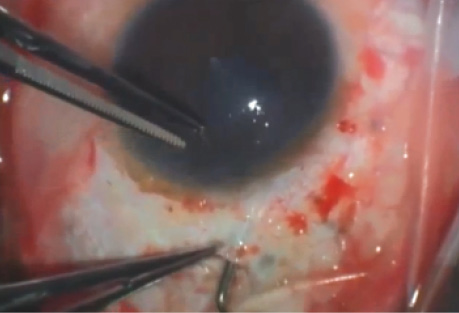
Nathan Radcliffe, MD, replaces all of the sutures in tube shunt surgery with glue in select cases.
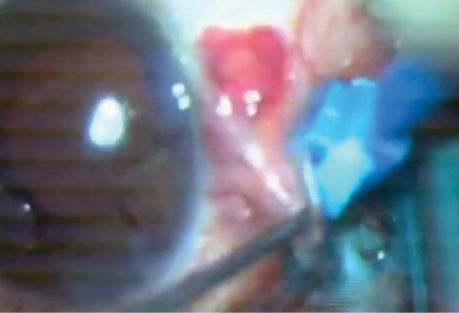
In a more recent video, Paul Palmberg, MD, demonstrates an even simpler approach (in his hands). He makes a groove several millimeters back from the limbus. Then, while grasping the edge of the groove, Dr. Palmberg introduces a bent 23-gauge needle into the groove, thus facilitating a long intrascleral tunnel for the tube.
A REPLACEMENT FOR SUTURES
Most surgeries evolve over time, often resulting in simplification. Traditionally, tube shunt surgery included suturing the plate, tube, and patch graft to the sclera as well as suturing the conjunctival incision. Many surgeons have found that sutures can often be omitted at the plate, tube, or patch graft. In his video, Nathan Radcliffe, MD, demonstrates how to replace all of the sutures in tube shunt surgery with glue in select cases.
There are several key elements to this technique. First, the plate should hang back behind the equator so that the plate will tend to be drawn away from, not toward, the limbus. Also, making a long scleral tunnel with the needle for tube entry will help to fixate the tube. Lastly, the patch graft should be positioned so that the conjunctiva and Tenon layer hold it in place over the tube.
Dr. Radcliffe’s technique is innovative and bold. It bears emphasizing that the less the surgeon does, the more perfectly each step needs to be executed to ensure success. Rather than a belt and suspenders, this approach is more of a button to close the fly.
PLACEMENT DESPITE AN OPACIFIED CORNEA
Understandably, many corneal surgeons prefer that the IOP be stable before penetrating keratoplasty because of the greater risk of suprachoroidal hemorrhage or graft failure with elevated IOP or concurrent tube and corneal transplant surgery. Opacified corneas, however, can prevent optimal tube placement. In a 2014 video, Imran Masood, BSc, MB ChB, MRCS(Ed), FRCOphth, uses an endoscope to ensure proper placement of a tube in the pars plana of an eye with uncontrolled IOP and an opacified cornea.
Watch it Now
Imran Masood, BSc, MB ChB, MRCS(Ed), FRCOphth, uses an endoscope to ensure ideal placement of a tube despite an opacified cornea.
Albert Khouri, MD, uses microforceps and microscissors to trim two overly long anterior chamber tubes without manipulating the conjunctiva.
TOO LONG OR TOO SHORT
Trimming
Albert Khouri, MD, uses microforceps and microscissors designed for IOL cutting to trim (with a new bevel) two anterior chamber tubes that are too long. He manages all of this through two 1.5-mm clear corneal incisions with no manipulation of the conjunctiva. This approach is much simpler than externalizing the tube.
Extension
The occasional need to extend tubes can present challenges. Devesh Varma, MD, and Iqbal Ike Ahmed, MD, demonstrate the use of a commercial tube extension device (bit.ly/ahmed0316), but in some cases, this implant may be too bulky, especially close to the limbus. Using a larger tube sleeve alone, Jeffrey Freedman, MD, PhD, achieves a similar effect with less hardware (bit.ly/freedman0316).
A similar technique can be performed using a 22-gauge angiocatheter as a bridge between the shortened old tube and the new tube length that will be placed in the eye. A 4- to 5-mm piece is cut from the part of the angiocatheter that is normally intravenous and used to bridge between and cover the end of each tube by 1.5 to 2 mm. The segment is sutured to the sclera, ideally farther back from the limbus. In this author’s experience, if additional tubing is needed to enter the eye, Crawford tubing works well. In this approach, the connections may not be watertight; suturing the proximal tube with a Vicryl ligature suture (Ethicon) and making venting slits proximal to that suture, much like in a Baerveldt tube shunt surgery (Abbott Medical Optics), may temporize for a few weeks until the tubes are all encased by fibrous tissue.
CONCLUSION
All of these videos’ tricks may help a surgeon more easily get the best result for a patient in a special situation. If you have found another approach useful, please upload a video of it to Eyetube so that the community may benefit from your insight. n
Section Editor Soosan Jacob, MS, FRCS, DNB
• senior consultant ophthalmologist at Dr. Agarwal’s Eye Hospital, Chennai, India
Section Editor Jonathan S. Myers, MD
• associate attending surgeon on the Glaucoma Service and director of the Glaucoma Fellowship at Wills Eye Hospital, Philadelphia
• (215) 928-3197; jmyers@willseye.org
