




Patients’ nonadherence to glaucoma medication regimens is a perennial issue. One study of patients’ adherence to their regimens found that 25% of those studied took less than 75% of their doses and nearly 20% took less than 50% of their doses, even while knowing they were being electronically monitored.1 Multiple studies have shown poor rates of glaucoma medication refilling.2,3
Annually, billions of dollars are spent worldwide in the glaucoma market. It is obvious that a large number of patients are affected by glaucoma and a great amount of money has been invested in prevention and treatment of this chronic disease. Removing the need for “hands-on” use of glaucoma medications by patients could be beneficial to both patients and eye care physicians. This article reviews several drug delivery devices in development that have the potential to revolutionize the delivery of glaucoma medications.
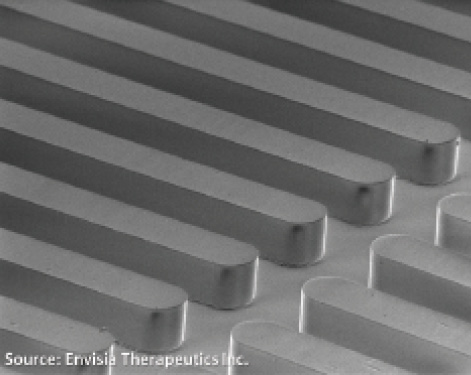
Figure 1. ENV515 is a biodegradable nanotechnology polymer drug delivery system using particle replication in nonwetting templates technology.
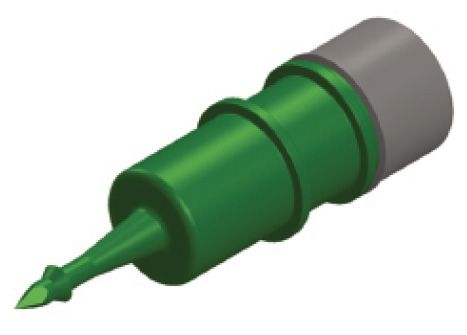
Figure 2. iDose is a titanium implant that is comparable in size to the iStent.
ENV515
ENV515 (Envisia Therapeutics; Figure 1) is a biodegradable nanotechnology polymer drug delivery system using the particle replication in nonwetting templates technology.4 It is injected intracamerally and provides extended release of travoprost in the anterior chamber. In a phase 2a open-label, 28-day dose-ranging study of 21 patients, IOP was lowered by 6.7 mm Hg (28%) at day 25 in one group, which was comparable with once-daily Travatan Z (travoprost ophthalmic solution 0.004%; Alcon) dosing in the fellow eye.5
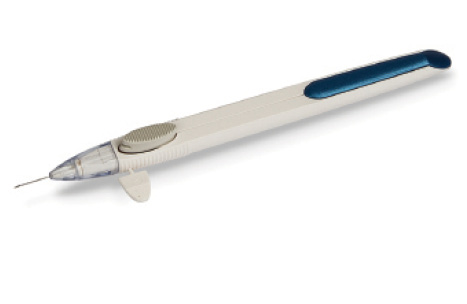
Figure 3. Bimatoprost SR is a biodegradable intracameral implant that resides in the anterior chamber, where it elutes bimatoprost in a sustained manner.
The low-dose form of ENV515 is now undergoing a 12-month safety and efficacy evaluation. Envisia Therapeutics recently reported interim 3-month results of this ongoing evaluation, showing positive results for the low-dose form of ENV515, with a favorable safety profile and a sustained, clinically meaningful reduction in IOP.6
iDose
iDose (Glaukos; Figure 2) is a titanium implant that is comparable in size to the company’s iStent Trabecular Micro-Bypass Stent. The iDose is filled with a formulation of travoprost and capped with a membrane designed to allow continuous controlled drug elution into the anterior chamber. Once depleted, the implant can be removed and replaced in a subsequent procedure. An ongoing phase 2 randomized clinical trial is assessing the safety and preliminary efficacy of two models of the device. The two models of the delivery system with different travoprost elution rates are being compared to topical timolol maleate ophthalmic solution 0.5%.7
Bimatoprost SR
Bimatoprost SR (Allergan; Figure 3) is a biodegradable intracameral implant that resides in the anterior chamber, where it elutes bimatoprost in a sustained manner. The pellet is designed to release bimatoprost evenly over a 6-month period. The 6-month interim results of a 24-month phase 1/2 clinical trial were announced last year.8 In this 75-patient study, one eye of each patient gets a bimatoprost pellet, and the contralateral eye receives daily topical bimatoprost 0.003%. The implants contain 6, 10, 15, or 20 µg of bimatoprost. Baseline washout IOP in the implant group was 25.2 mm Hg.9 At 4 months, IOP reduction in the implant groups ranged from 7.2 to 9.5 mm Hg, compared with 8.4 mm Hg in the topical group.9 Four months after implantation, IOP was lowered in 92% of patients, and this reduction was sustained to 6 months in 71% of patients.8 There was no clinically significant difference in IOP lowering across the implant dosages. According to these interim data, the implant continued to provide a statistically and clinically significant reduction in IOP for patients through 6-month follow-up.9 Regarding safety, the implant group had a higher percentage of conjunctival hyperemia than patients receiving topical bimatoprost. Overall, side effects were reported in 52% of the implant group and 30.7% of the topical group.10
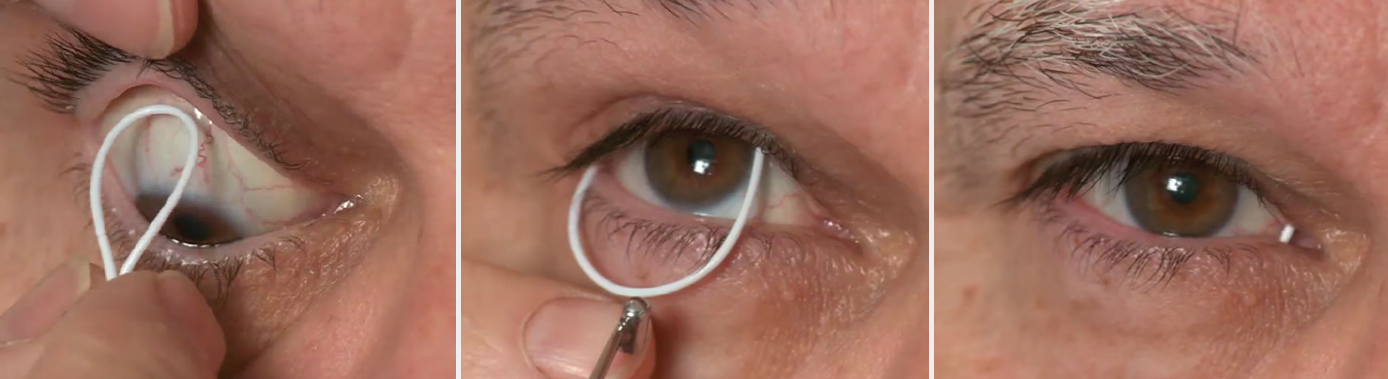
Figure 4. The silicone ring continuously releases preservative-free bimatoprost to the ocular surface.
bimatoprost Ring
The ring (formerly called Helios from ForSight VISION5, now owned by Allergan; Figure 4) is a silicone ocular insert that continuously releases preservative-free bimatoprost to the ocular surface. The ring, 24 to 29 mm in diameter, is composed of a polymer-bimatoprost matrix that is held to the ocular surface under the eyelids. In a clinical trial including 49 eyes, mean baseline washout IOP was 23.9 mm Hg; 1 month after insertion, mean IOP was 18.7 mm Hg, a reduction of 5.2 mm Hg. The decrease in mean IOP was sustained, with a mean IOP of 18.8 mm Hg at 6 months.11
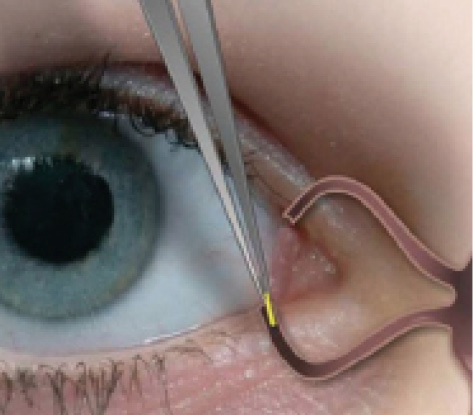
Figure 5. This intracanalicular punctal plug containing travoprost is designed to deliver a sustained release of the drug to the ocular surface for 90 days.
In a phase 2 clinical trial in 130 patients, the inserted ring containing 13 mg of bimatoprost was compared to topical timolol maleate instilled twice daily. The ocular insert demonstrated IOP lowering of 4 to 6 mm Hg, which trailed off slightly at 5- and 6-month measurement points. Overall, the retention rate of the insert was 89% at 6 months. Patients in the insert arm had 0 to 1.5 mm Hg less IOP reduction than those in the timolol arm. Side effects included itchiness and eye redness. Nearly 90% of patients rated comfort as “acceptable,” however, and the hyperemia rate was statistically significantly lower with the bimatoprost ring than has been previously reported with topical bimatoprost.12 This technology is expected to enter phase 3 trials by late 2016.
Sustained-Release Depot
An intracanalicular punctal plug (Ocular Therapeutix; Figure 5) containing travoprost is designed to deliver a sustained release of the drug to the ocular surface for 90 days. Similar to other medicated punctal plugs, the insert is made of hydrogel that will resorb into the nasolacrimal system. The plug is conjugated with a viewing aid to assist visualization after placement. A phase 2b clinical trial was recently completed, and the results are pending. In a phase 2a clinical trial of the depot, sustained-release travoprost produced clinically significant reductions in morning IOP.13 Patients with the depot had an IOP reduction of greater than 4 mm Hg after insertion, and the effect was maintained to day 75.13 Patients in the control arm of the study received topical timolol, which showed greater IOP lowering at days 30 and 45.13 Importantly, patients reported no hyperemia, a result that may support the value of the drug depot’s preservative-free formulation.13 A phase 3 trial will begin in late 2016, and this trial will compare sustained-release travoprost to a placebo punctal plug; no topical drops will be used.14
CONCLUSION
The management of glaucoma can be difficult, but the challenge is compounded when patients’ adherence to glaucoma medication regimens is considered. The future appears bright, with exciting new glaucoma treatments potentially becoming available in the coming years. Adherence must be improved, and sustained-release drug formulations may be part of the answer. Early studies have shown better tolerability of these delivery modalities compared with topical drops, but side effects may be challenging to address if they arise after these depot systems are administered. Nonetheless, sustained-release drug delivery has the potential to profoundly improve glaucoma care. n
1. Okeke CO, Quigley HA, Jampel HD, et al. Adherence with topical glaucoma medication monitored electronically: the Travatan Dosing Aid study. Ophthalmology. 2009;116(2):191-199.
2. Reardon G, Schwartz GF, Mozaffari E. Patient persistency with topical ocular hypotensive therapy in a managed care population. Am J Ophthalmol. 2004;137(suppl 1):S3-12.
3. Friedman DS, Nordstrom B, Mozaffari E, Quigley HA. Glaucoma management among individuals enrolled in a single comprehensive insurance plan. Ophthalmology. 2005;112(9):1500-1504.
4. Navratil T, Garcia A, Tully J, et al. Preclinical evaluation of ENV515 (travoprost) intracameral implant-clinical candidate for treatment of glaucoma targeting six-month duration of action. Paper presented at: Association for Research in Vision and Ophthalmology; May 6, 2014; Orlando, FL.
5. Envisia Therapeutics’ lead product candidate, ENV515 (travoprost XR), achieves primary efficacy endpoint in phase 2a glaucoma clinical trial [press release]. Envisia Therapeutics. October 6, 2015. http://www.envisiatherapeutics.com/envisia-therapeutics-lead-product-candidate-env515-travoprost-xr-achieves-primary-efficacy-endpoint-in-phase-2a-glaucoma-clinical-trial/. Accessed August 9, 2016.
6. Envisia Therapeutics announces positive three-month interim results of low dose ENV515 in patients with glaucoma [press release]. Envisia Therapeutics. May 3, 2016. http://www.envisiatherapeutics.com/envisia-therapeutics-announces-positive-three-month-interim-results-of-low-dose-env515-in-patients-with-glaucoma/. Accessed August 9, 2016.
7. Glaukos will begin phase II clinical trial for iDose travoprost intraocular implant in glaucoma patients [press release. Glaukos. January 7, 2016. http://investors.glaukos.com/investors/press-releases/press-release-details/2016/Glaukos-Will-Begin-Phase-II-Clinical-Trial-for-iDose-Travoprost-Intraocular-Implant-in-Glaucoma-Patients/default.aspx. Accessed August 9, 2016.
8. Positive phase I/II interim data of bimatoprost sustained-release implant for IOP therapy in glaucoma [press release]. Allergan plc. November 16, 2015. http://www.allergan.com/news/news/thomson-reuters/positive-phase-i-ii-interim-data-of-bimatoprost-su. Accessed August 9, 2016.
9. Dalton M. Sustained-release bimatoprost implant addresses challenges of adherence. January 1, 2016. Ophthalmology Times. http://ophthalmologytimes.modernmedicine.com/ophthalmologytimes/news/sustained-release-bimatoprost-implant-addresses-challenges-adherence. Accessed August 9, 2016.
10. Peterson L. Trends-in-Medicine. May 21, 2016. American Society of Cataract and Refractive Surgery. http://www.trends-in-medicine.com/?s=ASCRS&searchsubmit=Search&category=. Paid access only.
11. Goldberg I, Laganovska G, Baumane K, et al. The novel topical ocular insert (Helios) for sustained delivery of bimatoprost in glaucoma and ocular hypertension. Poster presented at: American Academy of Ophthalmology Annual Meeting; October 20, 2014; Chicago, IL.
12. Brandt J, Sall K, DuBiner H, et al. Six-month intraocular pressure reduction with a topical bimatoprost ocular insert. Ophthalmology. 2016;123(8):1685-1694.
13. Sustained Release Travoprost. Ocular Therapeutix. http://www.ocutx.com/pipeline/travoprost-punctum-plug. Accessed August 9, 2016.
14. Ocular Therapeutix announces phase 3 clinical development plan for OTX-TP, an innovative therapy for glaucoma and ocular hypertension [press release]. Ocular Therapeutix. February 16, 2016. http://investors.ocutx.com/phoenix.zhtml?c=253650&p=irol-newsArticle&ID=2139692. Accessed August 9, 2016.
Justin A. Schweitzer, OD, FAAO
• cornea, glaucoma, cataract and refractive surgery specialist, Vance
Thompson Vision, Sioux Falls, South Dakota
•justin.schweitzer@vancethompsonvision.com
• Financial disclosure: consultant to Allergan and Glaukos
Mitch Ibach, OD, FAAO
• cornea, cataract, refractive, and glaucoma surgery specialist, Vance
Thompson Vision, Sioux Falls, South Dakota
•(605) 361-3937; mitch.ibach@vancethompsonvision.com
• Financial disclosure: none acknowledged
