


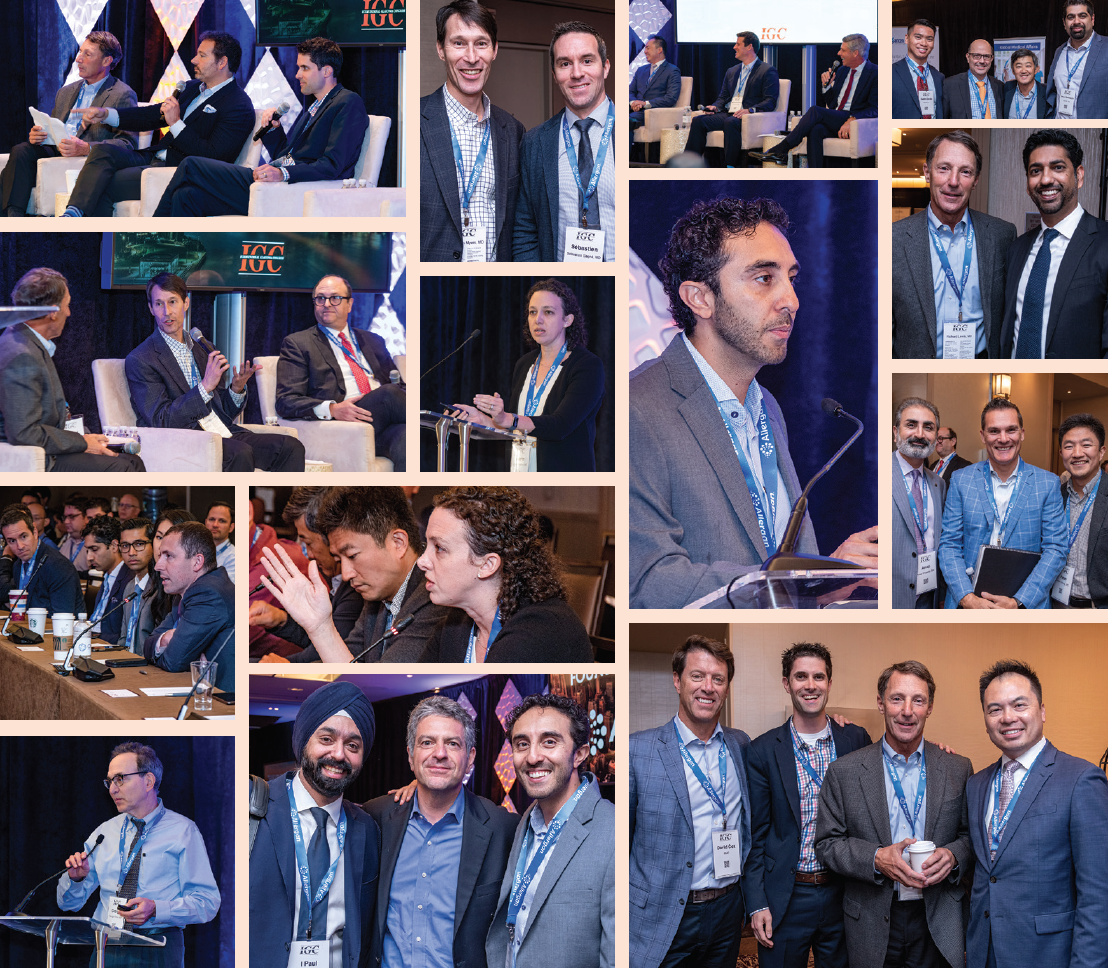
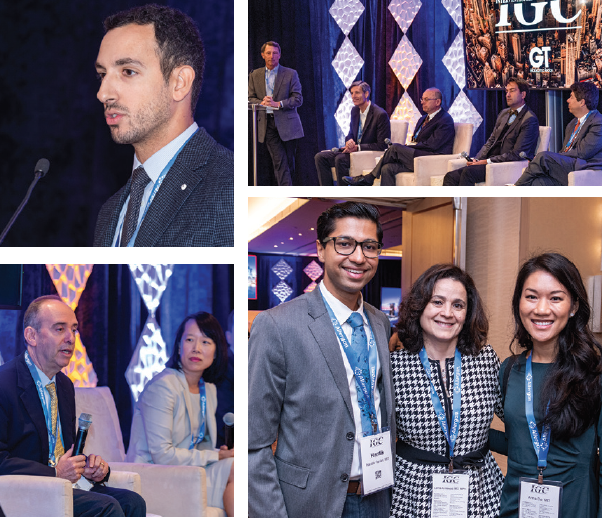
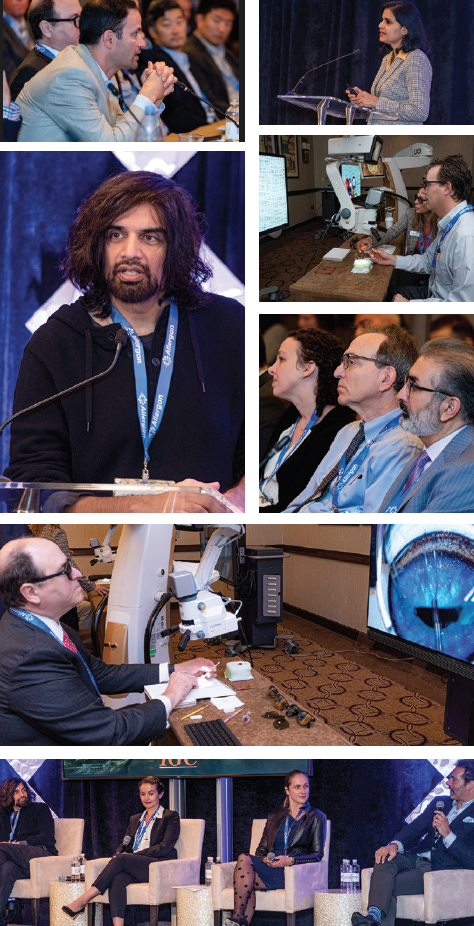
In October, the inaugural Interventional Glaucoma Congress (IGC) convened in New York City. Curated and moderated by Program Chairs Iqbal Ike K. Ahmed, MD, FRCSC; Richard Lewis, MD; and Arsham Sheybani, MD, the IGC was a think tank–style meeting for 50 progressive interventional glaucoma specialists. On site, the IGC served as a forum for discussion among these thought leaders in an effort to help build consensus and push the interventional glaucoma space forward.


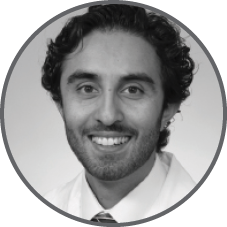
IGC PROGRAM CHAIRS: IQBAL IKE K. AHMED, MD, FRCSC; RICHARD LEWIS, MD; AND ARSHAM SHEYBANI, MD
Glaucoma is a chronic, debilitating disease and a leading cause of global blindness. With patients living longer, many will experience a significant loss of vision at some point in their lifetimes, even under the care of experienced glaucoma specialists. Although there is no easy answer to this complex problem, there is an evolution taking place in our quest to solve it.
Philosopher Thomas Kuhn maintained that scientific research and thought are defined by paradigms. According to Kuhn, scientists typically accept an existing paradigm and then try to extend its scope over time. Eventually, however, their efforts may expose the paradigm’s inadequacies or contradict it entirely. An accumulation of these difficulties triggers a crisis, which, in turn, sparks an intellectual revolution, or a paradigm shift. This is a model of change that we may be experiencing in glaucoma.
With the old paradigm, glaucoma care was focused heavily on the use of medication. The field is fortunate to have recently experienced significant progress in the pharmaceutical space, but challenges with patient adherence remain. Almost 40 years ago, Grant and Burke published an article titled, “Why Do Patients Go Blind From Glaucoma?”1 They concluded that patients were going blind not because they were undertreated but because they were noncompliant. Noncompliance rates are still too high today.
These long-felt challenges have served as an impetus for innovation and have, in part, triggered the formation of a new school of thought. Enter the concept of interventional glaucoma. This paradigm is founded on the objective to approach glaucoma in a proactive—not reactive—way and to intervene in a disease-centric and patient-centric manner. The interventional glaucoma specialist considers not only the disease’s effects on a patient’s quality of life but the treatment’s effects as well. Although microinvasive glaucoma surgery was developed with this in mind, interventional glaucoma does not refer solely to one type of intervention.
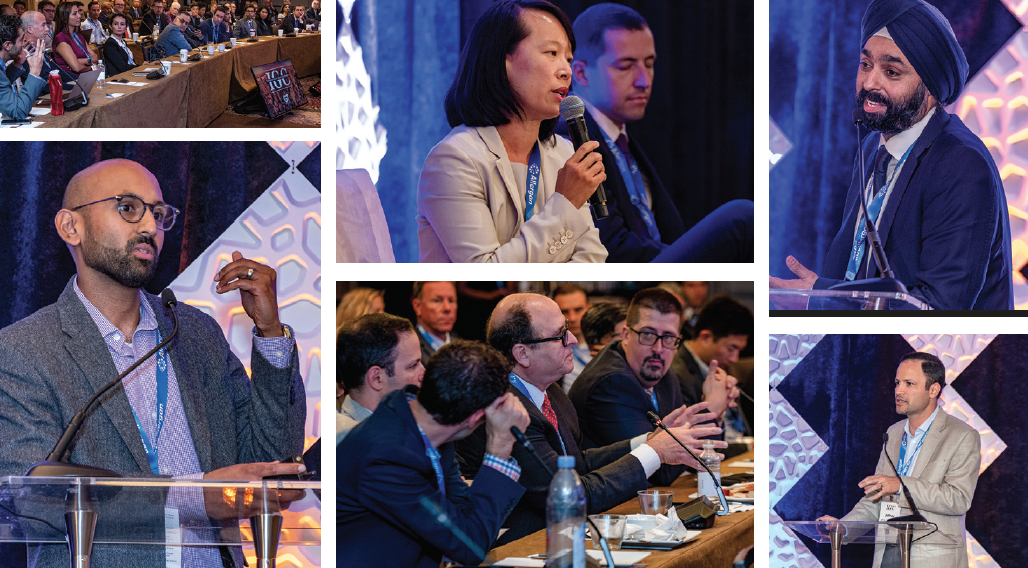
Those who can view glaucoma from the patient’s perspective and factor quality of life into their treatment decision-making will be able to prioritize an interventional glaucoma mindset. As innovation continues and this patient-centric outlook grows, we can all approach glaucoma in a way that addresses safety, efficacy, and quality of life. The path is long and we have much to accomplish, but the IGC is working hard to push this movement forward and usher in a new paradigm of glaucoma care.
1. Grant WM, Burke JF Jr. Why do some people go blind from glaucoma? Ophthalmology. 1982;89(9):991-998.
