Over time, glaucoma surgeons continue to discover and master the nuances of each MIGS device and to devise modifications of their surgical techniques to optimize their use and outcomes. One technique-based update I have implemented for ab interno implantation of the Xen Gel Stent (Allergan) involves the use of a superonasal corneal traction suture with inferior traction. This article details my approach and describes the advantages I have experienced with this technique, including improved reliability and ease of implantation.
SURGICAL STEPS
My technique for ab interno implantation of the Xen Gel Stent using a superonasal corneal traction suture is outlined in the following steps.


The drape is pinched to create a fold on the cheek for the traction suture near the nose. I prefer this location near the nares, and I use a mosquito clamp during times of traction.

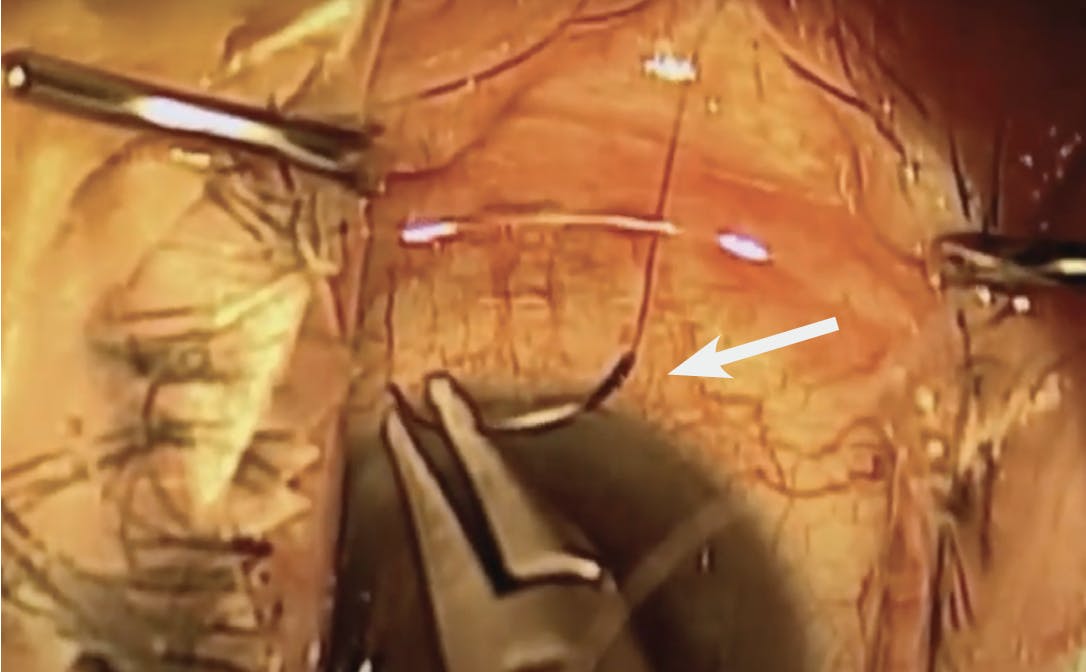
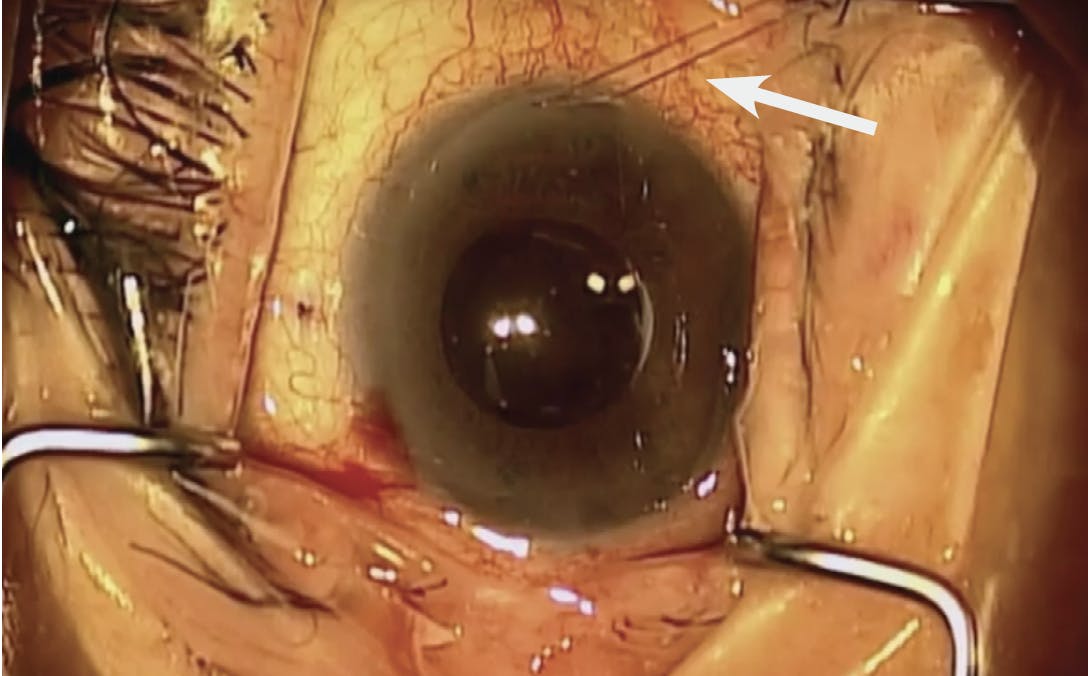
A superonasal traction suture with 8-0 polyglactin (Vicryl, Ethicon) on a spatulated needle is placed at the limbus, with a 2-mm pass of the suture in midstroma of the peripheral cornea (Figure 1).


Mitomycin C is injected into the intra-Tenon space using a 30-gauge needle, approximately 8 mm superior to the limbus and in the desired aspect of aqueous flow. The traction suture is released.

Sideport and temporal incisions are made after the anterior chamber is filled with an OVD and intracameral preservative-free lidocaine.

TECHNICAL ADVANTAGES
This approach offers multiple advantages.
Two-handedness. The superonasal corneal traction suture frees one of the surgeon’s hands and enables an effective two-handed approach to handle and guide the stent during implantation. Two-handedness can improve the surgeon’s stability and the safety of device placement, including accuracy of the angle of approach, desired tunnel length, and placement of the stent in the subconjunctival space. I find two-handed placement is safer, easier, and reassuring in challenging cases.
Ocular torsion and alignment for superior placement. Ocular torsion for a nasal rotation with the superonasal traction suture can also improve the ease and accuracy of placing the stent close to the superior 12:00 clock position. The 12:00 clock limbal position is rotated more into alignment with the ab interno approach from the trajectory of a temporal wound, which is a much more natural aim for surgeons.
Conjunctival exposure. Superior exposure of the conjunctiva becomes more accessible, as inferior traction and rotation of the globe reveal superior conjunctiva and limbus quite nicely, even in eyes with small palpebral fissures. Making challenging cases easier is a good indicator of advancing technical skill.
Surgical efficiency. Making the procedure more efficient also adds a safety factor because there is less time under sedation, less risk from anesthesia, and more comfort for the patient under sedation. With this technique, my surgical time has become more efficient, and cases feel routine and more standardized.
Countertraction. The benefits of good countertraction are significant during the process of stent implantation. Improved anterior chamber stability is notable with a corneal traction suture versus the Vera hook in a sideport for globe rotation. For very thin tissue, two traction sutures can be placed. The two-handed advancement of the Xen with this countertraction feels extremely stable, as the balance of the advancement pressure of the Xen through the angle progresses against constant and stable countertraction. Even nystagmus cases can be controlled with these two forces dampening nystagmus movements: The advancing Xen against constant traction dampens the nystagmus for controlled device implantation in the surgeon’s desired plane.
Anecdotally, one patient with severe nystagmus receiving a Xen had the eye completely immobilized with no nystagmus during the implantation due to the balanced stability of the gentle pressure of the stent aimed superiorly and the inferior force of the traction suture. This dampening effect to eye movement facilitates a gentle and stable approach for implantation. I prefer the stable countertraction of a superonasal traction suture with inferior rotation over the Vera hook for globe rotation during ab interno Xen implantation.
CONCLUSION
In my experience, the superonasal traction suture with inferior traction for ab interno Xen implantation has made challenging cases more routine and improved the reliability of device placement intraoperatively. This technique can improve routine performance and facilitate implantation of a Xen stent in challenging situations such as small eyes, difficult ocular anatomy, nystagmus, or poor patient cooperation during surgery. The ab interno Xen approach is also handy when the surgeon wishes to leave a pristine incision-free conjunctiva postoperatively.