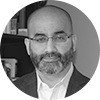
Dr. Kahook is the Vice Chair of Translational Research, Slater Family Endowed Chair in Ophthalmology, Chief of the Glaucoma Service, and Co-Director of the Glaucoma Fellowship at the University of Colorado School of Medicine in Aurora, Colorado.
NOMINATED BY JONATHAN MYERS, MD
"Dr. Kahook has filed many patents for practical devices to help patients.”
What first drew you to ophthalmology and, specifically, to glaucoma?
I knew that I wanted to be a surgeon prior to medical school, and I had a strong desire to work with my hands to improve the lives of patients in a measurable way. I can’t think of a procedure that allows for a more rapid impact on quality of life than cataract surgery. I was hooked on becoming an ophthalmologist after seeing my first phacoemulsification procedure in medical school.
My journey toward glaucoma grew out of a desire to try to improve medical and surgical approaches and enhance therapeutic outcomes. Glaucoma has a long history of innovating topical therapeutics, but, at the time of my residency training, surgical options had not advanced in decades. I had a desire to contribute to new innovations in this arena.
I also had the good fortune to match for fellowship with Joel S. Schuman, MD, FACS, and Robert Noecker, MD, in Pittsburgh, and time with them opened my eyes to a new way of thinking about patient care. Both managed to be involved in cutting-edge research while maintaining busy clinical and surgical practices. When I joined the University of Colorado in 2006, their approach became a blueprint for me to establish a glaucoma service while building a medical device lab from the ground up.
Your nominator cited your numerous patents in ophthalmology. Of which are you most proud?
My favorite project is always the one I am working on today. I have had the opportunity to partner with great collaborators and ophthalmic companies that have helped teach me the skill sets needed to invent and develop new technologies. I have also been fortunate to have several devices advance from the device lab at the University of Colorado to reach patients around the globe, and we are proud of the impact that we have had globally on glaucoma and cataract surgical care.
ClarVista Medical, a startup focused on novel IOL technology, originated in my lab at the university. The company was eventually acquired by Alcon in 2017 after years of development. The ClarVista experience was very educational, as I learned a great deal about moving a project from bench to bedside with a focus on efficiency and outcomes.
The Kahook Dual Blade is perhaps the most visible of my inventions, and my partnership with New World Medical to commercialize this product has certainly been a proud undertaking for me and our department of ophthalmology. I have also had a chance to collaborate with New World Medical on developing the Ahmed ClearPath Drainage Device and, more recently, the Streamline Surgical System, which is one of the more exciting products I have used to date for treating mild to moderate glaucoma. I am very excited about the new projects we have in our off-campus incubator (www.spyglassophthalmics.com) and look forward to sharing more in the future.
You once told GT’s sister publication MillennialEYE, “I remember my first trabeculectomy, during which the thought ‘There has to be a better way to do this’ kept running through my head.” Has this thought crossed your mind recently, and, if so, in what context?
I have experiences like this every day in both the OR and the clinic. Our team is constantly asking, how can we do things differently, and how can we better serve our patients with a new approach or an alternative way of thinking about problems? I have been focusing more closely on drug delivery over the past couple of years. We do not have great options for long-term, drug-eluting platforms to serve patients with acute and chronic diseases who would benefit from consistent delivery of medications to targeted tissues. Our incubator, SpyGlass, spends significant time on this unmet need, and I think we will ultimately have many more options for decreasing or eliminating patient-directed therapies, such as topical drops, as a primary option for ophthalmic diseases.
You were recently named chair of the Orbis medical advisory committee. What do you hope to accomplish in this role?
Working with Orbis International became a goal of mine when I was a first-year resident, after I attended a lecture by one of my attendings who partnered with the organization to teach cataract surgery. He was so excited to share stories about teaching and learning from local doctors, with both sides reveling in the opportunity to exchange knowledge and skill. I jumped at the chance to work on the Flying Eye Hospital in 2018 and was hooked. I have spent the past few years lecturing on Orbis’ digital platform Cybersight (www.cybersight.org), which is an online community for eye care professionals to learn and share best practices. I also collaborated with Orbis to make Kahook’s Essentials of Glaucoma Therapy freely accessible on Cybersight, and we constantly update the content for ophthalmic professionals worldwide.
As chair of Orbis’ medical advisory committee, I will focus on ensuring compliance of the Flying Eye Hospital while providing clinical expertise for best practices to enhance ophthalmic education and use of artificial medical intelligence globally. I will continue lecturing on Cybersight and helping with the planning and implementation of educational programs around the world. Orbis is one of the best and most focused organizations I have worked with, and I expect great things moving forward.
What advice do you have for ophthalmologists who want to follow the path of innovating in the medical device space?
Persistence in developing new technology without clinical insight will lead to consistent failure. As clinicians, we can provide the critical knowledge needed to increase chances of success. Toward this end, it is imperative for all young clinicians to set a firm foundation in the clinic and in the OR. This will allow them to build the experience needed to establish deep clinical and surgical skills, to be positioned to recognize unmet needs, and to adeptly anticipate outcomes based on prior successes and failures.
So much of what we do is determined by chance or pure accident. However, I believe that planning ahead and adapting to these chance events optimizes our ability to reach the goals we set. There are some basic habits that help put individuals in the best position to be “lucky”: answering emails the same day, answering texts within a few minutes, being available when others are not. These few simple habits will yield the chance to capitalize on opportunities in ways that will compound over time.
Finally, it is essential to find mentors who have traveled the same or a similar path. It always helps to have someone to lean on for advice when needed. Fortunately, there are many great leaders and mentors in ophthalmology who are willing to give time when asked. Ophthalmology is a unique and wonderful profession full of opportunities to thrive and evolve. The last line from the popular comic strip "Calvin and Hobbes" put it best: “Let’s go exploring.”