Then | 2007
Glaucoma Surgery: Today and Tomorrow
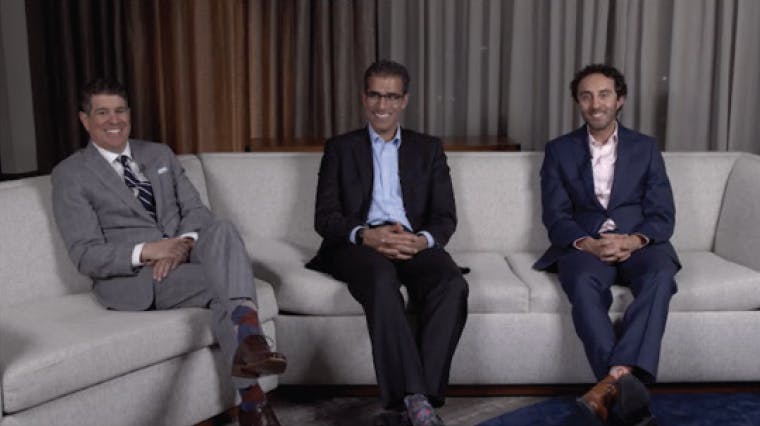
With Richard A. Lewis, MD; Iqbal Ike K. Ahmed, MD, FRCSC; Reay H. Brown, MD; Garry P. Condon, MD; Alan S. Crandall, MD; and Ivan Goldberg, MBBS, FRANZCO
In a 2007 roundtable published in GT, participants shared their views on surgical procedures, technologies, and problems, and they looked forward to the possibilities of the future. Following is an excerpt of that discussion.
THE TUBE VERSUS TRABECULECTOMY STUDY
Richard A. Lewis, MD (R.L.): The Tube Versus Trabeculectomy (TVT) Study is considered a landmark, and its data will have a profound effect on our approach to glaucoma surgery.1,2 How has the study impacted your practice?
Ivan Goldberg, MBBS, FRANZCO (I.G.): One problem facing readers of the TVT Study is that they may not have many patients who fit the study's criteria for inclusion and exclusion. That means that the conclusions of the study may not be applicable to many of their patients.
Also, many of the conclusions from the TVT Study are based on a remarkably high complication rate for trabeculectomies. I have been using tube shunts since 1984. They also have many potential complications. For example, regardless of how you cover them, in time, the tissues will thin and become avascular, and the tubes eventually will erode. Tubes can migrate anteriorly and cause epithelial changes. It would be an oversimplification to conclude from the TVT Study that tube shunts are a superior option to trabeculectomy.
Iqbal Ike K. Ahmed, MD, FRCSC (I.A.): The trabeculectomy group required less medication, but the success rates of the two modalities were pretty similar. It was a large study, some 200 patients, and comprised a diverse population. Someone whose first trabeculectomy failed is very different than someone who has undergone phacoemulsification and needs glaucoma surgery. The results that I am most interested in are patients who had failed trabeculectomy with mitomycin C, and they composed a small group. Based on my experience, tubes definitely come into play with these patients.
R.L.: What I think was so dramatic about the TVT Study was that the complication rates were so high.
Gary P. Condon, MD (G.C.): It would be a bold move for ophthalmologists to switch completely to tube shunts or trabeculectomy based on the TVT Study. The results are short term, … and the groups were diverse. I agree that a patient with a failed trabeculectomy is completely different from one who has undergone clear corneal phacoemulsification and has virgin conjunctiva. The TVT Study has reaffirmed my belief that trabeculectomies have a solid role in glaucoma management. … The study has not really changed my mix, if you will, in terms of tubes and trabeculectomies.
Alan S. Crandall, MD (A.C.): I am involved in residency approval. Because of the TVT Study, residents could not get enough hands-on experience at VA or university hospitals to qualify for trabeculectomy.
G.C.: It is surprising that the TVT Study is already affecting how many trabeculectomies residents are performing during their training. In that regard, the TVT Study may propagate the complications of trabeculectomies that were reported.
Reay H. Brown, MD (R.B.): We have put all of our intellectual and inventive efforts into procedures that do not create holes, so no one has really assessed how to make trabeculectomy better. When you break down a trabeculectomy, it is just a hole. The main issue is that we cannot control aqueous flow as we would like. … A tubular device not made of metal that could titrate aqueous flow and direct it posteriorly to produce a posterior bleb would make trabeculectomy a much safer procedure and a much smaller operation.
R.L.: Has the TVT Study changed what you are doing?
R.B.: No, because I have the same concerns that everybody else has about tubes.
I.A.: I always worry about the corneal issue. It is evident to me that there is a regurgitation of aqueous with the ocular pulse back through the tube. I have seen it come right back into the anterior chamber. This, along with intermittent tube-cornea touch, may result in an increased risk of corneal decompensation. I worry about creating more problems with our procedures that are not necessarily glaucoma related.
R.L.: Is the complication of a tube (particularly its effect on the endothelium and its potential for erosion) better or worse than the long-term complications of a bleb—the dysesthesia, thinning, and infection?
G.C.: Again, the data from the TVT Study are short term. I agree with Ivan that we are likely to see long-term complications in the tube group. I do believe that a tube placed in the pars plana as opposed to the anterior chamber can greatly reduce the risk of late problems like erosion of the tube and eliminate associated corneal problems.
I.A.: I should note that I have been really pleased with my tubes. To me, they have an important role in eyes with failed trabeculectomies, previous conjunctival mutilations, scleral buckles, major extracapsular or intracapsular cataract surgeries, or previous filters.
R.L.: No one has talked about the amount of pressure lowering. In my hands, tube shunts tend to produce IOPs in the high teens or low 20s.
I.G.: That is my experience as well with the two-plate Molteno Implant (Molteno Ophthalmic), which provides 270 mm2 of drainage area. If you need a lower IOP, often the patients require supplementary aqueous outflow suppressants.
R.L.: So, you are on medication plus?
I.G.: Many patients are. Pleasingly, many patients respond well to timolol once daily.
R.L.: Nothing beats trabeculectomy for reducing medication.
R.B.: I liken the treatment of glaucoma patients to moving them out on a limb. You have a certain number of branches and opportunities, and you cannot go back. Once you have placed a tube, it is very difficult then to do additional surgical procedures. You have put them in a situation where their only remaining options are a second tube, an inferior tube, or cyclodestruction. Glaucoma surgeons must always ask, what is my next operation?
THE EYEPASS GLAUCOMA IMPLANT
I.G.: Reay, with the Eyepass Glaucoma Implant (GMP Companies), you have been disappointed with your results. … What percentage of the patients ended up needing a secondary procedure, probably a trabeculectomy?
R.B.: About 50%. That is too high.
G.C.: An operation that has a very low risk and only works half the time might be a pretty reasonable operation.
R.B.: I think that is true, but a 50% success rate probably occurs because we do not understand exactly how it is working—or not working. If we understood outflow and how these devices may promote it, we would probably be able to increase the 50% success rate greatly.
I.G.: Any procedure that buys the patient more time is worthy of consideration.
THE AQUAFLOW COLLAGEN GLAUCOMA DRAINAGE DEVICE
R.L.: Ivan, what are some of the pluses and minuses of the AquaFlow Collagen Glaucoma Drainage Device (STAAR Surgical)? How many of these have you done?
I.G.: My group has done 13 only, and we had one long-term success. The 12 others failed, and they all went on to receive trabeculectomies augmented with antifibrotics.
R.L.: Alan, do you still use the AquaFlow?
A.C.: I use the AquaFlow for individuals with whom I follow up quite frequently. For the many out-of-state patients sent to me for glaucoma procedures for whom I will not do the follow-up, I will usually choose a standard trabeculectomy with mitomycin C.
R.L.: Is there any operation today that you are confident works well for glaucoma and that actually relies on fluid's getting outside the scleral wall and into the subconjunctiva?
G.C.: I am mainly performing trabeculectomy with a smattering of nonpenetrating deep sclerectomy AquaFlow.
CANALOPLASTY
G.C.: I have performed five canaloplasties (iScience Interventional) with the 360º suture in Schlemm canal. The predictability has not been there for me. One is a booming success. Two other patients are on medications, and two others have had trabeculectomies. These were all primary surgeries.
I.A.: By putting a suture there, do you think you are creating an effect like pilocarpine or holding the canal open?
R.L.: The viscodilation part of the study showed some pressure reduction without that. They viscodilated at the same time they did the deep sclerectomy without putting the suture in. So, they still enhanced fluid flow across the membrane into the scleral lake.
G.C.: Is there any chance that multicenter data, stratified, would suggest which type of patients will have successful outcomes?
R.L.: Surgical studies are difficult to recruit for and interpret. Some of the patients had combined surgery, some had argon laser trabeculoplasty, and some were on medication. This mixed bag of diagnosis and prior treatments is a problem in surgical studies, partially explaining why some patients do well and some patients do poorly.
R.B.: It is also difficult to improve when you do not understand why it works in the first place.
SOLX GOLD MICRO-SHUNT
I.A.: I do not think that simply trying to bypass the meshwork or trying to enhance the canal is going to get the pressure down. There may be functional blockage, not just structural blockage, in glaucoma. We seem to be stuck at 16 to 17 mm Hg with these procedures that attempt to bypass the meshwork. I am intrigued by the suprachoroidal space. There is a huge potential for IOP lowering without the bleb.
Implanting the Solx Gold Micro-Shunt (OccuLogix) is an attempt to control and titrate the traditional cyclodialysis procedure. … There have been over 150 to 200 worldwide, but, as far as the study versus the Ahmed Glaucoma Valve (New World Medical), there are about 60 patients in that study. The early results, again only 6 months, are promising.
R.L.: Why do you think the device failed in some eyes?
I.A.: I think it was multiple issues. Fluid may enter the suprachoroidal space, but then it may be localized beyond that. Alternatively, there may be fibrosis in the suprachoroidal space. If the fluid is only going through that shunt, then maybe that is insufficient for some patients. Finally, there may be an obstruction at the head of the implant in the anterior chamber if it is placed too close to the cornea.
R.B.: Because it is too big?
I.A.: I do not think that it is big enough. I think that you need to have openings bigger than 40 µm.
ENDOCYCLOPHOTOCOAGULATION
I.A.: During the last year, I have been combining endocyclophotocoagulation with phacoemulsification. … I do not generally favor external cyclodestructive surgeries because of the risk of hypotony and complications. I have been fairly impressed, however, with the lack of major problems with endocyclophotocoagulation and the reasonable reduction of IOP in patients whom I have selected. Typically, they are in for cataract surgery, they have mild to moderate glaucoma, and their IOP is borderline controlled (20–21 mm Hg) on a couple of medications.
R.L.: How many areas do you treat?
I.A.: I do at least 270º. I like the endoscope for other things. I use it for sutured IOLs and other intraocular suturing. I was treating aggressively and using a lot of steroids. Overall, it has been reasonable. Pressure spikes had been a problem.
R.L.: Because you have no outflow at all. You cannot win the game by shutting down outflow.
NONPENETRATING GLAUCOMA SURGERY
G.C.: Nonpenetrating surgery has advantages over trabeculectomy, so why isn’t it more popular?
R.L.: It does take a little longer than a trabeculectomy, but postoperative care is shorter. So, the overall time commitment (intraoperatively plus postoperatively) is probably less when performing nonpenetrating surgery.
G.C.: I do not think my postoperative care for a well-performed trabeculectomy is any more intense than for a nonpenetrating procedure in a routine case.
R.L.: My incidence of shallow chambers or hyphema in nonpenetrating surgery versus trabeculectomy was not different.
G.C.: Let’s return to the question of why, despite the well-documented studies showing that nonpenetrating surgery is potentially safer than trabeculectomy,3,4 it is not more popular. In the beginning, the success rates were not duplicated outside of certain parts of the world. That reduced surgeons’ enthusiasm. I also think that residency programs in the United States do not teach residents how to get into the canal.
I.G.: Nonpenetrating surgery involves too much of a learning curve.
R.B.: With cataract surgery, you can trace the progression from intracapsular to extracapsular, 7- to 6- to 3.5-mm phacoemulsification. The goal is pretty obvious. That is not true yet for trabeculectomy surgery.
R.L.: You don't think that lower pressure is the goal?
G.C.: We do not know what to converge on. If we knew that our goal was something that directed fluid directly to the osteum of a collector channel, we could solve that problem.
R.B.: If locating Schlemm canal allowed patients to see well up close and far away, I guarantee you that manufacturers would have devices to find Schlemm canal in about a week.
TRABECTOME
R.L.: Let's turn our attention to the Trabectome (NeoMedix).
R.B.: Cost is an important issue, but we need to consider our patients. What do we want for them? What would we want for ourselves? If the Trabectome had a 50% success rate that was long lasting, it would be a pretty tempting procedure. I am interested in it, because, if I am not going to hurt the person, then doing that as a combined procedure would seem to be of great benefit to the patient.
G.C.: You certainly still maintain the option of a trabeculectomy.
I.G.: I do not find the concept of the Trabectome very attractive. I think it is conceptually akin to ciliary body destruction, except it is targeting outflow as opposed to inflow rates. Although, theoretically, this is certainly better, it seems to me rather gross tissue destruction. We have to try to refine it.
IMAGING
I.G.: Should we be trying to design a way of imaging the outflow pathway for an individual patient? If we could do that, then maybe we could think about the different methods and their physiologic effects, and this might help us to achieve our goal to reduce IOP reliably and predictably.
R.L.: That capability is so relevant in cardiovascular surgery. They do angiography catheterization. They can determine which are not operable situations and which would benefit from coronary bypass surgery.
I.G.: What if we could identify where the blockage was in glaucoma? Then we could say, we need to put in a stent, or we need to do a trabecular bypass surgery.
R.L.: The point is cardiovascular surgeons can see what procedure is most appropriate. What if we could see that a patient's outflow system was never going to work or determine that a canal-based procedure had a good shot at working?
R.B.: I think we all agree that a better understanding of outflow is critical to moving forward in canal surgery.
PANELISTS’ CHOICES
R.L.: If you were newly diagnosed with glaucoma and had cupping, visual field loss, and uncontrolled pressure, would you opt to have surgery or medication?
G.C.: I would have selective laser trabeculoplasty (SLT) or maybe a drug. I certainly wouldn't have surgery first.
A.C.: I would probably not have surgery first but have a short trial on medications and SLT. I would proceed quickly to surgery, however, if my IOPs were not controlled.
I.G.: If I had chronic open-angle glaucoma, I would try medications and SLT before invasive surgery.
I.A.: I would actually probably go with SLT first and then proceed to nonpenetrating surgery.
I.G.: You would not even try a medication?
I.A.: Not if I had significant cupping.
R.L.: There is no question that a good surgical outcome really stops the disease.
R.B.: This brings me back to my point about trabeculectomy with a device. With nonpenetrating surgery, you are controlling the outflow to a relatively low flow rate so that you do not have to perform an iridectomy. You do not have to worry about hypotony. … Let’s have a device that you just slip in so you get the same well-controlled pressure outflow characteristics that you get with nonpenetrating surgery by finding Schlemm canal and using that barrier to control outflow. But, with the right device, you do not need to find Schlemm canal, because you are creating a “hole” by placing a device that has reduced outflow characteristics built into it. The device’s placement would be a much easier operation than finding Schlemm canal, and it would be a much smaller operation. It would save options for the future.
G.C.: Your point is well taken, Reay, but it is a bit hypothetical.
R.L.: To the question of what we would do—medication, laser, surgery—there is no consensus.
R.B.: When I was in Germany, I was watching colleagues perform cataract surgery. They were using the same implants, the same procedure, just a little tweaking here and there. There was a convergence of technology and technique. In glaucoma, we do not have a platform where you can say we are converging. But, we are taking steps down the road, and eventually I know we are going to get there.
Editor's note: To read the full version of this article, visit bit.ly/GT2007a.
1. Gedde SJ, Schiffman JC, Feuer WJ; Tube Versus Trabeculectomy Study Group. Treatment outcomes in the Tube Versus Trabeculectomy (TVT) Study after one year of follow-up. Am J Ophthalmol. 2007;143:9-22.
2. Gedde SJ, Herndon LW, Brandt JD; Tube Versus Trabeculectomy Study Group. Surgical complications in the Tube Versus Trabeculectomy Study during the first year of follow-up. Am J Ophthalmol. 2007;143;23-31.
3. Mermoud A, Schnyder CC, Sickenberg M, et al. Comparison of deep sclerectomy with collagen implant and trabeculectomy in open-angle glaucoma. J Cataract Refract Surg. 1999;25:323-331.
4. Shaarawy T, Karlen M, Schnyder C, et al. Five-year results of deep sclerectomy with collagen implant. J Cataract Refract Surg. 2001;27:1770-1778.
Now | 2022
MIGS Unplugged: Matching the Best Glaucoma Procedure to Each Patient
With Iqbal Ike K. Ahmed, MD, FRCSC; Arsham Sheybani, MD; Davinder S. Grover, MD, MPH; and Mark J. Gallardo, MD
In the first segment of a two-part episode of MIGS Unplugged, Iqbal Ike K. Ahmed, MD, FRCSC, and Arsham Sheybani, MD, invite Mark J. Gallardo, MD, and Davinder S. Grover, MD, MPH, to describe the nuances of how they determine appropriate surgical glaucoma treatments for their patients. Dr. Gallardo explains how he considers potential future procedures that patients may require when deciding on an approach. Dr. Grover comments on when gonioscopy-assisted transluminal trabeculotomy is the most appropriate approach for patients versus a stenting procedure to achieve the best possible outcome.
In the second segment of this two-part episode, Drs. Ahmed and Sheybani continue their discussion with Drs. Gallardo and Grover on how they determine appropriate surgical glaucoma procedures for their patients. Dr. Gallardo touches on how diagnostic tools can help determine a patient’s response rate to treatments and procedures. Dr. Grover explains the value of measuring corneal hysteresis to understand a patient’s glaucoma status and risk profile and determine the appropriate intervention.