Physicians advocate regularly by the nature of their profession. They care for patients medically and surgically, educate them, and strive to overcome barriers to ensure that they receive the best treatments possible. Broader advocacy efforts, such as those conducted by professional societies like the AAO and American College of Surgeons (ACS), also depend on physicians’ active engagement and participation. These efforts help to protect not only patients but also the ophthalmology profession. The health care landscape is constantly evolving, and politics, policies, and legislation affect ophthalmologists’ daily practices.
WHAT IS ADVOCACY?
Advocacy is defined simply as the act or process of supporting a cause or proposal. Health policy advocacy focuses on the patient and the medical profession as the cornerstones of purpose. It is worth acknowledging that advocacy is not dirty, wrong, or corrupt, and it should definitely not be left for others to do. It is physicians’ professional responsibility and obligation to advocate for patients. Advocacy, however, is complex in that it involves a dynamic interplay of multiple factors and influences. Many players without health care experience dictate how ophthalmologists practice, determine how they are paid, and influence the care that patients receive.
HOW TO EFFECT CHANGE
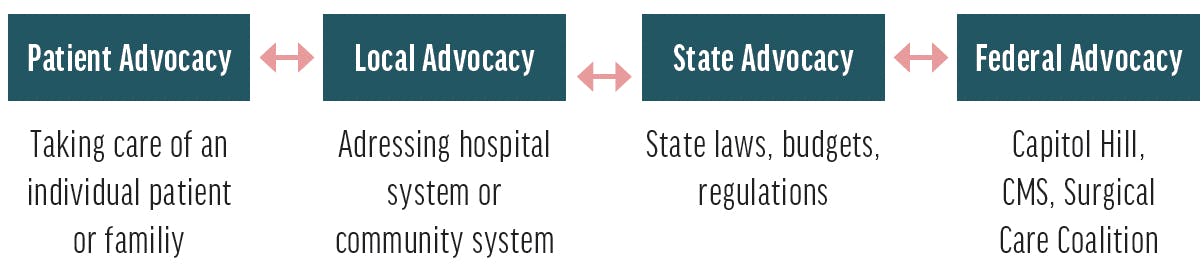
Despite these challenges, physicians can make a meaningful difference. Physician advocacy occurs on a spectrum (Figure 1). Most efforts center on patients, with physicians caring for an individual patient or family, or locally, with physicians addressing a hospital system or community issue. However, it is critical that advocacy occurs at the state and federal levels as well, as that is where decisions are made.
That said, ophthalmologists should always engage patients in their advocacy efforts. In a 2021 survey conducted by the American Medical Association, 95% of US voters said that it is important to them that physicians are involved in disease diagnosis and treatment decisions, and 62% of US voters said that patients are most likely to be harmed by scope of practice changes.
What can ophthalmologists do? First, know the issues that affect patients and practice. The AAO and ACS websites are valuable resources for up-to-date information. Some of the issues on which current advocacy efforts focus include:
- Physician payment reform;
- Administrative burdens (prior authorizations);
- Scope of practice expansion (eg, the Veterans Affairs Federal Supremacy Project [see Veterans Affairs Federal Supremacy Project]);
- Surgical workforce shortage;
- Rapid integration of technology;
- Research funding; and
- Health equity.
Veterans Affairs Federal Supremacy Project
The US Department of Veterans Affairs (VA) provides health care to 9 million veterans per year. In 2021, the VA launched the Federal Supremacy Project to develop national standards of practice for 50 categories of health professionals, including optometrists, registered nurses, and physician assistants. Only one category is designated for physicians, presumably to create a national standard for all MDs. These standards are described as “a standardized set of services that all health care professionals in a given occupation can perform regardless of what is permitted by a state license, certification, or registration.”1
In 2022, the Veterans Health Administration updated the guidelines of its Community Care Program. It deleted an important clause that stated, "Only ophthalmologists can perform invasive procedures, including injections, lasers, and eye surgery." The AAO is concerned that this may expand the scope of practice for VA-employed optometrists as the VA develops national standards of practice. Such efforts may not adequately account for differences in education and training between physicians and surgeons and nonphysician providers.
Groups such as AAO, the American College of Surgeons, and the American Medical Association are actively working to push for a more transparent process and to educate members of Congress and their staff about the Federal Supremacy Project. Quality of care and safety should be key considerations in any policy or rule related to veterans' health care services.
1. VA National Standards of Practice. Veterans Affairs. Accessed April 1, 2023. www.va.gov/standardsofpractice/faq.asp
In addition to knowing about the issues at stake, ophthalmologists should get involved with their state ophthalmological societies and contact their state legislators. As constituents, all our voices matter. Send an email, write a letter, or make a phone call. Younger ophthalmologists who are savvy on social media may prefer to use those platforms for advocacy work. When educating legislators, physicians should share their personal stories of how certain changes affect their practice, their ability to provide care, and, most important, their patients.
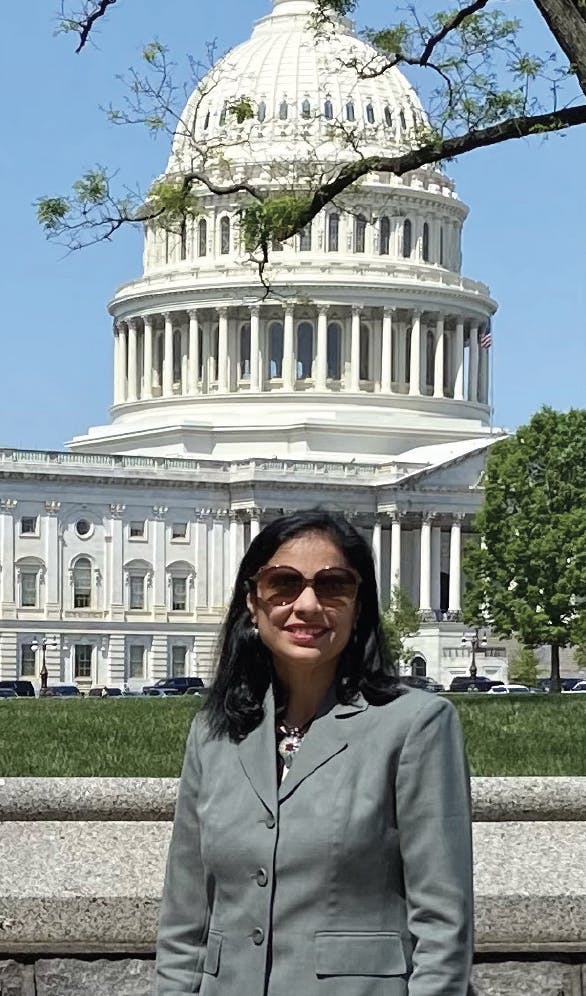
Of all the outreach approaches, in-person engagement has been shown to be the most effective. Every April, both AAO and ACS host the Congressional Advocacy Day in Washington, DC (Figure 2). I have attended these events since the start of my career. They present a great opportunity to learn about the key issues that affect our profession, connect with AAO and ACS leadership and colleagues, and educate and build relationships with legislators.
Physicians are extremely busy and have many competing responsibilities. It can be challenging to find time to write letters, make a phone call, or add another travel obligation. An additional way to advocate is by donating to different political action committees. For AAO, donations can be made to the Surgical Scope Fund or OPHTHPAC (see AAO Political Action Committees). These committees have dedicated team members who can help advocate on a contributing ophthalmologist’s behalf.
AAO POLITICAL ACTION COMMITTEES
Surgical Scope Fund
- Operates at the state level
- Ensures patient safety by limiting optometric scope expansion
- Provides resources needed to fund lobbyists, attorneys, media, and grassroots campaigns
- Open to contributions by any individual, practice, or society (all confidential)
OPHTHPAC
- Operates at the federal level
- Ensures that ophthalmologists have an impact on the legal and regulatory affairs governing their profession (eg, Medicare payments, support for physician practices, and administrative burdens)
- Increases visibility on Capitol Hill
- Builds relationships
- Open to contributions from US-based AAO members
CONCLUSION
It is important that physicians feel informed and empowered about advocacy efforts. For me, every advocacy effort counts because it helps our issues to be heard and addressed. Sometimes it is possible to stop bad legislation from moving forward or delay a bad idea to negotiate to a better one. It also helps to continue conversations and build relationships. Even if advocates are not successful on one issue, the right partnerships may help to generate support of other issues going forward. Ultimately, this work is crucial to serving patients and protecting our wonderful profession.