MIGS represents a significant development in the management of primary open-angle glaucoma (POAG), and patients around the world have benefitted from these procedures. However, several challenges in the space remain to be addressed fully. The requirements for certain procedures to be performed with cataract surgery, the incisional nature and technical challenges of OR-based procedures, surgical trauma and variable healing responses among patients, and the risks of surgery may all limit the widespread use of MIGS.
New treatment approaches continue to emerge to address unmet needs in the management of POAG. One such approach is femtosecond laser image-guided high-precision trabeculotomy (FLIGHT). This article shares our perspectives from our first-in-human experience with this technology.
THE POTENTIAL OF FLIGHT
The ViaLuxe Laser System (ViaLase; not approved in the United States) combines femtosecond laser application with a specialized OCT modality with micron-level accuracy. With the platform, the user can visualize the target tissue and apply an image-guided, gonioscopic femtosecond laser treatment to a precise location to remove a defined portion of the trabecular meshwork (TM) and inner wall of Schlemm canal noninvasively. The use of a femtosecond laser to create channels within the TM has been linked to improved outflow facility.1,2 The precision of the laser may also help to minimize collateral damage to surrounding tissue.2
FLIGHT differs from selective laser trabeculoplasty (SLT) in that SLT enhances outflow facility with a purported cellular turnover and/or biologic phenomena. Over time, reaccumulation of extracellular matrix may reduce outflow and limit the IOP-lowering effects. FLIGHT creates distinct physical channels in the TM to allow direct aqueous outflow into the collector system and may therefore offer a more durable effect than SLT.
NONINVASIVE TRABECULOTOMY
The noninvasive nature of FLIGHT is a significant advantage. The ViaLuxe femtosecond laser is used to create a trabeculotomy, eliminating the need for a corneal incision.1 The use of intraoperative OCT to visualize potential collector channels and target channel creation may help to maximize targeted outflow, guide surgical planning, and optimize surgical outcomes.
The patient’s lens status has no bearing on their ability to undergo FLIGHT. Patients have tolerated the treatment well, reported little to no discomfort or pain, and experienced a fast postoperative recovery, quickly returning to their normal activities after treatment.
Because FLIGHT does not have to be performed in a sterile environment, the treatment may be used in a variety of settings. The individual, noninvasive components of FLIGHT (ie, OCT and femtosecond laser) are familiar to ophthalmologists, meaning new users may be able to grasp the steps of the procedure more quickly.
EFFICACY, SAFETY, AND EFFICIENCY
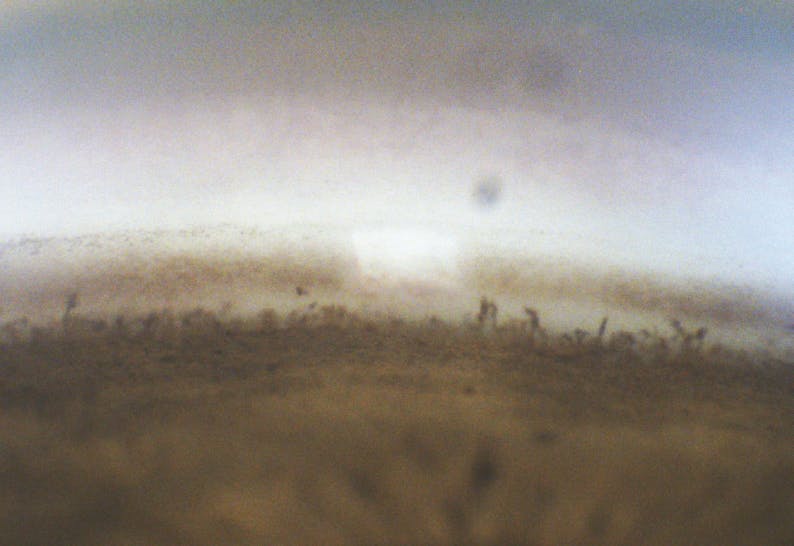
In a recent single-center, nonrandomized, prospective study, 18 eyes of twelve patients with open-angle glaucoma were treated with FLIGHT. In each patient, a single trabeculotomy channel measuring 500 µm by 200 µm was created (Figure).
At 24 months, mean IOP was reduced by 34.6% from 22.3 ±5.5 to 14.5 ±2.6 mm Hg (P < 5e-5) with an average of 2.0 ±1.2 hypotensive medications compared with 2.2 ±1.1 at baseline (P = .22). Fourteen out of the 17 study eyes (82.3%) achieved a 20% or greater reduction in IOP at 24 months when compared with baseline. Notably, no serious device-related adverse events were reported in this study.
NEXT STEPS
A multicenter, randomized, controlled trial is in progress to assess the safety and efficacy of FLIGHT. Further explorations are warranted to evaluate safety; compare short- and long-term outcomes of FLIGHT, SLT, and MIGS; and determine where FLIGHT fits within the overall glaucoma treatment paradigm.
The FLIGHT procedure has the potential to take advantage of the known benefits of MIGS without presenting the risks associated with incisional surgery. Issues associated with drop therapy for POAG—compliance, adverse effects, and quality-of-life challenges—may be mitigated by a laser-based approach. Further, earlier intervention may minimize visual field loss and reduce the need for more invasive glaucoma surgeries.
The potential of this intervention to improve treatment offerings for POAG is encouraging. FLIGHT may provide a safe, noninvasive method that overcomes challenges related to visualization and device/laser placement, reduces concerns regarding compliance, and may generate similar outcomes to OR-based surgical procedures.
1. Mikula E, Holland G, Bradford S, et al. Intraocular pressure reduction by femtosecond laser created trabecular channels in perfused human anterior segments. Transl Vis Sci Technol. 2021;10(9):22. Erratum in: Transl Vis Sci Technol. 2022;11(7):18.
2. Nagy ZZ, Kranitz K, Ahmed II, De Francesco T, Mikula E, Juhasz T. First-in-human safety study of femtosecond laser image guided trabeculotomy for glaucoma treatment: 24-month outcomes. Published online April 17, 2023. Ophthalmol Sci. doi.org/10.1016/j.xops.2023.100313