Prior to the establishment of Medicare, medicine was essentially a cash business. Most patients did not have insurance, and those who did lost coverage when they ceased employment. Physicians were paid based on a method called usual, customary, and reasonable, or UCR. The de facto definition of UCR has been quoted as, “More or less whatever doctors decided to charge and what patients could pay.”
With the advent of Medicare in the mid-1960s, the customary, prevailing, and reasonable, or CPR, method of payment went into effect. A customary fee was the median of a physician’s charges for a procedure. A prevailing fee was the 90th percentile of customary charges of peer physicians by specialty. A reasonable fee was the lowest of the physician’s actual charge, the customary or the prevailing. These are affectionately known as the good old days.
In 1992, CMS decided that the CPR system was not working due to an explosion in physician payments. It instituted what is in effect today, the resource-based relative value scale (RBRVS). Simultaneously, the Relative Value Scale Update Committee (RUC) was formed with the objective to compare the resources required to deliver a physician service across specialties and to advise Medicare on values. The RBRVS measured physician work, practice expense, and medical liability. It also introduced the concept of relativity (ie, how to compare one procedure to another across medicine) as well as significant constraints on the growth of physician payment.
THE RUC PROCESS
Any new device or procedure requires a Current Procedural Terminology (CPT) code. Many new technologies start with a category 3 CPT code, but ultimately a category 1 CPT code is required. The CPT committee, which is controlled by the American Medical Association (AMA), goes through a process to create a category 1 code. That code then goes to the RUC. Other codes can go to the RUC for a variety of reasons. For example, if CMS thinks that a certain procedure is overpaid, it can send that code to the RUC to review. If there is evidence that medical practice or technology has changed, the RUC may be asked to conduct a review. Another group of so-called mispriced codes (ie, overpriced codes) are also sometimes presented before the RUC.
The RUC consists of 32 physician members, all of whom hold voting seats. For a recommendation to pass the RUC, a two-thirds majority is required. For ophthalmology specifically, there are two sides to the RUC for the AAO. The AAO has a representative on the RUC who is a voting member but not an advocate for ophthalmology; this individual is intended to serve as an impartial arbiter of the process. The AAO is also represented by David Glasser, MD, on the specialty advisors group. This group presents data generated from physician surveys to the RUC and makes recommendations. The RUC then reviews the recommendations and decides whether to accept them. Eventually, the RUC determines a number to submit to CMS, and CMS determines the final payment amount. The RUC is strictly an advisory group.
Physician payment has been based on relative value since 1992. In brief, the RUC votes on values and makes recommendations to CMS in three areas related physician work, practice expense, and professional liability insurance.
Physician work (worked relative value units [WRVUs]) is based on (1) the time and intensity of the work on the date of service, including any global postoperative visits, and (2) survey-derived data comparing the procedure relatively to other procedures. Practice expense (practice expense relative value units [PERVUs]) is based on clinical staff time, equipment costs and time used, and supplies. WRVUs and PERVUs account for about 95% of the physician payment. The remaining 5% is for professional liability insurance costs (professional liability insurance relative value units [PLIRVUs]), which are based on national trends for malpractice premiums. The total value equals all those RVUs (WRVU + PERVU + PLIRVU) multiplied by the conversion factor, which is a dollar amount (in 2023, about $34). The outcome of that equation is the amount physicians are paid.
Ultimately, physician payment is relative. The process is designed to determine a way to compare performing cataract surgery to delivering a baby. Within this process, however, there is some granularity. A concept known as intraservice work per unit of time (IWPUT) measures an RVU per minute to .001. An IWPUT greater than 0.200 is considered high. Across more than 10,000 CPT codes, only 21 have an IWPUT greater than 0.200; four of those are ophthalmic codes. This is a reflection of the intensity of ophthalmic microsurgery. Over the past few years, there has been a default from time and intensity to simply time and so-called crosswalks. In other words, if one code takes X minutes, it should be paid similarly to another code that takes the same amount of time.
AN EMPHASIS ON PRIMARY CARE
Over the past several years, payment policy has been driven by a common theme, which is to distribute more money to primary care. Several assumptions are made based on this theme. One assumption is that there are too few primary care physicians and too many proceduralists. However, health care workforce predictions since 1910 share one characteristic: They have all been wrong. Another assumption is that primary care management is the answer to uncontrolled spending. This has never been demonstrated outside of capitated or salaried systems. Last is the assumption that more primary care physicians will improve access to care. It is a fact, however, that a lack of insurance and high deductibles and copays are the primary barriers to access.
The attempt to distribute more money to primary care is a zero-sum game, with payment being shifted away from specialty and surgical care. Over the past 10 years, primary care has seen payment increases of about 14% to 18%, whereas specialties have seen decreases between 1% and 57%. This is a politically driven process, and it is based on multiple flawed assumptions. The idea is that increased payments for “cognitive” care will attract more primary care physicians; in reality, this does not seem to be occurring, even though primary care payments have increased substantially. The Table shows the impacts on various subspecialties from 2010 to 2021. Ophthalmology decreased by about 4% in this time. Other specialties decreased significantly, such as radiology (-57%). Family practice and geriatrics, however, saw substantive increases of 31% and 18%, respectively. The policy is accomplishing the goal. Figure 1 shows the reductions in payment for three common ophthalmic procedures—vitrectomy for macular hole (CPT code 67042), complex cataract surgery (CPT code 66982), and standard cataract surgery (CPT code 66984)—ophthalmologists have certainly seen the effects of these payment trends over the past decade.
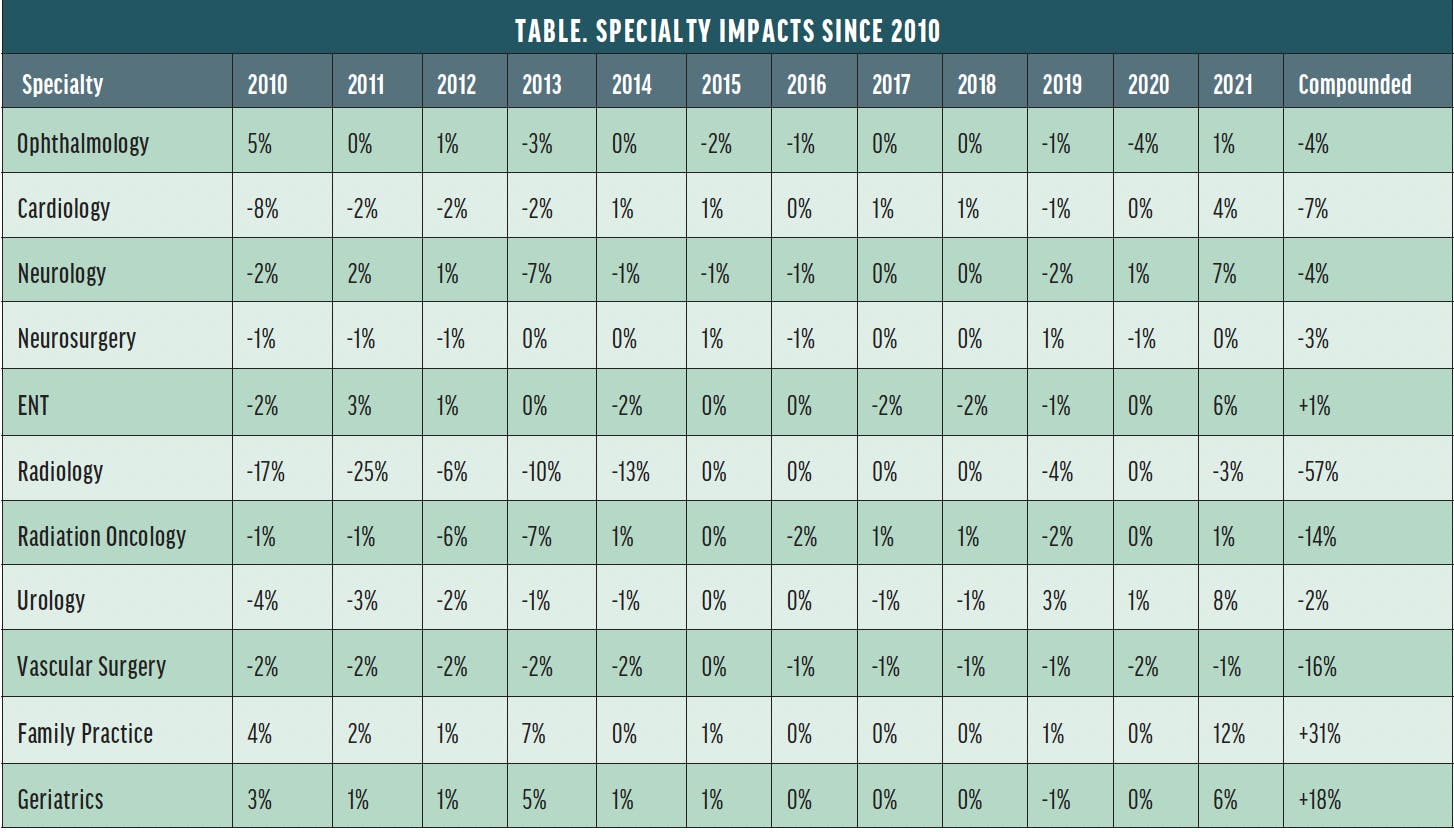
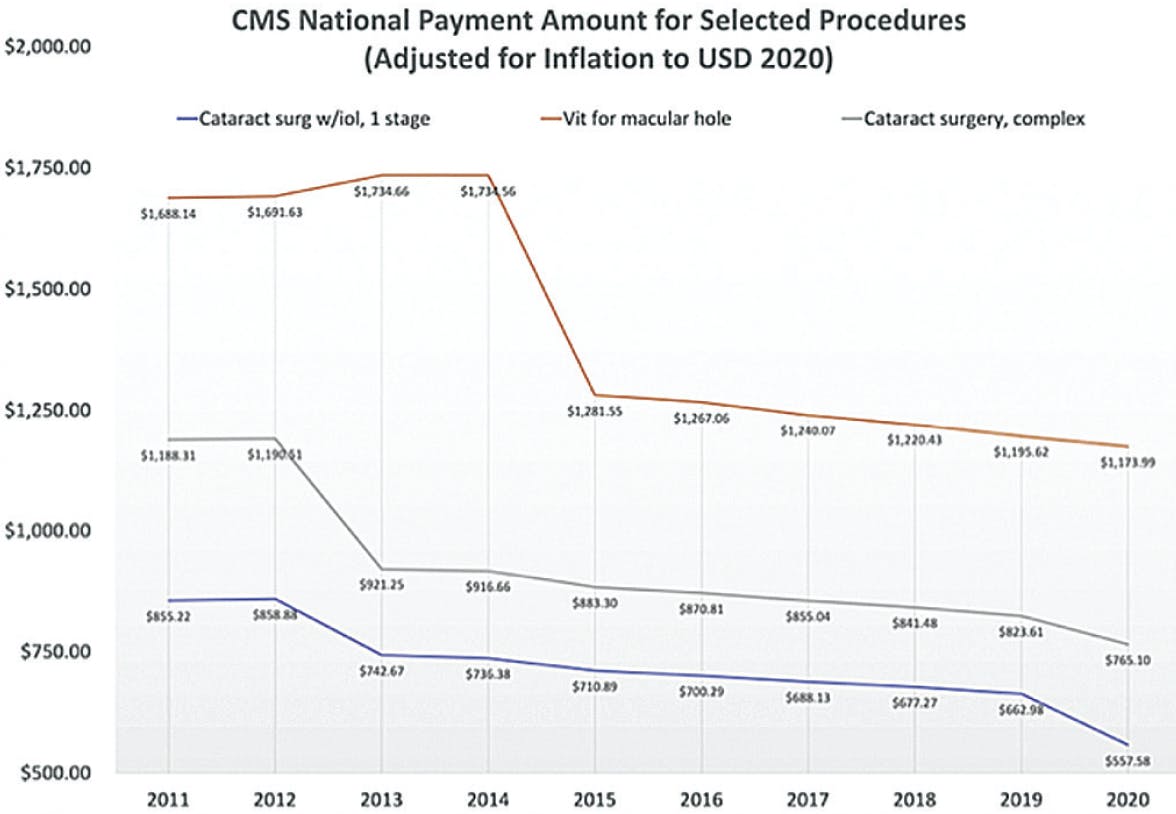
Figure 1. The CMS national payment amounts (inflation-adjusted 2020 US dollars) for standard cataract surgery (CPT code 66984), complex cataract surgery (CPT code 66982), and vitrectomy for macular hole (CPT code 67042).
The Medicare Physician Fee Schedule (MPFS) is capped by statute through a mechanism called budget neutrality. Budget neutrality requires that if the MPFS increases more than $20 million in a year for reasons such as new codes or increased utilization, other codes must be cut. Think of budget neutrality as a pizza: The bigger one person’s piece, the less there is for everyone else. There are 57 specialty groups vying for a piece of the budget pie. In 2021, the total pot was about $100 billion. Internal medicine’s piece was about $11 billion, cardiology’s was about $7 billion, family medicine’s was $6 billion, and ophthalmology’s was around $5 billion. However, there are approximately 200,000 internal medicine physicians; 200,000 family practice physicians; and 35,000 cardiologists sharing their pieces of the pie. There are only 18,000 ophthalmologists sharing our piece. Therefore, on a per capita basis, ophthalmology gets the biggest piece of the pie.
GOALS FOR THE FUTURE
In 2022, ophthalmology faced a proposed cut of 9.75%. We were able to get a Congressional fix, which was basically the 2% sequester freeze. The 2021 bonus was cut from 3.75% to 3%. We got a 4% delay on the Pay-As-You-Go (PAYGO) cut until 2023. We also had a 0.82% decrease in the conversion factor, such that from January to March 2022 we had a 1.6% cut and from April to June a 2.6% cut. From July to December, the cut was 3.6%. All in all, this was a win, but ophthalmology is still seeing a decrease in payments.
A group called MedPAC is the congressionally mandated advisory body to CMS and to Congress on Medicare payment policy. In a 2022 report, MedPAC reported that overall physician payments (including commercial) increased by 3.3% per year from 2015 to 2019 and by about 1.0% in 2020. MedPAC noted that there was lower median compensation for primary care, and it felt that this suggested mispricing. The group advised Medicare that more should be done to increase payments for primary care services. It stated, “For calendar year 2023, the Congress should update the 2022 Medicare base payment rate for physician and other health professional services by the amount determined under current law.” This recommendation was unanimously approved.
Based on the current law, there would be a 4% PAYGO cut from pandemic relief, a loss of 3% bonus, a conversion factor cut of 4.42%, a 2% sequester, and continued inequity for postoperative visits versus evaluation and management. This is a particular hit to glaucoma, as there is a perception that many surgeons do not conduct patients’ postoperative visits. In many surgical specialties (eg, cardiovascular surgery and general surgery), postoperative visits are conducted by physician extenders or other physicians. However, data show that ophthalmologists see their patients postoperatively at the level and number of visits in the fee schedule, particularly in glaucoma. The glaucoma codes have more postoperative visits than any other medical specialty. Every time this comes before the RUC, we must defend the amount of time that ophthalmologists spend managing patients after a variety of glaucoma procedures.
In the long term, this system must be fixed, as it is unsustainable for several reasons. Figure 2 shows the Medicare updates from 2001 to 2021. The top two lines (red and blue) chart inpatient and outpatient hospital payments. The middle lines show the consumer price index (purple) and the practice costs, or Medicare expense index (orange). The bottom line (black) shows physician payment. These are nominal dollars—it would look much worse if converted to real dollars.
According to data from the Medicare Trustees, Medicare physician pay increased by just 11% between 2001 and 2021. In comparison, Medicare hospital updates and Medicare skilled nursing facility updates both totaled about 60% in this time. The cost of running a medical practice increased by 39% in the past 2 decades, and economy-wide inflation, as measured by the Consumer Price Index (CPI), increased by 51% (or 2.1% per year).
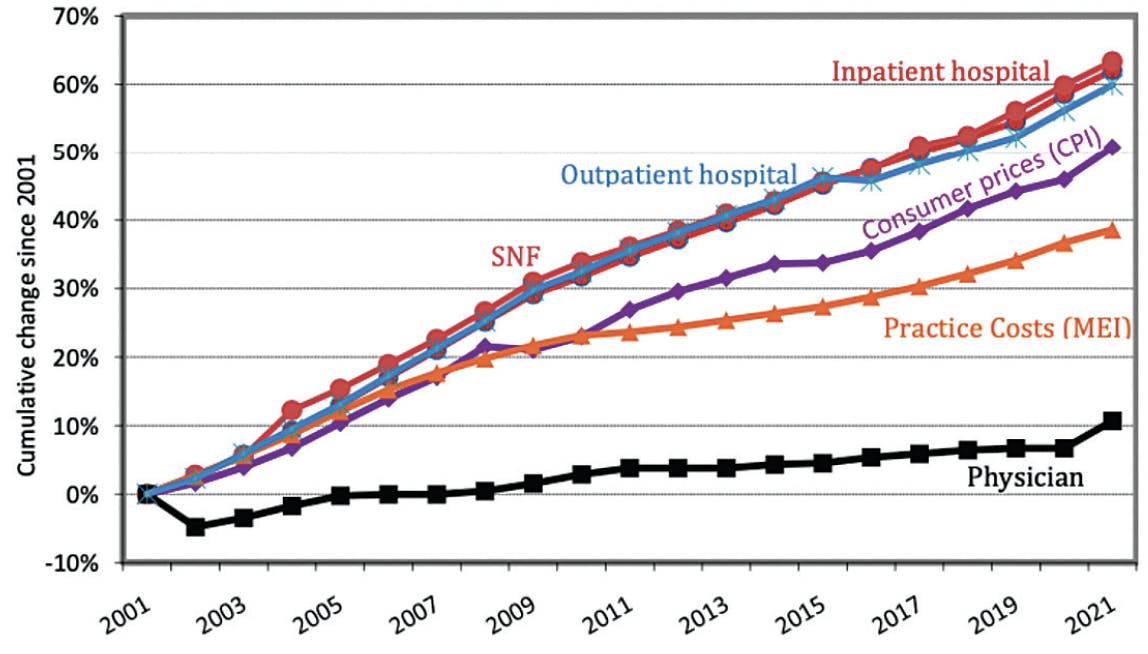
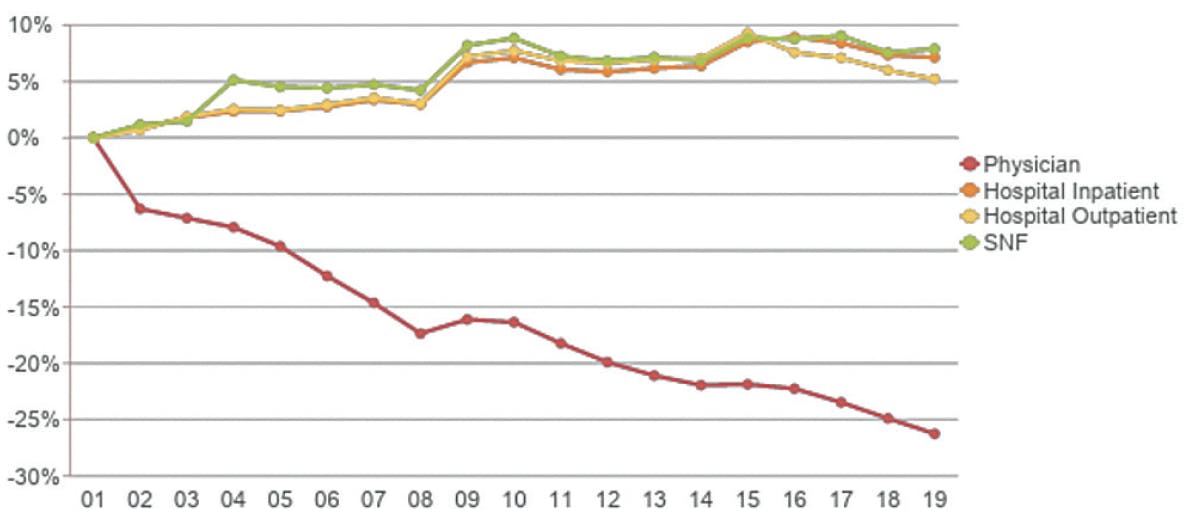
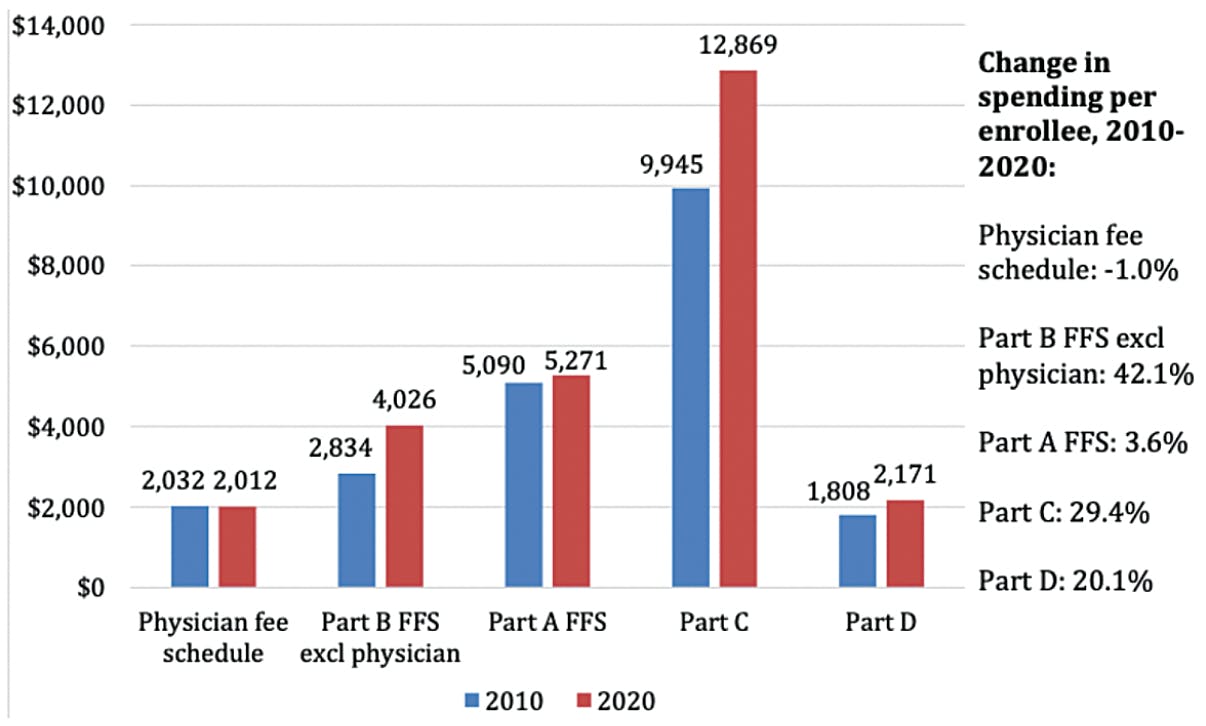
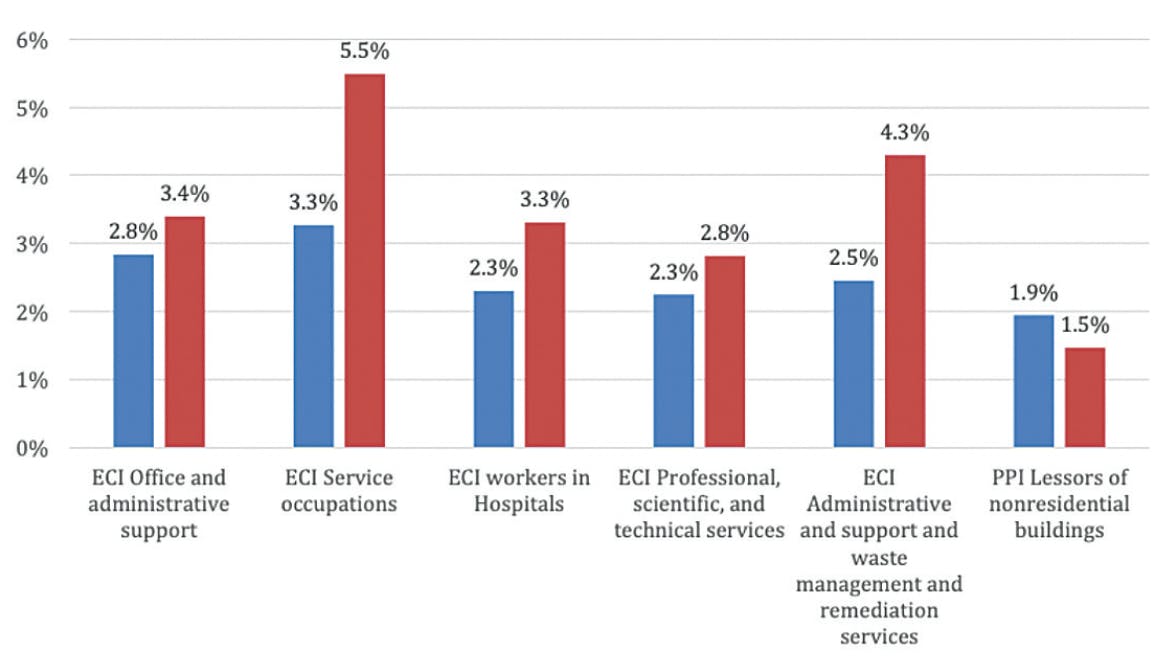
Figure 3 shows the CPI-adjusted Medicare payment updates. Physician payments decreased by more than 25% in real dollars after adjusting for inflation. In looking at Medicare spending per enrollee in 2010 and 2020, all payments (parts A, B, C, and D) except physician fees increased (Figure 4). Physicians were actually paid less in nominal dollars in 2020 than in 2010. Further, most key measures of practice expense accelerated in 2021 (Figure 5).
The AAO works closely with the AMA and most major specialty societies to address issues surrounding physician payment. In 2022, the AAO sent a letter to Congress to emphasize the need to fix this system. We noted that it is urgent that Congress work with the physician community to develop solutions to the systematic problems with the Medicare physician payment system to preserve patient access to care. At a minimum, we maintained that Congress must establish a stable, annual Medicare physician payment update that keeps pace with inflation and practice costs and allows for innovation to ensure that Medicare patients continue to have access to physician practice-based care. Recently, our Congressional physician advocates introduced the bipartisan Strengthening Medicare for Patients and Providers Act (H.R.2474), which would require a yearly update to the MPFS based on inflation. Importantly and for the first time, both MedPAC and the Medicare Trustees recognized the need for yearly updates in their 2023 reports to Congress.
CHALLENGES TO THE RUC PROCESS
The RUC relies on a concept called magnitude estimation, which is based on physician-generated surveys of time and intensity. When a new CPT code is added, physicians are asked to participate in a survey to rank that new procedure against existing procedures (in other words, help determine the relativity). It turns out that family matters. If a new code is added or one code in a family is reviewed, then the rest of the family is subject to review. This creates a significant problem for innovation, as the net result is typically a decrease in value for the other codes in the family. This result has been seen in the recent valuations for both glaucoma and cataract procedures.
In 2022, the National Academies of Science, Engineering, and Medicine (NASEM) said that CMS should increase the overall portion of spending going to primary care by:
- Accelerating the accuracy of the MPFS by developing better data collection and valuation tools to identify overpriced services, with the goal of increasing payment rates for primary care evaluation and management services by 50% and reducing other service rates to maintain budget neutrality; and
- Restoring the RUC to its advisory nature as originally intended by developing and relying on additional independent panels and evidence derived directly from medical practice.
The growing consensus is that the RUC process is fatally flawed and should be abandoned. Both NASEM and MedPAC believe that more payment should be allocated to primary care at the expense of surgeons and proceduralists. NASEM and MedPAC suggest a building block approach, using measured times and standardized intensities. With this approach, someone will come into ORs and time how long it takes a representative sample of physicians to perform a procedure. Then they will use a standardized intensity. They will say that one type of surgery will get X intensity, and another type of service will get Y intensity, and they will do simple arithmetic of intensity multiplied by time to create a valuation. The net effect of this will be to further penalize innovation and efficiency. The reward for doing something better and faster will be a lower payment.
This occurred recently with the cataract/MIGS valuations for CPT codes 66989 and 66991. The initial CMS proposed rule, which rejected the RUC recommendations, proposed $729 for CPT code 66989 and $565 for CPT code 66991. We were able to adjust the final rule to $856 for CPT code 66989 and $683 for CPT code 66991, which was a win, although not as high as it should be. This situation will get worse because the entire cataract family is up for reevaluation in 2025 for implementation in 2026. That includes any code in glaucoma that has an associated cataract procedure.
CONCLUSION
Substantial advocacy will be required to address the flaws in this system, but these efforts can be effective. The last-second Congressional intervention in 2020 and 2021 prevented devastating cuts. The AAO’s investment of about $600,000 in the Surgical Care Coalition has returned nearly $800 million in payments to its membership. Continued physician advocacy is needed to help the greater effort to address impending cuts and develop a sustainable plan for physician payments.