Bali
Oluwatosin Smith, MD
In March, the Cure Glaucoma Foundation, in collaboration with the Indonesian Glaucoma Society and the Udayana University/Mangusada Hospital, organized a 3-day global outreach program in Bali, Indonesia. On site, my colleagues Lola Idowu, MD, and Ramya Swamy, MD, and I executed the MIGS Didactic Course and Wet Lab Conference, during which 36 Indonesian surgeons received training in various glaucoma procedures, with a focus on MIGS. Attendees participated in live and virtual lectures delivered by 12 experts in glaucoma. They also engaged in live surgical training and wet lab sessions, resulting in a total of 25 surgeries performed during the event.
For me, the joy of delivering this program stems from witnessing its profound impact on physician education and patient care, both within Indonesia and across the globe. The program’s impact extends beyond the immediate patient care provided; it also involves bringing local surgeons up to date with the latest glaucoma procedures and offering ongoing support as they become proficient in newer techniques.
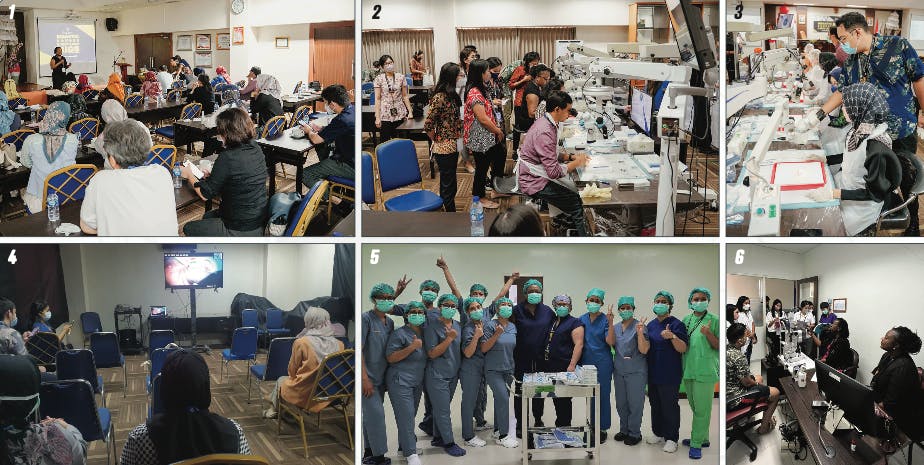
(1) Delivering one of the lectures during the morning didactic session in Bali. (2) Training on a MIGS procedure at a wet lab station as trainees observe. (3) Trainees in a wet lab station. (4) A live surgery viewing room. (5) Celebrating at the end of the last OR day with surgical technician Denise Delrio and the local OR team at the Mangusada Hospital. (6) All 25 surgical patients treated in Bali have achieved satisfactory outcomes.
Further, the program shed light on existing deficiencies within the health care system. Notably, it revealed that selective laser trabeculoplasty has been underutilized due to limited exposure and a lack of equipment. The Cure Glaucoma Foundation is collaborating with Dr. Swamy to return to Bali and introduce the procedure.
Another observation I made in Bali is a need to discuss ways to improve postoperative management of trabeculectomy. To address this, I plan to host an observership at my practice in Dallas for a glaucoma specialist from Udayana University. This will allow the physician to observe postoperative treatment plans for patients over the course of weeks and months, and they will then return to Udayana University to share this knowledge with others.
Haiti
Benjeil Z. Edghill, MD
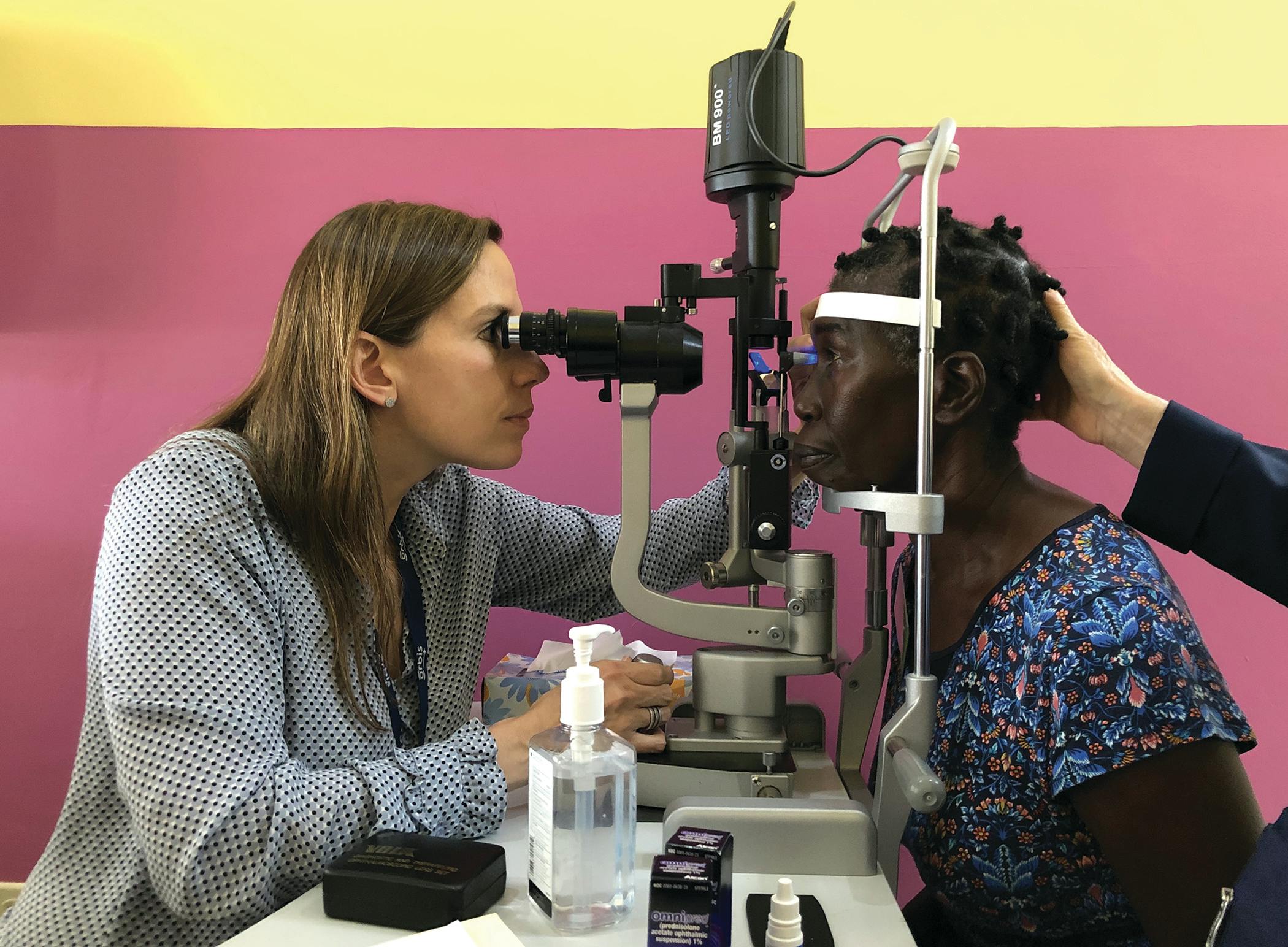
To reach as many people as possible, the Association Haitienne de Développement Humain (AHDH; www.ahdhhaiti.org) sets up clinics in churches and schools in the surrounding communities. The volunteers on average see more than 100 patients per day. We distribute glasses, perform laser procedures, and provide eye drops and treatment for acute and chronic conditions. Surgeries are also scheduled for those in need.
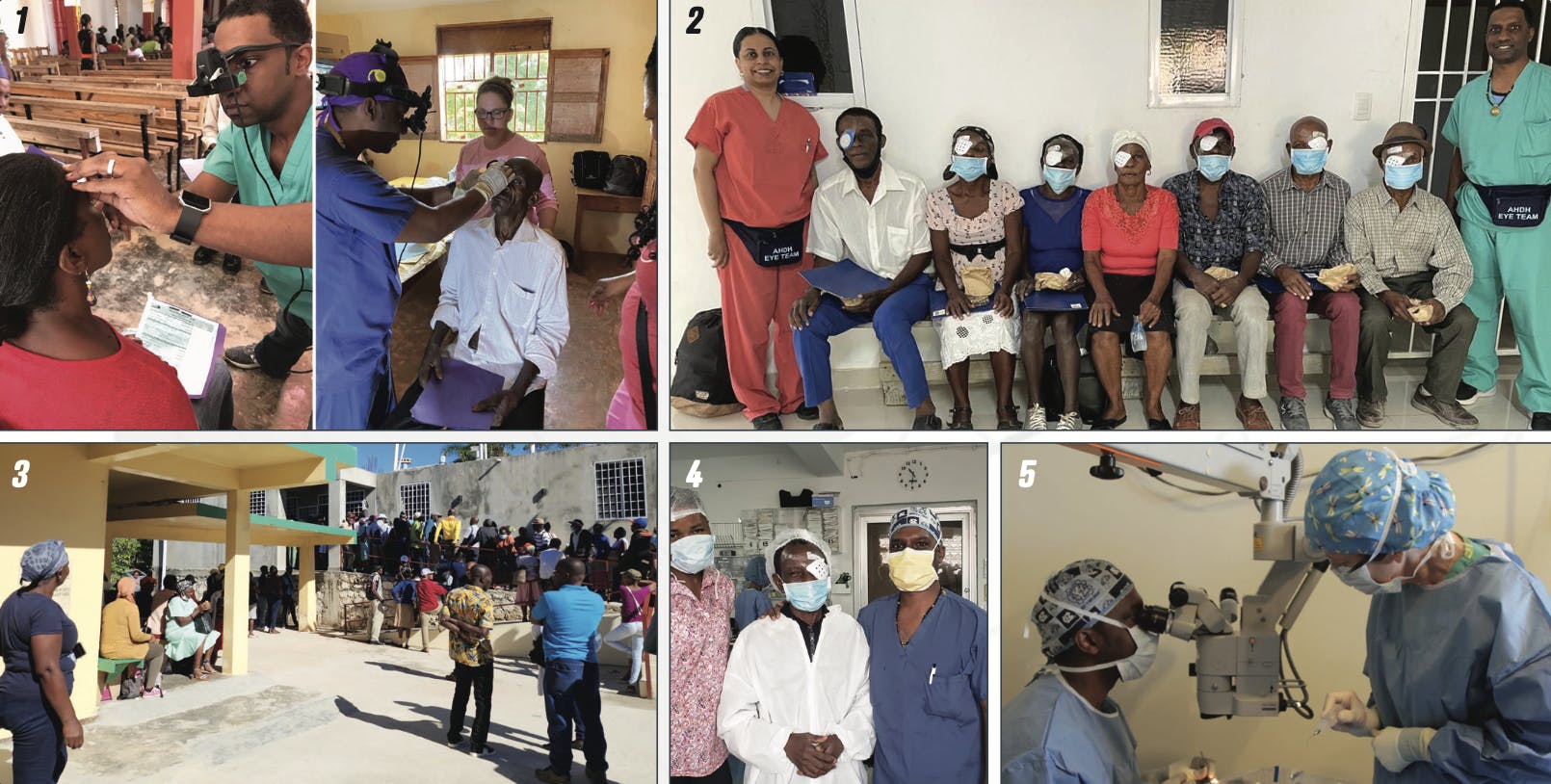
(1) Eye examinations held in a church in La Montagne, Haiti, and at a school in Muzak, Haiti. (2) Anika Michael, MD (head of the ophthalmology team), with some postoperative patients in La Vallèe-de-Jacmel, Haiti. (3) Patients lined up to be seen in the eye clinic. (4) Me and one of the first patients to undergo MIGS in La Vallèe-de-Jacmel. Also pictured is a young woman who previously underwent eye surgery by the mission team. She now volunteers as a translator and circulator in the eye OR and clinic. (5) Operating on a Haitian patient in La Vallèe-de-Jacmel with assistance from a volunteer nurse.
Tamil Nadu, India
Alan L. Robin, MD
I had developed the first portable Nd:YAG laser and tried to bring it to Burma, where angle-closure glaucoma is prevalent. (I had first used it above the Arctic Circle in Alaska.) The day I was to go to Burma, a revolution started. So, I switched gears and instead went to Kathmandu. While there, I met the late Govindappa Venkataswamy, MD—or Dr. V—who founded the Aravind Eye Hospital in Madurai, Tamil Nadu, India in 1976. Dr. V invited me to come to Madurai and start a glaucoma service at the Aravind Eye Hospital.
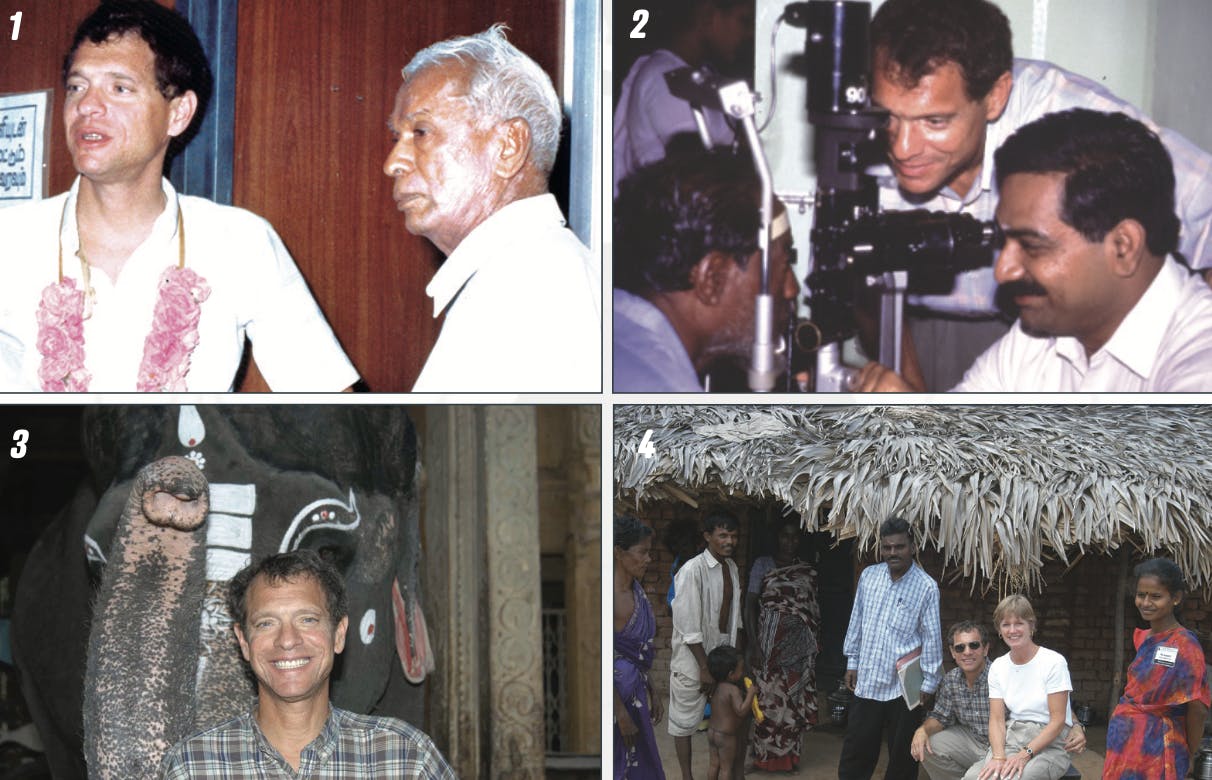
(1) Dr. V, the founder of the Aravind Eye Hospital, and me. (2) Assisting S.R. Krishnadas, DO, DNB, at the Aravind Eye Hospital in 2012. (3) Being blessed by an elephant at the Meenakshi Temple in Madurai, Tamil Nadu. (3) My wife Wendy and I at a village in Madurai, Tamil Nadu, while conducting a prevalence study.
Tanzania
Shawn Gulati, MD, MPH
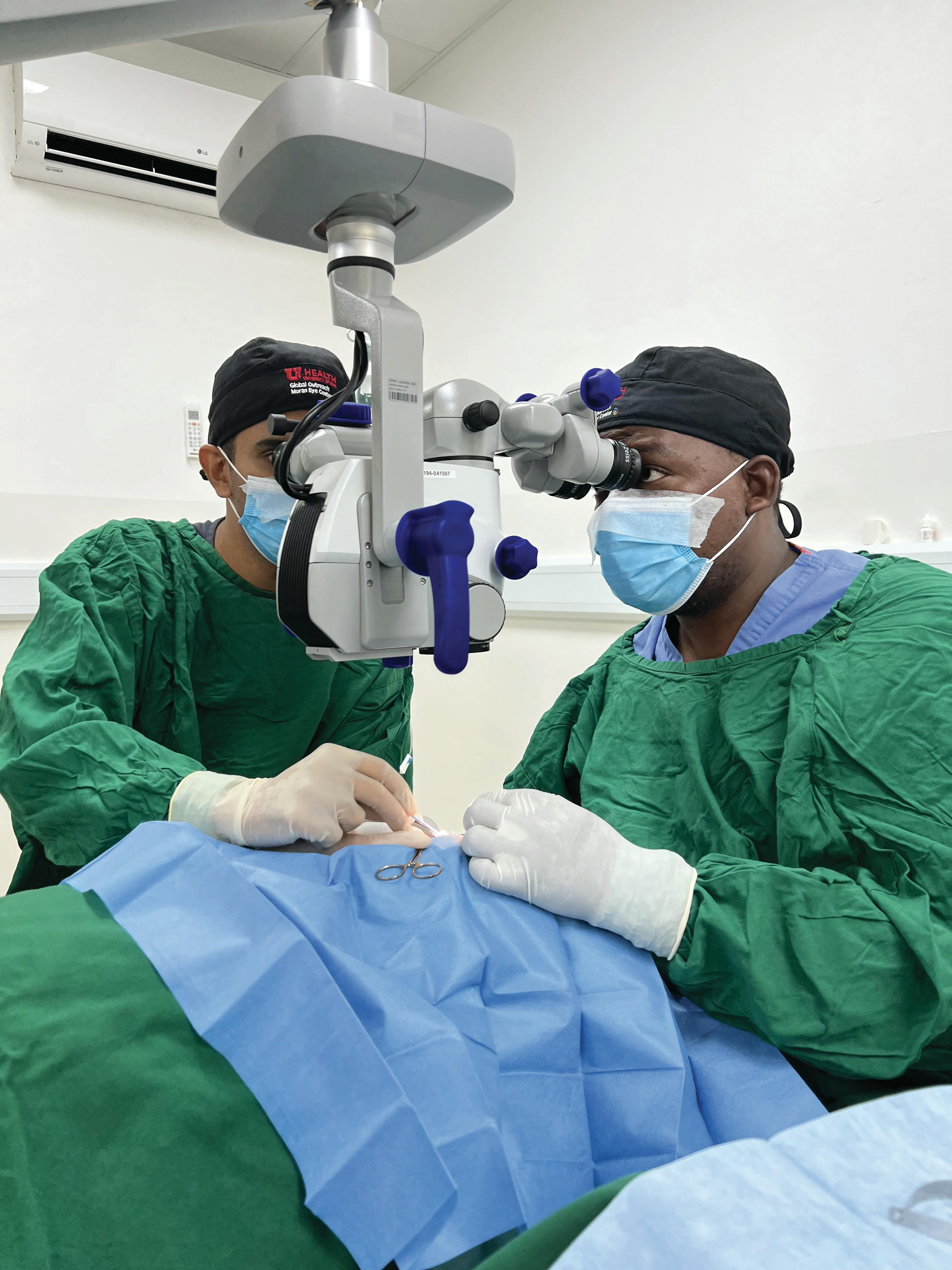
I spent 2 months with the amazing team at Bugando Medical Center in Mwanza, Tanzania. With severe glaucoma rampant in the local patient population, my focus was to teach glaucoma surgery. Here, I am working with James Shimba, MD, to implant a Baerveldt glaucoma implant (Johnson & Johnson Vision). It was a privilege to spend time with the Bugando Medical Center team, and I look forward to returning!
Vietnam
Wallace L.M. Alward, MD
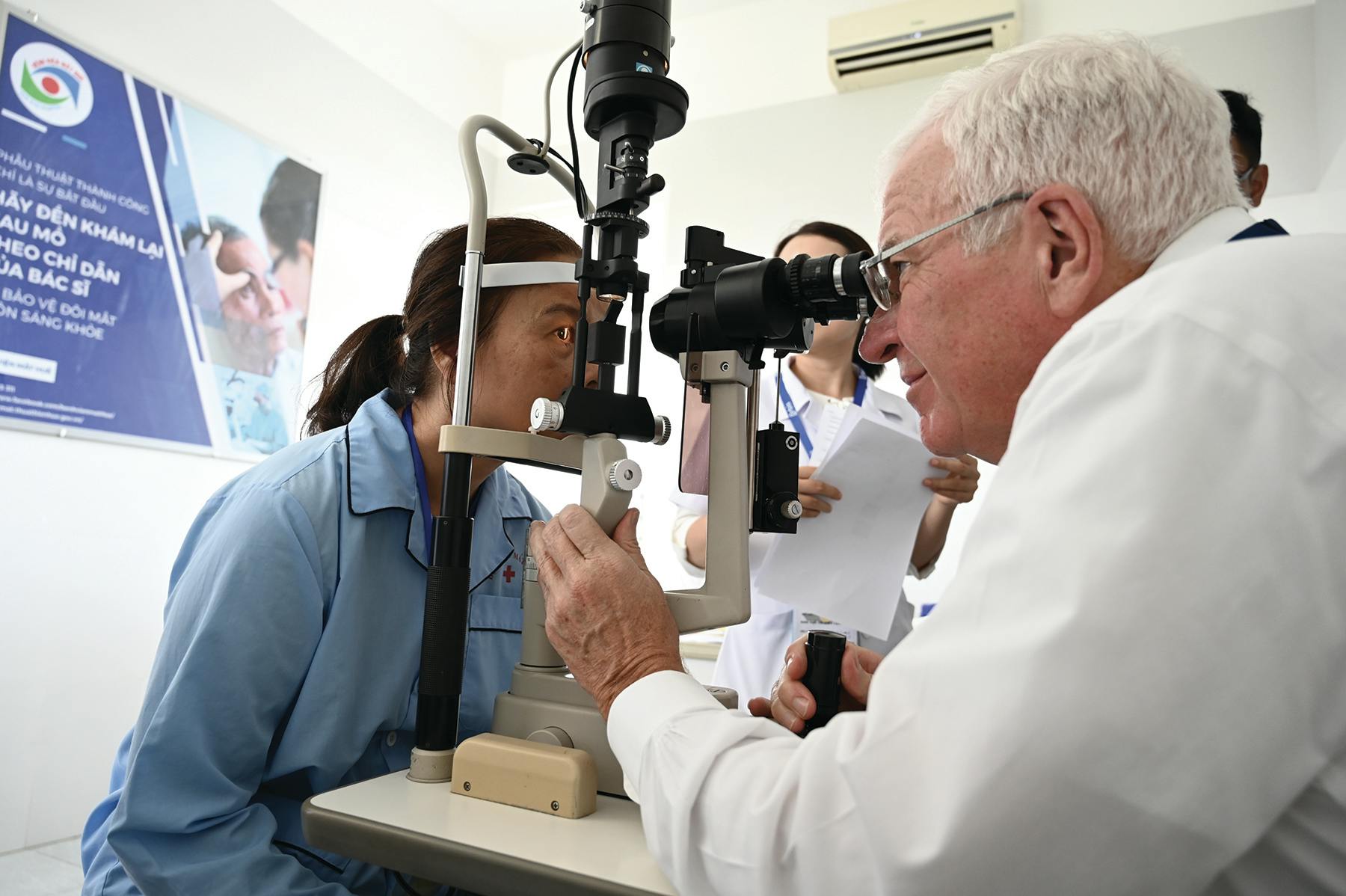
I am pictured here examining a patient who presented with glaucoma at Hue Eye Hospital in Hue, Vietnam, in 2019. This was the first day of a 2-week Orbis Flying Eye Hospital ophthalmic training project.
The Flying Eye Hospital is a fully accredited ophthalmic teaching hospital on board an aircraft. I have volunteered to train ophthalmologists in glaucoma on seven different Flying Eye Hospital projects, including two in Vietnam in 2017 and 2019. I have also been to China, Kenya, Indonesia, and the Philippines with the Orbis Flying Eye Hospital.
While in Hue, I trained two surgeons, both of whom absorbed every word I said and asked very smart questions. You could tell that they truly wanted to learn and that they were going to use this education to take better care of their patients and to teach other surgeons to do the same.
During my trips to Vietnam for Orbis, I worked closely with a local resident ophthalmologist named Tung Hoang, MD, who served as my translator. Dr. Hoang went on to secure a glaucoma fellowship in Sydney, Australia, and later returned to Vietnam to become one of the only fellowship-trained glaucoma specialists in the country. Together, we coauthored a paper, and Dr. Hoang wrote the first glaucoma textbook in Vietnamese.
Jamaica
Annette L. Giangiacomo, MD
I have been volunteering with Orbis to train eye care professionals in glaucoma care and have traveled to Jamaica (as pictured), Cameroon, China, Ghana, and Vietnam. The relationships formed between Orbis Volunteer Faculty members and local clinicians are special, and they empower us all to provide a higher quality of care. I stay in touch with the local doctors I meet during these trips to discuss patient cases, and I am proud to be a part of this community of supportive peers.