Iqbal Ike K. Ahmed, MD, FRCSC: Nate, you have been active within ASCRS’ leadership and have been heavily involved in navigating some reimbursement challenges. This topic has come to the forefront of glaucoma this past year. What are your reflections in terms of where we started and where we have come so far?
Nathan M. Radcliffe, MD: A lot of lessons have been learned. We had a big threat to several glaucoma procedures—goniotomy, canaloplasty, and laser cyclophotocoagulation—from insurance companies. Medicare MACS in particular claimed that there was not enough evidence to support their use. ASCRS, AAO, and AGS pooled together resources, put tons of hours into this fight, and ultimately were successful in getting Medicare to convince the MACS to withdraw their proposed local coverage determination changes.
I made a couple of key observations throughout this experience. One, goniotomy has great prospective randomized controlled trial data; however, many do not know this, so people were writing letters but not citing the paper that showed level 1 evidence for goniotomy.1 Two, canaloplasty does not quite have that level of evidence, and we need to do a better job of generating evidence once we start widely adopting these procedures. Companies that are developing these technologies need to unfortunately put the reimbursement strategy high. With devices and stents, the data are baked in because they cannot get FDA approval without prospective randomized controlled trials. But, with some other procedures, it is possible to get caught in a situation where stronger evidence is needed, and it will take a while to generate once required.
Dr. Ahmed: What recommendation would you give to companies regarding the evidence needed to protect reimbursement for these MIGS procedures?
Dr. Radcliffe: First, a noninferiority study against a technology that has already been shown to be effective, like noninferiority against a stent if that is the market you are competing in—those are great data to have. You can do simpler case control studies—this series underwent this procedure, and others underwent a different procedure, and those two groups were followed prospectively. However, the retrospective, single-arm studies of a technology with no control do not move the needle as far as insurance companies go. We must do better, and ophthalmologists should work with industry. You can usually get a grant to conduct an investigator-initiated trial to study these things. You do not need 150 patients or more—you can do it with 30 or 40 in each group. It is doable. It just takes time. The problem is, by the time you get called out by an insurance company, it is too late to start generating these data.
Arsham Sheybani, MD: Talking about data generation, we know that adding angle procedures to phacoemulsification helps. I do not know if many in the United States are going to be okay with randomizing to phacoemulsification versus phacoemulsification plus a trabecular meshwork–based procedure. What is your take on just doing a prospective case series with an angle procedure alone, with or without phacoemulsification?
Dr. Radcliffe: We like that data just to see that it works and that all the numbers fit. We know they are all roughly similar procedures, but the insurance companies want to see something that they can apply the transitive property to—this is equal to this, this is equal to that. You want to have something approved that you can compare your technology to and at least show noninferiority.
Similarly, with combination MIGS, someone needs to show that doing two MIGS procedures has some value over doing one, and that will not be a hard, even prospective randomized trial. It is easy to explain to patients: “You are already getting the procedure. We can add something.” If we want reimbursement to be solid on that, we must show that it works. That is also our responsibility. I think everyone likes to do what they feel is best for patients, but we also have an obligation to evidence-based medicine.
Dr. Ahmed: There are rumors around these situations, and we hear about industry driving some of these issues and pitting against each other. Do you get a sense of that? Is it time for us to all come together as industry and physicians to say, let’s play well together in the sandbox. Is that something we should be pushing, rather than people fighting on their own and fighting with each other?
Dr. Radcliffe: Absolutely. It is a key message. It is hard to break into a competitive space where one player is dominant and get market share without having something bad to say about the competition. But all these procedures are safe and valuable, and we are a small community. It should be obvious that it will not work to put one procedure down to get another up. You just must show that you have what patients need. Ultimately, we are saving people from losing vision. Reimbursement changes every year. We have seen that one procedure is higher this year, another is higher the next. Focusing on that is not a way to run medicine. It must be patient-centered, and data are a great way to show how we can help patients.
Dr. Sheybani: Can you touch on the patient populations that would be most affected if coverage of these procedures had been cut? For those of us with a young patient population, a lot of whom maybe underserved, angle surgery is sometimes the best way to go.
Dr. Radcliffe: Stents are not approved for my patients. Don’t ask me why. There is great evidence, but New York Medicaid does not cover stents, so all I have for the angle is goniotomy and canaloplasty. When those procedures were being threatened due to a perceived lack of data, my patients were going to suffer. I practice in a low health literacy area. Patients do get confused about their drops. These MIGS procedures are critical to preserve vision. It was horrifying to me—I felt like it was not a just situation that we were facing.
Dr. Sheybani: We need to thank you, because you have been fighting the fight.
Dr. Radcliffe: We do what we can. We are a community. I will make a plug to give back to your society—they are looking out for us and for our patients. All the societies were helpful. If you have a favorite one, support them and recognize that they are supporting you and your patients.
Editor’s note: This interview was adapted from an episode of MIGS Unplugged. Access the original interview below.
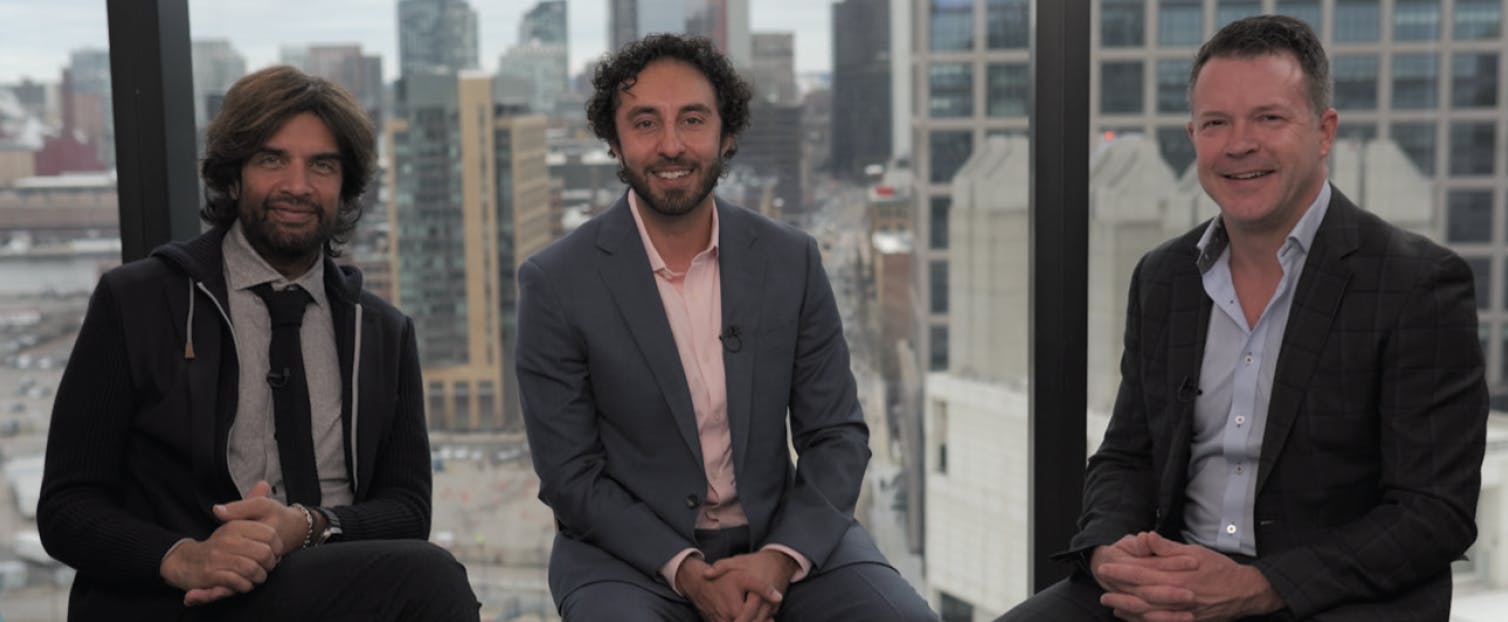
MIGS Unplugged: Reflections on the Reimbursement Landscape
1. Falkenberry S, Singh IP, Crane CJ, et al. Excisional goniotomy vs trabecular microbypass stent implantation: a prospective randomized clinical trial in eyes with mild to moderate open-angle glaucoma. J Cataract Refract Surg. 2020;46(8):1165-1171.