Subconjunctival filtration procedures can be highly effective in achieving significant IOP reductions in patients with moderate to severe glaucoma, but they also often result in pressure fluctuations. Postoperative hypotony and IOP above the target range can both result in vision-threatening complications. Although several techniques can be used to modulate aqueous flow following surgery, they lack precision and reversibility.
A novel treatment designed to address this challenge is the Calibreye System (Myra Vision; not yet available), a titratable aqueous shunt with valve-controlled channels that can be reversibly and repeatedly opened or closed using an office-based transcorneal laser. The ability to titrate outflow resistance is intended to minimize the risk of early hypotony following surgery and optimize long-term IOP outcomes.
Currently in the development stage, the Calibreye device is undergoing clinical evaluation and is not approved for sale anywhere in the world.
PRINCIPLE OF OPERATION
The Calibreye System features three flow channels that communicate between the anterior chamber and the subconjunctival space, resulting in the creation of a filtering bleb. Two of the three flow channels are controlled by valves made of nitinol, a nickel-titanium alloy, that are situated in the anterior chamber. These valves can be opened or closed using a slit-lamp–mounted green laser through the peripheral cornea. This design provides reversible, titratable resistance to aqueous humor outflow.
DEVICE SPECIFICATIONS
The Calibreye device is composed of nitinol and silicone, both well-established materials with a history of use in intraocular glaucoma implants (Figure 1). The body of the shunt is 1.6 mm wide and 0.3 mm thick and is designed to be implanted through a 1.6-mm keratome incision. The soft, low-durometer silicone, coupled with the low-profile dimension, was selected to conform to the globe and minimize the risk of erosion.
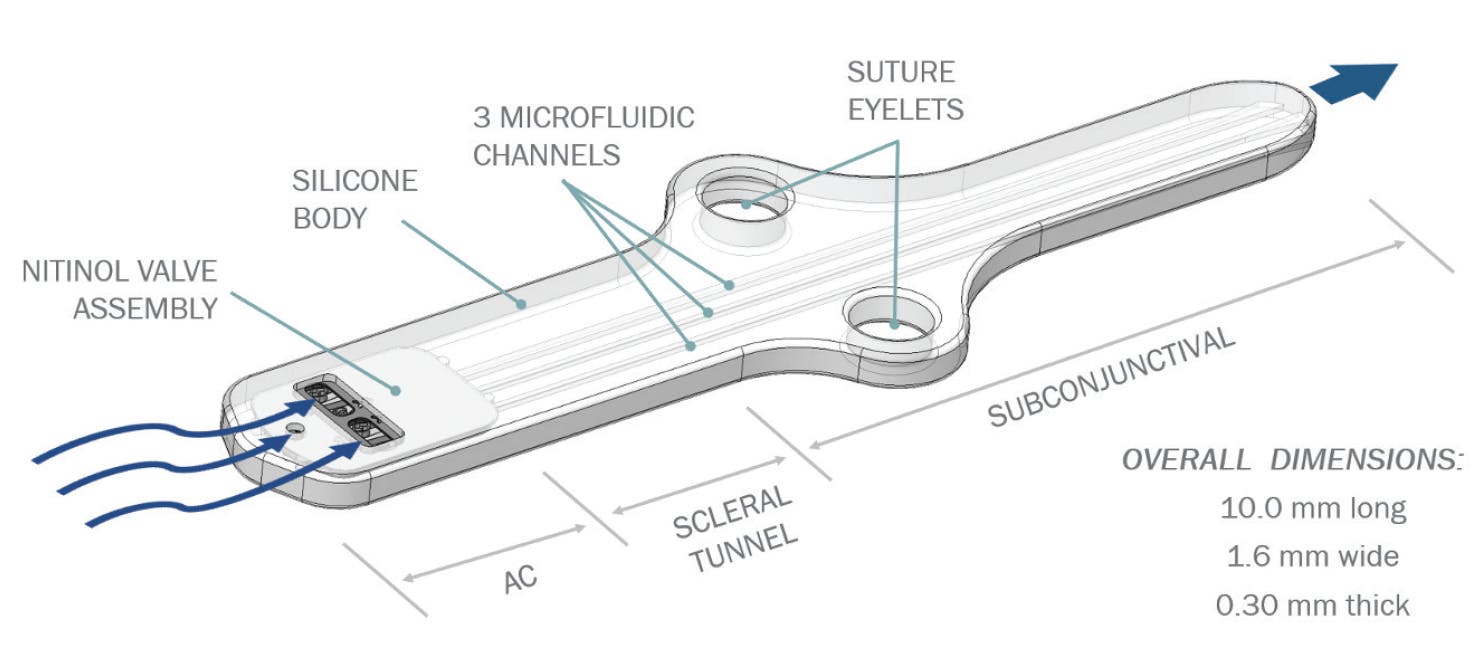
Figure 1. The Calibreye System is a novel titratable aqueous shunt composed of nitinol and silicone. The material, coupled with the low-profile dimension, was selected to conform to the globe and minimize the risk of erosion.
A nitinol valve assembly on the proximal end of the device contains two valves, which control fluid flow through the two outer channels. Each valve is controlled by two actuators, one that opens the valve and one that closes the valve, allowing for reversible, on/off control of aqueous flow. These valve actuators are composed of nitinol with shape memory properties, which can be repeatedly actuated with light energy from a green laser at the slit lamp. An indicator window on the valve assembly provides visual confirmation to the user of the open/closed state.
The overall length of the shunt is 10 mm, with the channel outlets positioned approximately 8 mm posterior to the limbus to create a posterior bleb. There are three microfluidic channels within the silicone body. The central, standard channel is always open to provide immediate aqueous flow. The outer medium and large channels are each controlled by a valve. By modulating the positions of the valves, a total of four device settings can be achieved, with decreasing hydrodynamic resistance: baseline (standard channel open), moderate, high, and maximal (Figure 2).
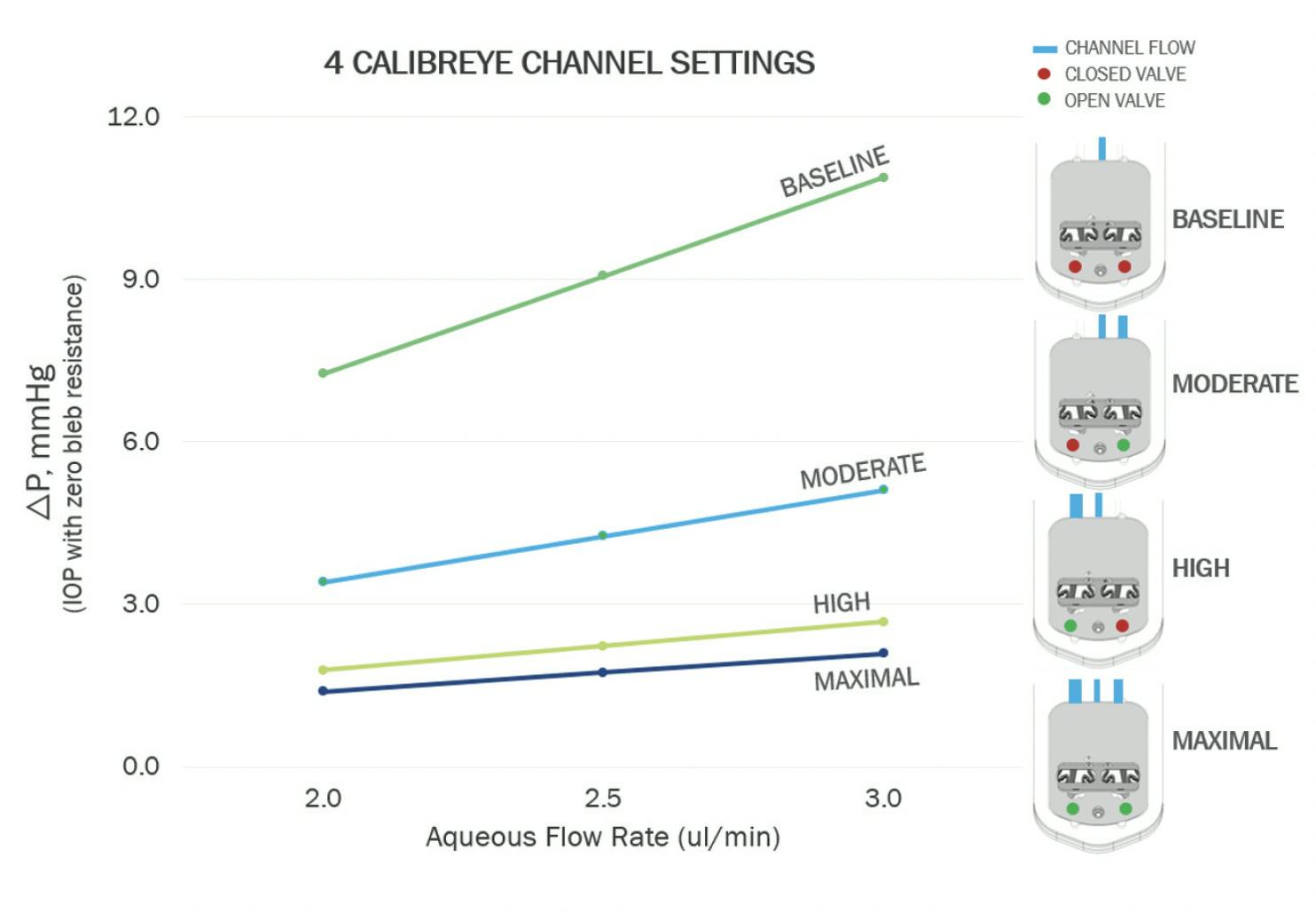
Figure 2. By modulating the positions of the channel valves, a total of four device settings can be achieved, with decreasing hydrodynamic resistance.
SURGICAL TECHNIQUE
The Calibreye System is implanted through an ab externo approach under local anesthesia and with the use of a traction suture. Currently, the investigational surgical technique begins with the creation of a 6-mm peritomy in the superotemporal or superonasal quadrant, followed by blunt dissection of a deep sub-Tenon pocket. Three sponges soaked in mitomycin (0.2–0.4 mg/mL) are inserted into the sub-Tenon pocket and left in place for 2 to 5 minutes depending on surgeon preference on a case-by-case basis.
A 1.6-mm keratome is used to create a two-plane scleral tunnel starting 2.5 mm posterior to the limbus and ending parallel to the iris plane. With a custom instrument, the Calibreye implant is advanced into the scleral tunnel until the valve targets of the implant are visible through the peripheral cornea.
After flow through the baseline channel is confirmed, the implant is secured to the sclera with two 10-0 nylon sutures through the suture eyelets. The Tenon tissue and conjunctiva are closed after the distal tail of the implant is confirmed to be free of Tenon or other obstruction. A bleb should start to form after Tenon and conjunctival closure, and no leaks should be observed.
LASER TITRATION TECHNIQUE
A green laser (514–532 nm) mounted to a slit lamp is used to actuate the device valves and titrate aqueous flow. Four actuator targets are visible through the peripheral cornea (Figure 3); two open or close the medium channel, and two open or close the large channel. The aiming beam is focused first on the desired actuator target of the implant. A single pulse of 100 ms, 200-μm spot diameter, and 300-mW power is then applied to change the position of the valve. The new valve position is visually confirmed with the indicator window. The patient’s IOP is monitored for 30 to 60 minutes, and further adjustments are made as needed to increase or decrease IOP.
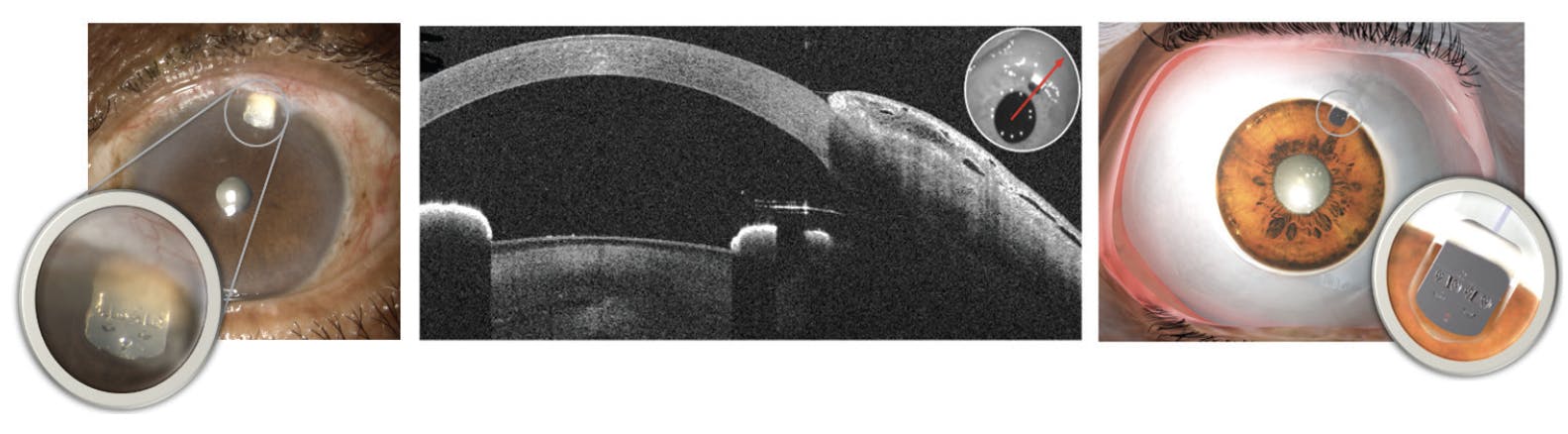
Figure 3. A green laser mounted to a slit lamp is used to actuate the device valves and titrate aqueous flow. Four actuator targets are visible through the peripheral cornea.
RESEARCH
Benchtop Characterization
The Calibreye System has been tested in the laboratory over a range of laser and flow conditions to ensure reliable and consistent performance. The hydrodynamic resistance of the device has been calculated based on measured liquid mass flow through the shunt at each channel setting under a gravimetric constant pressure head of 20 mm Hg, consistent with the American National Standard Institute’s standard for implantable glaucoma devices.1 These experimentally derived resistance values align with theoretical predictions and are well controlled in the manufacturing process (Figure 4).
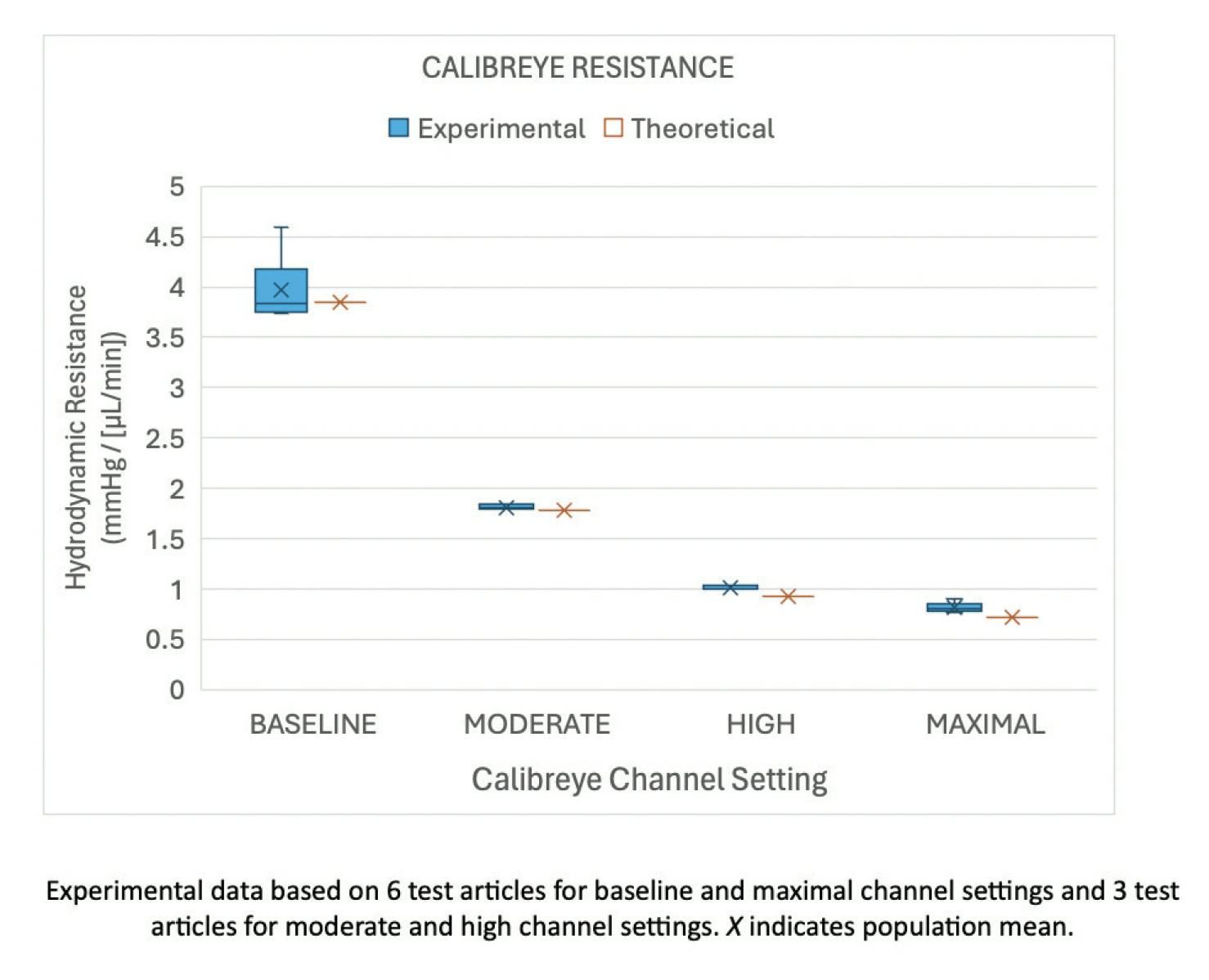
Figure 4. The device has been tested over a range of laser and flow conditions to ensure reliable and consistent performance. The experimentally derived resistance values align with theoretical predictions and are well controlled in the manufacturing process.
Preclinical Testing
The safety of the device has been evaluated for up to 6 months in rabbit eyes, and clinical examinations and histopathology have shown that the device is well tolerated. In addition, repeated actuation of the nitinol valves was confirmed in 14 rabbit eyes, which received repeated laser adjustments at 7, 14, and 30 days. The ability of the laser to open and close the valves was assessed by visual inspection and visualization of fluorescein egress through channels after valves were opened.
Clinical Development
Patients with open-angle glaucoma are currently being enrolled in clinical feasibility studies of the Calibreye System. The study objectives are to evaluate the safety and efficacy of the device and to identify the optimal titration regimen. The primary efficacy endpoint will be based on 12-month follow-up data.
CONCLUSION
The Calibreye System is a promising technology that may safely allow more aggressive IOP reduction for patients with moderate to severe glaucoma. The ability to modulate outflow could enable the delivery of more personalized care while minimizing postoperative complications.
1. ANSI Z80.27-2014: American National Standard for Ophthalmics – Implantable Glaucoma Devices. Alexandria, VA: The Vision Council; 2019.