Glaucoma drainage implants can be very effective for lowering IOP in patients with glaucoma, but postoperative hypotony is a potential and dreaded complication associated with their use. The ability to control pressure fluctuations following surgery can help to minimize this concern. A drainage device that is titratable puts IOP control in the hands of the surgeon from postoperative day 1, thereby serving to prevent hypotony and better manage IOP.
A NEW TITRATABLE SYSTEM
A relatively new device designed to offer such IOP control is the EyeWatch system (Rheon Medical; not available in the United States). This adjustable glaucoma drainage implant allows surgeons to modify IOP noninvasively following the implantation of a nonvalved tube shunt. The EyeWatch device contains a magnetic disc and commercial ruby ball bearings surrounding a compressible tube, which is connected to a glaucoma drainage device at the time of surgery (Figure 1). The original drainage device used with the EyeWatch was the Baerveldt Glaucoma Implant (Johnson & Johnson Vision); however, Rheon has since also produced its own plate called the EyePlate.
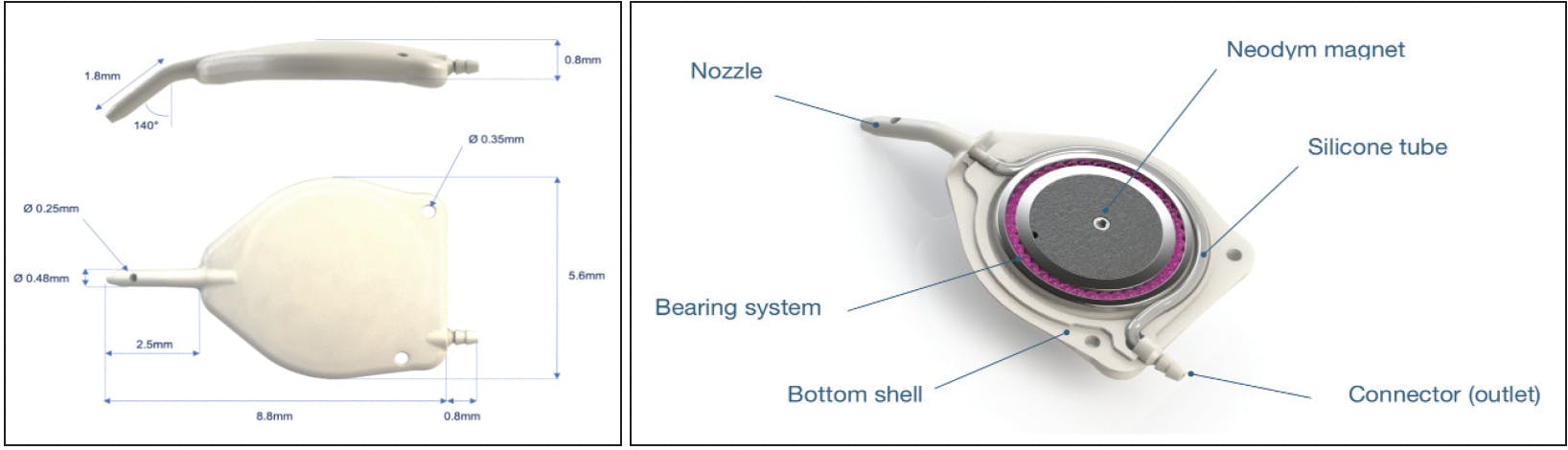
Figure 1. The EyeWatch device contains a magnetic disc and commercial ruby ball bearings in the center and an attached tube, which is connected to a tube shunt at the time of surgery.
Surgeons can adjust the EyeWatch noninvasively by rotating the internal magnetic disc with an external control unit, the EyeWatch pen. One end of the pen contains a magnet, and the other end displays a compass that indicates the position of the EyeWatch. The action of rotating the pen around the circumference of the implant compresses or decompresses the drainage tube to adjust aqueous flow and control IOP (Figure 2).
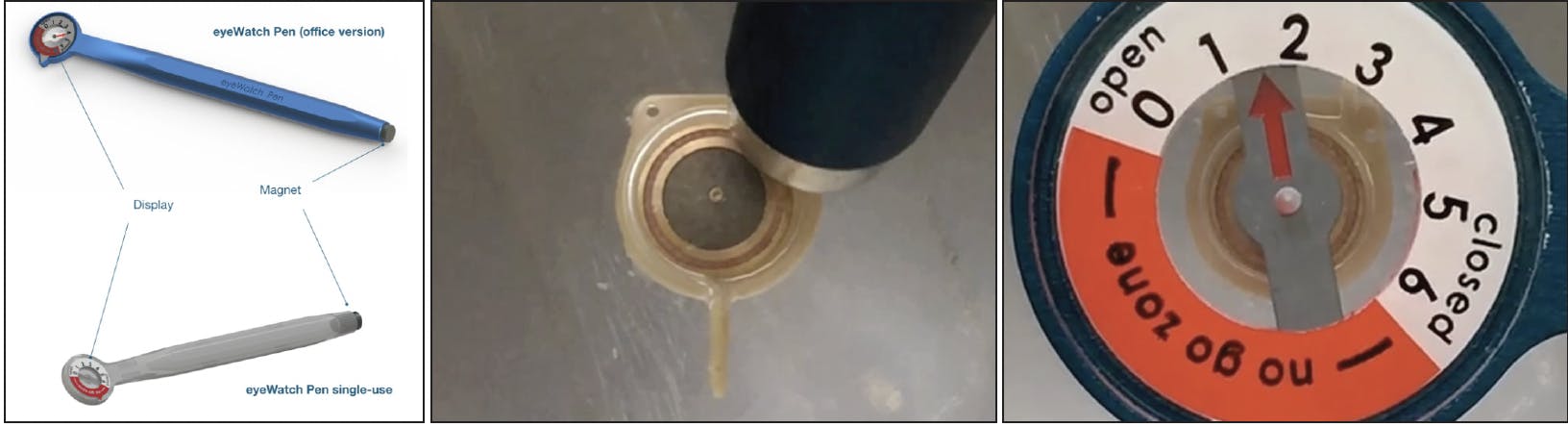
Figure 2. Surgeons can adjust the EyeWatch noninvasively by rotating the internal magnetic disc with an external control unit, the EyeWatch pen. One end of the pen contains a magnet, and the other end displays a compass that indicates the position of the EyeWatch.
DEVICE SPECIFICATIONS AND IMPLANTATION
The EyePlate is made of a flexible material and is available in two sizes, the EyePlate 200 (200 mm2 surface area) and EyePlate 300 (300 mm2 surface area; Figure 3). The EyePlate 200 does not have to be placed underneath extraocular muscles. The tube itself has an external diameter of about 480 μm, compared with 650 μm for the Baerveldt. The relatively small tube should theoretically result in less endothelial cell damage.
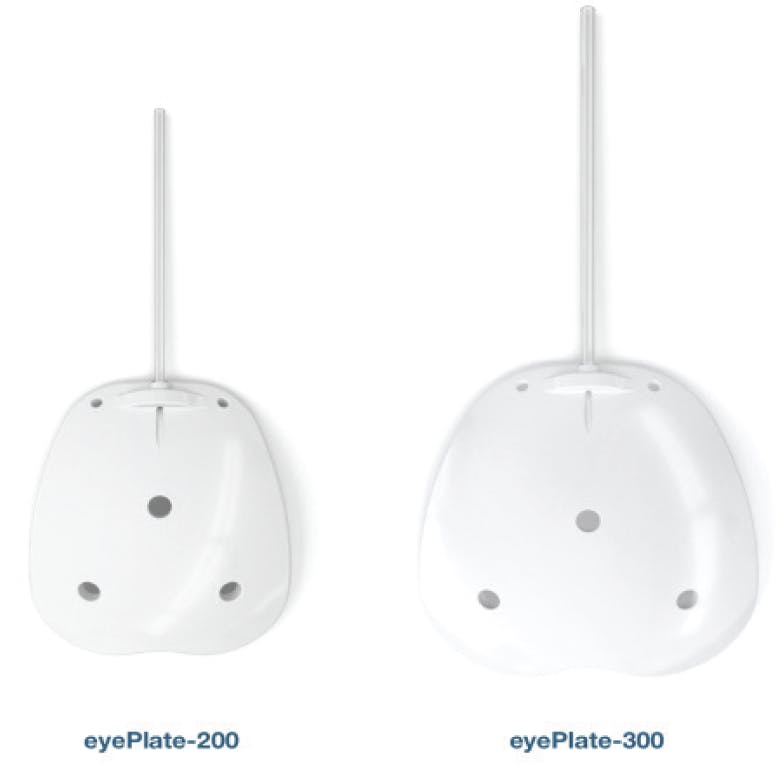
Figure 3. The EyePlate attaches to the EyeWatch and is available in two sizes, the EyePlate 200 (200 mm2 surface area) and EyePlate 300 (300 mm2 surface area).
The EyeWatch system is composed of a substantial amount of hardware, and surgeons must account for certain factors when considering this option. The surgery requires more time than comparable procedures because two devices (the plate and the magnet system) must be secured to the sclera with sutures. In addition, the patient’s anatomy must permit the placement of a large, complex device (Figure 4).
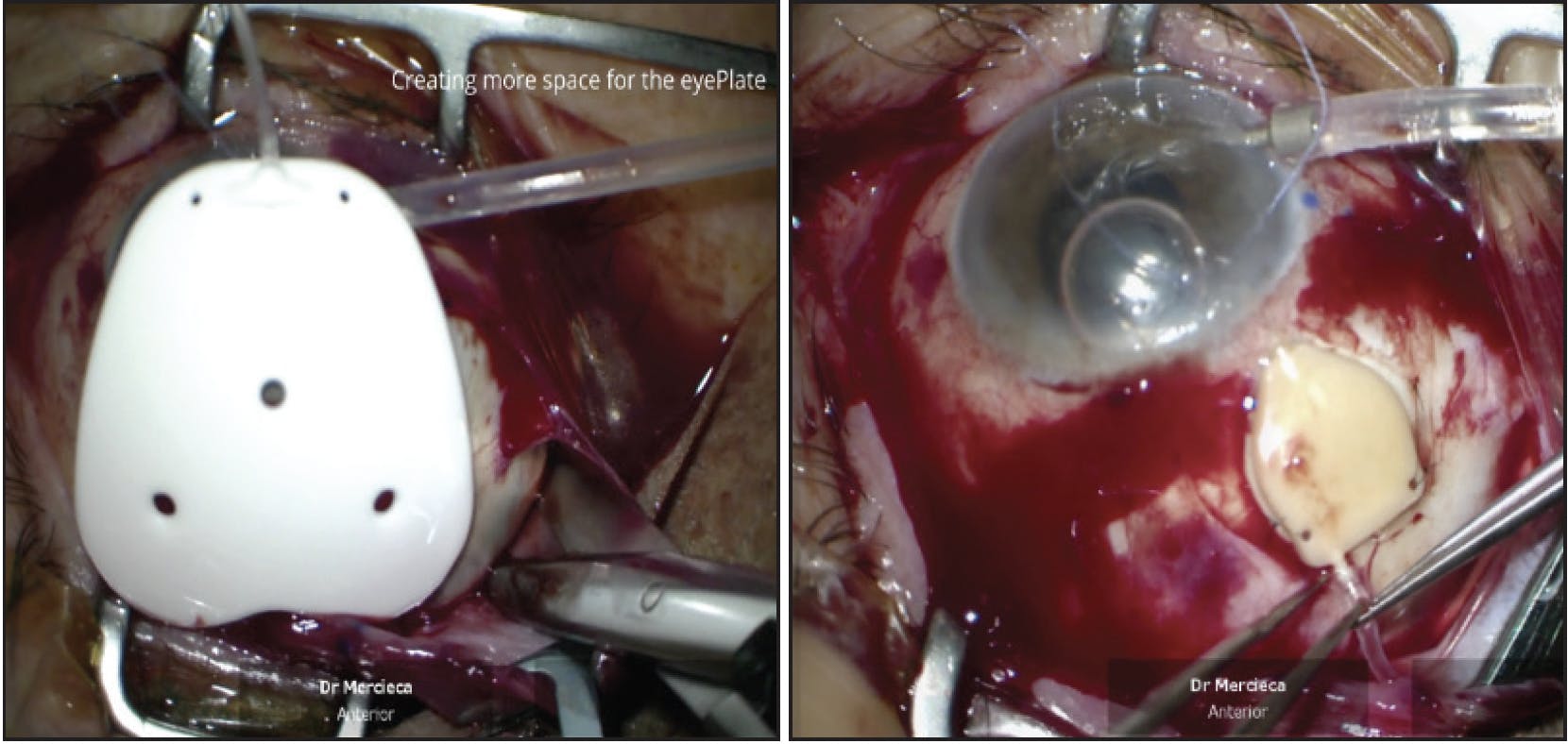
Figure 4. The EyeWatch system is composed of a substantial amount of hardware, and the surgery requires more time than comparable procedures because the plate and the magnet system both must be secured to the sclera with sutures.
One approach to help create enough space and produce a low bleb profile is to perform a partial sclerectomy for placement of the device within a scleral bed, although this method is invasive and takes time. An alternative option is to scrape the sclera with a “hockey blade” and ensure that the device sits nicely on the surface of the eye. It is important to cover the device with a patch graft, such as fascia lata, pericardium, sclera, or other material (see Watch Now).
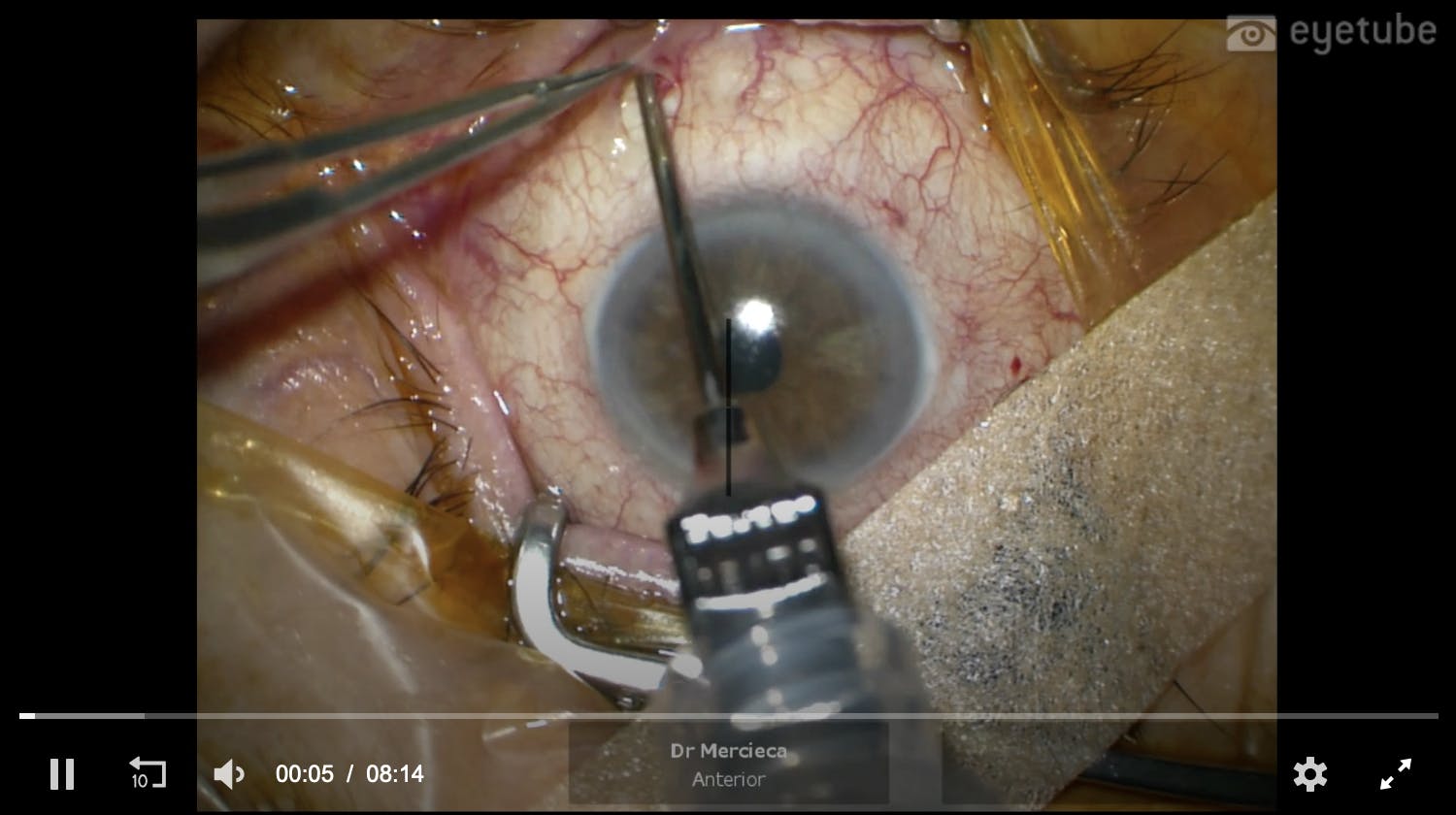
Eyeplate and Eyewatch Glaucoma Drainage Device Implantation
Once the tube has been implanted, it should be compressed, or closed, to allow higher IOP on postoperative day 1. It can then be titrated to dial down the pressure as needed following the initial postoperative period. Ultimately, the IOP will also be affected by factors such as aqueous humor production and capsule porosity.
POTENTIAL ISSUES
The magnetic principle of the EyeWatch must be kept in mind. The implant is lightweight and susceptible to flipping on the table when in proximity to ferromagnetic surgical instruments. One can use a cotton swab with ointment rather than metal forceps to manipulate the EyeWatch into place. Nonferromagnetic forceps are also being developed to overcome this obstacle.
It is also important to note that the EyeWatch is an MRI-conditional device. Although it is relatively safe for a patient with the implant to undergo an MRI, their IOP must be checked after any head scanning because adjustments may be required.
INITIAL CLINICAL RESULTS
An original study assessed the safety and efficacy of the EyeWatch compared to the Ahmed Glaucoma Valve (New World Medical) in 21 patients over 2 years.1 After 12 months, patients who received the EyeWatch had a mean IOP that was as low or slightly lower than those who received the Ahmed Glaucoma Valve, and the EyeWatch group required fewer medications. In the EyeWatch group, IOP decreased from 27.3 ±7.0 mm Hg on 2.9 ±0.8 glaucoma medications at baseline to 12.1 ±1.8 mm Hg on 0.2 ±0.4 medications at 12 months. Results from regular follow-up visits showed that patients with the EyeWatch maintained slightly lower IOPs over 12 months.
In a 2-year prospective study of 42 patients who received the EyeWatch, mean IOP was 11.5 mm Hg at 24 months.2 A total of 87% of patients maintained an IOP within the target range (5–19 mm Hg), and 51% of patients maintained an IOP within the target range without medication. No patients experienced hypotony, and average endothelial cell loss was 5.5%.
The 1-year outcomes of the first five cases performed at the University Eye Hospital Bonn in Germany showed that IOP remained low for all patients over 12 months.3 Mean IOP was reduced from 34.6 mm Hg (range, 23–45 mm Hg) preoperatively to 12.2 mm Hg (range, 9–18 mm Hg) postoperatively, representing a mean IOP reduction of 60%. Four of the five patients received multiple pressure adjustments with the EyeWatch pen in the first year after surgery, including one for elevated IOP after an MRI scan.
CONCLUSION
Titratable devices offer advantages for IOP control, but their use entails certain considerations. The current EyeWatch system requires two separate devices to be placed in the eye, and the magnetic component can cause issues, such as pressure changes following an MRI scan. Other comparable tube shunt devices are available, such as the Paul Glaucoma Implant (Advanced Ophthalmic Innovations; CE Mark and FDA approval pending), which features a small tube similar to that of the EyeWatch and, although not titratable, yields relatively reproducible values in my experience. The Calibreye System (Myra Vision; CE Mark and FDA approval pending) could be easier to implant, offering an efficient and reliable option for titration using an argon laser on a slit lamp.
Postoperative hypotony is always a concern with tube shunt surgery, and the EyeWatch certainly offers surgeons an option for noninvasive, titratable IOP control, albeit with some caveats.
1. Roy S, Villamarin A, Stergiopulos C, et al. Comparison between the EyeWatch device and the Ahmed Valve in refractory glaucoma. J Glaucoma. 2020;29(5):401-405.
2. Roy S, Mermoud A. Efficacy and safety of an adjustable glaucoma drainage device (EyeWatch system) for refractory glaucoma: a 2-year prospective study. J Glaucoma. 2024;33(2):132-138.
3. Weber C, Hundertmark S, Holz FG, Mercieca K. Clinical results of the EyeWatch system: 1-year outcomes. Article in German. Ophthalmologie. 2024;121(4):298-307.