Uveitis-glaucoma-hyphema (UGH) syndrome can present a unique surgical challenge in pseudophakic eyes. Diagnosis and glaucoma management receive much of the attention in this situation, but the durable resolution of UGH syndrome frequently hinges on choosing an appropriate IOL and fixation strategy.
Although IOL-induced UGH syndrome is classically associated with sulcus-fixated one-piece acrylic IOLs, subluxated IOLs, and malpositioned IOLs,1 the complication may also occur when the lens implant is fully within the capsular bag.2 Proposed mechanisms for the development of the latter scenario include iris chafing in the setting of severe pseudoexfoliative pseudophacodonesis and asymmetric capsular fibrosis with a calcific Soemmering ring, which creates focal points of iris contact.2
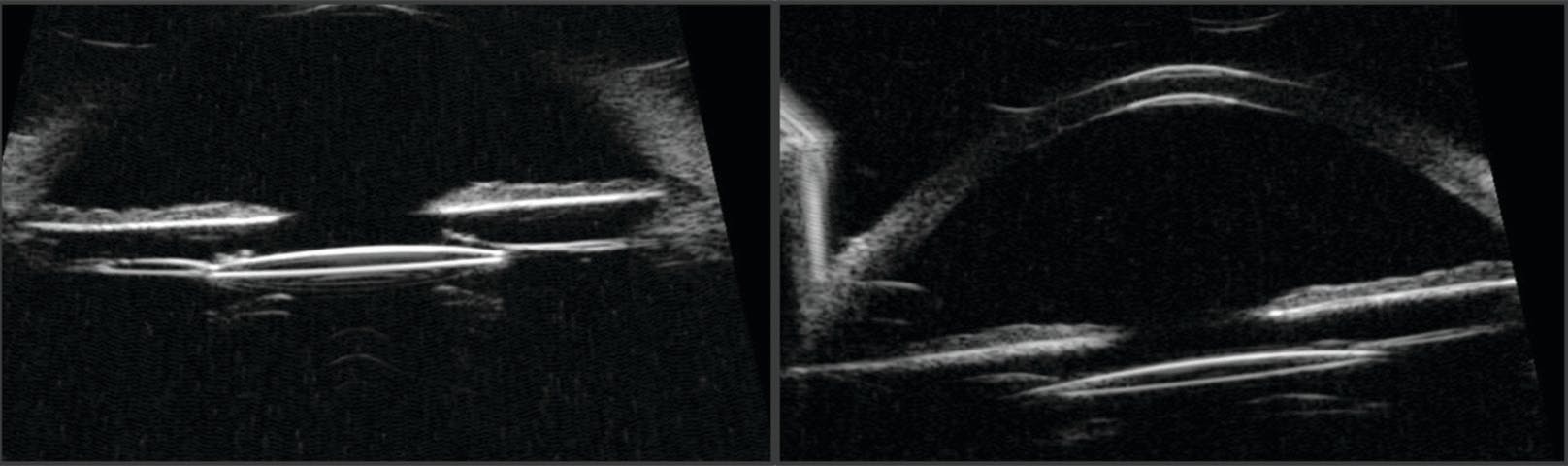
We have recently encountered cases of in-the-bag UGH syndrome resulting from subtle pseudophacodonesis in patients with dead bag syndrome (DBS). First described by Samuel Masket, MD, DBS is characterized by late IOL dislocation due to a capsular bag that lacks sufficient structural integrity to provide long-term support.3-5 In eyes with DBS, the diaphanous, floppy, and sometimes splitting capsule may result in zonulopathy and pseudophacodonesis. Peripheral dislocation of the IOL haptics through the equator of the capsule may also occur, particularly if the bag splits spontaneously. Preoperatively, ultrasound biomicroscopy (UBM) can be a critical step in assessing bag integrity, IOL position/tilt, and a calcific Soemmering ring as possible etiologies of UGH syndrome.
This article presents a case of in-the-bag UGH syndrome secondary to DBS and highlights key points that can help guide the surgical management of these complex cases.
CASE PRESENTATION
A 75-year-old pseudophakic patient was referred for an evaluation of recurrent vitreous hemorrhage of unknown etiology. The patient had undergone uncomplicated cataract extraction with placement of a posterior chamber one-piece acrylic IOL nearly 20 years earlier. Prior careful retinal evaluations had identified no definitive source of vitreous hemorrhage.
On examination, the IOL was in the capsular bag, which exhibited minimal to no fibrosis (Figure 1A). Retroillumination at the slit lamp revealed peripheral iris transillumination defects at the 2 and 8 clock positions (Figure 1B), raising clinical suspicion that the one-piece acrylic IOL was in the sulcus or UGH syndrome had developed. UBM confirmed that the IOL was in the bag without visible tilt or evidence of prominent iris chafing induced by capsular fibrosis or Soemmering ring material (Figure 2).
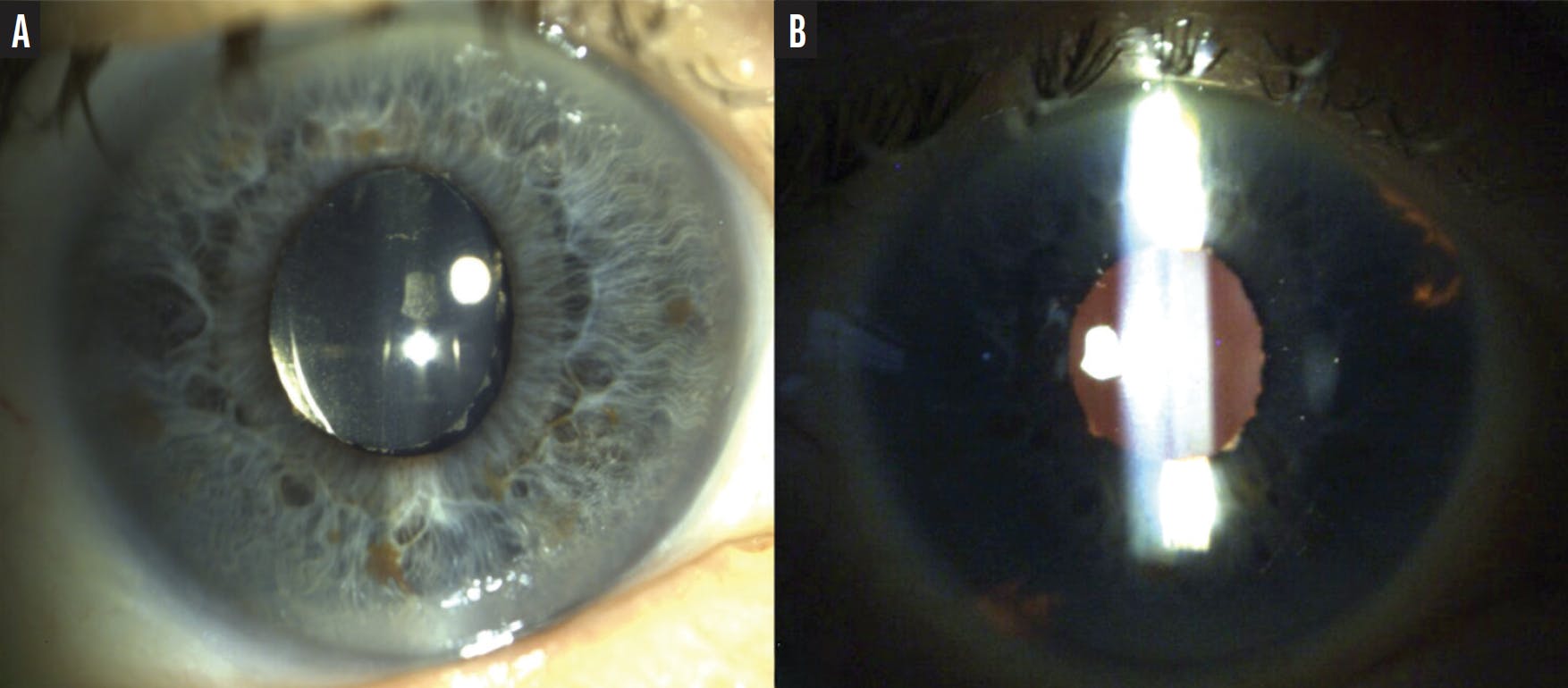
Figure 1. Nearly 20 years after cataract surgery, a slit-lamp examination found minimal to no capsular fibrosis (A). Retroillumination revealed iris transillumination defects consistent with chronic iris chafing (B).
INITIAL SURGICAL STRATEGY: REPOSITIONING OR REMOVAL?
The surgical management of UGH syndrome in pseudophakic eyes begins with a critical assessment of whether the existing IOL can be safely salvaged. This determination depends on the integrity of the capsular bag, the feasibility of achieving durable posterior fixation, and the likelihood that repositioning will definitively eliminate iris contact.
If the capsular bag seems to be intact, lasso fixation or repositioning may be considered. Any attempt at IOL preservation, however, should ensure full capsular overlap of the haptics and posterior fixation of the lens to avoid sulcus fixation of a one-piece IOL. In addition, asymmetric fixation causing tilt and/or ciliary body compromise may increase the risk of persistent or recurrent UGH syndrome. Adequate capsular fibrosis and minimal perioperative tilt should be confirmed when repositioning a one-piece acrylic IOL.
INTRAOPERATIVE COURSE: A DEAD BAG DECLARES ITSELF
In the case presented earlier, an initial attempt was made to reposition the IOL using the lasso technique while preserving the capsular bag. During manipulation, tension split the capsular bag, causing the suture to slip along the haptic (a common occurrence in DBS) and confirming the bag’s nonviability (Figure 3). At that point, the decision was made to remove the entire capsular bag–IOL complex and proceed with secondary IOL placement via scleral suture fixation.
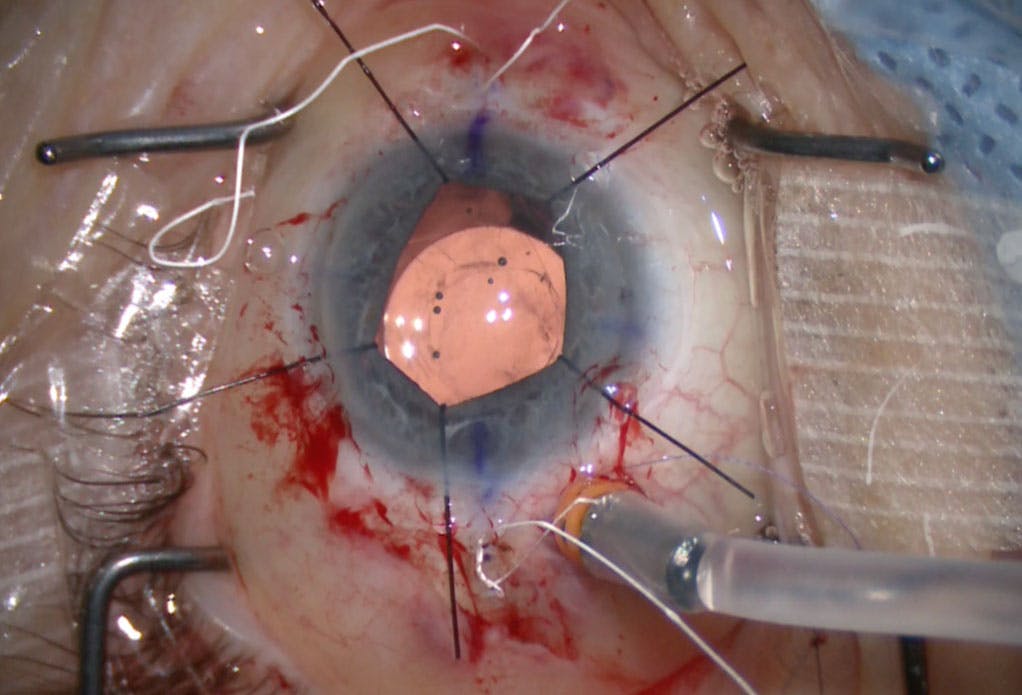
Figure 3. An intraoperative photograph demonstrated failure of the capsular bag during attempted IOL repositioning via a lasso technique and confirmed nonviability of the capsule to hold fixation.
In our practice, we have learned from cases such as this one to resist the temptation to reposition a dead bag. Early recognition and decisive IOL removal can reduce operative morbidity.
SECONDARY IOL SELECTION AND FIXATION
After explantation of the original IOL, an enVista Toric MX60ET IOL (Bausch + Lomb), selected to address the patient’s high corneal astigmatism, was implanted using pars plana fixation (Figure 4; off-label use). There are case reports of UGH syndrome with this lens platform and approach,6 but we suspect the incidents were due to overly anterior suture fixation of the IOL. We recommend placing the sutures 3 mm posterior to the limbus, rather than the more conventional 2 mm, to minimize the risk of continued contact between the iris and ciliary body. In our experience, a stable, posteriorly fixated optic that avoids such contact is a key determinant of success in these eyes.
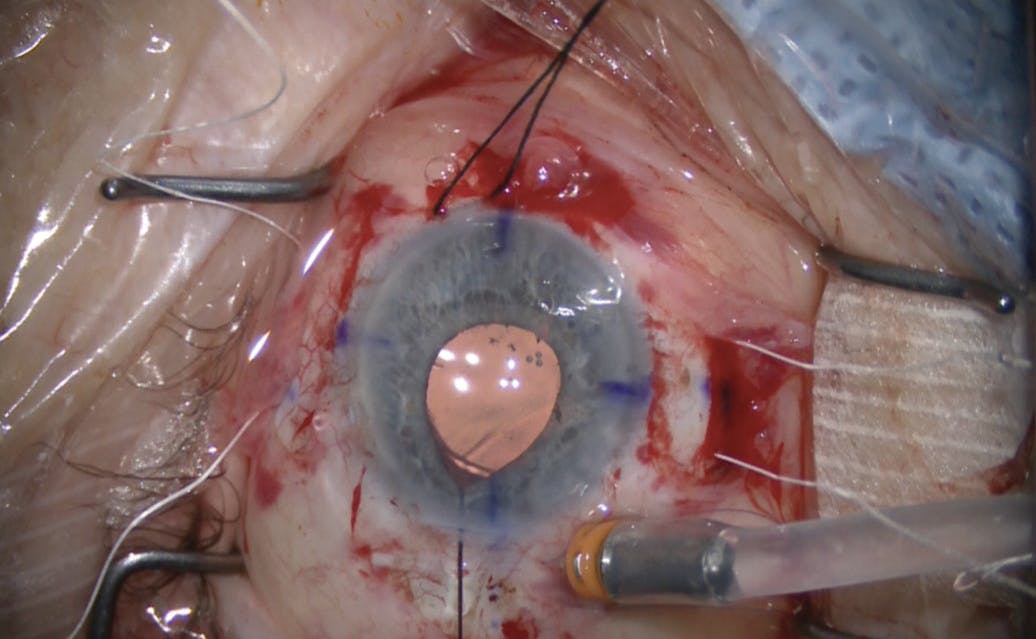
Figure 4. Postoperative appearance of a posteriorly sutured toric IOL showed excellent centration and clearance from the iris.
ALTERNATIVE FIXATION OPTIONS
Sutureless intrascleral haptic fixation (ISHF), such as the Yamane technique,7 are viable alternatives in select cases, but the approach can be unforgiving. Even subtle IOL tilt or decentration may result in postoperative iris chafing and recurrent inflammation, and ISHF does not permit the correction of greater than 2.00 D of corneal astigmatism.8
When performing ISHF in eyes with UGH syndrome, meticulous attention to haptic externalization, tunnel construction, and symmetry is essential. Surgeons should have a low threshold for intraoperatively reassessing IOL centration and iris clearance.
ADJUNCTIVE MEASURES: SURGICAL PERIPHERAL IRIDOTOMY
In the setting of scleral fixation, a surgical peripheral iridotomy is routinely performed. Creating a peripheral iridotomy facilitates equilibration of the anterior and posterior chambers and may reduce dynamic iris movement or iridodonesis that can contribute to pupillary capture and iris chafing, particularly in eyes that have a history of pars plana vitrectomy.
CONCLUSION
DBS is an underrecognized cause of in-the-bag UGH syndrome. Successful management depends on recognizing when the capsular bag is not viable, avoiding futile repositioning attempts, and prioritizing stable posterior fixation of the IOL. When these principles are followed, durable resolution of UGH syndrome can be achieved.
1. Chang DF, Masket S, Miller KM, et al; ASCRS Cataract Clinical Committee. Complications of sulcus placement of single-piece acrylic intraocular lenses: recommendations for backup IOL implantation following posterior capsule rupture. J Cataract Refract Surg. 2009;35(8):1445-1458.
2. Zhang L, Hood CT, Vrabec JP, Cullen AL, Parrish EA, Moroi SE. Mechanisms for in-the-bag uveitis-glaucoma-hyphema syndrome. J Cataract Refract Surg. 2014;40(3):490-492.
3. Cuesta PP, Safran S, Milman T. Dead bag-associated uveitis-glaucoma-hyphema syndrome. Ophthalmology. Published online November 13, 2025. doi:10.1016/j.ophtha.2025.10.011
4. Culp C, Qu P, Jones J, et al. Clinical and histopathological findings in the dead bag syndrome. J Cataract Refract Surg. 2022;48(2):177-184.
5. Nath V, Vasavada AR, Dholu S, et al. Clinical features, risk factors, and outcomes following surgery for late intraocular lens decentration in the dead bag syndrome. Am J Ophthalmol. 2025;272:38-47.
6. Manabe S, Oh H, Amino K, Hata N, Yamakawa R. Ultrasound biomicroscopic analysis of posterior chamber intraocular lenses with transscleral sulcus suture. Ophthalmology. 2000;107(12):2172-2178.
7. Yamane S, Sato S, Maruyama-Inoue M, Kadonosono K. Flanged intrascleral intraocular lens fixation with double-needle technique. Ophthalmology. 2017;124(8):1136-1142.
8. Cheng CY, Chou YB, Tsai CY, Hsieh MH, Hsiao CC, Lai TT. Management of complications of sutureless intrascleral intraocular lens fixation. Taiwan J Ophthalmol. 2024;14(1):95-101.