CASE PRESENTATION
A 76-year-old woman presents for a glaucoma evaluation. The patient has a history of chronic B-cell lymphocytic leukemia, and a previous brain MRI showed involvement of the central nervous system. In addition, she developed retinal leukemic infiltrates and subsequent retinal edema. To treat the edema, the patient received sub-Tenon injections of triamcinolone as well as intravitreal injections of bevacizumab (Avastin, Genentech), after which she developed steroid-induced glaucoma.
The patient’s current glaucoma treatment regimen includes a fixed combination of timolol and brimonidine, dorzolamide, and bimatoprost in both eyes. She is also administering prednisolone acetate twice daily and ketorolac in both eyes.
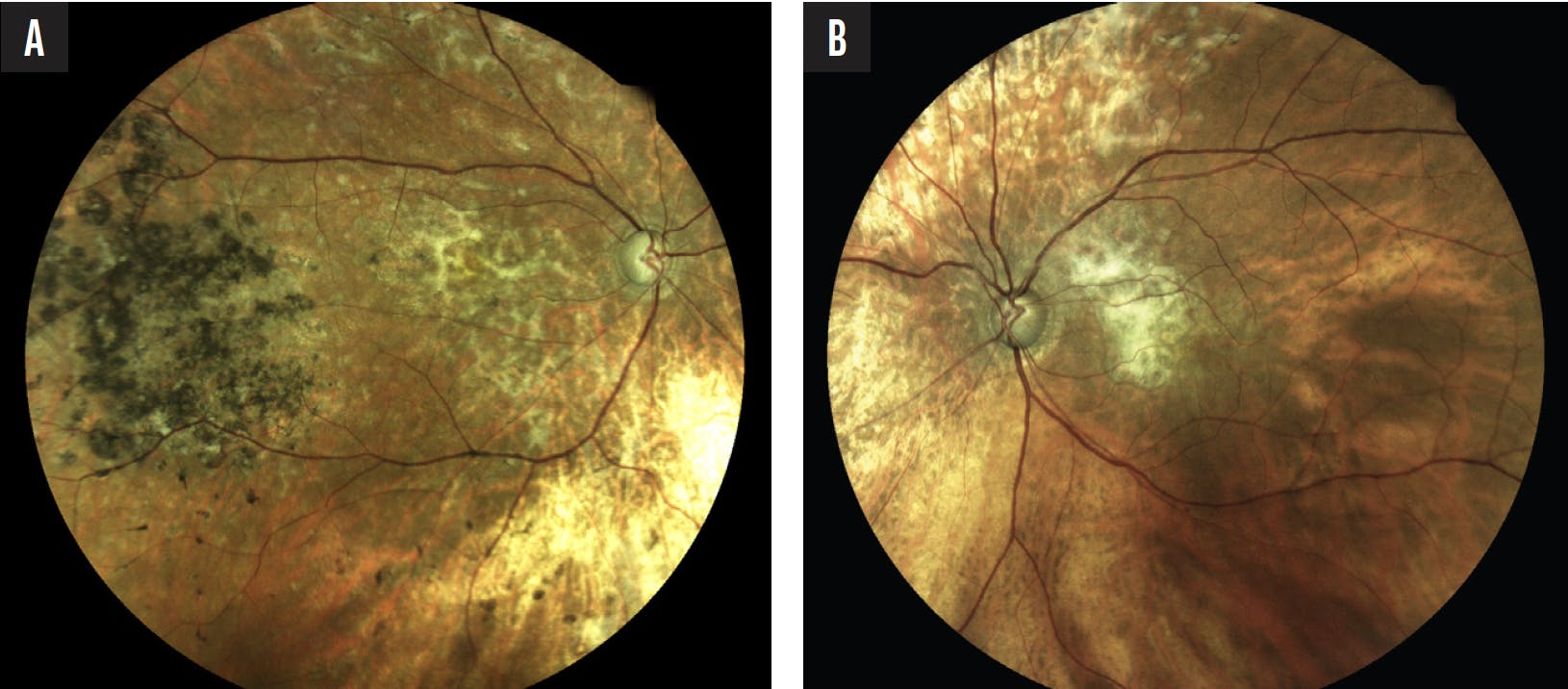
Upon presentation, her BCVA is 20/80 OD and 20/60 OS. Her IOP is 42 mm Hg OU. On examination, the anterior chamber of each eye is deep and quiet. Both posterior chamber IOLs are unremarkable in appearance. Gonioscopy shows grade 4 angles. A fundus examination reveals bilateral optic nerve cupping that is greater in the right eye and evidence of leukemic infiltrates in the subretinal spaces with resulting macular edema (Figure 1).
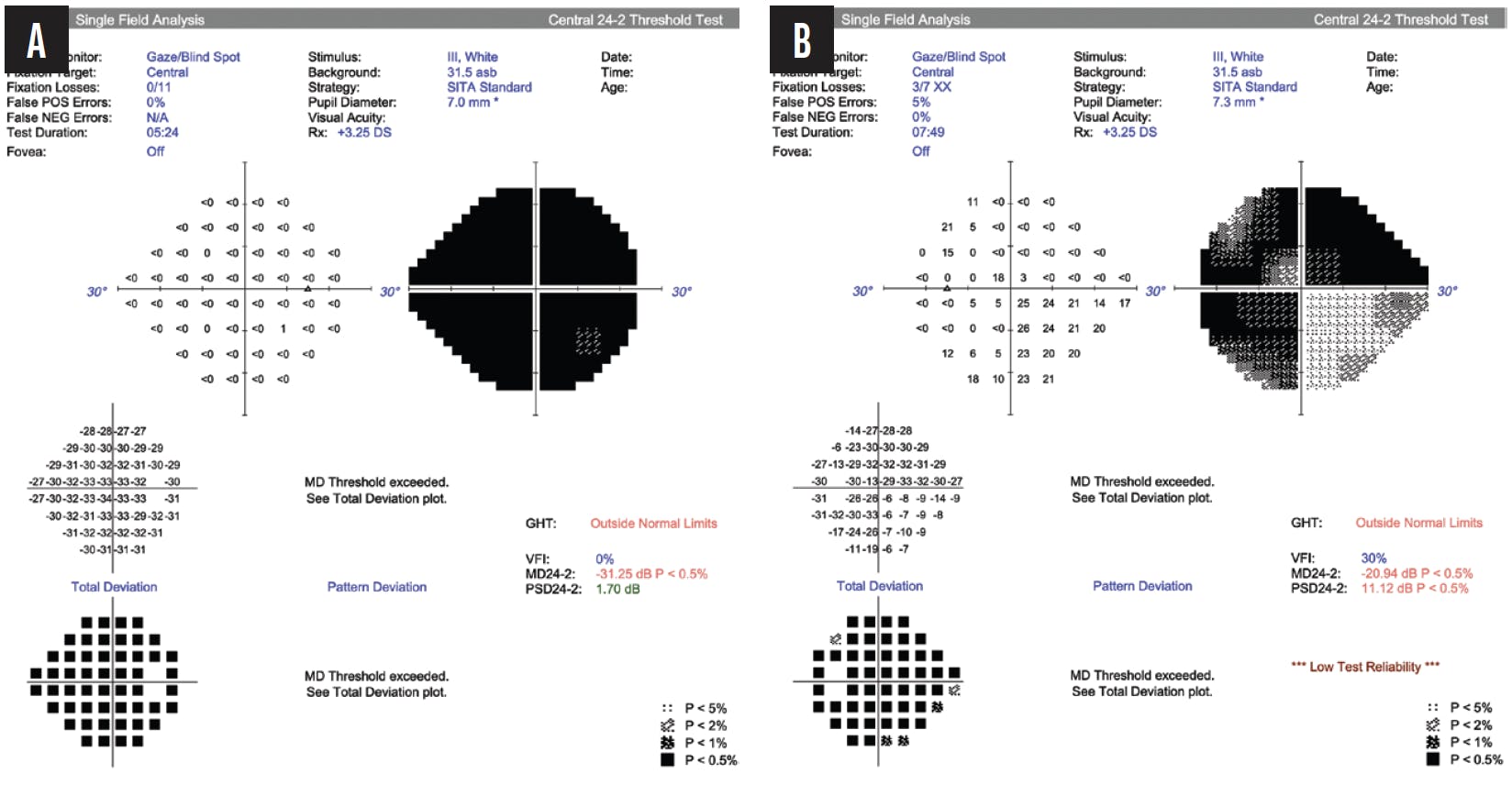
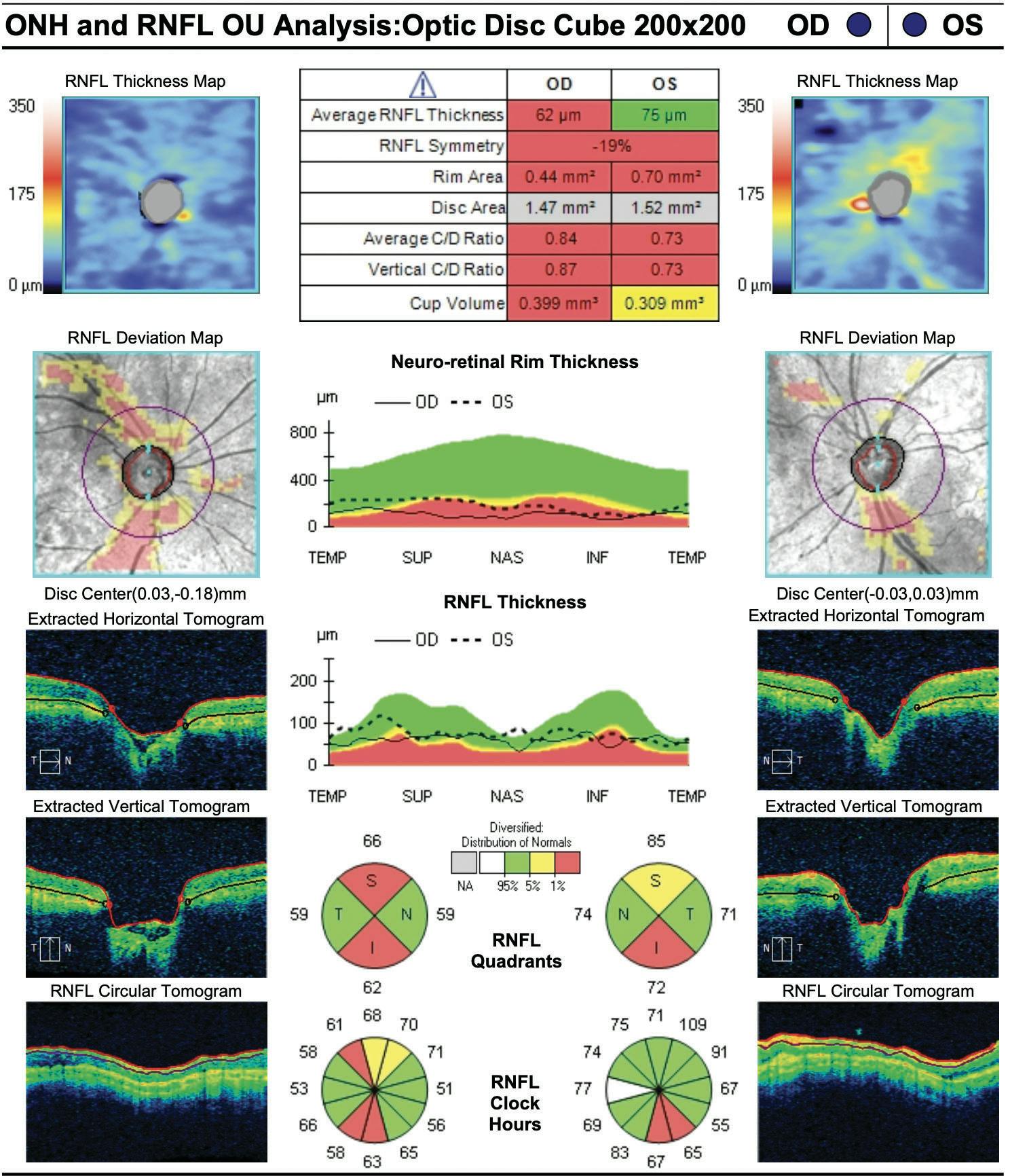
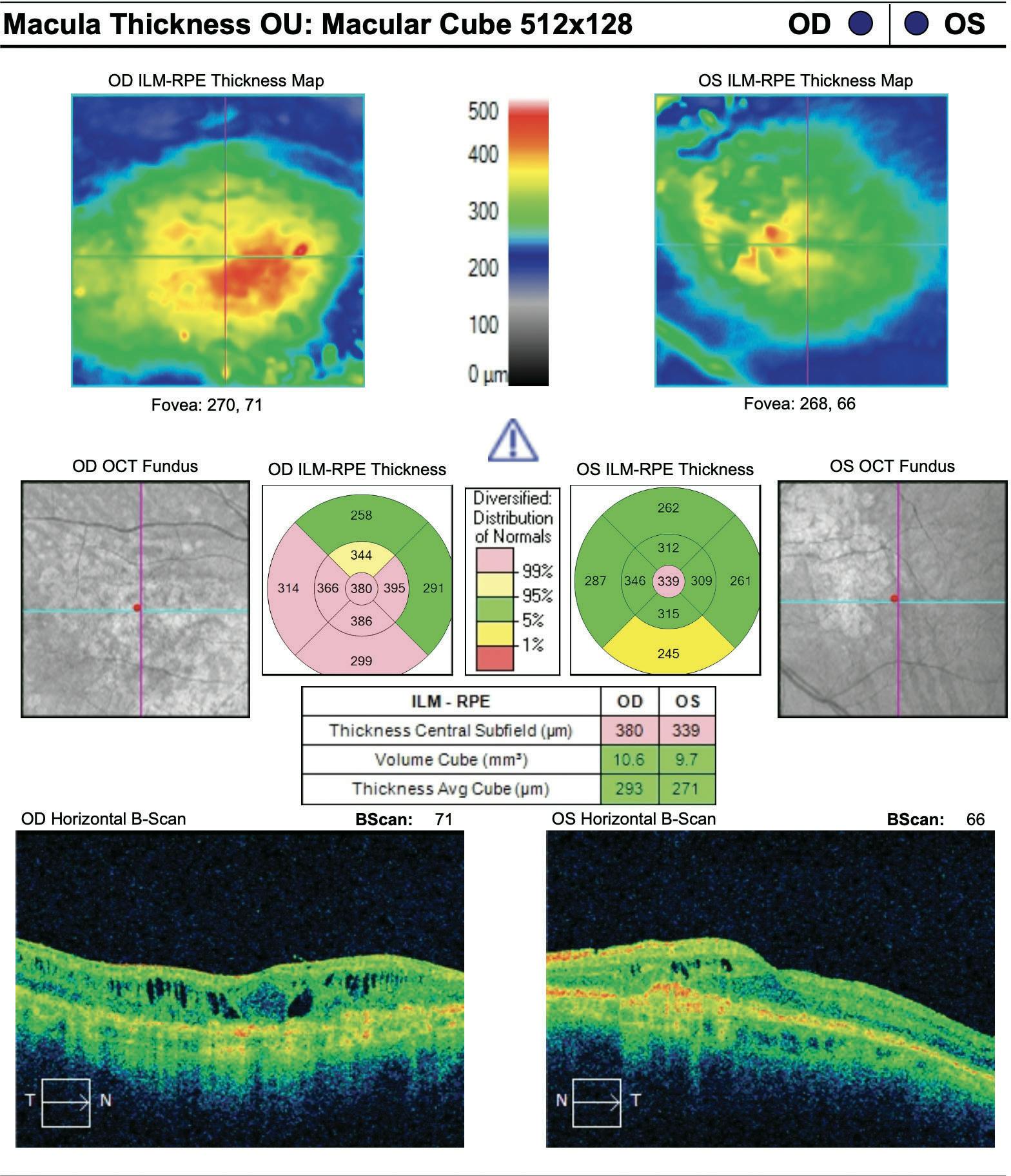
Humphrey visual field testing (Carl Zeiss Meditec) shows bilateral constriction that is more significant in the right eye (Figure 2). OCT imaging reveals severe cupping and thinning of the retinal nerve fiber layer and macular edema in both eyes (Figures 3 and 4).
Based on the patient’s elevated IOP and after a consultation with her oncologist, urgent implantation of an Ahmed Glaucoma Valve (AGV; New World Medical) is performed in the right eye. Initially, the postoperative IOP is in the low teens, but 3 weeks after surgery—just days before the patient is scheduled to undergo the same filtration procedure on the left eye—she presents with an IOP of 31 mm Hg OD. She is administering only prednisolone acetate four times daily in the right eye. The IOP in her left eye is 45 mm Hg on the glaucoma regimen mentioned earlier.
How would you proceed? Would you have suggested a different treatment option for the right eye? What would your next step be in treating the left eye?
—Case prepared by Jacob Brubaker, MD
KIERSTEN SNYDER, MD, MS
IOP control is urgently needed to preserve the patient’s remaining vision amid oncologic constraints. Given the hematologic malignancy, leukemic cells have already been disseminated and spread hematogenously, so creating an aqueous outflow pathway via a tube shunt is not likely to meaningfully increase metastatic potential as it would with primary intraocular solid malignancies.
The elevated IOP in the right eye after AGV placement is likely due to a hypertensive phase of valve encapsulation. I would optimize medical therapy, start digital ocular massage, and consider bleb needling.
Gonioscopy-assisted transluminal trabeculotomy (GATT) would be an option for the left eye, given the procedure’s efficacy for the management of steroid-induced glaucoma in eyes with an open angle. In retrospective studies, GATT reduced IOP by 55% to 63% at 3 to 24 months, and the medication burden decreased from 3.1 to 0.8 agents, even with continued steroid therapy.1 Because the patient’s visual fields are severely constricted, I would also consider transscleral cyclophotocoagulation (TSCPC) as a nonincisional alternative for reducing aqueous production and IOP. CPC is titratable and repeatable, and the procedure is suitable for advanced glaucoma and poor surgical candidates. Both GATT and TSCPC would balance rapid IOP-lowering with safety in the current situation.
In conjunction with intervention to achieve IOP control, multidisciplinary coordination with oncology and retina specialists is required for possible steroid tapering and initiation of anti-VEGF therapy to treat the macular edema.
ZACHARY VEST, MD
The patient has a complex ocular history with advanced glaucomatous optic neuropathy and uncontrolled IOP in both eyes. If there are no signs of tube occlusion and if fluid is visible around the AGV plate, digital massage of the right eye would be performed in the office. If the IOP subsequently decreases, she would be asked to perform digital massage at home, and therapy with dorzolamide and a fixed combination of timolol and brimonidine would be restarted. If she has access to an iCare Home tonometer (Icare USA), home monitoring could help her manage her use of digital massage to minimize hypotony.
For the left eye, options such as trabeculectomy, the placement of a nonvalved tube shunt or a Xen Gel Stent (AbbVie), or GATT could be considered. I, however, would proceed with AGV implantation because rapid IOP reduction and long-term steroid therapy are required. Considering that the first eye experienced a significant hypertensive phase after AGV placement, steps would be taken to reduce the risk of a similar postoperative IOP elevation. Options include either a sub-Tenon steroid injection or the application of mitomycin C (MMC) around the AGV plate.2,3 In my experience, the application of triamcinolone acetonide around the plate is a net positive, even in patients with a demonstrated sensitivity to steroids. With the antifibrotic strategy, repeat application of MMC in the clinic might be required, but MMC can be difficult to obtain in the office. A further modification for the left eye would be to initiate therapy with aqueous suppressants in the early postoperative period once the IOP exceeds 10 mm Hg4; this strategy can help decrease the hypertensive phase.
BARAA NAWASH, MD; SAMANTHA GOLDBURG, MD; AND MARY QIU, MD
The IOP spike in the right eye raises concern about a hypertensive phase as the AGV plate is encapsulated. In a retrospective series, a hypertensive phase occurred in more than half of the eyes within the first postoperative month, and it was associated with a higher long-term IOP and a greater medication burden.5 Based on this series, we would start therapy in the right eye with a combination of timolol, dorzolamide, and brimonidine, which are aqueous suppressant shown to improve AGV outcomes by limiting capsule formation.6
Because the patient’s visual acuity and visual field are better in the left eye, the goal would be to preserve the vision in that eye to the greatest extent possible. Both eyes have open angles on gonioscopy, so a 360º GATT would be recommended on the left eye. In the interim, the IOP response in the right eye would be assessed following the initiation of topical therapy. If the IOP remains elevated, GATT would be performed on the right eye, and the AGV would be left in place. In the Ahmed Versus Baerveldt (AVB) Study, the 5-year cumulative failure rate was 53% in the AGV group, supporting consideration of adjunctive GATT for this patient versus leaving the AGV alone.7
GATT can be particularly effective for the management of secondary glaucoma, including steroid-induced glaucoma, and would be an excellent option for this patient. A study by our colleagues at the Cole Eye Institute characterized the surgical outcomes of GATT in eyes with steroid-induced and uveitic glaucoma. At 24 months, the GATT eyes demonstrated a significant reduction in IOP and medication burden.8
WHAT I DID: JACOB BRUBAKER, MD
The patient had advanced leukemia and alarmingly high IOP. Although the life expectancy of individuals with leukemia involving the central nervous system is typically short, we felt that aggressive treatment of her elevated IOP was warranted.
A classic hypertensive phase had developed in the right eye following AGV implantation. The initiation of therapy with aqueous suppressants is an accepted treatment in this situation. Therapy with a fixed combination of brimonidine and timolol administered twice daily was therefore initiated. Given the aggressive early development of hypertension in the right eye, we discussed alternative surgical options for the left eye.
Several studies have shown a reduced hypertensive phase and decreased need for topical IOP-lowering medication with the adjunctive use of MMC.9,10 We therefore decided to proceed with AGV placement with adjunctive MMC.
After the creation of a conjunctival peritomy and pocket for the AGV tube, 0.2 mL of MMC 2 mg/mL was injected into Tenon capsule where the tube was to be placed (click here to watch the procedure). The remainder of surgery was unchanged from the earlier procedure on the contralateral eye.
One day after surgery on the left eye, the IOP was 21 mm Hg OD on the aforementioned drug regimen and 8 mm Hg OS. At follow-up visits, an IOP ranging from the upper teens to the low 20s mm Hg was maintained in the right eye, whereas the IOP remained in the low teens without medication for several years in the left eye. Slit-lamp photographs taken several months after the surgeries showed a tense, encapsulated bleb over the tube in the right eye and a more diffuse bleb in the left eye (Figure 5).
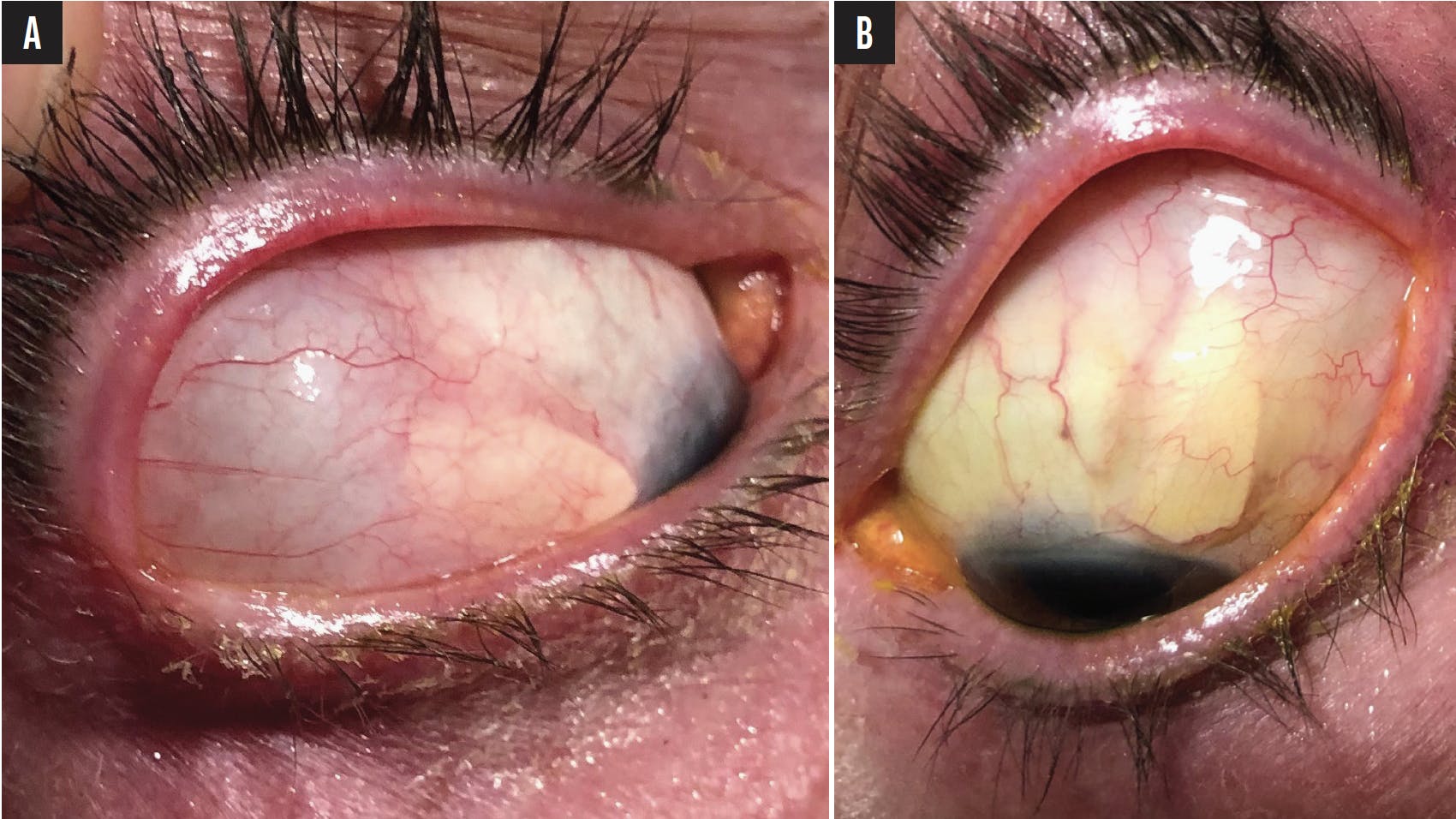
Figure 5. Slit-lamp photographs show a tense, encapsulated bleb over the AGV tube in the right eye (A) and a diffuse bleb in the left eye (B).
The patient unfortunately died 4 years after surgery. At that time, her UCVA had deteriorated to counting fingers OD, but fortunately she had maintained her preoperative level of 20/60 UCVA OS until her death.
1. Boese EA, Shah M. Gonioscopy-assisted transluminal trabeculotomy (GATT) is an effective procedure for steroid-induced glaucoma. J Glaucoma. 2019;28(9):803-807.
2. Turalba AV, Pasquale LR. Hypertensive phase and early complications after Ahmed Glaucoma Valve implantation with intraoperative subtenon triamcinolone acetonide. Clin Ophthalmol. 2014;8:1311-1316.
3. Perez CI, Verdaguer S, Khaliliyeh D, Maul EA, Ou Y, Han Y. Subconjunctival injections of mitomycin C are associated with a lower incidence of hypertensive phase in eyes with Ahmed Glaucoma Valve. Ophthalmol Glaucoma. 2021;4(3):322-329.
4. Shalaby WS, Wong JC, Zhang TZ, et al. Early postoperative aqueous suppression therapy and surgical outcomes of Ahmed tube shunts in refractory glaucoma. Ophthalmol Glaucoma. 2024;7(1):47-53.
5. Nouri-Mahdavi K, Caprioli J. Evaluation of the hypertensive phase after insertion of the Ahmed Glaucoma Valve. Am J Ophthalmol. 2003;136(6):1001-1008.
6. Pakravan M, Rad SS, Yazdani S, Ghahari E, Yaseri M. Effect of early treatment with aqueous suppressants on Ahmed Glaucoma Valve implantation outcomes. Ophthalmology. 2014;121(9):1693-1698.
7. Christakis PG, Kalenak JW, Tsai JC, et al. The Ahmed Versus Baerveldt Study: five-year treatment outcomes. Ophthalmology. 2016;123(10):2093-2102.
8. Chen RI, Purgert R, Eisengart J. Gonioscopy-assisted transluminal trabeculotomy and goniotomy, with or without concomitant cataract extraction, in steroid-induced and uveitic glaucoma: 24-month outcomes. J Glaucoma. 2023;32(6):501-510.
9. Perez CI, Verdaguer S, Khaliliyeh D, Maul EA, Ou Y, Han Y. Subconjunctival injections of mitomycin C are associated with a lower incidence of hypertensive phase in eyes with Ahmed Glaucoma Valve. Ophthalmol Glaucoma. 2021;4(3):322-329.
10. Alvarado JA, Hollander DA, Juster RP, Lee LC. Ahmed valve implantation with adjunctive mitomycin C and 5-fluorouracil: long-term outcomes. Am J Ophthalmol. 2008;146(2):276-284.