Key Takeaways
- Gene-guided surgery may be most beneficial for patients with glaucoma caused by a single genetic mutation.
- Surgeries specific to the trabecular meshwork, especially gonioscopy-assisted transluminal trabeculotomy, are uniquely effective for the treatment of myocilin-associated juvenile open-angle glaucoma.
- The presence of a mutation in optineurin, TANK-binding kinase 1, or methyltransferase-like 23 in a patient with normal-tension glaucoma could warrant consideration of trabeculectomy to reduce IOP into the single digits and arrest disease progression.
A 9-year-old girl, dwarfed by the exam chair, sat in my clinic. Each of her eyes had an IOP higher than 40 mm Hg on maximum tolerated medical therapy, but fortunately, they had no measurable glaucomatous damage. Although it was the patient’s first visit to the clinic, I knew her family well.
She carried the same autosomal dominant mutation in the myocilin (MYOC) gene as dozens of her family members. Despite the temptation to offer her a trabeculectomy (the procedure recommended to everyone else in her family), I felt confident performing gonioscopy-assisted transluminal trabeculotomy (GATT). This MIGS procedure bypasses the trabecular meshwork (TM), which is the tissue I knew to be affected in her disease. Following GATT, not only was the patient’s IOP at a normal level, but she was able to discontinue all of her glaucoma medications.1
What is most noteworthy in this scenario is not the surgical procedure but its remarkable efficacy—an effect supported by the specific pathophysiology of the patient’s disease. This case example offers a glimpse of a future in which glaucoma surgery is guided by genetic testing.
HEREDITY
With a heritability of 70% and 93% in two large population-based studies,2,3 glaucoma is among the most heritable of human diseases. Simply having a first-degree relative with glaucoma confers a ninefold increase in a patient’s lifetime risk of developing the disease.4 The genetics underlying glaucoma, particularly primary open-angle glaucoma (POAG), remain largely complex, with the vast majority of glaucomas caused by a combination of numerous genetic and environmental factors.5 Recent genome-wide association studies have identified 312 individual loci that collectively account for 14.1% of the familial risk.6-9 Analyses of genome-wide association study data with new strategies, such as polygenic risk scores, have greater power to identify subsets of a population with an increased likelihood of developing glaucoma.10,11 The clinical utility of polygenic risk score analyses for specific individuals is currently being investigated.10
A small proportion (5%) of glaucoma is caused by a single genetic mutation,5 and this is where gene-guided surgery could be the most advantageous. In Mendelian disease, the presence of the mutation alone can manifest in disease, promoting a more clear-cut understanding of the pathophysiology. There are four known single-gene or autosomal dominant (Mendelian) causes of POAG: MYOC, optineurin (OPTN), TANK-binding kinase 1 (TBK1), and methyltransferase-like 23 (METTL23).12-15
MYOCILIN
MYOC offers the best example to date of how genetics can influence surgical approach. Nearly 30 years following the discovery of mutations in the MYOC gene,13,16 it remains the most common genetic cause of glaucoma, accounting for just 4% of adult-onset POAG cases but up to 36% of juvenile OAG (JOAG) cases.17-19 MYOC-associated JOAG typically presents in young patients with markedly high IOPs that are largely resistant to medical therapy.18 Traditionally, these patients underwent trabeculectomies and tube shunt surgery early in life. The scarring and failure rates of these procedures is elevated due to the individuals’ ages.
The MYOC gene encodes a protein produced within the TM cells that is secreted into the aqueous humor, where the protein has no known function to date. Mutations in the MYOC gene cause a misfolding of this protein, leading to a toxic accumulation within the TM cells. The resulting TM apoptosis causes TM dysfunction, elevated IOP, and glaucoma.20,21
A defining feature of MYOC-associated JOAG is that the pathology has been shown to be within the TM and no other tissue. As such, TM-specific surgeries, especially GATT, are uniquely effective for the treatment of MYOC-associated JOAG (Figure). Studies evaluating GATT in patients with known MYOC variants have demonstrated the procedure’s remarkable success; GATT lowered IOP by a mean of 26 mm Hg (68%) and decreased the medication burden from an average of 3.8 medication classes to zero.1,22
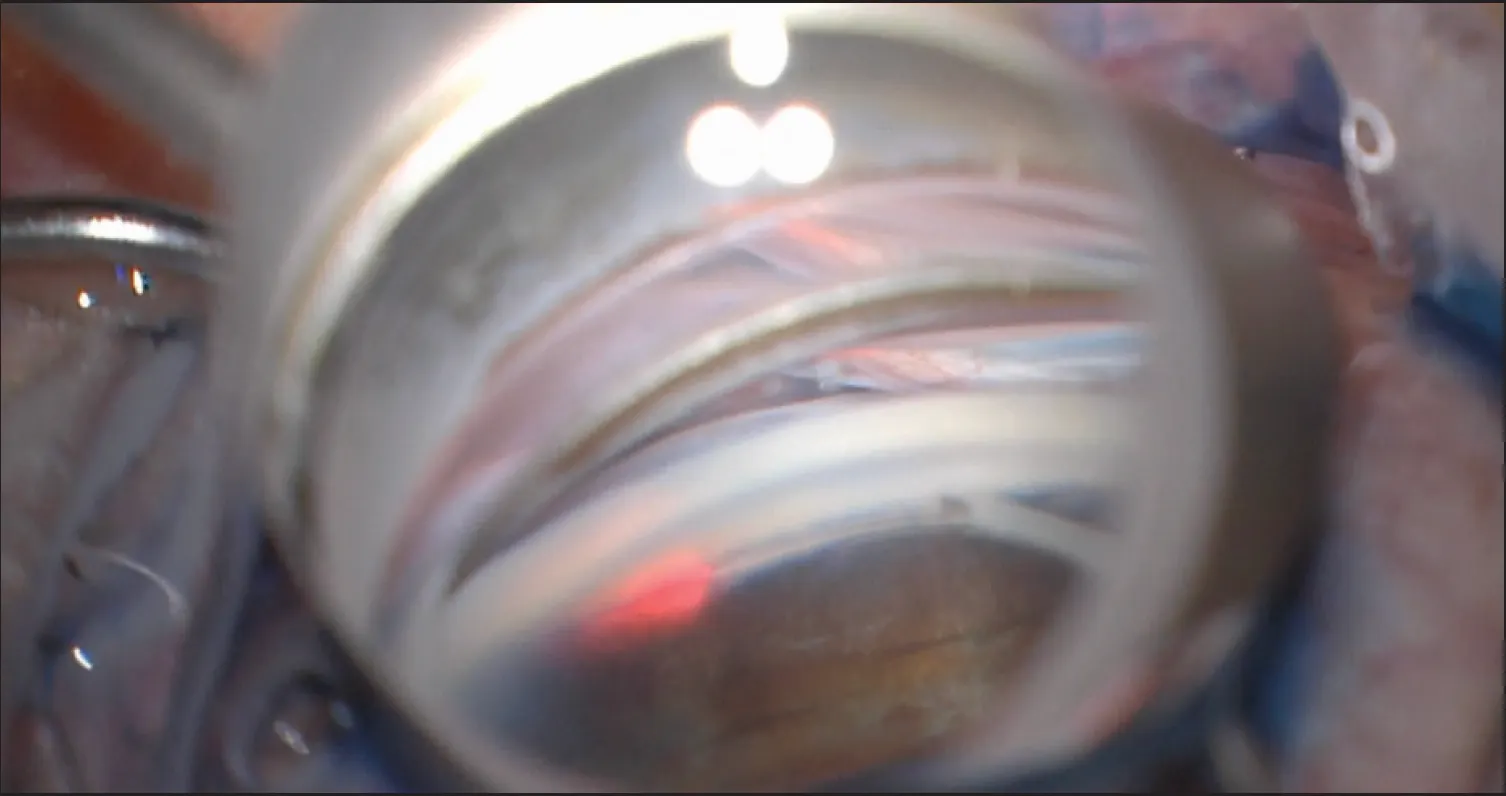
Figure. Intraoperative photograph of GATT using an iTrack Advance lighted microcatheter (Nova Eye Medical), an effective surgical approach in MYOC-associated JOAG.
OPTN, TBK1, AND METTL23
Mutations in OPTN, TBK1, and METTL23 are autosomal dominant causes of normal-tension glaucoma (NTG), and each of these genetic mutations contributes to 1% to 2% of NTG cases.23-28 Patients often present in their 30s and 40s with severe optic nerve damage despite low IOPs.29
The proteins that the OPTN and TBK1 genes encode interact directly with each other to regulate autophagy.15,30-32 Mutations in either OPTN or TBK1 are thought to dysregulate autophagy, leading to retinal ganglion cell damage at low IOPs.33,34 Mutations of METTL23 may cause NTG by altering histone methylation and gene expression, ultimately compromising retinal ganglion cell health.12
Given the early age of onset and disease progression at low IOPs, there is a benefit to significantly lowering IOP in this patient population. In some individuals with NTG and either OPTN or TBK1 mutations, glaucomatous progression was arrested after single-digit IOPs were achieved following trabeculectomy.35,36 The presence of one of these genetic mutations may therefore warrant consideration of aggressive surgery, namely trabeculectomy, to reduce IOP into the single digits.
IMPLICATIONS
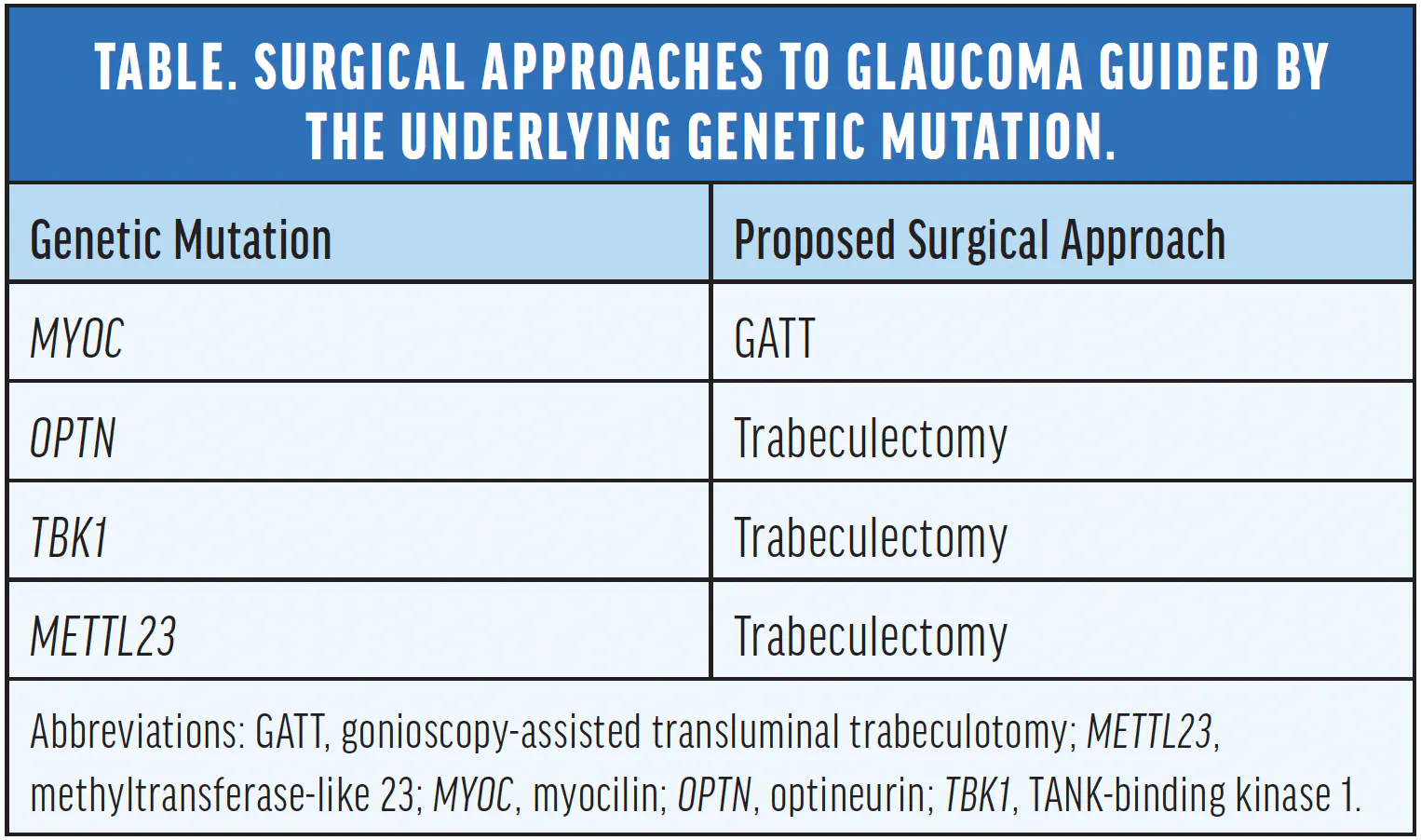
Genetic testing has the potential to provide valuable insights for glaucoma surgical decision-making. Patients whose family history is consistent with an autosomal dominant form of glaucoma may benefit from genetic testing for MYOC, OPTN, TBK1, and METTL23 (Table). Although clinical acumen cannot be replaced by DNA tests, targeted genetic screening is a powerful prognostic tool with exciting therapeutic implications.
1. Boese EA, Alward WLM, Fingert JH. Gonioscopy-assisted transluminal trabeculotomy for MYOC-associated juvenile open angle glaucoma: a case series of 8 eyes over 2.2 to 4.1 years. Ophthalmol Glaucoma. 2025;8(5):466-473.
2. WWang K, Gaitsch H, Poon H, Cox NJ, Rzhetsky A. Classification of common human diseases derived from shared genetic and environmental determinants. Nat Genet. 2017;49(9):1319-1325.
3. Polubriaginof FCG, Vanguri R, Quinnies K, et al. Disease heritability inferred from familial relationships reported in medical records. Cell. 2018;173(7):1692-1704.e11.
4. Wolfs RC, Klaver CC, Ramrattan RS, van Duijn CM, Hofman A, de Jong PT. Genetic risk of primary open-angle glaucoma. Population-based familial aggregation study. Arch Ophthalmol. 1998;116(12):1640-1645.
5. Fingert JH. Primary open-angle glaucoma genes. Eye (Lond). 2011;25(5):587-595.
6. Han X, Gharahkhani P, Hamel AR, et al. Large-scale multitrait genome-wide association analyses identify hundreds of glaucoma risk loci. Nat Genet. 2023;55(7):1116-1125.
7. Wiggs JL, Pasquale LR. Genetics of glaucoma. Hum Mol Genet. 2017;26(R1):R21-R27.
8. Choquet H, Paylakhi S, Kneeland SC, et al. A multiethnic genome-wide association study of primary open-angle glaucoma identifies novel risk loci. Nat Commun. 2018;9(1):2278.
9. Gharahkhani P, Jorgenson E, Hysi P, et al. Genome-wide meta-analysis identifies 127 open-angle glaucoma loci with consistent effect across ancestries. Nat Commun. 2021;12(1):1258.
10. Kolovos A, Hassall MM, Siggs OM, Souzeau E, Craig JE. Polygenic risk scores driving clinical change in glaucoma. Annu Rev Genomics Hum Genet. 2024;25(1):287-308.
11. Gao XR, Huang H, Kim H. Polygenic risk score is associated with intraocular pressure and improves glaucoma prediction in the UK Biobank cohort. Transl Vis Sci Technol. 2019;8(2):10.
12. Pan Y, Suga A, Kimura I, et al. METTL23 mutation alters histone H3R17 methylation in normal-tension glaucoma. J Clin Invest. 2022;132(21):e153589.
13. Stone EM, Fingert JH, Alward WL, et al. Identification of a gene that causes primary open angle glaucoma. Science. 1997;275(5300):668-670.
14. Rezaie T, Child A, Hitchings R, et al. Adult-onset primary open-angle glaucoma caused by mutations in optineurin. Science. 2002;295(5557):1077-1079.
15. Morton S, Hesson L, Peggie M, Cohen P. Enhanced binding of TBK1 by an optineurin mutant that causes a familial form of primary open angle glaucoma. FEBS Lett. 2008;582(6):997-1002.
16. Sheffield VC, Stone EM, Alward WL, et al. Genetic linkage of familial open angle glaucoma to chromosome 1q21-q31. Nat Genet. 1993;4(1):47-50.
17. Shimizu S, Lichter PR, Johnson AT, et al. Age-dependent prevalence of mutations at the GLC1A locus in primary open-angle glaucoma. Am J Ophthalmol. 2000;130(2):165-177.
18. Alward WL, Fingert JH, Coote MA, et al. Clinical features associated with mutations in the chromosome 1 open-angle glaucoma gene (GLC1A). N Engl J Med. 1998;338(15):1022-1027.
19. Wiggs JL, Allingham RR, Vollrath D, et al. Prevalence of mutations in TIGR/myocilin in patients with adult and juvenile primary open-angle glaucoma. Am J Hum Genet. 1998;63(5):1549-1552.
20. Jacobson N, Andrews M, Shepard AR, et al. Non-secretion of mutant proteins of the glaucoma gene myocilin in cultured trabecular meshwork cells and in aqueous humor. Hum Mol Genet. 2001;10(2):117-125.
21. van der Heide CJ, Alward WLM, Flamme-Wiese M, et al. Histochemical analysis of glaucoma caused by a myocilin mutation in a human donor eye. Ophthalmol Glaucoma. 2018;1(2):132-138.
22. Boese EA, Alward WLM, Fingert JH. Gonioscopy-assisted transluminal trabeculotomy for myocilin juvenile glaucoma. Ophthalmol Glaucoma. 2022;5(3):369-370.
23. Alward WL, Kwon YH, Kawase K, et al. Evaluation of optineurin sequence variations in 1,048 patients with open-angle glaucoma. Am J Ophthalmol. 2003;136(5):904-910.
24. Aung T, Ebenezer ND, Brice G, et al. Prevalence of optineurin sequence variants in adult primary open angle glaucoma: implications for diagnostic testing. J Med Genet. 2003;40(8):e101.
25. Kawase K, Allingham RR, Meguro A, et al. Confirmation of TBK1 duplication in normal tension glaucoma. Exp Eye Res. 2012;96(1):178-180.
26. Ritch R, Darbro B, Menon G, et al. TBK1 gene duplication and normal-tension glaucoma. JAMA Ophthalmol. 2014;132(5):544-548.
27. Awadalla MS, Fingert JH, Roos BE, et al. Copy number variations of TBK1 in Australian patients with primary open-angle glaucoma. Am J Ophthalmol. 2015;159(1):124-130.e1.
28. Scheetz TE, Tollefson MR, Roos BR, et al. METTL23 variants and patients with normal-tension glaucoma. JAMA Ophthalmol. 2024;142(11):1037-1045.
29. Sarfarazi M, Child A, Stoilova D, et al. Localization of the fourth locus (GLC1E) for adult-onset primary open-angle glaucoma to the 10p15-p14 region. Am J Hum Genet. 1998;62(3):641-652.
30. Wild P, Farhan H, McEwan DG, et al. Phosphorylation of the autophagy receptor optineurin restricts Salmonella growth. Science. 2011;333(6039):228-233.
31. De Marco N, Buono M, Troise F, Diez-Roux G. Optineurin increases cell survival and translocates to the nucleus in a Rab8-dependent manner upon an apoptotic stimulus. J Biol Chem. 2006;281(23):16147-16156.
32. Mehrpour M, Esclatine A, Beau I, Codogno P. Overview of macroautophagy regulation in mammalian cells. Cell Res. 2010;20(7):748-762.
33. Tucker BA, Solivan-Timpe F, Roos BR, et al. Duplication of TBK1 stimulates autophagy in iPSC-derived retinal cells from a patient with normal tension glaucoma. J Stem Cell Res Ther. 2014;3(5):161.
34. Minegishi Y, Iejima D, Kobayashi H, et al. Enhanced optineurin E50K-TBK1 interaction evokes protein insolubility and initiates familial primary open-angle glaucoma. Hum Mol Genet. 2013;22(17):3559-3567.
35. Quist TS, Johnson CA, Robin AL, Fingert JH. Long-term follow-up of normal tension glaucoma patients with TBK1 gene mutations in one large pedigree. Am J Ophthalmol. 2020;214:52-62.
36. Fox AR, Fingert JH. Familial normal tension glaucoma genetics. Prog Retin Eye Res. 2023;96:101191.