Key Takeaways
- IOP fluctuation despite maximum tolerated medical therapy in a patient with advanced pigment dispersion glaucoma necessitates prompt surgical intervention.
- Less invasive procedures such as laser trabeculoplasty, angle-based MIGS, and laser iridotomy may not lower IOP sufficiently in these eyes.
- Surgical intervention must balance efficacy and risk.
CASE PRESENTATION
A 38-year-old South Asian man presents with advanced pigment dispersion glaucoma in both eyes. The patient’s BCVA is 20/20 OU, and his eyes’ accommodative ability is intact. The IOP is 20 mm Hg OD and 22 mm Hg OS on a regimen of four classes of topical glaucoma medication. He has a history of IOP fluctuation, and the pressure in each eye was 37 mm Hg at the time of referral.
Central corneal thickness measures 581 µm OD and 580 µm OS. Corneal hysteresis is within the average range (9.5 OD and 9.4 OS). A slit-lamp examination finds classic signs of pigment dispersion, including iris transillumination defects, dense (4+) trabecular meshwork pigmentation, and pigment deposition on the corneal endothelium. Anterior segment OCT confirms posterior iris bowing (Figure 1).
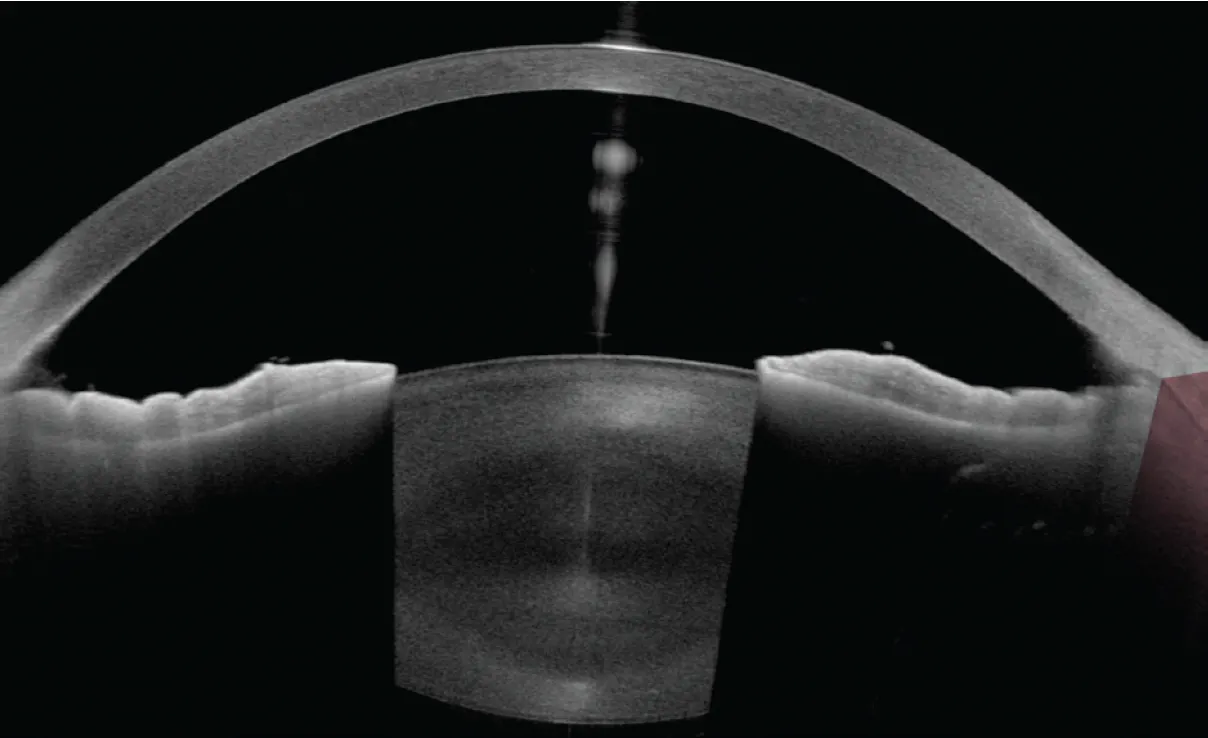
Figure 1. Anterior segment OCT of the right eye demonstrating posterior iris bow. Both eyes share similar anatomy.
An examination of the optic nerve reveals advanced glaucomatous cupping in both eyes (Figure 2), and OCT finds corresponding retinal nerve fiber layer loss (Figure 3). Visual field testing shows severe impairment, with a small central island in the right eye and fixation-splitting defects in the left eye (Figure 4).
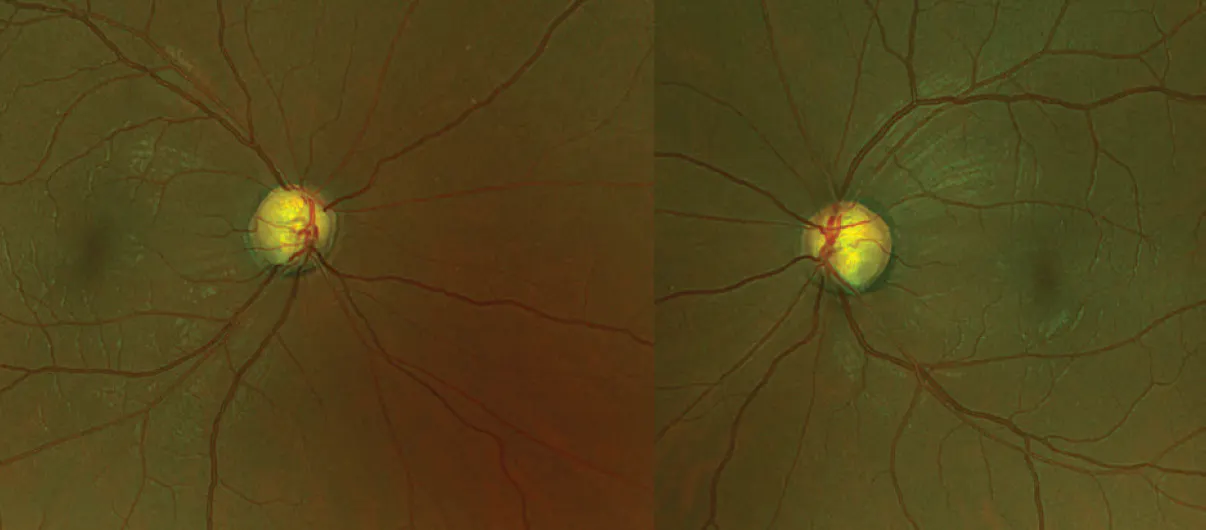
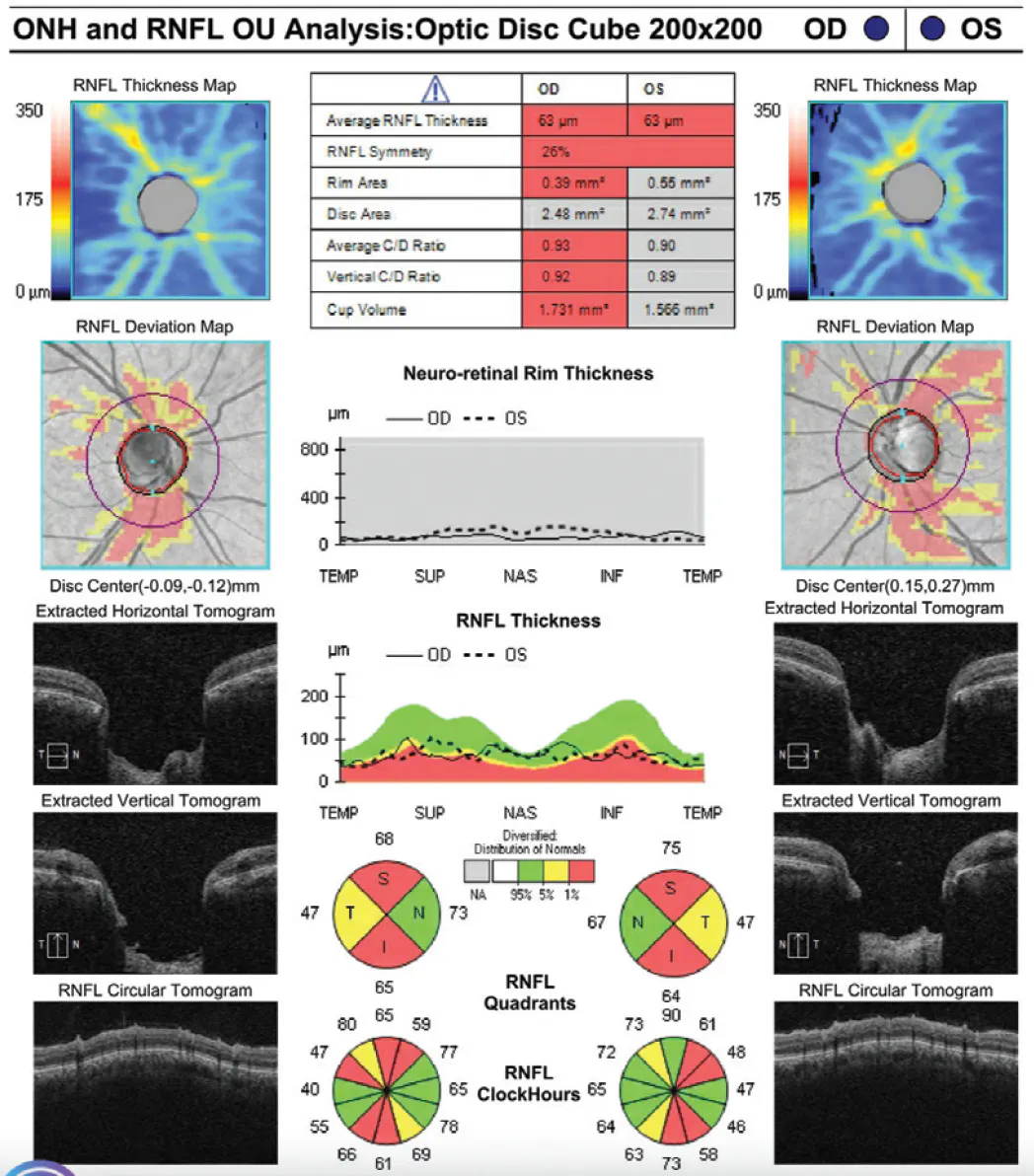
Figure 3. OCT imaging of the optic nerve confirms marked retinal nerve fiber layer loss in both eyes.
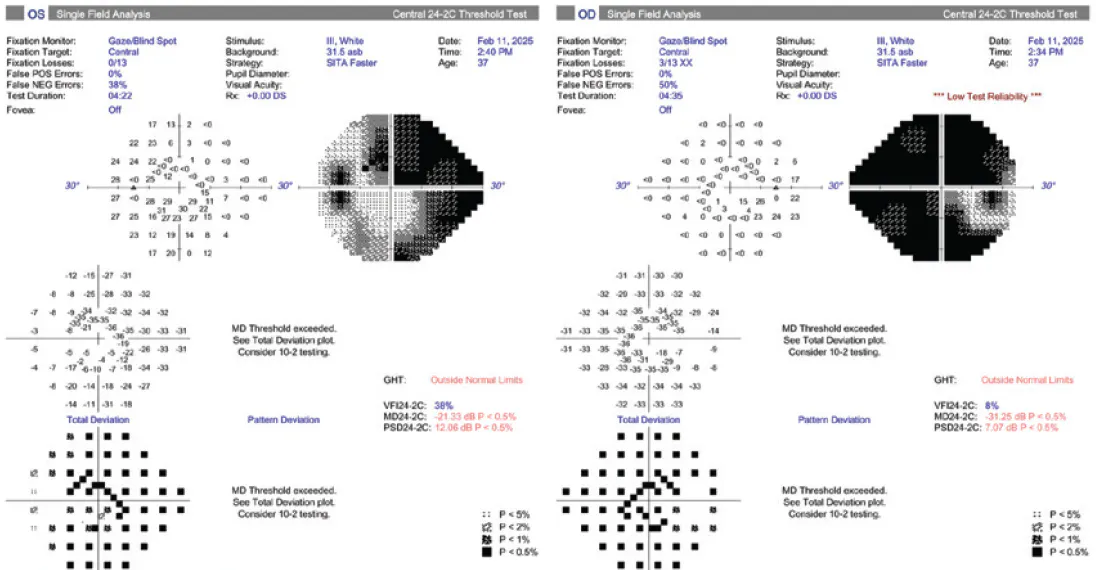
Figure 4. Visual field testing demonstrates marked loss with an island of remaining field in the right eye and fixation-splitting field defects in the left eye.
Given the disease severity and IOP fluctuation despite maximum tolerated medical therapy, additional intervention is required. The patient is highly engaged in decision-making and would like to review all available options, including selective laser trabeculoplasty (SLT), MIGS, microinvasive bleb surgery, conventional filtering procedures, and iridotomy.
What would you recommend?
—Case prepared by Devesh K. Varma, MD, FRCSC
AHMAD A. AREF, MD, MBA
SLT, an angle-based procedure such as goniotomy, and iridotomy would all be considerations for an earlier disease stage, which would allow time for possible failure followed by sequential filtration surgery. Given the patient’s uncontrolled IOP in the setting of advanced disease and his age, however, aggressive intervention is urgently required to decrease his risk of further visual field loss, which would likely have immediate and permanent functional consequences. SLT, angle surgery, and iridotomy, moreover, can be complicated by IOP spikes, which would present a heightened risk profile in the setting of advanced pigmentary glaucoma.
The decision between glaucoma drainage device (GDD) surgery and trabeculectomy likely depends on the surgeon’s experience and preference. My preference would be to implant a nonvalved aqueous shunt, either an Ahmed ClearPath (New World Medical) or a Baerveldt Glaucoma Implant (Johnson & Johnson Vision). Fenestrations would be placed at the time of surgery to minimize the risk of a postoperative IOP spike. Oral carbonic anhydrase therapy would be initiated to temporize IOP until the tube ligature dissolves.
KATEKI VINOD, MD
Prompt, definitive surgical intervention is required in both eyes. Surgery would be performed on the right eye first given its more advanced disease. The degree of myopia, axial length, and peripheral retina would be assessed preoperatively to evaluate the patient’s surgical risk.
Angle-based MIGS and SLT would be unlikely to lower the IOP sufficiently. Although a laser peripheral iridotomy might flatten the iris configuration and reduce pigment dispersion, the procedure would be unlikely to alter the disease course in an eye with existing trabecular dysfunction.1
Traditional glaucoma surgery (trabeculectomy or GDD placement) is indicated. The patient would be counseled extensively regarding the advantages and disadvantages of both options. His occupation, avocations, contact lens use, and tolerance of topical medical therapy would be taken into consideration during surgical decision-making. Trabeculectomy with mitomycin C might require more frequent postoperative visits, and the procedure confers a lifelong risk of bleb-related infection. The patient’s age might increase his risk of scarring and bleb failure and necessitate antifibrotic injections and needling to maintain bleb function. That said, myopia might predispose him to sustained hypotony-related sequelae following aggressive suture lysis to achieve a low IOP after trabeculectomy. A nonvalved GDD might be more resistant to scarring and less likely to produce profound hypotony, but supplemental topical glaucoma medications might be required to attain a low IOP. If the patient is highly myopic, I might favor primary nonvalved GDD surgery to achieve long-term IOP control while mitigating the risk of hypotony-related complications. Bleb-based MIGS might be safer than traditional filtration surgery, but it is less effective at reducing IOP.
Given the patient’s young age, he would be counseled that additional glaucoma surgery might be required in the future regardless of which initial intervention is selected.
WHAT I DID: DEVESH K. VARMA, MD, FRCSC
I felt that, in this situation, SLT was unlikely to achieve a consistent target pressure of 12 mm Hg and carried a risk of early postoperative IOP elevation. I therefore favored a surgical approach.
Microinvasive bleb-forming procedures such as the implantation of a Xen Gel Stent (AbbVie) or Preserflo MicroShunt (Santen) were considered. In phakic patients with pigment dispersion glaucoma, however, these devices may be prone to obstruction from pigment. Although trabeculectomy or GDD surgery is less susceptible to pigment-related obstruction, these options could carry an increased risk of hypotony and fixation loss compared with less invasive approaches.
The patient was willing to continue topical therapy postoperatively if necessary. We therefore decided on a staged surgical strategy, beginning with an angle-based approach. I explained that traditional filtration surgery would be performed if the target pressure were not achieved through a combination of angle-based surgery and topical glaucoma medications.
An ab interno goniotomy was combined with the placement of two first-generation iStents (Glaukos), one positioned at each end of the goniotomy. In addition, a surgical iridotomy was performed using microinstruments to address posterior iris bowing and the presumed underlying mechanism of IOP fluctuation. I opted for a surgical rather than a laser iridotomy to minimize pigment dispersion and reduce the risk of postoperative pressure spikes. The combined procedure was performed sequentially on both eyes, beginning with the right eye.
Postoperatively, fixation was preserved, the posterior iris configuration normalized, and the IOP was 12 mm Hg OD and 13 mm Hg OS on four classes of topical medication.
1. Michelessi M, Lindsley K. Peripheral iridotomy for pigmentary glaucoma. Cochrane Database Syst Rev. 2016;2(2):CD005655.