Glaucoma remains one of the leading causes of blindness globally,2 and intraocular pressure (IOP) reduction is currently the only modifiable factor shown to decrease the risk of visual field loss associated with the advancement of glaucoma.3 Although prostaglandin analogues are often an initial treatment choice, many individuals may eventually need multiple therapies to manage IOP sufficiently.2 Ophthalmologists often grapple with the potential limitations of therapies and the complexities of disease progression.
IMPORTANT SAFETY INFORMATION
INDICATIONS
The XEN® Glaucoma Treatment System (XEN® 45 Gel Stent preloaded into a XEN® Injector) is indicated for the management of refractory glaucomas, including cases where previous surgical treatment has failed, cases of primary open-angle glaucoma, and pseudoexfoliative or pigmentary glaucoma with open angles that are unresponsive to maximum tolerated medical therapy.
CONTRAINDICATIONS
XEN® Gel Stent is contraindicated in angle-closure glaucoma where angle has not been surgically opened, previous glaucoma shunt/valve or conjunctival scarring/pathologies in the target quadrant, active inflammation, active iris neovascularization, anterior chamber intraocular lens, intraocular silicone oil, and vitreous in the anterior chamber.
Please see additional Important Safety Information below. Please click here for the full Directions for Use.
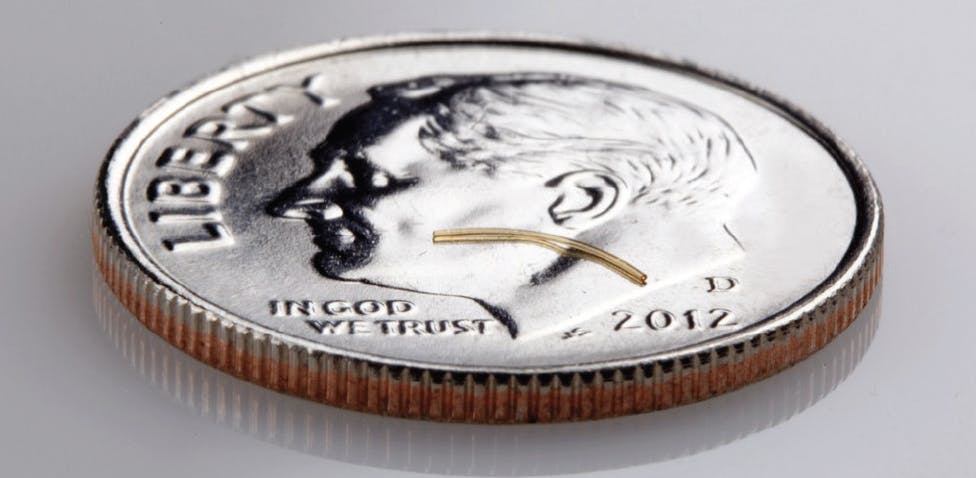
The XEN® Gel Stent (AbbVie; Figure 1) is a proven treatment option, with established efficacy and safety data.4 Since FDA approval, much has been learned about the XEN® Gel Stent. User experience and additional insights have brought enhanced understanding of surgical techniques and use of XEN® earlier in the refractory glaucoma treatment journey. In a recent roundtable discussion, Lena Al-Dujaili, MD; Reena Garg, MD; Davinder Grover, MD, MPH; and Arsham Sheybani, MD, shared their experiences and insights, as well as the outcomes they have achieved with the XEN® Gel Stent.
XEN®: Recent Perspectives
Dr. Grover: In my experience, the approach to treating glaucoma has undergone a remarkable change over the years. Reflecting on the early 2010s, the landscape of glaucoma treatment was more conservative, heavily reliant on a ‘meds first, surgery later’ approach.
Since then, there has been a significant shift toward an interventional mindset, with an emphasis on integrating minimally invasive surgical interventions. How has your perspective changed since you began integrating XEN® into your own clinical practice?
Dr. Garg: When I first started using the XEN® procedure when it launched in 2017, I reserved it as a replacement for my patients who were resistant to trabeculectomy. I didn’t initially experience positive outcomes and ended up discontinuing its use after trying it on about 10 patients. However, my journey with XEN® took a pivotal turn after I participated in a webinar where Dr. Grover and Dr. Sheybani discussed the concept of primary needling as part of their intraoperative technique. This opened a new perspective on how I could enhance my surgical technique. Inspired to give XEN® another chance, I adopted a technique where Tenon was disinserted and space was created using the Grover-Fellman microshunt spatula. Since making this change, I’ve seen a marked improvement in my patients’ outcomes, which has solidified my confidence in this treatment approach.
Dr. Al-Dujaili: In my practice in New Orleans, which predominantly serves an African-American patient population, we often face higher rates of scarring that can compromise surgical success. Recognizing the need for improvement, I had the opportunity to observe Dr. Grover during a preceptorship, which demonstrated different XEN® techniques for specific patient anatomy. Motivated by this experience, I have adopted an open conjunctival approach to dissect Tenons and create space for the implant, which has worked for my patient population. What I’ve learned through experience is to tailor my techniques to the unique needs of my patients.
Dr. Sheybani: My approach to integrating XEN® into my practice has been shaped by the effectiveness I have seen in cases where the patient’s refractory glaucoma required earlier intervention. This perspective, especially for patients at higher risk for hypotony, represents a significant paradigm shift for me. It isn’t just about delaying invasive surgeries, it’s about the patient experience from the start.
Patient Identification
Dr. Grover:It’s important to understand where XEN® fits within the range of available treatments. In my practice, I use XEN® in situations where canal-based MIGS are inadequate (or have already failed) and incisional glaucoma surgery may be excessive for some refractory patients. This is how I select patients who I feel are the most likely to benefit from XEN®. How do you identify suitable candidates for XEN®? What specific factors weigh most heavily in your decision-making process?
Dr. Sheybani: Selecting patients for the XEN® procedure involves a nuanced understanding of their individual cases. For standalone procedures where I don’t consider angle surgery a viable option, XEN® is my first choice. Additionally, I consider the patient’s ocular surface, lens status, and lifestyle, especially their ability to handle potential postoperative complications such as IOP spikes associated with incisional glaucoma surgeries.
I also think since it’s been reported that an IOP of < 10 mm Hg occurs naturally in less than 1.5% of the population, I don’t see a need to aim for such a low IOP in most of my patients to slow disease progression.5 I find that in my patients that don’t have considerably elevated IOP, my goal is to focus on reduction of their fluctuation6 rather than absolute IOP reduction.7 These factors are important in my decision-making process to ensure that the selected treatment aligns well with the patient’s overall health and lifestyle.
Dr. Garg: The key factor in my outcomes using XEN® has been expanding my patient selection criteria in refractory glaucoma. I no longer reserve XEN® for patients that have failed surgery. I have expanded my use to include patients on maximum tolerated medical therapy with a goal of mid-to-low teens IOP and medication reduction. I consider each patient’s history of prior surgeries and assess scarring in the conjunctiva or other high-risk areas to tailor my surgical approach. Additionally, I pay careful attention to lid positioning, aiming for a superonasal placement but adjusting to a more superior position if necessary to minimize the potential for exposure of the implant.
Dr. Al-Dujaili: In my experience, there is not a specific patient type for which XEN® works best. I have seen XEN® be successful for more varied patient types with refractory glaucoma than I had originally thought, so I no longer limit my use of XEN® to certain demographics or disease stages.
Creating Space
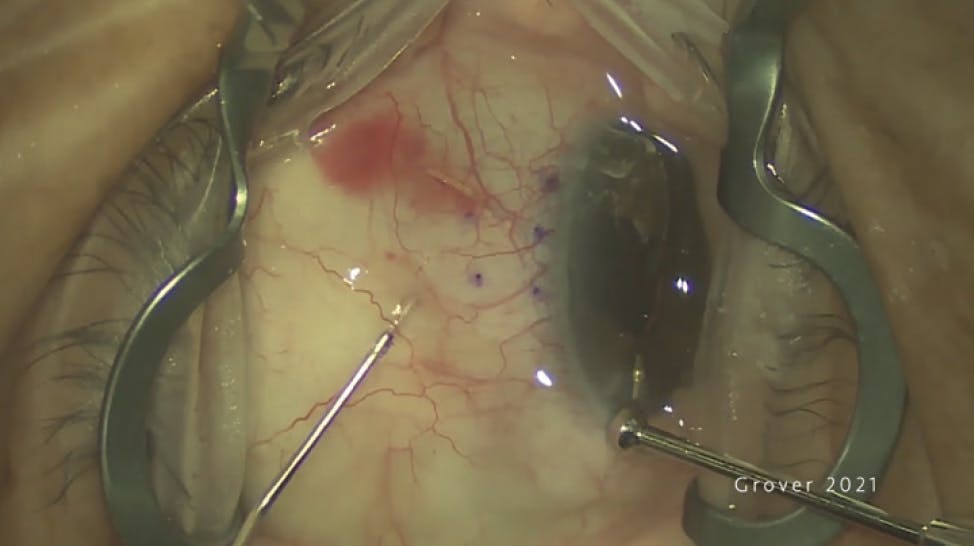
Dr. Grover: An essential aspect we must address is the surgical technique itself, particularly in terms of managing the risk of failure. Ensuring there is sufficient space for the implant is pivotal to prevent it from becoming entangled in Tenons capsule, which could lead to fibrosis8 and impact the success of the surgery. There are multiple surgical insights on techniques used to implant XEN®. After trying different options, my partner, Ron Fellman, MD, and I developed the PoST technique (Figure 2), which involves performing a posterior sweep of Tenons using the Grover-Fellman microshunt spatula to create a Tenons-free window. With this in mind, I’d like to ask: What do you consider important when implanting XEN® and ensuring you make enough space so that it doesn’t get caught up in Tenons and cause fibrosis?8
Dr. Sheybani: I consider multiple factors, including IOP goals, medication tolerance, conjunctiva thinness, and hypotony risk. If the conjunctiva is really thin, then I am going to implant XEN® ab interno with closed conjunctiva and primary needling.
However, it’s important to understand that the XEN® itself does not create a cavity or space in the subconjunctival region. I use primary needling to do this. In my practice, I make sure to consider the application of mitomycin C (MMC).4 In cases where the conjunctiva is thin, I prefer to use low doses of MMC with primary needling. I vary the dosage depending on the tissue of the patient. I’ve found that this approach has aided in the healing process and functionality of the bleb. My preference sometimes is to use ophthalmic viscosurgical devices (OVDs) for space creation in addition to needling.
Dr. Al-Dujaili: I’ve found, particularly with my heavily pigmented patient population, that standard ab interno approaches don’t always prevent scarring. This led me to adopt an open conjunctiva technique that helps me to ensure that the XEN® is completely free from Tenons, which I believe is crucial for my patients who tend to have more aggressive fibrotic responses. Postoperatively, I perform primary needling early if I detect any signs of encapsulation.
Dr. Garg: I typically implant XEN® using a closed conjunctiva technique with primary needling because I find it involves the least amount of manipulation of the conjunctiva. After elevating the conjunctiva with topical anesthesia, I perform needling using the Grover-Fellman microshunt spatula and create a Tenon’s window. Before exiting the eye, I prefer to leave OVD in the subconjunctival space to provide some scaffolding and tamponade bleeding. To prevent potential scarring issues, I perform secondary needling in the clinic.
preoperative considerations
Dr. Grover: Beyond the surgical approach, managing both the pre- and postoperative phases plays a crucial role in optimizing my patient’s recovery and the effectiveness of their stent. Some surgeons treat the ocular surface with steroids prior to surgery to manage inflammation.9 I personally do not like to change the drop regimen prior to surgery because I am concerned that if the patient cancels surgery, they may stay on this altered drop regimen until they actually follow up. Intraoperatively, I advocate for the use of subconjunctival steroids to manage inflammation effectively. Postoperatively, I start topical steroids. I manage with a topical beta blocker9 once in the morning, if the IOP starts to rise above my goal. If ocular inflammation is gone at 1-2 weeks postoperatively, I prefer to begin tapering the steroids over the next few weeks.10,11 Typically, at the 4-6 postoperative week visit, most of my patients are entirely off steroids as long as the eye is without inflammation and the conjunctiva is quiet. How do each of you use steroids or other methods to manage postoperative inflammation and contribute to the optimal recovery of your patients?4
Dr. Garg: To address surface inflammation, I prefer to pre-treat with steroids to calm the ocular surface and prescribe a prolonged steroid course. I employ this strategy to try to reduce ocular surface inflammation.4,9 It has been important in my practice to have a strategic approach to steroid use, as I’ve seen the impact it can have in that postoperative management. Based on the condition of the patient’s ocular surface, I tailor steroid application to reduce inflammation and facilitate recovery.4 Typically, I use a topical steroid course with 3-month taper.4
Dr. Al-Dujaili: Controlling inflammation with steroids is key in the postoperative phase, in my opinion. I pause any aggressive topical glaucoma treatments to reduce conjunctival and corneal inflammation, setting a foundation for recovery.
Dr. Sheybani: I’ve shifted toward using subconjunctival steroids at the beginning of the postoperative period in some patients. I have utilized this approach particularly in my patients who have undergone previous angle surgery. I have found it helpful to aggressively reduce inflammation to potentially optimize the success of my procedures.10
Postoperative Considerations
Dr. Grover: Postoperative monitoring is essential to ensure the XEN® implant functions correctly and to effectively manage IOP. How do each of you approach managing complications such as elevated IOP, and what strategies have you utilized in your practice?
Dr. Al-Dujaili: In the clinic, addressing early signs of elevated pressure through needling is considered critical to prevent scarring and manage IOP spikes. However, if there’s a sudden spike in pressure, I’ve found that needling isn’t always effective. Now, I’ve incorporated Nd:YAG in my postoperative management.12 If complications arise with a XEN® bleb, the interventions required may often be managed directly in the office setting.
Dr. Garg: I agree that early intervention is key and often employ subconjunctival lidocaine followed by needling. Recognizing Tenons as the primary obstacle and focusing on its deliberate removal and retraction was a significant revelation for me. Moreover, I can manage my XEN blebs postoperatively in both the clinic or operating room. I advise my XEN patients that, while complications can arise, they can generally return to work the next day.13 I tell them if XEN doesn’t lower their IOP enough, we still have the option to revise the XEN or move to incisional surgery if necessary.
Dr. Sheybani: Like many of us here, I often perform Nd:YAG to address any internal obstructions in the XEN® implant. When a patient presents with acute elevated IOP and an absence of a bleb, there could be blockage within the lumen of the device. My intraoperative techniques and postop management have reduced the need for postop needling in some of my patients. The XEN® Gel Stent creates a minimally invasive pathway for fluid exit4, resulting in a less prominent bleb compared to traditional surgeries.14,15 In my experience, my postop management strategies often allow for comfortable patient recovery.14,15
Conclusion
Dr. Grover: In the constantly evolving field of glaucoma treatment, I feel it is important to stay informed about the latest research and to tailor treatment plans to fit patients’ individual lifestyles and long-term goals. The XEN® Gel Stent represents, for me, a minimally invasive filtering surgery alternative to incisional surgeries. Thanks to advancements in surgical techniques and comprehensive postoperative care, XEN® has become an excellent option I use in certain cases, proving effective not only in advanced disease stages4 but also earlier in the course of my refractory glaucoma patients.
Dr. Garg: In my practice, XEN® isn’t just for those at the brink of traditional filtering surgery; it’s a viable option earlier in refractory glaucoma. As patients enjoy longer and more active lives, quality of life becomes a significant factor in the decision to undergo filtering surgery. I believe that XEN® offers a minimally invasive filtering option that ultimately helps maintain my goals for my patients.
Click here to access videos of our panelists using the latest XEN® techniques.
Learn more about the XEN® Gel Stent now.
1. Department of Health and Human Services. Food and Drug Administration. 2016. 510k
Premarket notification K161457. https://www.accessdata.fda.gov/scripts/cdrh/cfdocs/cfpmn/pmn.cfm?ID=K161457. Accessed August 15, 2024.
2. American Academy of Ophthalmology. Primary Open-Angle Glaucoma Preferred Practice Pattern®. San Francisco, CA: American Academy of Ophthalmology; 2020.
3. Akpek EK, Smith RA. Overview of age-related ocular conditions. Am J Manag Care. 2013;19(suppl 5):S67-S75.
4. XEN® Directions for Use.
5. Colton T, Ederer F. The distribution of intraocular pressures in the general population. Surv Opthalmol. 1980;25 (3):123-129.
6. Nouri-Mahdavi K, Hoffman D, Coleman AL, et al. Predictive factors for glaucomatous visual field progression in the advanced glaucoma intervention study. Ophthalmology. 2004;111(9):1627-1635.
7. Kim JH, Caprioli J. Intraocular pressure fluctuation: Is it important? J Ophthalmic Vis Res. 2018;13(2):170-174. doi:10.4103/jovr.jovr_35_18.
8. Kerr NM, Lim S, Simos M, Ward T. Primary needling of the ab interno gelatin microstent reduces postoperative needling and follow-up requirements. Ophthalmology Glaucoma. 2021;4(6):581-588.
9. Vera V, Ahmed IK, Stalmans I, Reitsamer H. Gel stent implantation--recommendations for preoperative assessment, surgical technique, and postoperative management. US Ophthalmic Review. 2018;11(1):38-46.
10. Tham CCY, Li FCH, Leung DYL, Kwong YYY, et al. Intrableb triamcinolone acetonide injection after bleb-forming filtration surgery (trabeculectomy, phacotrabeculectomy, and trabeculectomy revision by needling): a pilot study. Eye (Lond). 2006;20(12):1484-1486.
11. Georgoulas S, Dahlmann-Noor A, Brocchini S, Khaw PT. Modulation of wound healing during and after glaucoma surgery. Progress in Brain Research. 2008;173:237-254.
12. Fellman RL, Grover DS, Smith OU, Kornmann HL. Rescue of failed XEN-45 gel implant by Nd: YAG shock wave to anterior chamber tip to dislodge hidden intraluminal occlusion. J Glaucoma. 2021;30(7):e338–e343.
13. Grover DS, Flynn WJ, Bashford KP, et al. Performance and safety of a new ab interno gelatin stent in refractory glaucoma at 12 months. Am J Ophthalmol. 2017;183:25-36.
14. Teus M, Moreno-Arrones JP, Castano B, Castejon M, Bolivar G. Optical coherence tomography analysis of filtering blebs after long-term, functioning trabeculectomy and XEN® stent implant. Graefes Arch Clin Exp Ophthalmol. 2019;257:1005–1011.
15. Sacchi M, Agnifili L, Brescia L, et al. Structural imaging of conjunctival filtering blebs in XEN gel implantation and trabeculectomy: a confocal and anterior segment optical coherence tomography study. Graefes Arch Clin Exp Ophthalmol. 2020;258:1763–1770.
US-XEN-240079 09/24