Sponsored by Glaukos
To watch the full webcast on Eyetube, please visit this page.
Interventional glaucoma has come to refer to a movement, rather than to a specific technology or treatment approach. It represents a mentality that embraces proactive disease management using proven, earlier interventions to alter the course of progression and improve patients’ quality of life. On a recent webinar, Iqbal Ike K. Ahmed, MD, FRCSC; Christine Funke, MD; Mark Gallardo, MD; and Deborah Ristvedt, DO, discussed how primary interventional glaucoma therapies can optimize patient outcomes and strategies for implementing them into practice.
How effective is topical glaucoma therapy, and what challenges affect ophthalmologists’ confidence in the efficacy of this approach?
Dr. Funke: Topical glaucoma therapy is effective—if used as prescribed. Noncompliance, however, has been a problem since the invention of eye drops. As I consider how to treat my patients with glaucoma, my focus has become reducing or eliminating their treatment burden, whether that is achieved with a laser procedure, a type of pharmaceutical placed in the eye, or MIGS, all of which are low-risk interventions.
Dr. Gallardo: In the past, if patients were experiencing side effects from their glaucoma medications but drops were preserving their vision, that tradeoff was worthwhile because the treatment alternatives were risky. Now, with the Laser in Glaucoma and Ocular Hypertension (LiGHT) trial demonstrating that better optic nerve protection can be achieved with early selective laser trabeculoplasty,1 we should be rethinking whether drops are the best option.
How can glaucoma management burden a practice? What pain points do you see, and how have you managed them?
Dr. Funke: Many pain points related to medication use can likely be avoided with the introduction of interventional glaucoma procedures. However, it is important to recognize that some new pain points may also be introduced by this approach, such as there not being enough surgeons to handle the volume of procedures. Surgeons will have to remold themselves and their role within a practice offering interventional glaucoma treatments, particularly increased procedural support.
Dr. Ristvedt: Running a practice and motivating a team and patients are not easy tasks. Glaucoma care requires a collaborative effort, and we are committing patients to lifelong disease management. I have found it helpful to work with staff to directly address any gaps in our delivery of care and identify where we may be losing time and efficiency.
Dr. Gallardo: In general, practices have become more burdened by the bureaucracy of medical care. By helping to minimize a patient’s medication burden, interventional glaucoma treatments relieve some strain from staff and eventually from surgeons. Slightly more chair time is required to introduce a patient to a new interventional treatment plan, but I find that, once they understand, this approach helps my overall practice and minimizes my staff’s requirements.
Could a treatment roadmap help provide a starting point for ophthalmologists thinking about which glaucoma treatment to introduce and at what disease stage?
Dr. Funke: For someone who wants to adopt interventional glaucoma practices, doing so can be overwhelming with all the treatment options available. Several glaucoma specialists and I recently created a multistage roadmap to help stratify patients and match them to escalating interventional glaucoma treatment modalities (Figure 1). With this protocol, topical medications serve as temporary bridges rather than as long-term monotherapy.
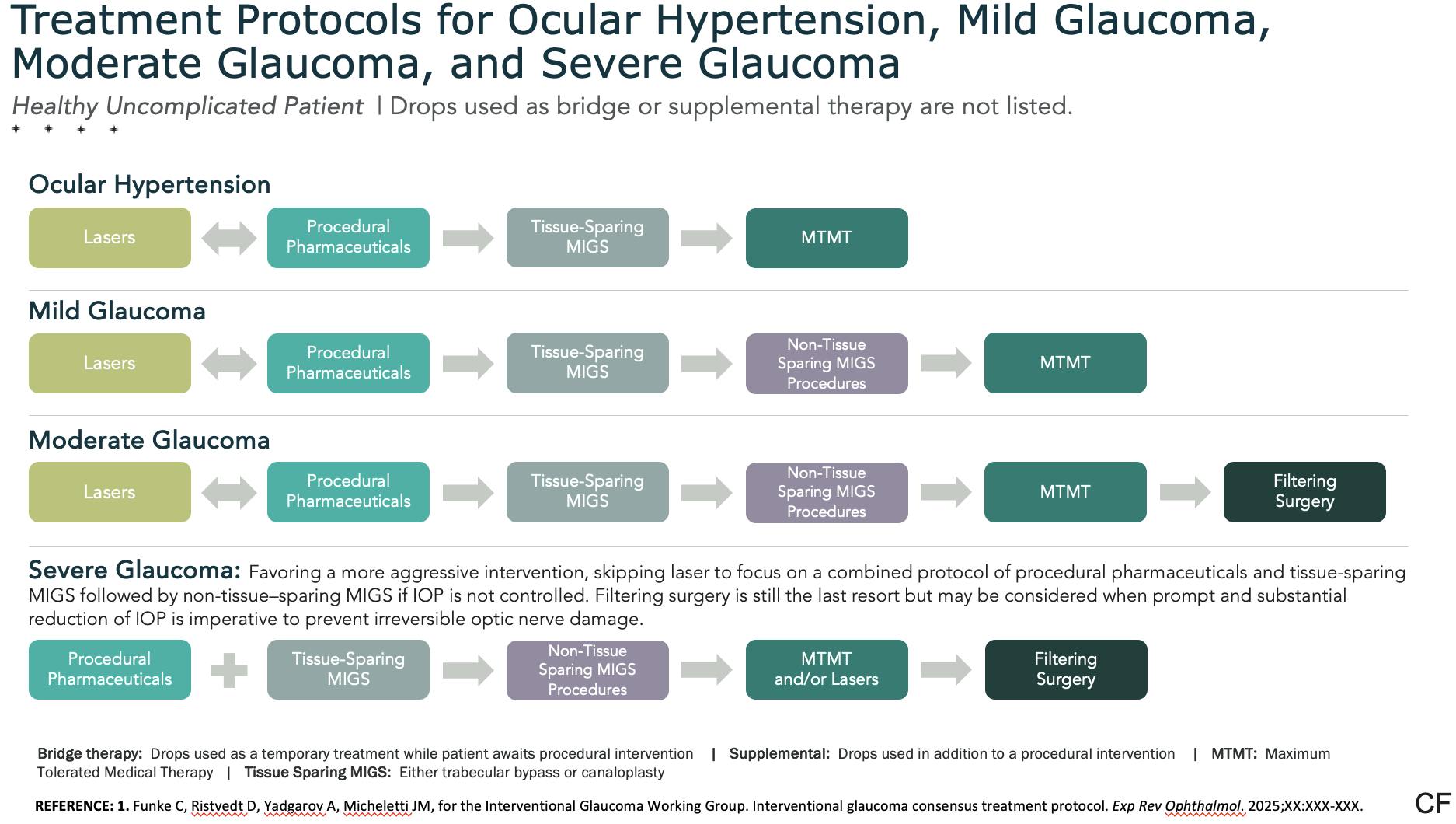
Figure 1. A proposed treatment roadmap from the published interventional glaucoma consensus treatment protocol.2
Dr. Ristvedt: We should think about glaucoma management as a long-term journey and emphasize that to patients. Treatment plans will evolve over time.
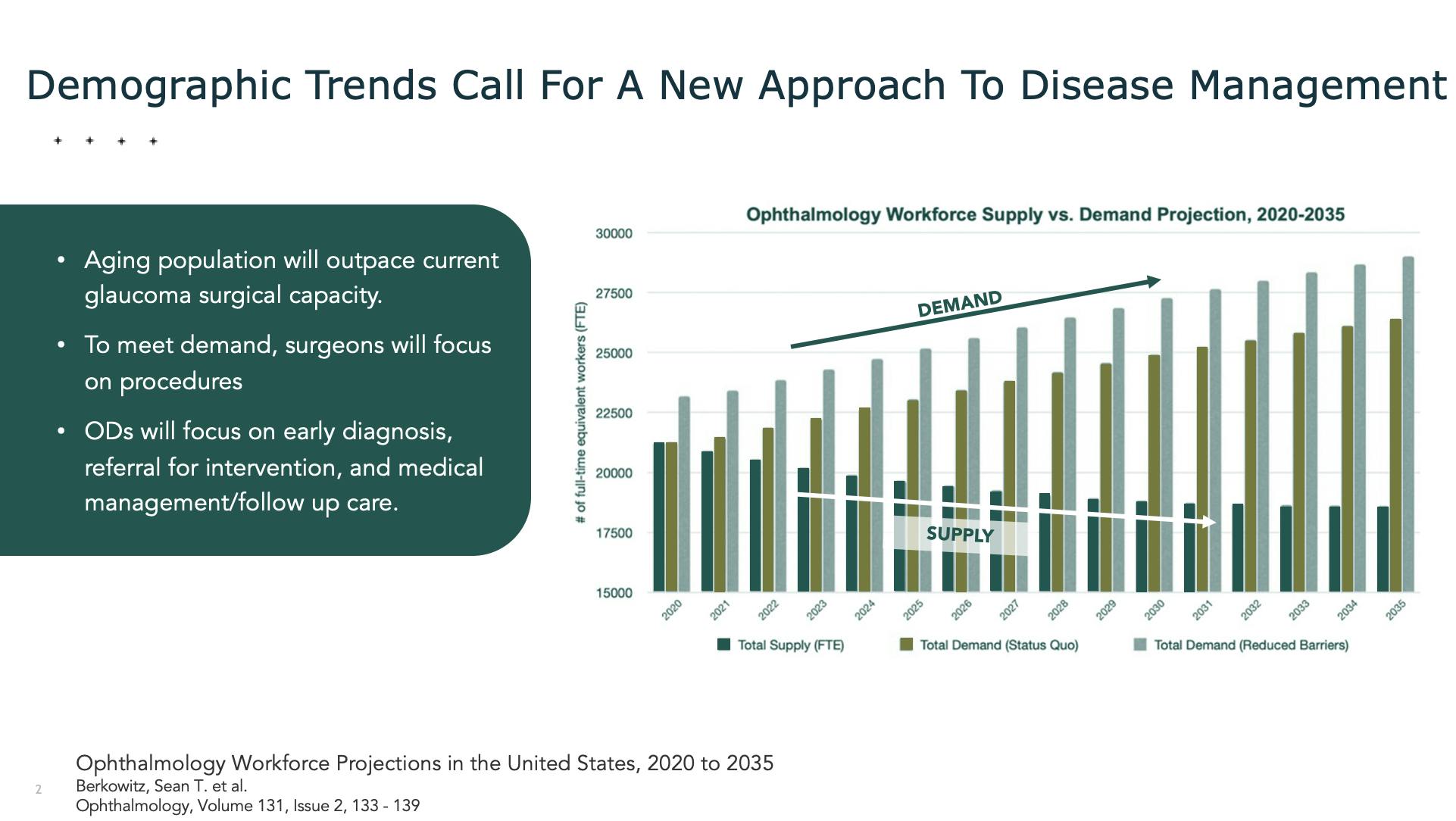
Demographic trends show an increasing demand for a new approach to disease management and a decreasing supply of ophthalmologists. How could interventional glaucoma help address this?
Dr. Funke: It is somewhat daunting that there are not enough glaucoma specialists to meet the demands of the growing patient population (Figure 2). But it continues to harken back to why we need to move toward a consensus so that we can advocate for a more streamlined approach to glaucoma care.
Dr. Ristvedt: This challenge prompts us to ask, "Why do we do things the way we do now?" This link of thinking has reenergized me and my practice because we have been able to sit down as a team and say, "How should we do things? How should we reinvent the wheel?" It makes me excited to be more involved with collaborative care and to truly address patients’ quality of life.
Dr. Gallardo: As our practices expand in managing diseases such as glaucoma, surgeons will see increased time to provide surgical interventions. I am currently excited about being a glaucoma specialist, whereas, when I was in training, glaucoma was a dark field with limited options. Now, we are practicing in an era of wonderful technology, excellent procedures, and the ability to manage patients in a way that prioritizes their quality of life.
1. Gazzard G, Konstantakopoulou E, Garway-Heath D, et al. Selective laser trabeculoplasty versus eye drops for first-line treatment of ocular hypertension and glaucoma (LiGHT): a multicentre randomised controlled trial. The Lancet. 2019;393(10180):1505-1516. doi:10.1016/s0140-6736(18)32213-x
2. Funke C, Ristvedt D, Yadgarov A, et al. Interventional glaucoma consensus treatment protocol. Exp Rev of Ophthal. 2025; 20 (Vol 2): 79-87. doi:10.1080/17469899.2025.2465330