


CASE PRESENTATION
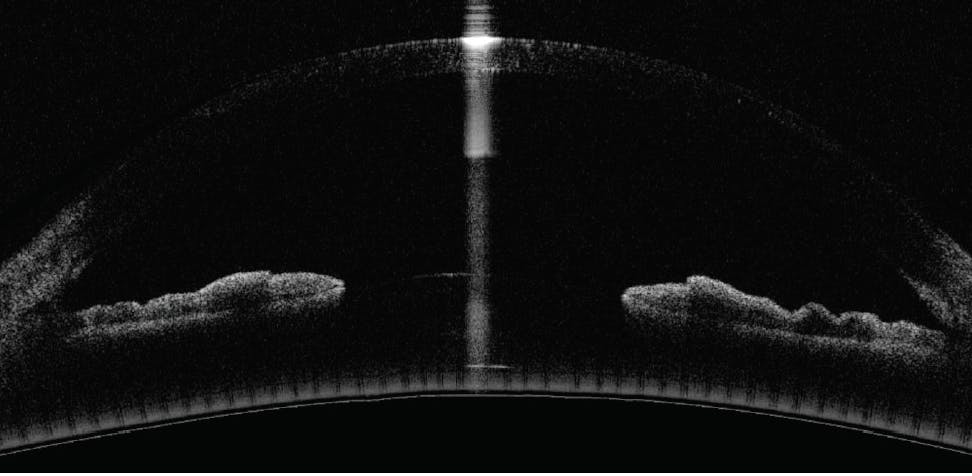
Figure 1. Anterior segment OCT imaging of the right eye confirmed that the angle was open. Results for the left eye were similar.
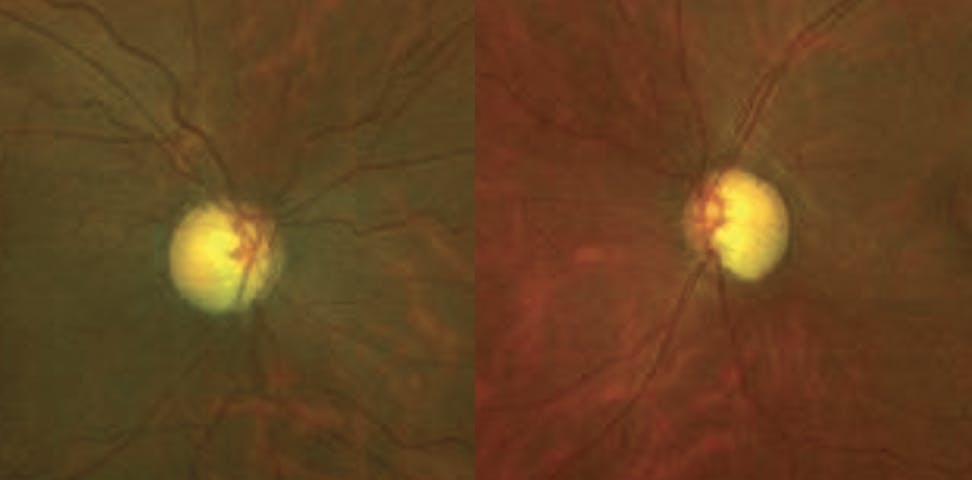
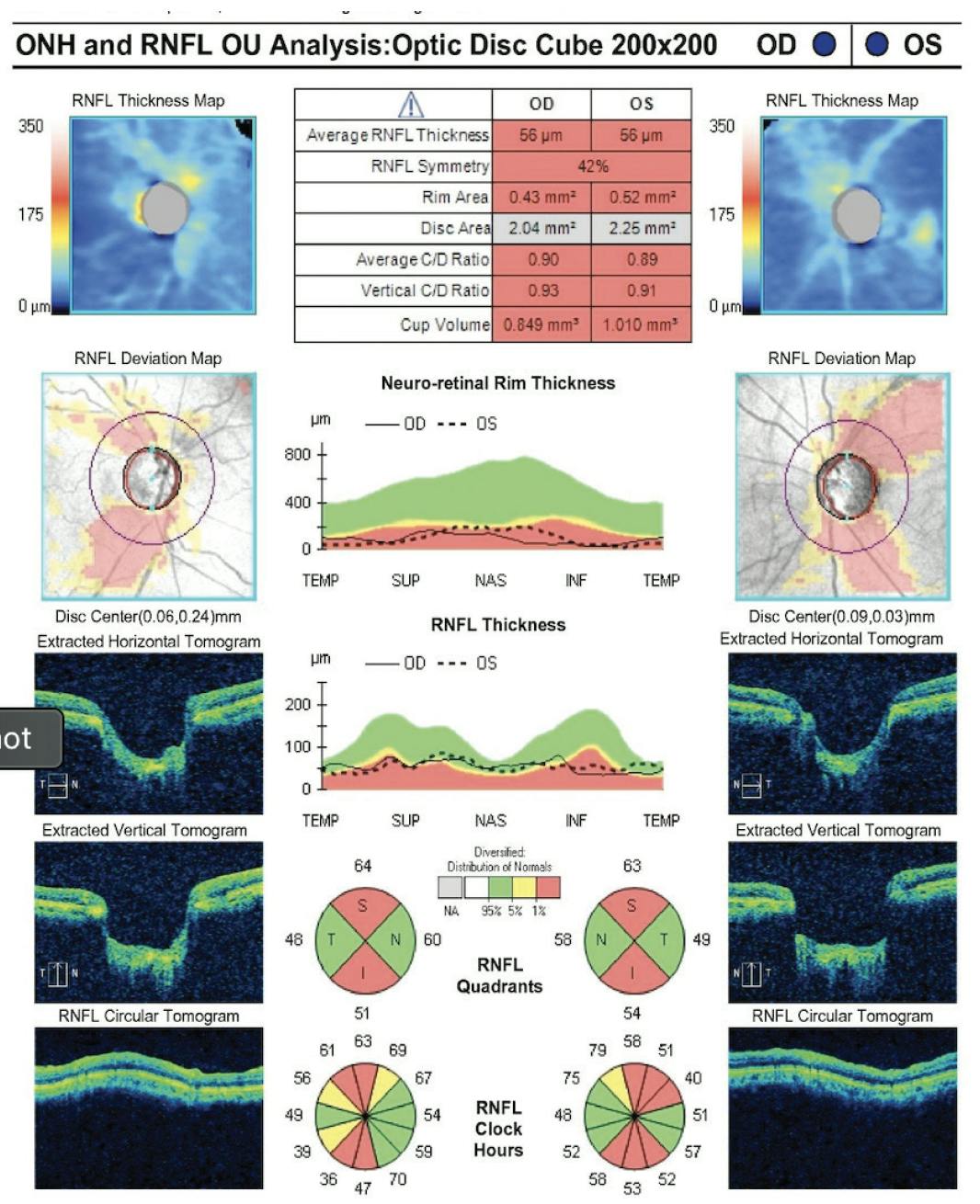
Figure 3. OCT imaging of the optic nerves showed significant retinal nerve fiber layer loss superiorly and inferiorly in each eye.
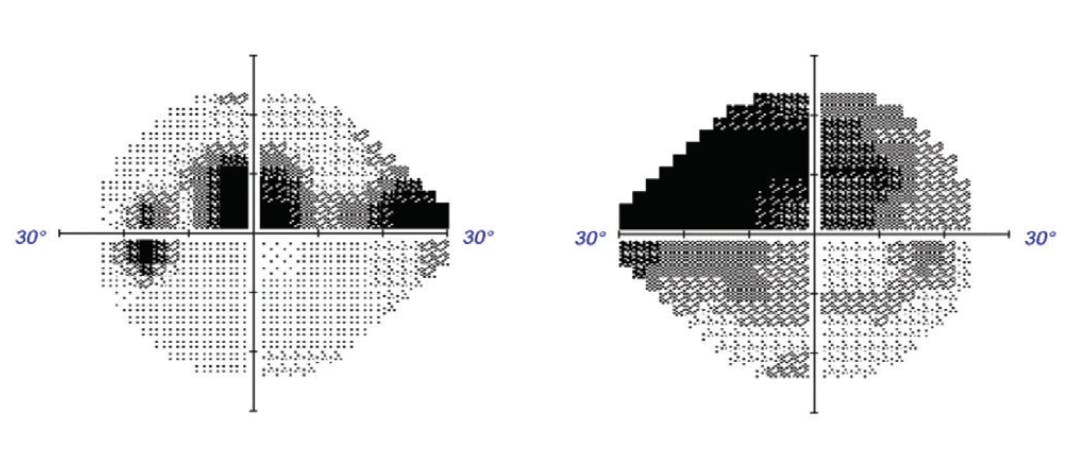
Figure 4. Humphrey VF testing (Carl Zeiss Meditec) showed advanced fixation-splitting superior field loss that was worse in the right eye.
—Case prepared by Devesh K. Varma, FRCSC
REENA A. GARG, MD
This case presents a diagnostic and treatment dilemma in a young patient with a complicated history. Her discs, OCT scans, and VF tests are all suspicious for NTG, but the discs appear to be reassuringly stable since before the vascular incident. It would be helpful to evaluate earlier VF tests for changes before 2018 and to determine whether, if changes occurred, they were progressive.
I am not reassured by this patient’s low IOP readings, even after correction for hysteresis. She is clearly susceptible to optic nerve damage, whether because of the incident in 2018 or from NTG. I rarely obtain diurnal IOP measurements, but they would be helpful in this case. If she is experiencing wide swings in IOP, I might initiate therapy with a Rho kinase inhibitor to stabilize the IOP. A reduction in episcleral venous pressure with this medication would be an added benefit. I would also ask the patient to consider administering her blood pressure medications in the morning to mitigate some of the nocturnal hypotension she is experiencing.
Most important, I would have a frank conversation with the patient about her situation. She is young, and the prognosis of patients with advanced NTG isn’t great. Given the natural course of this disease, I would monitor her closely but proceed conservatively, especially given her comorbidities.
MICHAEL D. GREENWOOD, MD
With few historical glaucoma tests available, the similarity in the optic nerves’ appearances before and after the aortic dissection is helpful. IOP measurements after LASIK can be unreliable. Using the Ocular Response Analyzer (Reichert) helps to confirm the IOP readings, and corneal hysteresis measurements indicate that the right eye is at greater risk of disease progression than the left eye.
The true cause of this patient’s VF loss may never be known, but I suspect NTG. I would not initiate IOP-lowering therapy at this time. Instead, I would observe her closely with multiple VF tests and OCT scans to determine if there is active progression. I would be comfortable with close monitoring to start because, in the Collaborative Normal Tension Glaucoma (CNTG) study, more than half of the participants did not experience disease progression.1
If I were to initiate medical therapy, I would consider netarsudil ophthalmic solution 0.02% (Rhopressa, Aerie Pharmaceuticals) or latanoprostene bunod ophthalmic solution 0.024% (Vyzulta, Bausch + Lomb) because they might lower episcleral venous pressure and reduce IOP in a patient whose starting IOP is already low. I would encourage the patient to administer her systemic antihypertension medications in the morning to reduce nighttime hypotension.
Further testing would include diurnal IOP measurement to ensure that she is not experiencing IOP spikes. I would also want to review previous measurements of cerebrospinal fluid pressure if available. Patients with NTG tend to have lower cerebrospinal fluid pressure than normal patients and patients with ocular hypertension,2,3 so these measurements could shed light on this case and help guide future therapy.
WHAT I DID: DEVESH K. VARMA, MD, FRCSC
Because disc photographs taken before and after the hypotensive episode in 2018 showed similar degrees of optic nerve cupping, my diagnosis was underlying advanced NTG. Although the patient had experienced a right frontoparietal stroke from hypotension, the left inferior VF quadrants remained intact, so I suspected that the stroke had had little impact on her optic radiations. The hypotensive episode that injured the frontoparietal lobe, however, might also have caused an injury elsewhere, including the optic nerves, so an acute or chronic injury was a reasonable working hypothesis. The nocturnal diastolic dipping was likely indicative of long-standing mechanisms unrelated to IOP that were contributing to glaucoma.
I began by adjusting the patient’s antihypertensive medications in consultation with her family doctor. The patient was already administering both medications in the morning, so no change in schedule was required. Her family doctor agreed to halve the candesartan dose. Although the IOP had always measured approximately 12 mm Hg, I thought that a more complete picture of the patient’s 24-hour IOP might be helpful. She used an Icare Home Tonometer (Icare USA) for 1 week to better elucidate her IOP pattern (Figure 5). The testing confirmed significant IOP fluctuations, with higher pressures in the right eye and a peak of 22 mm Hg. The lowest pressures were measured at night when her diastolic blood pressure was also at its lowest.
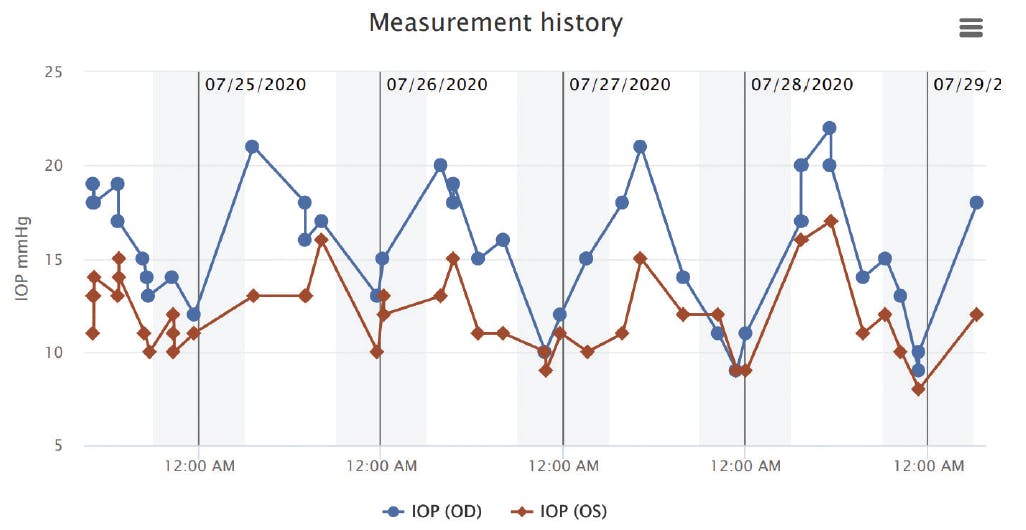
Figure 5. Measurements with the Icare Home Tonometer reveal significant IOP fluctuations and high peaks in IOP in the right eye.
The patient is scheduled to return to discuss the results of home tonometry. At that time, I will recommend initiating IOP-lowering therapy with an aim of reducing mean IOP by 30% and blunting IOP fluctuations. Her options for first-line treatment include laser trabeculoplasty and topical therapy. In addition to the side effects, we will discuss the theoretical benefits of different options for topical therapy such as a possible improvement in blood flow with a carbonic anhydrase inhibitor or nitric oxide–releasing drop and a theoretical potential for neuroprotection with an alpha agonist. Fortunately, despite her advanced disease, this patient has multiple options.
1. Anderson DR; Normal Tension Glaucoma Study. Collaborative Normal Tension Glaucoma Study. Curr Opin Ophthalmol. 2003;14(2):86-90.
2. Ren R, Jonas JB, Tian G, et al. Cerebrospinal fluid pressure in glaucoma: a prospective study. Ophthalmology. 2010;117(2):259-266.
3. Berdahl JP, Allingham RR, Johnson DH. Cerebrospinal fluid pressure is decreased in primary open-angle glaucoma. Ophthalmology. 2008;115(5):763-768.


