


Having visited the glaucoma clinic multiple times in 2020 (in January, February, June, October, and November), I have become somewhat of an expert in navigating pandemic-era appointments. Although my first visits of the year took place before SARS-CoV-2 began running rampant across all corners of The Old North State, my subsequent visits have very much been in the thick of the public health crisis.
I will admit that I was not comfortable going to the clinic back in June, but, in some ways, my hand was forced. I was testing a virtual reality–enabled visual field (VF) analyzer for home use and wanted to compare my results to the gold standard. Unfortunately, although the large academic health system my provider is a part of had invested millions of dollars in a state-of-the-art electronic health record system, the platform had not been designed to allow for the sharing of PDF files. If I wanted to review my VF test results, I had to venture into the practice and pick up the hard copies. I figured, why not go ahead with my regularly scheduled in-office appointment? After all, in for a penny, in for a pound, right?
In a perfect world, I would have utilized an at-home IOP monitor and VF perimeter to get a handle on my optic atrophy, and my historic VF test results would have been sent to me via the patient portal. But, because these options were not available, I masked up, refilled my hand sanitizer, and headed to the clinic.
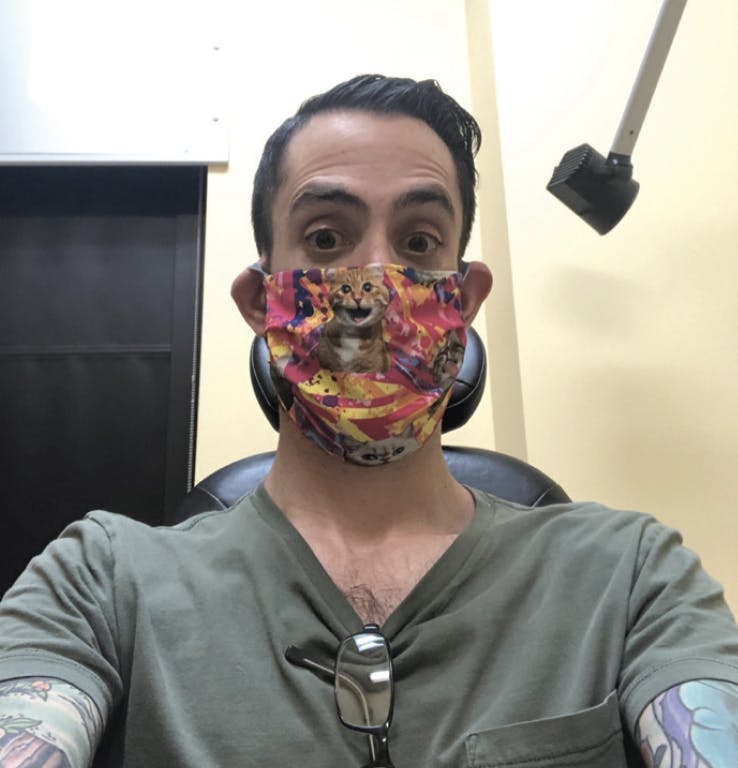
Figure. From the patient perspective, visits to the glaucoma clinic in the time of COVID-19 emphasize the need for more remote care solutions.
Showcasing Patient Safety During COVID-19
A new video resource demonstrates the measures providers and practices are taking to safely deliver glaucoma care.

Since the start of the pandemic, many glaucoma patients have been grappling with the decision of whether to visit their eye care providers and potentially risk exposure to COVID-19 or to delay their appointments and be subjected to visual consequences that occur as a result. “Patients are facing some difficult decisions. Do they try to save their sight? Do they risk their lives? It’s a real dilemma for some patients,” says Andrew Iwach, MD.
Dr. Iwach describes a particularly challenging situation faced by one of his patients, a 56-year-old named Myra. In addition to being treated for glaucoma, Myra has been undergoing chemotherapy for stage 4 breast cancer. When the pandemic hit, she decided to skip her eye care appointments out of fear of contracting COVID-19. In May, Myra began noticing some new visual symptoms, and she returned to Dr. Iwach for evaluation in mid-July.
“She knew something wasn’t right, but she was afraid to come in,” he says. “When she eventually came to see me, she had additional permanent loss of vision. Although I tried to reassure her that she did the best she could under extremely difficult circumstances, she now feels like she made the wrong decision concerning her glaucoma care.”
Dr. Iwach notes, however, that most of Myra’s fear about attending her appointments was alleviated once she visited the practice and saw the safety measures in place. He says, “She saw that you couldn’t enter our center without completing a screening questionnaire, getting a temperature check, sanitizing your hands, and wearing a properly fitted mask. She saw that our practice was outfitted with plastic barriers and that all staff members were wearing protective gear. Once Myra could see these efforts herself, she realized she could continue feeling comfortable in our care.”
Because situations like Myra’s are encountered by providers around the country, the Glaucoma Research Foundation recently produced a video to show patients the types of safety measures that are now commonly in place across ophthalmic practices (Figure). The video, entitled See You Soon!, was supported by an unrestricted grant from Aerie Pharmaceuticals, and it features several glaucoma specialists from different regions of the United States. Dr. Iwach says, “The ophthalmologists interviewed are not only from different parts of the country but also different types of practices, and they have implemented changes in slightly different ways according to their clinical settings. But, collectively, they emphasize that glaucoma care providers are concerned for patients’ safety and are taking the necessary steps to minimize risk.”
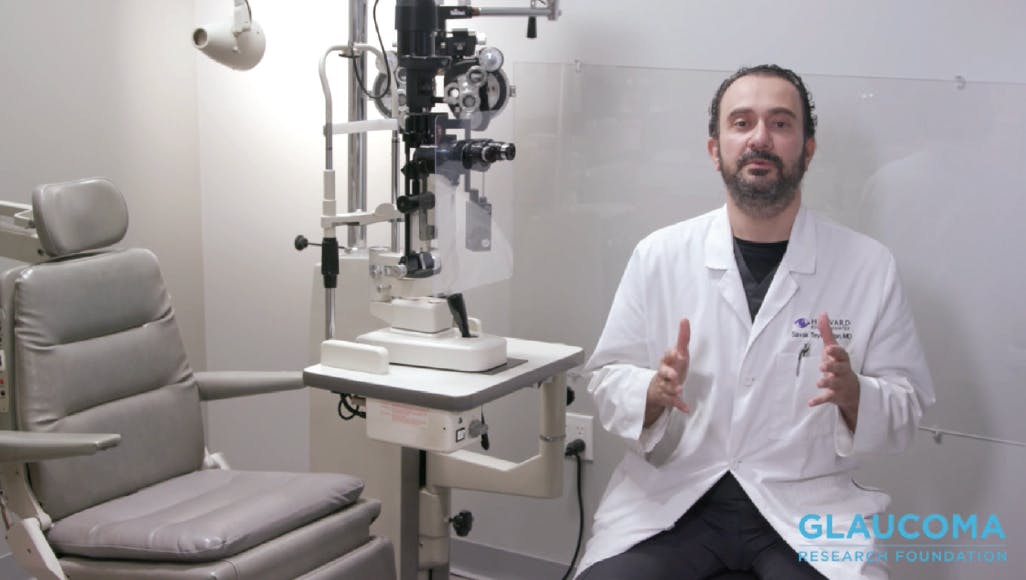
Figure. In the See You Soon! video, Savak Teymoorian, MD, MBA, and other glaucoma specialists show some of the safety measures in place to protect patients from COVID-19.
Dr. Iwach recommends that glaucoma care providers spread the word about the video, especially if they sense patients are reluctant to visit their offices due to COVID-19. “Many practices have communication systems in place, through which they can send messages to their patients,” he says. “To me, the easiest way to share the video is to send the link to patients and say, ‘Here is some useful information to let you know how those in the glaucoma community, our practice included, are continuing to prioritize patient safety in the time of COVID-19.’” Although patients’ personal eye care providers may not appear in the video, it may help patients to visualize some of the protections in place, emphasize the importance of their glaucoma appointments, and increase their comfort with resuming in-person care.
The See You Soon! video is available to view and download at bit.ly/GTseeyousoon.
Andrew Iwach, MD
• Executive Director, Glaucoma Center of San Francisco, California
• Board Director, Glaucoma Research Foundation
• frontdesk@glaucomasf.com
• Financial disclosure: None
A MODIFIED EXPERIENCE
While at the glaucoma clinic, I observed some key changes from the before times:
- Before I entered the clinic, staff performed an initial temperature check, and I was asked about any known exposures to COVID-19.
- After passing my preliminary screening, I was asked to sanitize my hands before check-in.
- When I reached the socially distanced front desk, I answered more screening questions and received a secondary temperature check.
- All clinic and office staff members wore masks, although none seemed amused by my party cat face covering (Figure). It was sort of hard to tell, though—no one smiled with their eyes.
- Clinic staff had thoughtfully removed 75% of the chairs from all waiting areas. In my particular waiting area, I was the only patient present.
- Patient flow was drastically different to reduce potential exposure. Right after I sat down, I was whisked to an empty exam room. I sat in the exam room until it was time for my VF test, as opposed to sitting in a common area. Once the VF test was complete, I went directly to OCT imaging, from OCT imaging back to the exam room, from the exam room to check-out, and from check-out to the door—no common areas and no mingling experienced.
- Although the degree of personal protective equipment in use has varied from visit to visit over the past few months, all staff members have always been masked. Sometimes my clinician will wear a face shield for an additional layer of protection. Hand sanitizer is everywhere, and staff members are constantly wiping down equipment.
ABOUT THE AUTHOR
Richie Kahn, MPH, is a health policy professional by training, clinical researcher by trade, and patient advisor by necessity. He is passionate about incorporating patient and caregiver perspectives into the clinical development process and ultimately reducing the time it takes to bring promising new therapeutics and diagnostics to market.
MOVING FORWARD
Whether considering clinical trial design or the structure of a clinical encounter, I am a big believer in removing patient burdens whenever possible, which includes fewer in-person visits that require patients, caregivers, and/or drivers to take time off work and as many in-home assessments as practical. Before COVID-19, in-person visits were the standard. If there is one silver lining to the pandemic as it relates to glaucoma, it is that clinical care is becoming more patient-centric. This means putting the patient first and engaging more effectively in order to better experiences and outcomes. More in-home ocular assessments with targeted, in-person follow-up as necessary would be a good place to start.

