Traumatic Atonic Pupil, Dislocated Cataract, and Vitreous Prolapse
Iqbal Ike K. Ahmed, MD, FRCSC
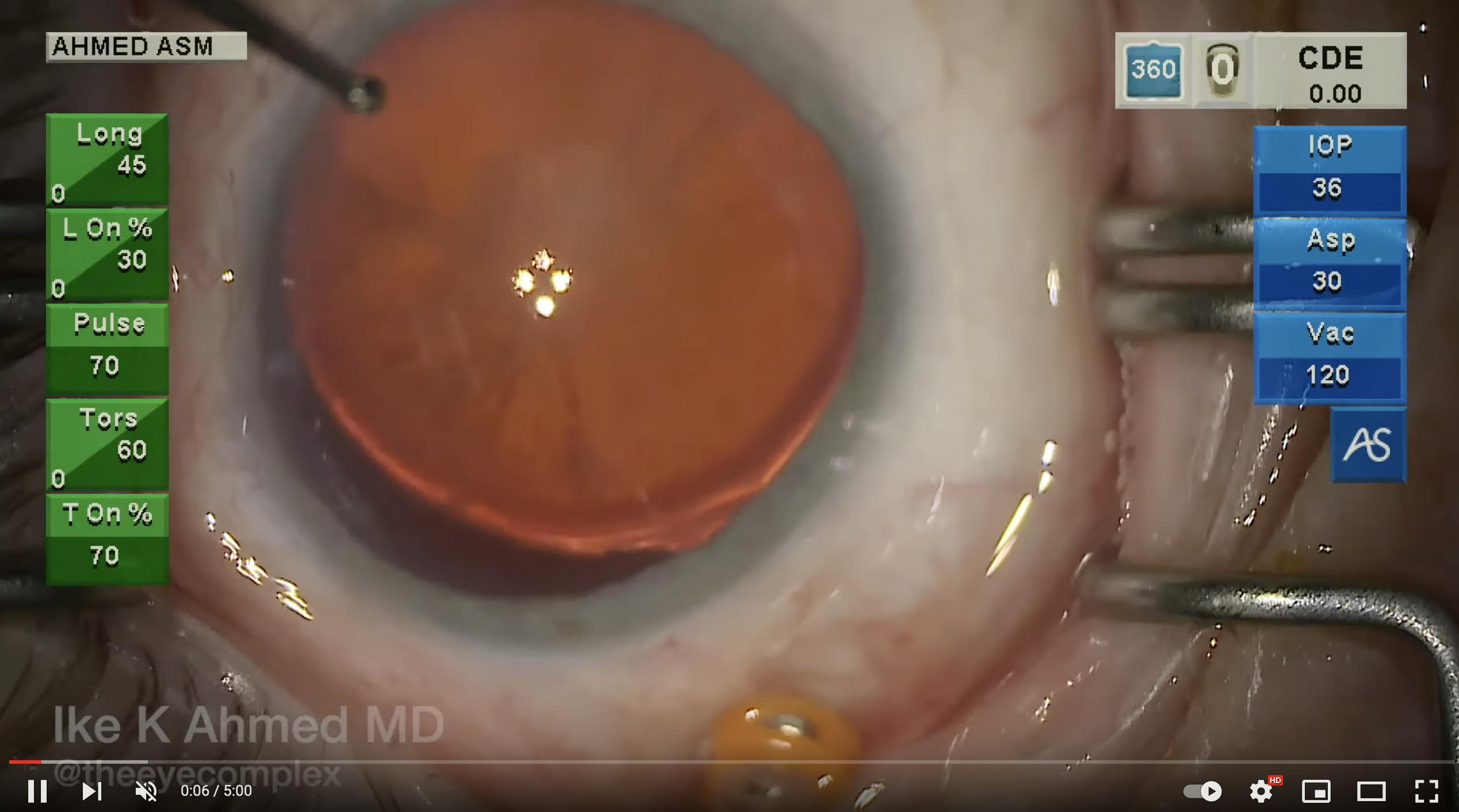
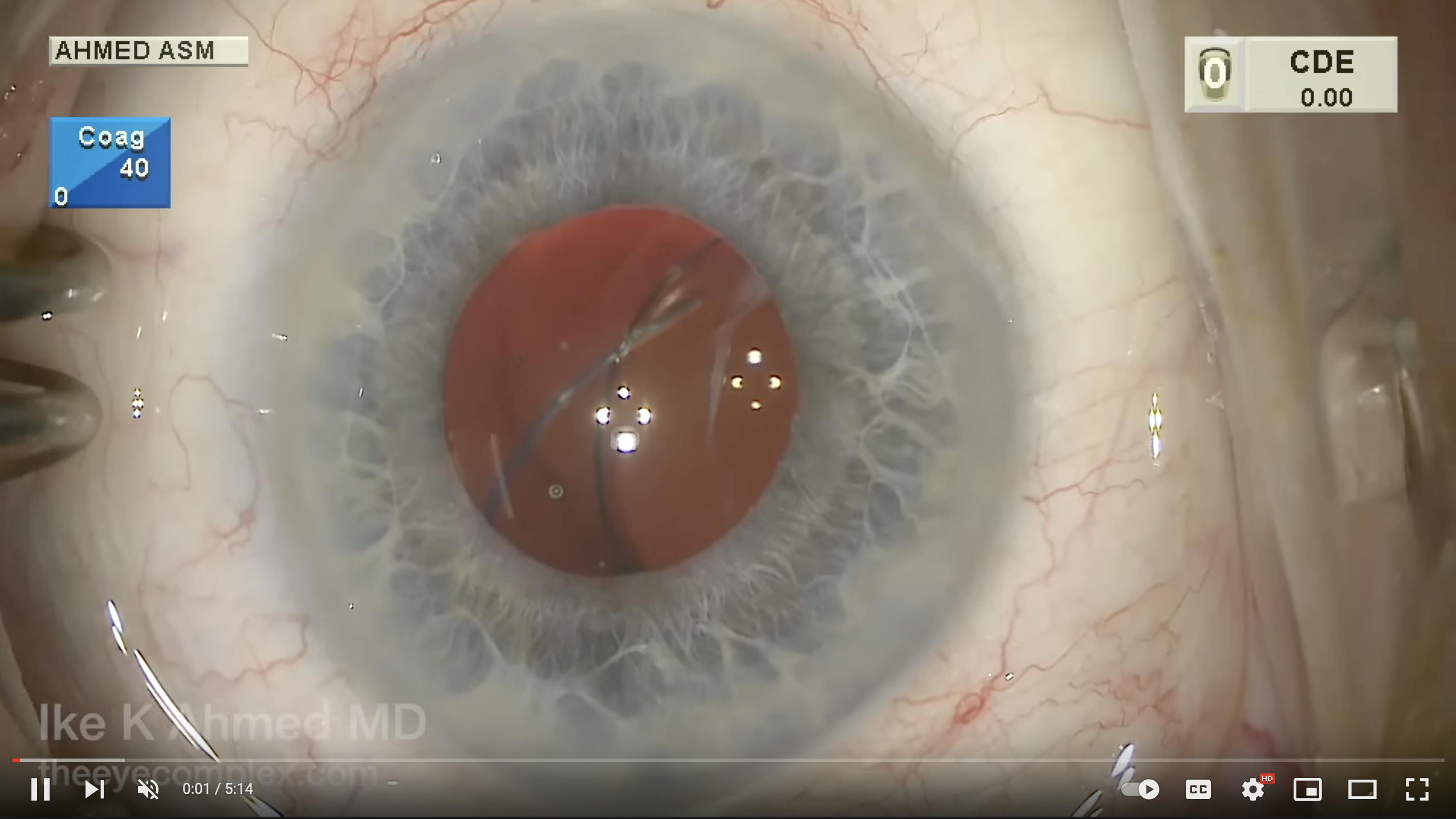
A patient presented with traumatic vitreous prolapse, a subluxated lens, and a large atonic pupil. Anterior vitrectomy using a pars plana approach was performed. Zonular dialysis was managed with the use of a capsular tension segment and 7-0 Gore-Tex suture and a capsular tension ring in the capsular bag to provide support for an in-the-bag posterior chamber IOL. Pupil cerclage with a 10-0 polypropylene suture was used to bring down the pupil to about 3.5 mm, which provided sufficient improvement in light sensitivity and vision loss and allowed for examination of the posterior segment of the eye.
Surgical Repair of a Subluxated Cataract and Pupilloplasty
Georges Durr, MD, FRCSC
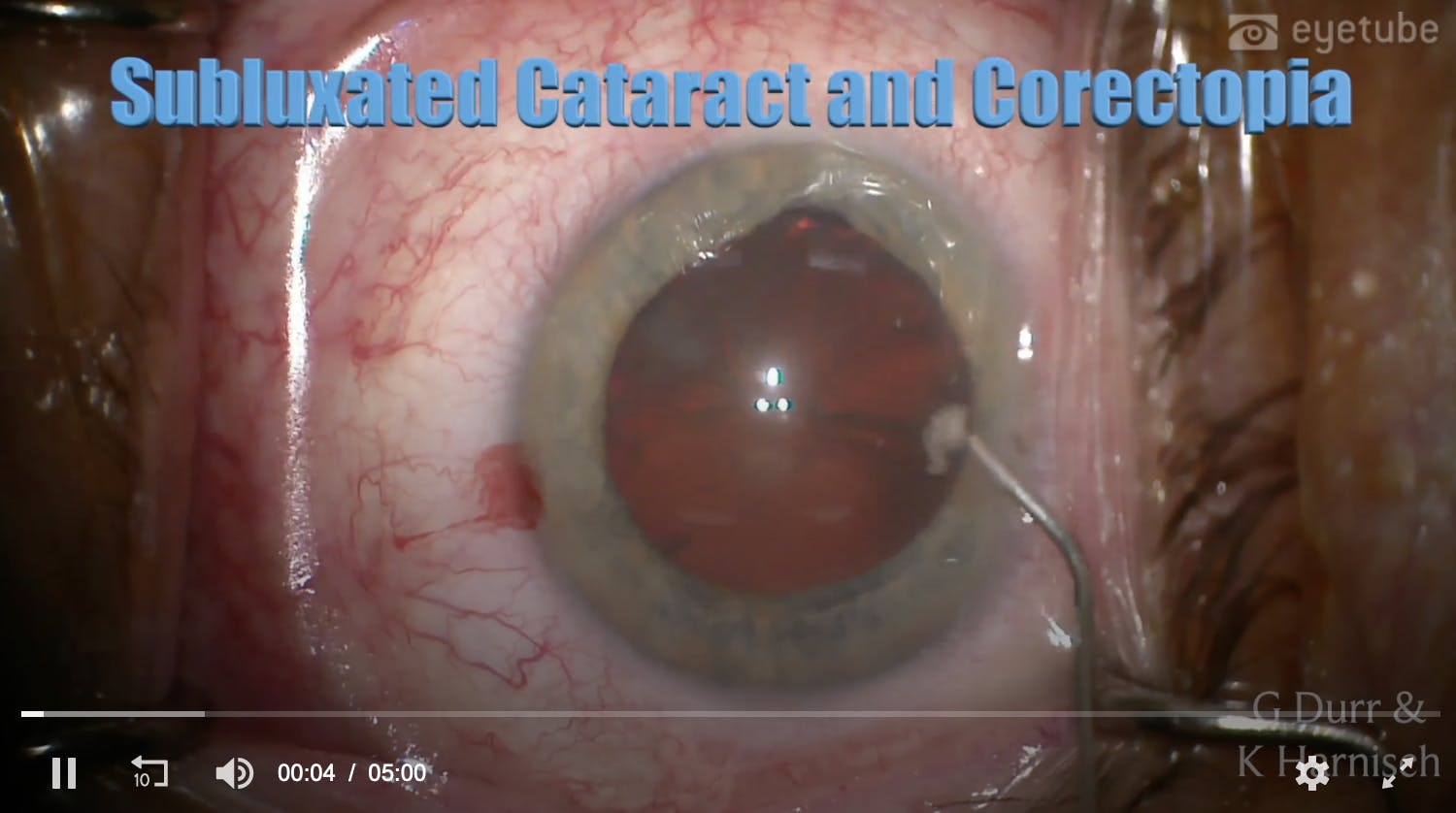
A patient presented with a subluxated cataract and correctopia secondary to a previous blunt trauma. The surgical repair required capsular hooks to support the bag during cataract removal, followed by a scleral-sutured capsular tension segment using a CV-8 suture (Gore-Tex) and a capsular tension ring to help secure the IOL. The capsular tension segment and capsular tension ring allow for the IOL to be placed in the natural capsular bag and minimize IOL tilt. Finally, a single interrupted iris suture using 10-0 polypropylene on a CIF-4 needle was placed to decrease any glare/dysphotopsia from the IOL edge and restore a more physiologic pupil.
Dislocated Toric IOL in an Eye With a Large Functioning Bleb
Cathleen McCabe, MD
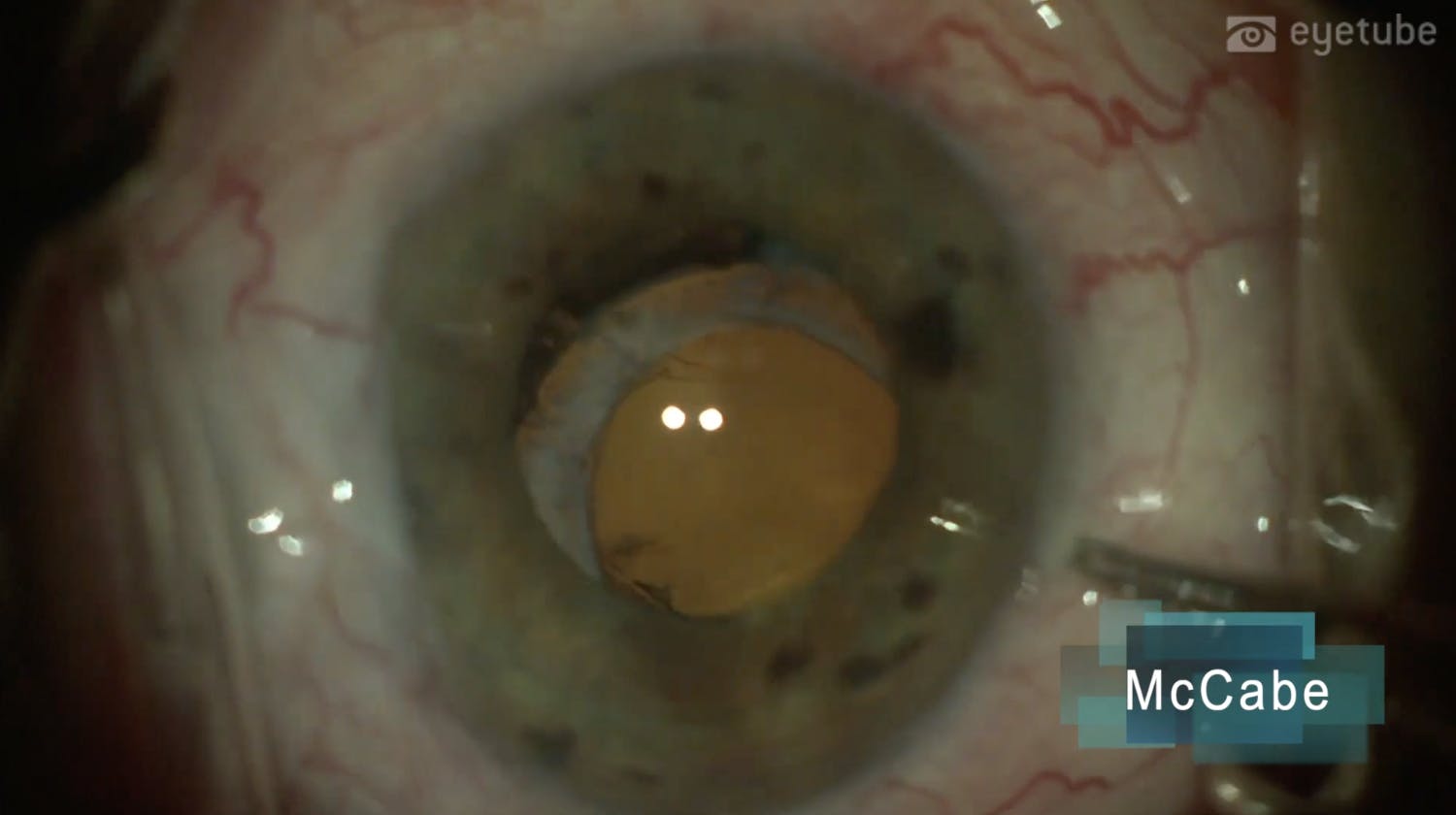
A 75-year-old with a history of cataract surgery and trabeculectomy presented with fluctuating vision. This video shows pseudophacodonesis and a dislocated one-piece acrylic toric IOL in the bag. When the eye is rotated inferiorly, an elevated, avascular bleb is visible superiorly.
Late-Onset, In-the-Bag IOL Dislocation
Iqbal Ike K. Ahmed, MD, FRCSC
This video demonstrates the exchange of a dislocated IOL with a three-piece hydrophobic IOL sutured to the posterior iris. Benefits of an iris-sutured approach versus a scleral-fixated approach include no externalization of haptics/tract, less tilt, and minimal vitrectomy requirement. This technique also maintains the IOL in a more natural position and away from the cornea compared with an anterior chamber IOL. A 10-0 polypropylene suture on a CIF-4 needle was used.
A Thick Lens and Shallow Anterior Chamber Depth
I. Paul Singh, MD
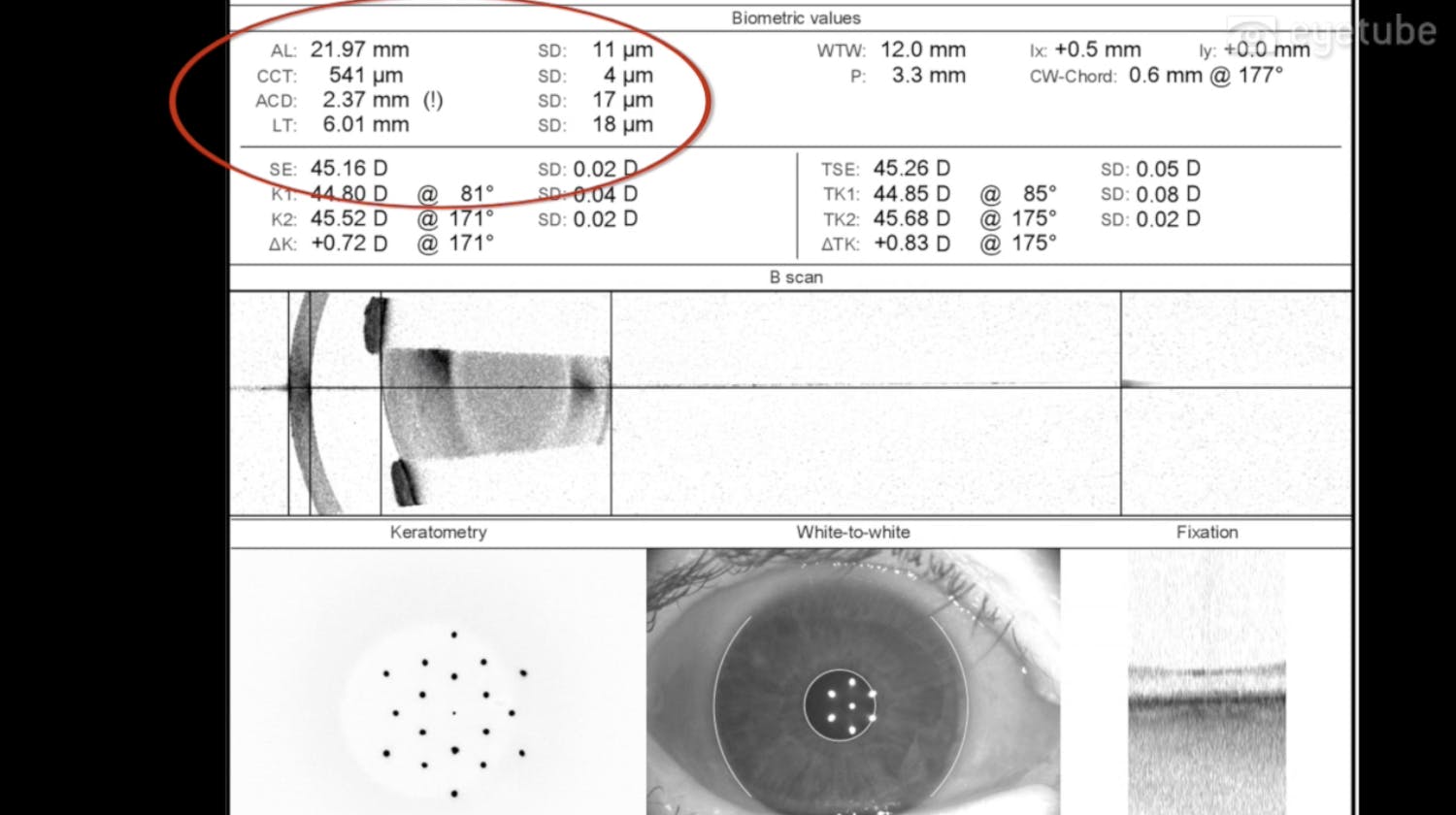
A patient with a thick lens (6.01 mm) and shallow anterior chamber depth (2.37 mm) presented for cataract surgery. The use of a femtosecond laser, vacuum-based phacoemulsification, a capsular tension ring, and an aberration-free IOL help with the management of this challenging case.
SUBMIT A VIDEO
Have a surgical highlight to share?
Upload it to Eyetube: eyetube.net/video/submit
Fast Facts on Eyetube
- 9,000 on-demand videos
- 2,500 videos watched daily
- 135,000 members around the world