A 6-year-old patient was referred for the surgical treatment of glaucoma, secondary to Sturge-Weber syndrome, that was uncontrolled on three medications. His BCVA was 20/20 OU. IOP was 13 mm Hg OD and 35 mm Hg OS. The cup-to-disc ratios were 0.2 OD and 0.9 OS. Choroidal thickness was higher in the left eye than in the right eye (1.33 mm vs 1.86 mm), and a choroidal hemangioma was present in the left posterior pole.
The patient underwent implantation of an Ahmed Glaucoma Valve (New World Medical) in the left eye. During the surgery, a small amount of an OVD was left in the anterior chamber to keep the IOP slightly elevated in the early postoperative period and avoid hypotony-related retinal complications in this high-risk patient with phakomatosis.
On postoperative day 1, the anterior chamber was so shallow that the corneal endothelium was almost in contact with the iris and the lens (Figure 1). IOP was 21 mm Hg, and ultrasonography did not reveal retinal complications such as suprachoroidal hemorrhage. The patient underwent tube ligation on the same day, and he was treated with cyclopentolate. The day after the tube ligation, his IOP was 27 mm Hg, and the anterior chamber was deeper; however, a serous retinal detachment had developed (Figure 2). His BCVA was 20/200 OS.
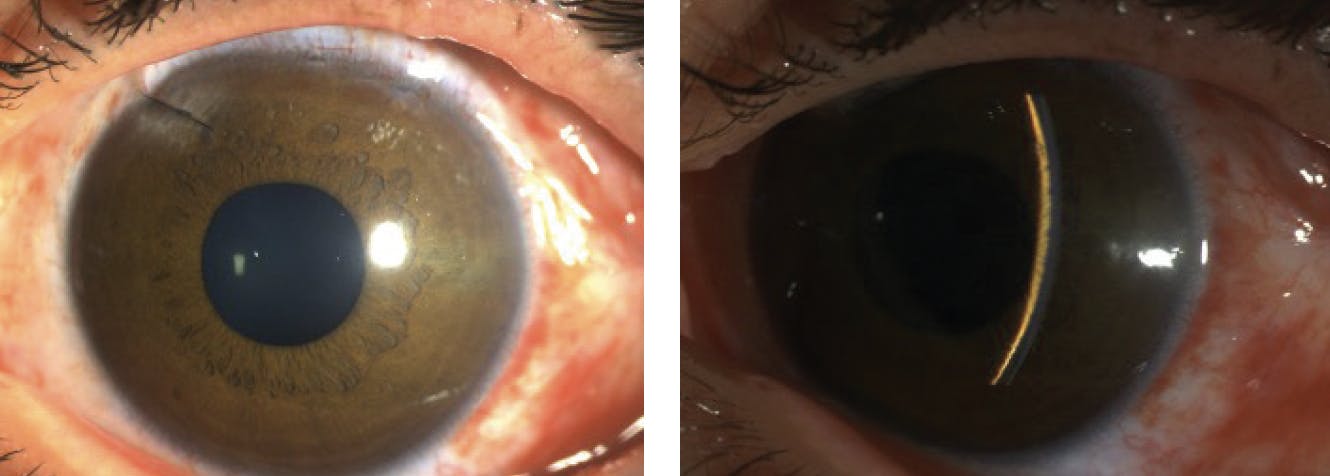
Figure 1. One day after tube shunt surgery, the anterior chamber was so shallow that the corneal endothelium was almost in contact with the iris and the lens.
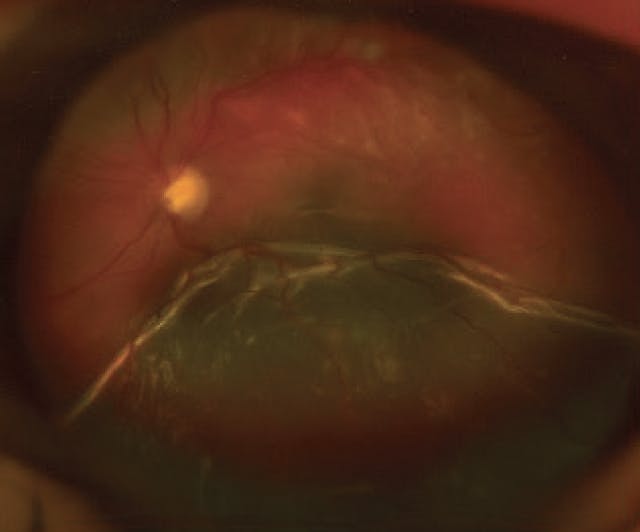
Figure 2. One day after tube ligation, the patient’s IOP was 27 mm Hg, and the anterior chamber was deeper; however, a serous retinal detachment had developed.
Treatment with a topical carbonic anhydrase inhibitor (CAI) three times per day was prescribed, and oral propranolol was considered for the treatment of the retinal detachment. Meanwhile, the patient was examined in the hospital's pediatric oncology department and coincidentally diagnosed with systemic hypertension. His pediatrician recommended propranolol therapy for his systemic hypertension, so this treatment was initiated.
The patient’s IOP was 16 mm Hg OS at 2 weeks postoperatively and 14 mm Hg OS at 1 month postoperatively on the topical CAI. The retinal detachment had almost resolved by the end of postoperative month 1 (Figure 3). By postoperative month 2, IOP was 12 mm Hg on the topical CAI, and the retinal detachment had completely resolved (Figure 4).
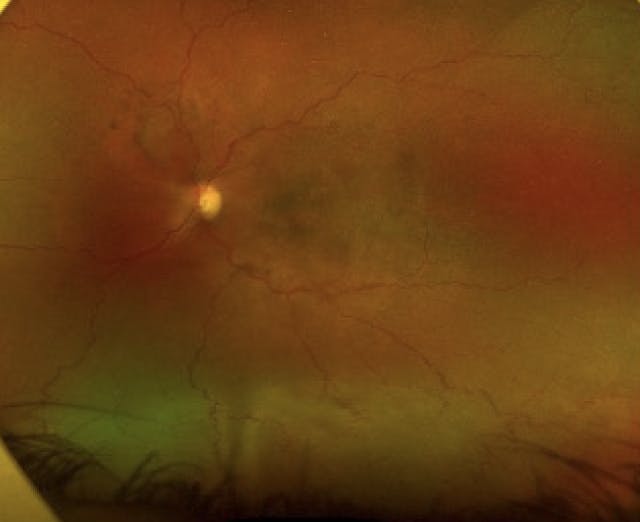
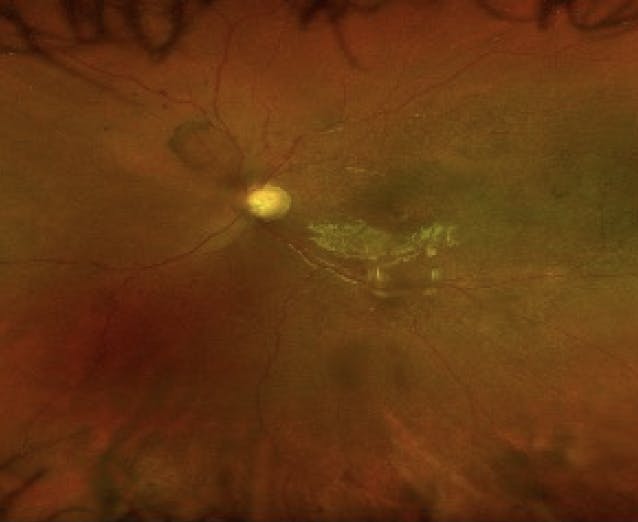
Figure 4. By 2 months postoperatively, the patient’s IOP was 12 mm Hg on a topical CAI, and his retinal detachment had completely resolved.
LESSONS LEARNED
Several valuable lessons can be drawn from this case.
No. 1: Early postoperative choroidal and exudative retinal detachments may occur from a rapid expansion of the choroidal hemangioma with effusion of fluid into the suprachoroidal and subretinal spaces.
No. 2: These complications are not always seen when the IOP is low, as in this case.
No. 3: It is safe to tie off the tube (even valved implants such as the Ahmed Glaucoma Valve) using absorbable sutures in high-risk patients with thick choroids and to avoid the steep pressure gradient in the early postoperative period if the preoperative IOP was high.
No. 4: Systemic hypertension may increase the possibility of exudative retinal detachment and should therefore be considered in all patients with phakomatoses, even children.