Several glaucoma treatments in development show promise and suggest future directions in research. Therapeutic advances may ultimately allow patients to defer surgical intervention. This article provides an update on omidenepag isopropyl (OMDI) ophthalmic solution 0.002% (Eybelis) and galectin-3 (Gal-3) inhibition as well as on alternative drug delivery systems such as sustained-release (SR) prostaglandin analogue (PGA) implants and drug-eluting scleral rings.
OMIDENEPAG ISOPROPYL
OMDI ophthalmic solution 0.002% contains the active metabolite omidenepag, a selective, non–prostaglandin prostanoid EP2 receptor agonist. OMDI was approved in Japan in 2018 for use as an IOP-lowering agent in patients with glaucoma and ocular hypertension (OHT).1 Like first-line PGAs such as latanoprost, OMDI reduces IOP by increasing the uveoscleral outflow of aqueous humor (AH).
Aihara et al compared the efficacy of OMDI 0.002% and latanoprost 0.005% in 190 Japanese patients with primary open-angle glaucoma (POAG) or OHT.1 OMDI was noninferior to latanoprost (noninferiority margin of 1.5 mm Hg). IOP decreased by a mean of 5.93 ±0.23 mm Hg and 6.56 ±0.22 mm Hg from baseline after 4 weeks of nightly dosing of OMDI and treatment with latanoprost, respectively (Table).1
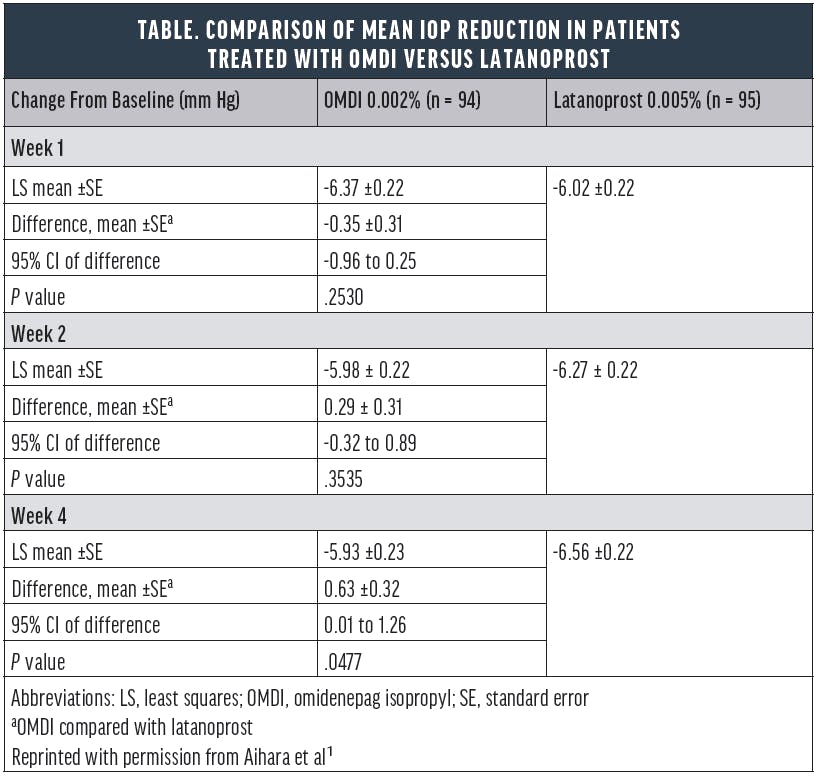
Emerging data indicate a lower incidence of complications such as cystoid macular edema (CME) and periorbital fat atrophy in patients using OMDI versus PGAs. Whether CME is a complication of PGA use is the subject of debate.2 Arcieri et al observed a significantly higher incidence (27%) of CME in pseudophakic or aphakic patients with POAG who were treated with latanoprost for 6 months compared to those who were treated with bimatoprost or travoprost (each with an incidence of 6%; P = .03).3 On the other hand, a 4.7% incidence of CME was observed in the phase 3 RENGE study in patients with POAG or OHT who were treated with OMDI for 6 months.4 OMDI may therefore be of particular benefit for the treatment of patients with concurrent CME.
Cosmetic changes such as periorbital fat atrophy and eyelid pigmentation are well-documented side effects of PGA therapy. Treating patients with OMDI in lieu of latanoprost has been shown to ameliorate these symptoms.5 Twelve patients exhibiting signs of PGA-associated periorbital symptoms after prolonged use of PGAs were instructed to stop the therapy and begin treatment with OMDI for 12 months. Within that period, most of the patients showed an improvement in their PGA-associated periorbital symptoms.5
GAL-3 INHIBITION
Gal-3 is a beta-galactoside–binding lectin involved in a variety of cellular processes, including proliferation and differentiation, cell adhesion, fibrosis, and apoptosis.6 Gal-3 has been implicated in inflammatory conditions such as acute kidney injury, cardiac dysfunction, and fibrosis in mouse models.7 In glaucoma, Gal-3 is secreted by activated microglia, the resident immune cells in the retina, in response to neurodegeneration. Increased levels of Gal-3 are associated with a loss of retinal ganglion cells (RGCs) in the setting of chronic neuroinflammation.8,9 Of significance, an upregulation of Gal-3 expression has been found in the retinal microglia of both mouse and human models of glaucoma.6,9
In collaboration with the laboratory of Milica Margeta, MD, PhD, our team is currently researching the potential of Gal-3 inhibitors for preventing RGC death in hypertensive, glaucomatous eyes. Following weekly intravitreal injections of the commercially available Gal-3 inhibitor TD139, RGC bodies and their axon projections were protected in glaucomatous mouse eyes despite high IOP.9 In preliminary human trials conducted at Massachusetts Eye and Ear Infirmary, AH samples were collected at the start of surgery from 57 patients with glaucoma who were undergoing various ophthalmic procedures as well as 14 control patients who were undergoing routine phacoemulsification. After protein quantification by standard enzyme-linked immunosorbent assay, levels of Gal-3 were significantly elevated (2.33 ±2.09 ng/mL) in patients with glaucoma versus control patients (0.92 ±0.81 ng/mL; P = .004).
We presented our results at the 2022 ARVO Annual Meeting. Importantly, Gal-3 protein levels were positively correlated with those of apolipoprotein E (APOE), a known marker of activated microglia (Figure 1).10,11 Dr. Margeta presented research on how APOE4 impairs the response of neurodegenerative microglia and prevents neuronal loss in glaucoma.
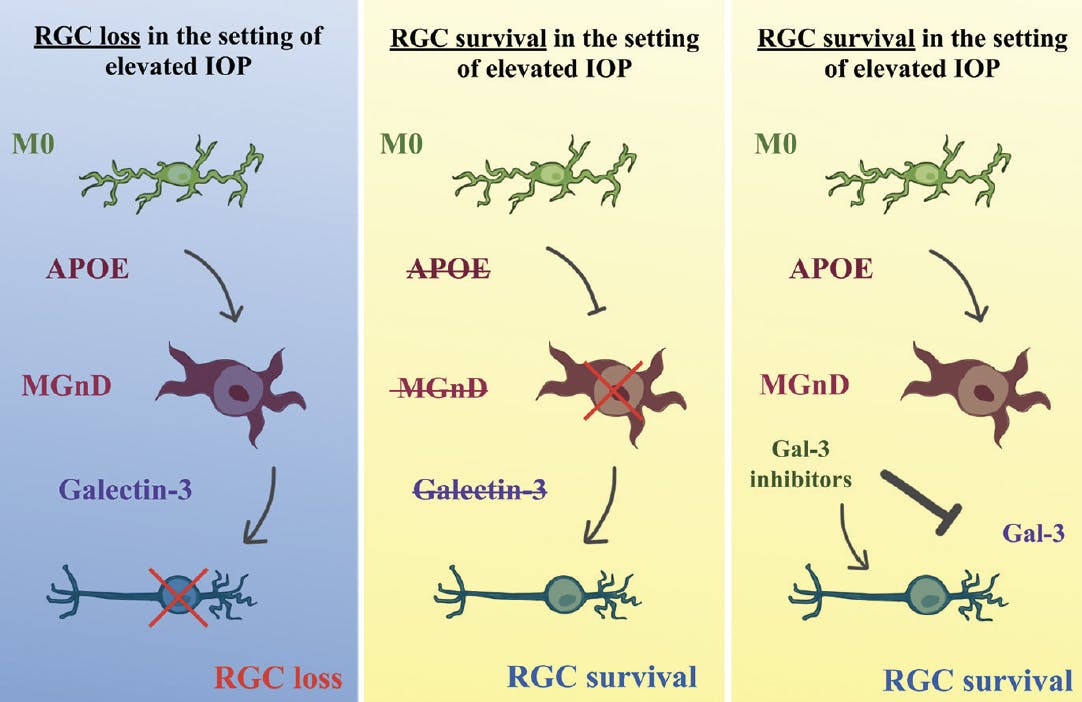
Figure 1. Panel 1 illustrates the proinflammatory cascade that leads to Gal-3 secretion and progressive RGC loss. When APOE is knocked out, neurodegenerative microglia phenotype (MGnD) activation does not occur, resulting in RGC survival (panel 2). When Gal-3 inhibitors are present, RGCs survive despite the presence of APOE and MGnD activation (panel 3). Abbreviation: M0, homeostatic adult microglia phenotype.
The preliminary human study found that patients with higher maximum recorded IOPs had significantly higher levels of Gal-3 present in their AH (P = .009). We hypothesize that very elevated IOPs in glaucoma may initiate a proinflammatory cascade that leads to Gal-3 secretion and progressive RGC loss. Our ongoing project aims to address questions concerning the most effective Gal-3 inhibitors, the best route for delivery of Gal-3 inhibitors, and ideal candidates for Gal-3 inhibitor therapy. We envision Gal-3 inhibitors as IOP-independent neuroprotective treatments for glaucoma, with the potential to protect RGCs from glaucomatous degeneration even when IOP-lowering methods fail.
ALTERNATIVE DRUG DELIVERY SYSTEMS
In the United States, an estimated 27% of written prescriptions are either filled but never used or not filled at all.12 According to the Glaucoma Adherence and Persistency Study (GAPS), only 10% of the approximately 14,000 patients surveyed reported consistent medication adherence over the course of 1 year.13 Oftentimes, nonadherence contributes to the decision to intervene surgically in glaucoma. It is therefore crucial to develop effective and safe alternative drug delivery systems to improve patients’ prognoses and overall quality of life.
SR implants. The bimatoprost implant (Durysta, Allergan) is delivered by an intracameral injection, and it is the first SR glaucoma therapy approved by the FDA. Currently, the implant is approved only for one-time administration. Its IOP-lowering effects last 4 to 6 months on average, making the implant a likely short-term solution.14,15 Endothelial cell loss may be the primary contraindication for multiple injections because of the close proximity of the drug pellets to the corneal epithelium.14,15
Other SR devices have been developed but are not approved by the FDA. For example, iDose (Glaukos) is a titanium SR travoprost-eluting device that is implanted in the trabecular meshwork (Figure 2). Its IOP-lowering effects have lasted up to 36 months.14 Given the potential to refill the iDose once the medication it contains is depleted,16 we hypothesize that the device may be less likely to cause endothelial cell loss than the bimatoprost implant. The requirement, however, for a corneal incision to implant the iDose may deter patients.
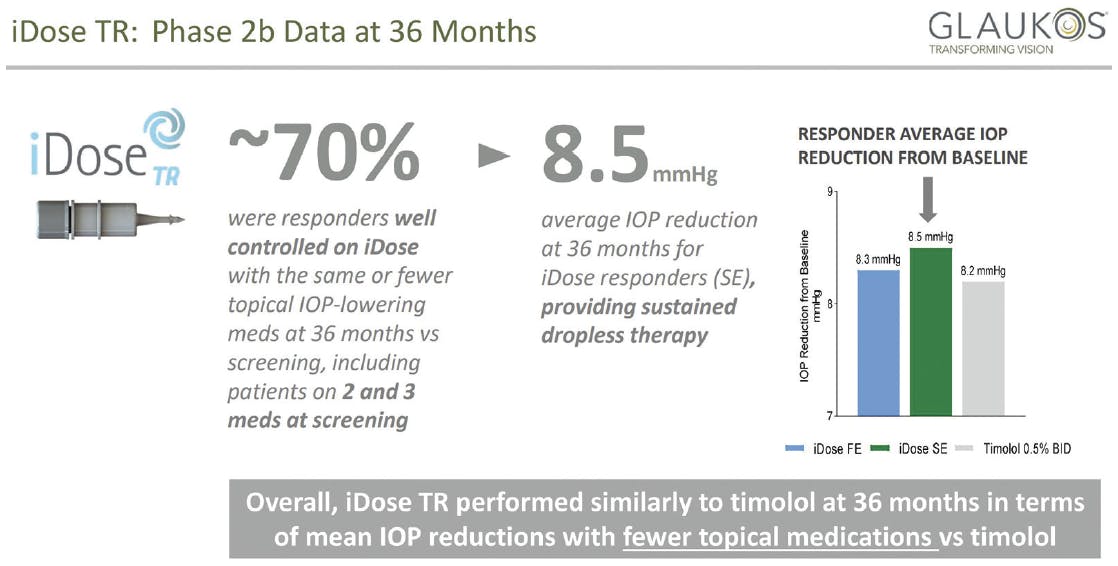
Figure 2. Mean IOP reduction from baseline in patients treated with the iDose versus timolol.
Image courtesy of Glaukos
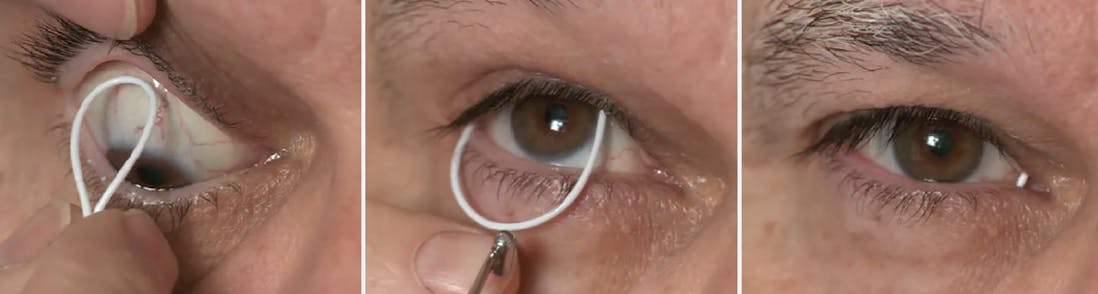
Other devices. The limitations of SR intraocular implants have spurred the development of minimally invasive alternative drug delivery systems such as drug-eluting contact lenses, scleral rings, and punctal plugs. The Bimatoprost Ocular Ring (BIM Ring, Allergan), for example, is a silicone-polymer matrix insert designed for placement directly on the ocular surface (Figure 3). The ring’s large surface area may make it a candidate for simultaneous multidrug administration. In the phase 2 trials, 130 patients with POAG or OHT received the BIM Ring and exhibited at least a 20% sustained IOP reduction from baseline over a 6-month period. Compared to patients who received topical timolol twice daily, the BIM Ring patients may have experienced a slightly lower mean IOP reduction (4.2–6.4 mm Hg vs 3.2–6.4 mm Hg).17
CONCLUSION
Emerging glaucoma therapies in combination with alternative drug delivery systems have the potential to revolutionize glaucoma treatment. This could greatly benefit both patients and providers.
1. Aihara M, Lu F, Kawata H, Iwata A, Odani-Kawabata N, Shams NK. Omidenepag isopropyl versus latanoprost in primary open-angle glaucoma and ocular hypertension: the phase 3 AYAME study. Am J Ophthalmol. 2020;220:53-63.
2. Holló G, Aung T, Cantor LB, Aihara M. Cystoid macular edema related to cataract surgery and topical prostaglandin analogs: mechanism, diagnosis, and management. Surv Ophthalmol. 2020;65(5):496-512.
3. Arcieri ES, Santana A, Rocha FN, Guapo GL, Costa VP. Blood-aqueous barrier changes after the use of prostaglandin analogues in patients with pseudophakia and aphakia: a 6-month randomized trial. Arch Ophthalmol. 2005;123(2):186-192.
4. Aihara M, Lu F, Kawata A, et al. Six-month efficacy and safety outcomes of a novel selective EP2 agonist omidenepag isopropyl: the RENGE study (phase 3). Invest Ophthalmol Vis Sci. 2018;59(9):1229.
5. Oogi S, Nakakura S, Terao E, Fujisawa Y, Tabuchi H, Kiuchi Y. One-year follow-up study of changes in prostaglandin-associated periorbital syndrome after switch from conventional prostaglandin F2alfa to omidenepag isopropyl. Cureus. 2020;12(8):e10064.
6. Belmares R, Raychaudhuri U, Maansson S, Clark AF. Histological investigation of human glaucomatous eyes: extracellular fibrotic changes and galectin 3 expression in the trabecular meshwork and optic nerve head. Clin Anat. 2018;31(7):1031-1049.
7. Prud’homme M, Coutrot M, Michel T, et al. Acute kidney injury induces remote cardiac damage and dysfunction through the Galectin-3 pathway. JACC Basic Transl Sci. 2019;4(6):717-732.
8. Puigdellívol M, Allendorf DH, Brown GC. Sialylation and Galectin-3 in microglia-mediated neuroinflammation and neurodegeneration. Front Cell Neurosci. 2020;14:162.
9. Pitts K, Neeson CE, Hall NE, Falah HK, Margeta MA, Solá-Del Valle D. APOE and Galectin-3, markers of activated microglia, are elevated in the aqueous humor of glaucoma patients. Poster presented at: ARVO Annual Meeting; May 1-4, 2022; Denver, CO.
10. Margeta MA, Letcher SM, Igo RP Jr, et al. Association of APOE with primary open-angle glaucoma suggests a protective effect for APOE ε4. Invest Ophthalmol Vis Sci. 2020;61(8):3.
11. Krasemann S, Madore C, Cialic R, et al. The TREM2-APOE pathway drives the transcriptional phenotype of dysfunctional microglia in neurodegenerative diseases. Immunity. 2017;47(3):566-581.e9.
12. Fingeret M, Dickerson JE Jr. The role of minimally invasive glaucoma surgery devices in the management of glaucoma. Optom Vis Sci. 2018;95(2):155-162.
13. Friedman DS, Quigley HA, Gelb L, et al. Using pharmacy claims data to study adherence to glaucoma medications: methodology and findings of the Glaucoma Adherence and Persistency Study (GAPS). Invest Ophthalmol Vis Sci. 2007;48(11):5052-5057.
14. Shirley M. Bimatoprost implant: first approval. Drugs Aging. 2020;37(6):457-462.
15. Kesav NP, Young CEC, Ertel MK, Seibold LK, Kahook MY. Sustained-release drug delivery systems for the treatment of glaucoma. Int J Ophthalmol. 2021;14(1):148-159.
16. Fea A. Miniject: harnessing the drainage power of the supraciliary space. Glaucoma Today. September/October 2021. Accessed March 10, 2022. https://glaucomatoday.com/articles/2021-sept-oct/miniject-harnessing-the-drainage-power-of-the-supraciliary-space?c4src=issue:feed
17. Brandt JD, Sall K, DuBiner H, et al. Six-month intraocular pressure reduction with a topical bimatoprost ocular insert: results of a phase II randomized controlled study. Ophthalmology. 2016;123(8):1685-1694.