I was lucky to train for residency at Alexandria University Hospital, one of the busiest teaching hospitals in Egypt. I was exposed to a wide spectrum of glaucoma pathologies, as the prevalence of the disease is high in Egypt and in Africa generally. In these regions, glaucoma is typically managed with conventional options such as topical drops, filtering surgery, and glaucoma drainage devices and less often with laser trabeculoplasty. These conventional options can be effective and are the mainstay of glaucoma treatment worldwide, but they can also negatively affect patients’ quality of life, either because of the side effects of medication or complications.
Following this experience, I was offered a glaucoma fellowship post at Queen Victoria Hospital in the United Kingdom, which is well known for its high volume of MIGS procedures. There, I was introduced to the objective of managing glaucoma with treatment options that prioritize patients’ quality of life. This article draws tips from my first 50 MIGS-cataract procedures as a glaucoma fellow and focuses on my experience with the iStent inject W (Glaukos) and Hydrus Microstent (Alcon).
1. MAKE PREPARATIONS
Seek information. Read journal articles on the topic of MIGS to get a feel for how the procedures are classified (eg, bleb-forming vs non–bleb-forming, implant vs nonimplant, ab interno vs ab externo, trabecular meshwork [TM] bypass vs TM incising, etc.). I also recommend reviewing the HORIZON1 and investigational device exemption studies to learn more about the Hydrus and iStent. Watch surgical videos and lectures available on websites such as Eyetube, YouTube, and Cybersight. Contact representatives from the device manufacturers to request training materials and establish a relationship with these individuals. Familiarize yourself with the design and mechanism of action of and insertion technique for each implant.
Master gonioscopy. Perform gonioscopy as routinely as possible in the clinic. I find that a four-mirror gonioscope is the most convenient to use because it requires no coupling agent and allows indentation to identify peripheral anterior synechiae.
I favor the Spaeth gonioscopy grading system for angle assessment, because it provides as much information about the angle as possible. This includes the degree of TM pigmentation, level of iris insertion, and iris configuration—details that are particularly important when performing MIGS before phacoemulsification.
Performing gonioscopy trains your eye to recognize different angle variations, which can help in identifying different angle structures more quickly in the OR. Mastering gonioscopy facilitates the successful performance of angle-based surgery.
Modify your cataract surgery technique. I recommend utilizing a temporal approach for cataract surgery because most angle-based surgeries target the nasal angle. Transition to clear corneal versus limbal incisions because blood trickling onto the cornea can blur your view during intraoperative gonioscopy. Also, if possible, use a single sideport incision and perform irrigation and aspiration with a coaxial rather than a bimanual approach.
Enlist the patient’s cooperation. The patient’s cooperation can be highly advantageous during angle-based surgeries, so try to become comfortable operating under topical anesthesia or, at most, a sub-Tenon block. Avoid patients with neck stiffness or involuntary movements and those who have difficulty following instructions.
Develop your skills for preoperative counseling. Explain to patients the goals of MIGS and set realistic expectations based on the available evidence. I explain to them that it is a straightforward procedure added to standard cataract surgery that can help reduce their medication burden or improve IOP control. Explain that MIGS may not work if their distal collector systems are closed but that, should that happen, additional surgery is an option.
Gather information. Obtain as much diagnostic information as possible before surgery. This includes advanced imaging, biometry, and specular microscopy. Knowing as many details as possible before surgery can save so much time and effort on the operative day.
2. FIND A GOOD EN FACE ANGLE VIEW
Perform intraoperative gonioscopy during standalone cataract surgeries. This can help you learn how to position the patient’s head and the microscope properly for angle-based surgery.
Learn what a good en face view looks like (Figure 1). Unlike with a top-down view, the scleral spur is clearly visible as a broad rather than thin white band.
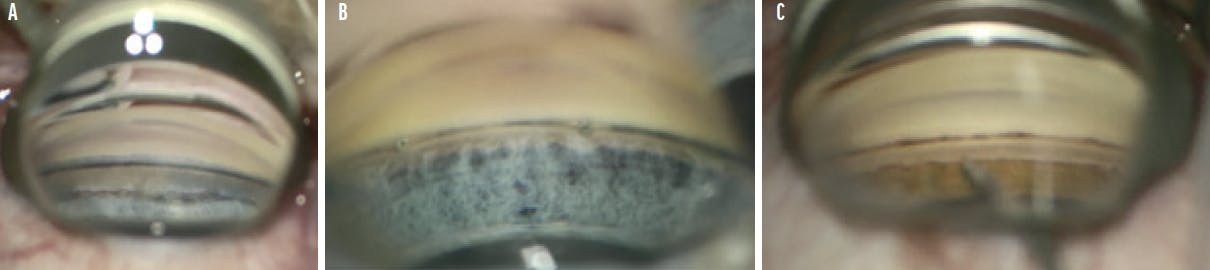
Figure 1. A top-down view through a gonio lens shows a thin scleral spur band (A). A clear en face view shows a wider scleral spur band (B). Example of a good en face view with blood in Schlemm canal delineating the TM (C).
3. GET INTO ACTION
Carefully choose your first few patients. Start with patients who have mild open-angle glaucoma, wide-open angles, clear corneas, and highly pigmented TM. If you decided to perform MIGS before cataract surgery, a little trick to help delineate pale TM is to use a staining dye such as trypan blue (VisionBlue, Dutch Ophthalmic USA). After phacoemulsification, TM is easily identifiable due to blood reflux and pooling in Schlemm canal (Figure 1).
Focus on one device at a time. I started with the iStent inject W and implanted only this device for the first few months before moving on to the Hydrus Microstent. Perform your first cases with the assistance of a more experienced surgeon who can take over if anything goes wrong.
Hone your technique. Learn how to hold and insert the MIGS device as well as how to position your wrist. Practice with a trainer in wet labs. For both the iStent and Hydrus devices, the implantation site is typically at the nasal angle with the surgeon sitting temporally, and the insertion point is at the junction between pigmented and nonpigmented TM (or anterior TM). During both surgeries, an en face view is required for proper stent placement. Do not hesitate to adjust your, the microscope’s, or the patient’s position to achieve a good view.
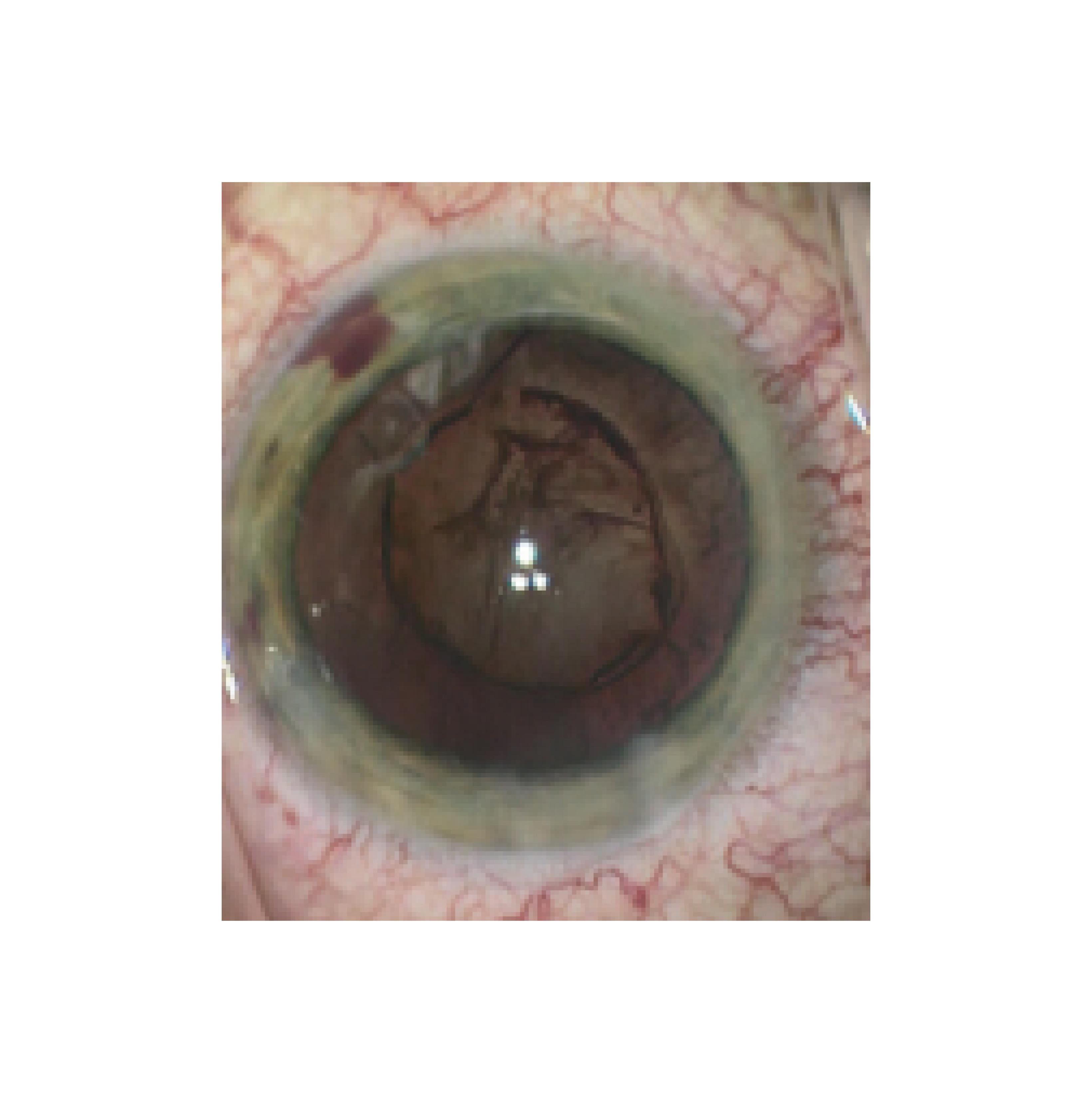
Counsel patients before and after surgery. Inform patients of the possibility of postoperative hyphema due to blood reflux into the anterior chamber and note that it signifies proper stent placement and good flow (Figure 2). Explain to patients that their vision may be blurry during the first few days. Advise them to keep their head upright, sleep with an extra pillow at night, and minimize head movements to help clear hyphema more rapidly.
4. MANAGE MISHAPS
When implanting the iStent inject W, if the first stent was not implanted properly, leave it as is and proceed with second stent insertion. Then go back and rethread and insert the first stent. For underimplanted stents that are still attached to the TM, a gentle forward push into the TM with an OVD cannula can facilitate proper attachment. Overimplanted stents are less likely to occur with the iStent inject W because of the wider flange, but they can happen in an eye with fragile TM tissue (Figure 3).
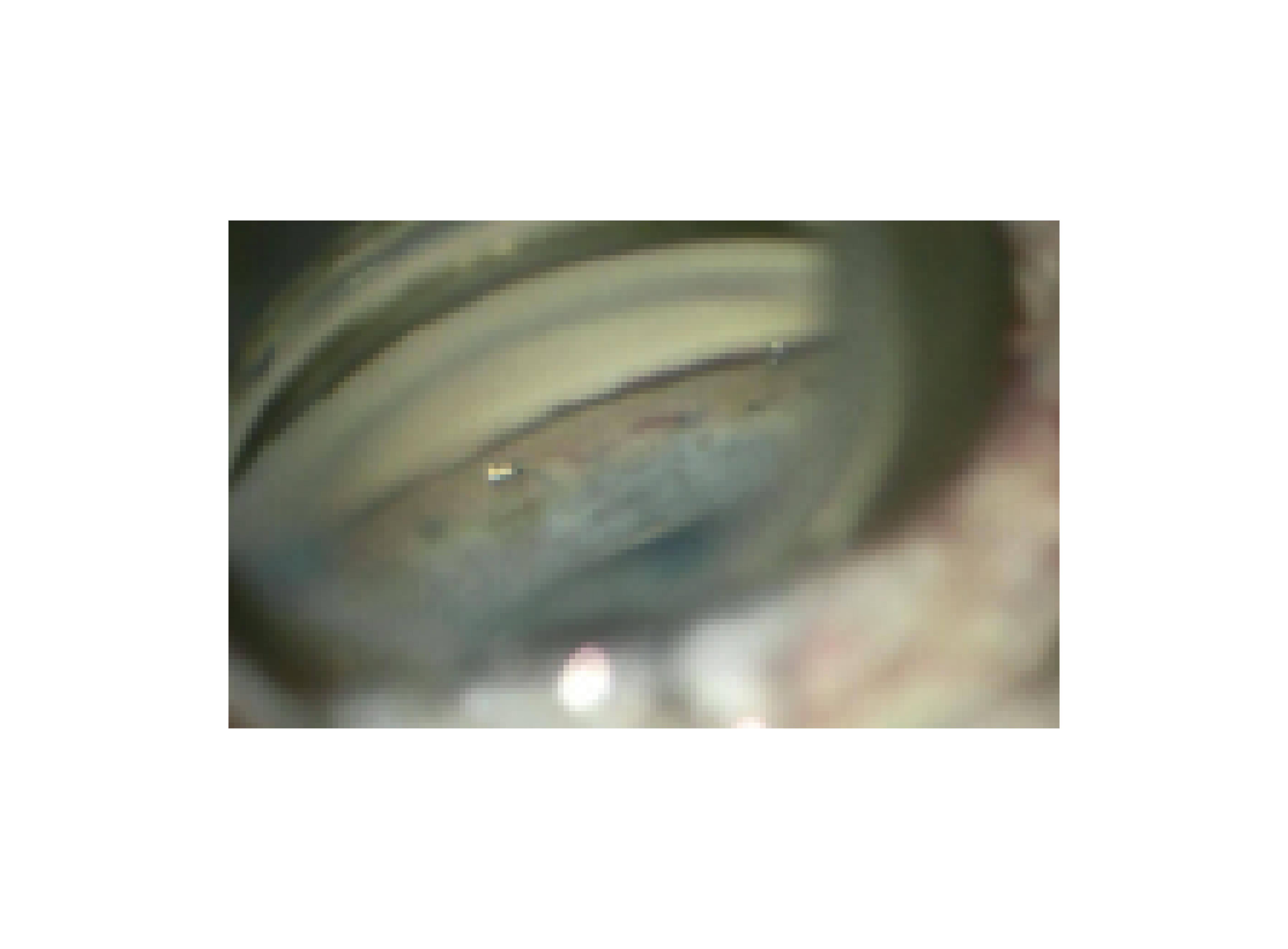
Figure 3. One iStent inject W is floating in the anterior chamber while the second is well positioned in the TM.
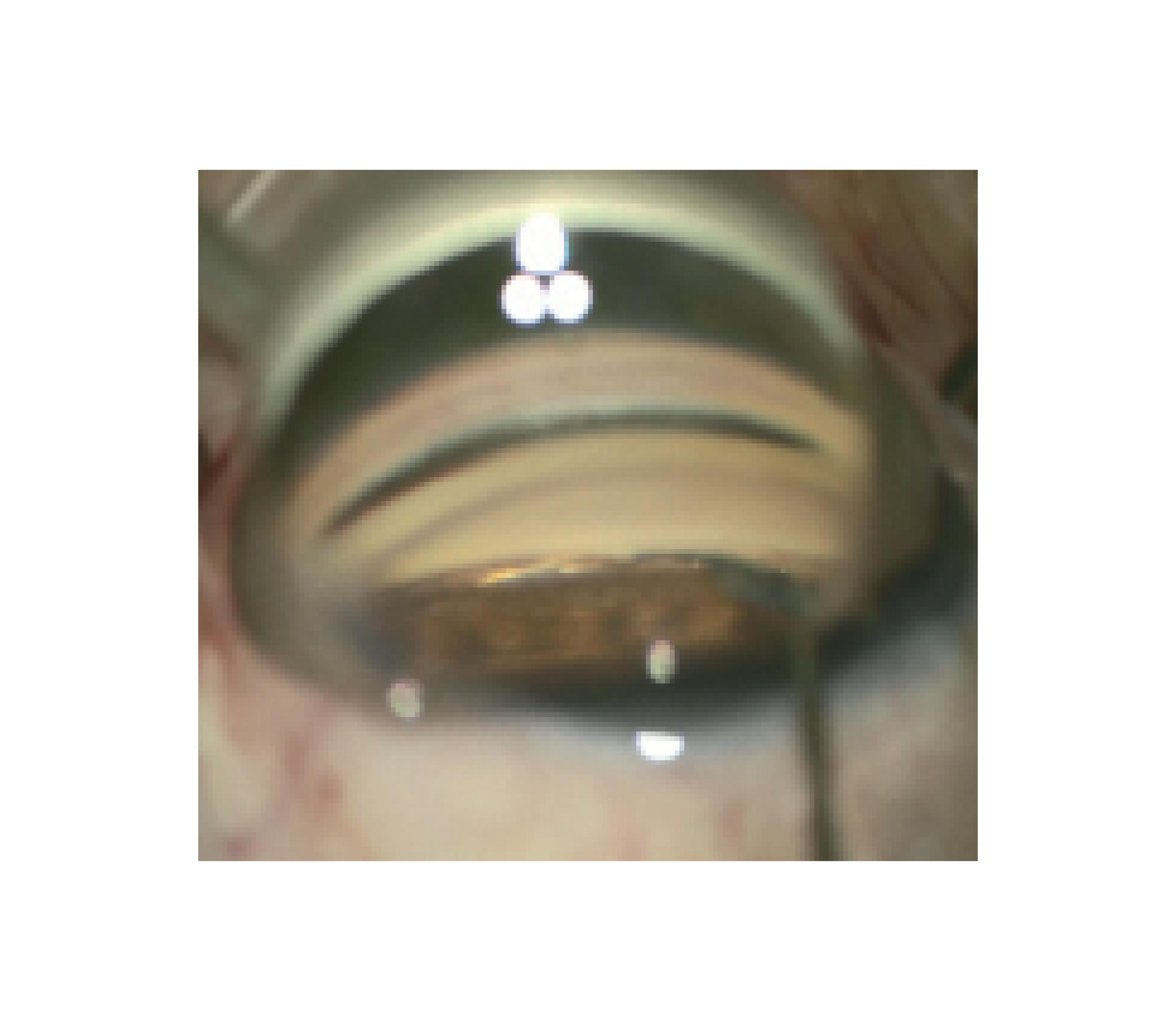
With the Hydrus Microstent, failure to insert and malpositioning are two potential mishaps. I failed to insert the Hydrus in two eyes. In one eye, the Hydrus was initially inserted in the suprachoroidal space owing to incomplete upward angulation of the catheter during initial engagement. In another eye, the insertion technique was sound, but the Hydrus could not proceed forward, likely owing to an anomalous Schlemm canal. When a device is malpositioned (Figure 4), it can be easily detected intraoperatively and retrieved, making postoperative malpositioning less likely.
5. TRACK YOUR PROGRESS
Carefully study videos of your first few cases to analyze mishaps and identify areas for improvement. Remember, you can’t fix what you can’t see. Tracking cases is a useful part of the learning process. Audit your results by creating a spreadsheet that lists all pre-, intra-, and postoperative data, including visual acuity, IOP, visual field mean deviation, number of medications, and complications.
By studying my early results, I learned that one or both iStents were malpositioned in my patients whose IOP response was modest during the early postoperative period. In contrast, some patients showed excellent IOP reduction with the iStent inject W or Hydrus Microstent when they were correctly placed. Now, when I face a patient with a modest response after MIGS, I revise my technique and examine the angles; in most cases, I find the stents to be malpositioned. I recommend revising the technique and positioning of the stent before making determinations about its efficacy. If a patient did well with one device in the first eye, I list them for the same device in the other eye when needed.
CONCLUSION
Now at the end of my fellowship experience, I recognize that this is just the beginning of my learning process, and I look forward to performing more angle-based surgeries and adopting more MIGS techniques. I hope that, with experience, I can offer treatment options that help preserve my patients’ quality of life and narrow the gap in glaucoma care in the developing world.
1. Samuelson TW, Chang DF, Marquis R, et al; HORIZON Investigators. A Schlemm canal microstent for intraocular pressure reduction in primary open-angle glaucoma and cataract: The HORIZON Study. Ophthalmology. 2019;126(1):29-37.