CHRISTIAN BERRY, MD
When considering the qualities I value in an effective mentor, several characteristics come to mind. Someone who is wise, approachable, considerate, and calm has the makings of a good mentor. Obviously, a mentor is often someone who is more experienced, seasoned, and knowledgeable, but these qualities alone are not enough. How do they respond under pressure? How do they treat others? These are questions I seek to answer in my search for a mentor.
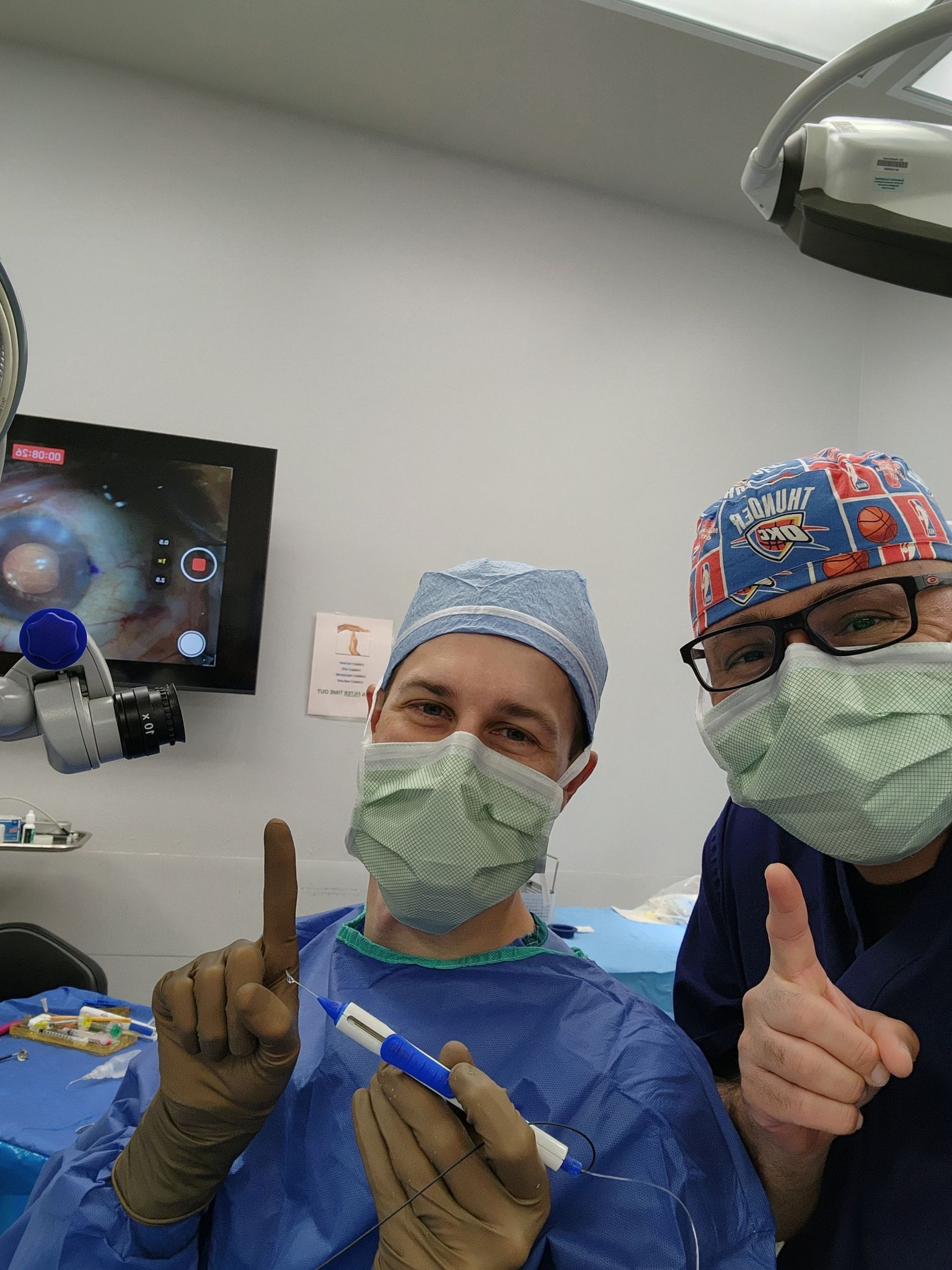
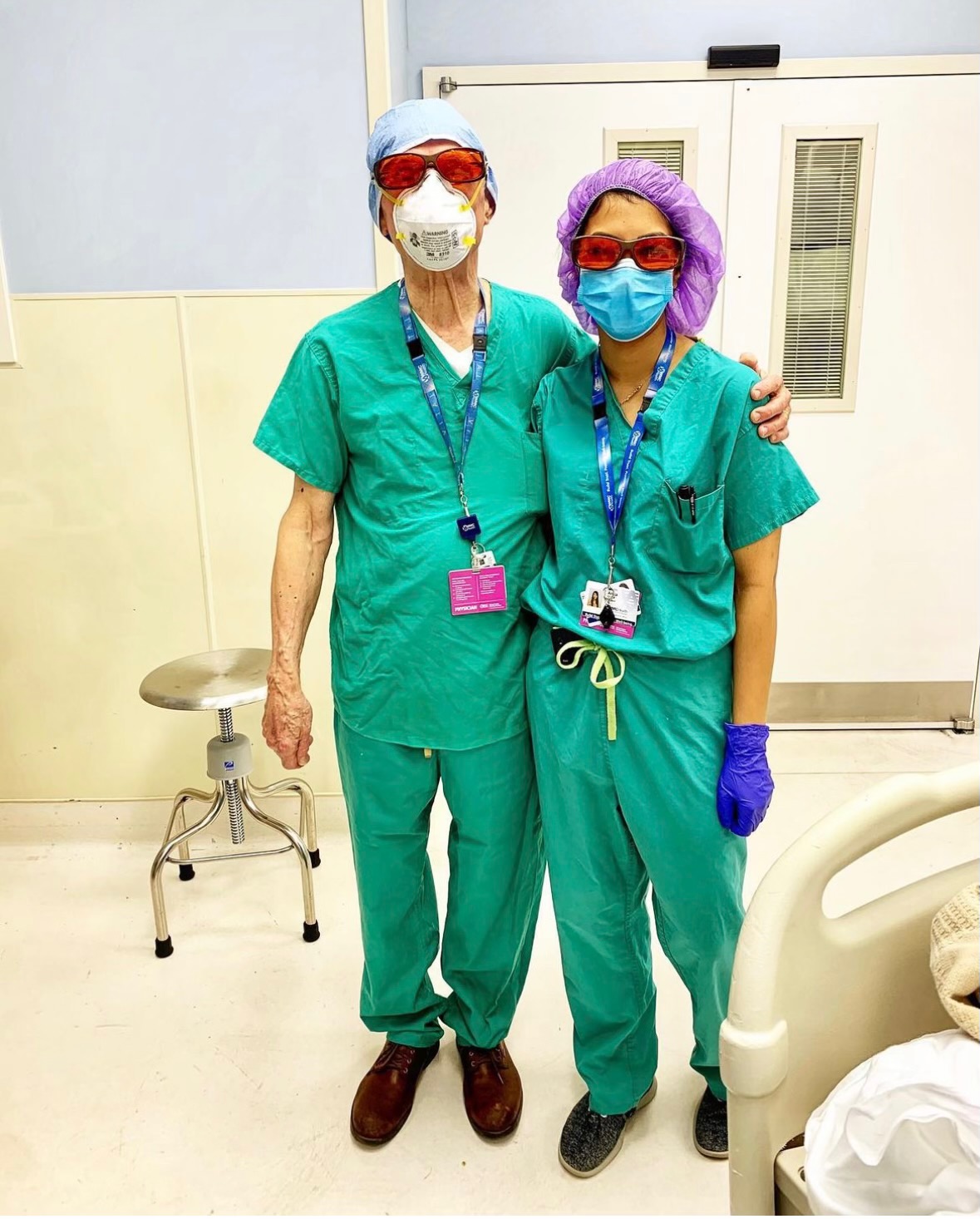
Figure 1. Christian Berry, MD, with his mentor, Mahmoud Khaimi, MD, after Berry became the first fellow in the United States to use the iTrack Advance (Nova Eye Medical) in the OR under Khaimi’s guidance.
In my medical journey, I have crossed paths with many physicians who are certainly knowledgeable in their fields, but is this expertise alone enough to make a good mentor? I believe that a mentor is truly remarkable when he or she also considers the needs of others, particularly those of the mentee. I truly appreciate when a mentor—whose time is valuable—can pause and listen to feedback on how to communicate and teach more effectively. When a mentor sets the standard by listening and demonstrating open communication, this shows humility, builds trust, and nurtures a more effective mentor-mentee relationship. Finally, an effective mentor is one who remains composed in times of stress. When significant tension surrounds a case in the OR, those who can navigate the crisis or complication while maintaining control of their emotions garner my utmost respect.
I am thankful for the mentors who have been at my side in my journey to become an ophthalmologist, and I believe that those who have impacted me the most share the qualities of wisdom, approachability, compassion, and collectedness.
MAX COLBERT, MD, MBA
The ideal qualities of a mentor differ for every individual, a reflection of the fact that we each have our own personal and professional ambitions. What may be the perfect pairing for one person may not be quite as meaningful for another. For example, although we are primarily immersed in academic medicine throughout training, and many of our early mentors naturally happen to practice at academic centers, perhaps that is not the career you see for yourself. As such, it is important to be thoughtful and honest with yourself when seeking out mentors. As a resident, I find that the mentorship I seek has evolved over time as I have refined how I genuinely want my future career to look.
When searching for mentors, it is important to remember that your career is only one aspect of your life to consider. As I approach 30, I am beginning to place much more weight on balancing my personal and professional goals. For instance, because my partner is also in training to become a surgeon, I look to my mentors in two-physician marriages for guidance on managing our two demanding careers while prioritizing our relationship. Similarly, because being a good father in the future is important to me, I have also identified ophthalmologists who prioritize their children and on whom I can lean when the time comes. In short, be sure to look for mentors who have the life you desire, not just the career you want.
MATT ELITT, MD, PHD
I have been fortunate to have exceptional mentors during every part of my scientific and clinical training. They have been approachable, open-minded, and always willing to provide me with opportunities to achieve goals and overcome challenges. They have offered invaluable advice and insight based on their own experiences, helping me to avoid potential pitfalls. Most importantly, my mentors have been selfless in their support, putting my needs and goals ahead of their own. For example, they have pushed me to go beyond my comfort zone in the OR, wholeheartedly embraced risky (and expensive!) laboratory experiments, and encouraged me to attend meetings and conferences to further my professional development. Without the mentorship of these individuals, I would not have been able to reach my early accomplishments. I recommend carefully considering potential mentor pools at every stage of your training and career, as they can make or break your ability to realize your ambitions.
ANITA GOYAL, MD
Looking back on the successful mentoring relationships I have had in residency, many of my mentors shared similar characteristics. The ability to listen without judgment, to provide support in times of both success and failure, and to impart pearls of knowledge and experience were qualities that were invaluable to me as I navigated through training. I especially appreciated when my mentors were able to take time out of their busy schedules to offer their guidance and support.
The most valuable mentors are passionate and invested in seeing their mentees succeed. A good mentor possesses the ability to listen well and provide feedback, has experience in your field, and has a passion for helping others and seeing those they have helped become successful. A mentor should be invested in your success and willing to share with you their own experiences, ideas, and contacts.
When seeking out a mentor, especially in residency, it’s a good idea to identify an individual who works in your subspecialty of interest. Through platforms such as YoungMD Connect (www.youngmdconnect.com), you can seek out mentors in the positions that you are striving to reach.
ABHINITI MITTAL, MD
Mentorship within medicine, particularly ophthalmology, is essential for every new generation of physicians. An effective mentor values honesty, balances offering support with fostering independence, and remains open-minded throughout the mentorship. Both the mentor and mentee should be transparent about their expectations. An honest conversation at the beginning of a relationship aligns expectations and creates a comfortable environment. Mentors are also faced with the important task of providing support and encouraging autonomy. Finally, both the mentor and the mentee should remain open-minded as the mentorship progresses. Ultimately, a mentor-mentee relationship is an invaluable and essential asset to have within medicine (Figure).