Monitoring IOP is crucial to the management of glaucoma. Traditional single measurement methods, such as clinic-based Goldmann applanation tonometry (GAT), may not provide an accurate picture of how IOP changes throughout the day or from day to day. Fluctuations in IOP can occur at any time of day or night—with pressure often peaking early in the morning or at night in eyes with primary open-angle glaucoma—and they can cause damage to the optic nerve even when IOP measures within the normal range in the clinic.1
Diurnal and remote IOP monitoring can give health care providers a more comprehensive understanding of how a patient’s disease is progressing and help them tailor treatment plans accordingly. Currently, at-home measurements captured with the iCare Home2 tonometer (Icare) is the main method for diurnal and remote IOP monitoring.2 This article describes our initial experience with a novel silicone hydrogel microfluidic contact lens technology that has the potential to bring continuous IOP measurement to physicians’ and patients’ fingertips via a smartphone.
ADVANTAGES OF CONTACT LENS TONOMETERS
Home tonometry allows clinicians to approximate diurnal IOP, but the use of these technologies depends on appropriate patient selection and cooperation. A promising alternative is contact lens tonometry. With this approach, noninvasive and wearable devices capture IOP readings while patients perform their daily activities and provide valuable continuous measurements regardless of the individual’s lifestyle.
Current smart contact lens technologies such as the Triggerfish (Sensimed) are based on microelectromechanical systems (MEMS).3 Using a tiny circuit embedded in the contact lens, MEMS detect minute capacitance changes in the cornea that occur as a result of IOP variations. The downside is that a power source and a bulky system, such as an adhesive periorbital antenna, are required to capture readings.4 Furthermore, MEMS cannot measure IOP directly. This is where a microfluidic system raises interesting possibilities.
THE POTENTIAL OF MICROFLUIDIC CONTACT LENSES
A promising new technology for noninvasive IOP monitoring is the miLens (Smartlens). This wearable device is a soft contact lens consisting of a network of microfluidic channels embedded in a silicone hydrogel material. The miLens contains no electronic components, so it can be worn and handled in a variety of conditions. The contact lens relies on the passive displacement of volumes within the microfluidic channels to detect changes in IOP directly. Elevated IOP causes a change in the radial curvature of the eye: Each 1 mm Hg change in IOP causes a 4-μm alteration in the radius of curvature.5 This change is translated into the movement of fluids across the microchambers, which can be read directly by a high-resolution camera or a slit lamp.
The miLens device differs from other current technologies in that patients can use their own smartphones to obtain direct measurements throughout the day. Instead of relying on an external antenna and wires to collect IOP readings from an electrical sensor embedded in the lens, microfluidic contact lenses are hands-free. This is made possible by a combination of unique hardware and software features (Table). Specifically, an attachment that automatically connects to the smartphone without the internet or Bluetooth activates a light beam when it detects the patient’s eye, focuses on the contact lens, and captures the reading directly on the microchannels (Figures 1 and 2). The phone attachment also directs the patient where to look. The captured images are then interpreted by independent software powered by AI. The integrated hardware and software features of the miLens system have the potential to make continuous IOP monitoring accessible to patients in even the most remote locations.
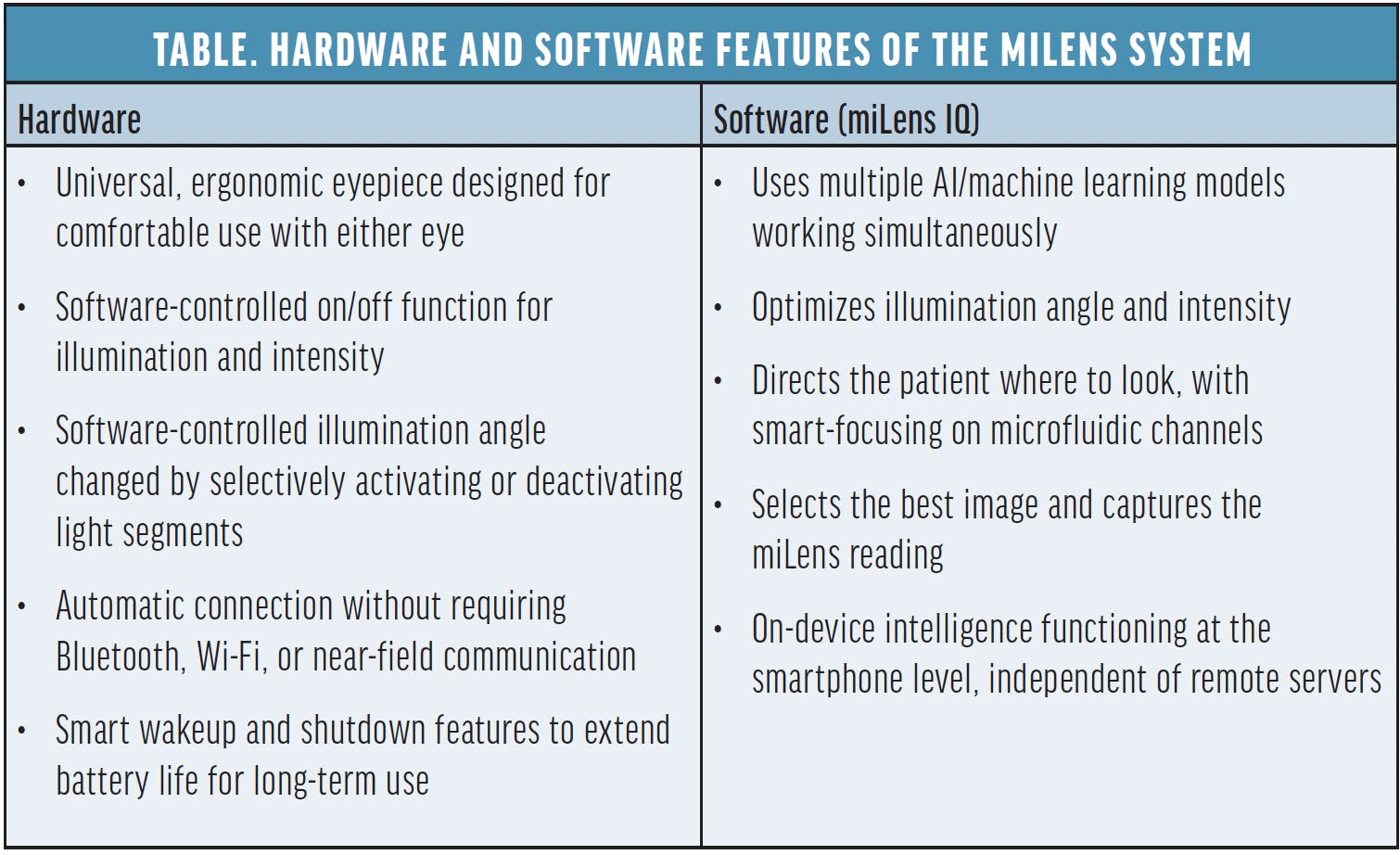
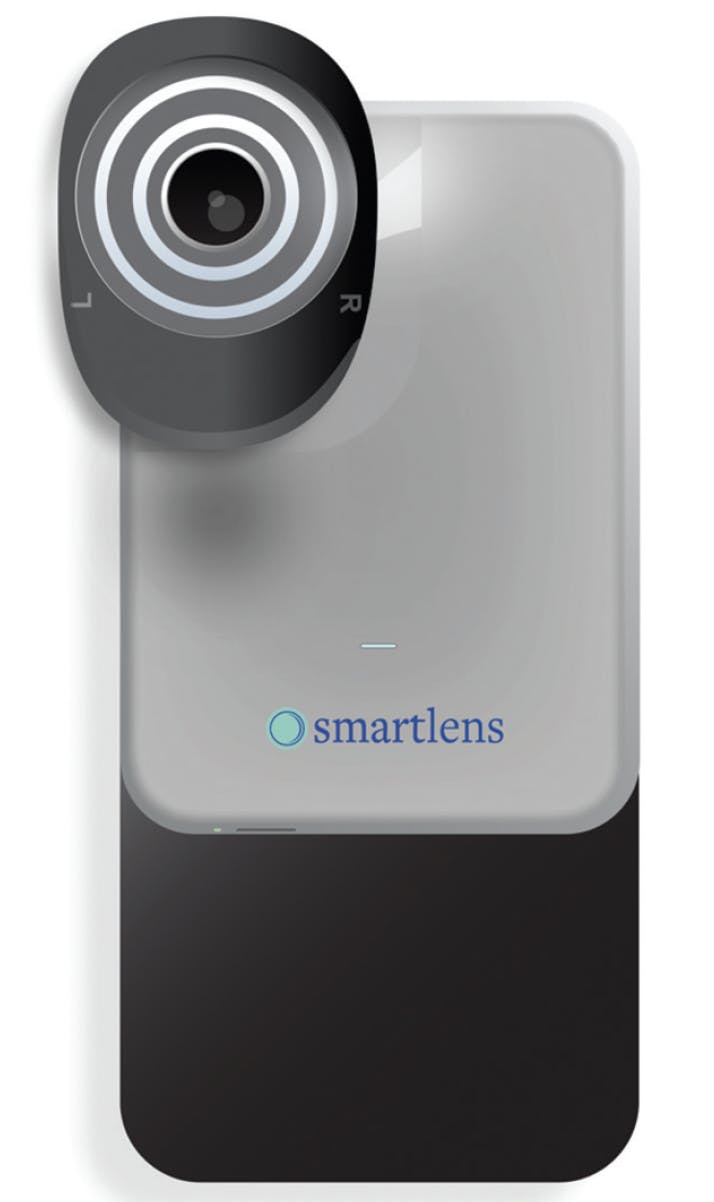
Figure 1. A smartphone attachment allows patients to take IOP measurements directly with their smartphone camera.
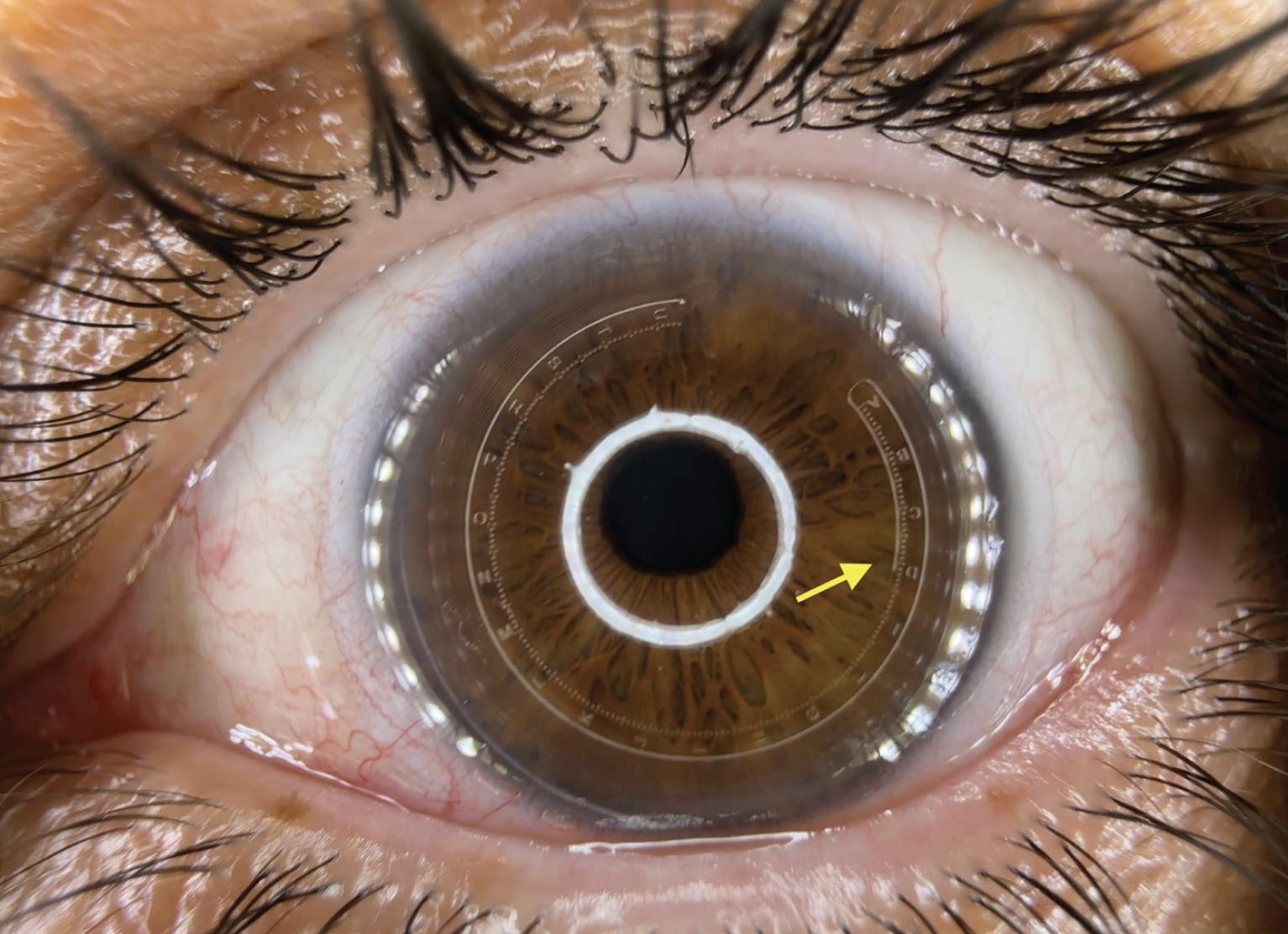
Figure 2. Bluetooth activates a light beam when it detects the patient’s eye, focuses on the contact lens, and captures the reading directly on the microchannels. The yellow arrow points to the reading (D1).
EFFICACY, SAFETY, AND EFFICIENCY
Pinakin G. Davey, OD, PhD, and James C. Tsai, MD, MBA, presented a single-center prospective study at the 2023 AGS annual meeting to examine the agreement of IOP values obtained using miLens smart lenses, applanation tonometry, and rebound tonometry (RBT). The study included data from 25 healthy patients from the Eye Care Institute at Western University of Health Sciences, College of Optometry, collected in 2022 and 2023. Participants wore the miLens device continuously for 4 hours, and IOP was measured in both eyes. Only participants with an intereye difference of 2 mm Hg or less as measured by GAT at baseline were included. The miLens readings in the study eye and GAT and RBT measurements in the fellow eye at regular intervals were obtained before and after the administration of 250 mg oral acetazolamide. The miLens device measured IOP in miLens units (mm Hg) and was calibrated to GAT readings (Figure 3).
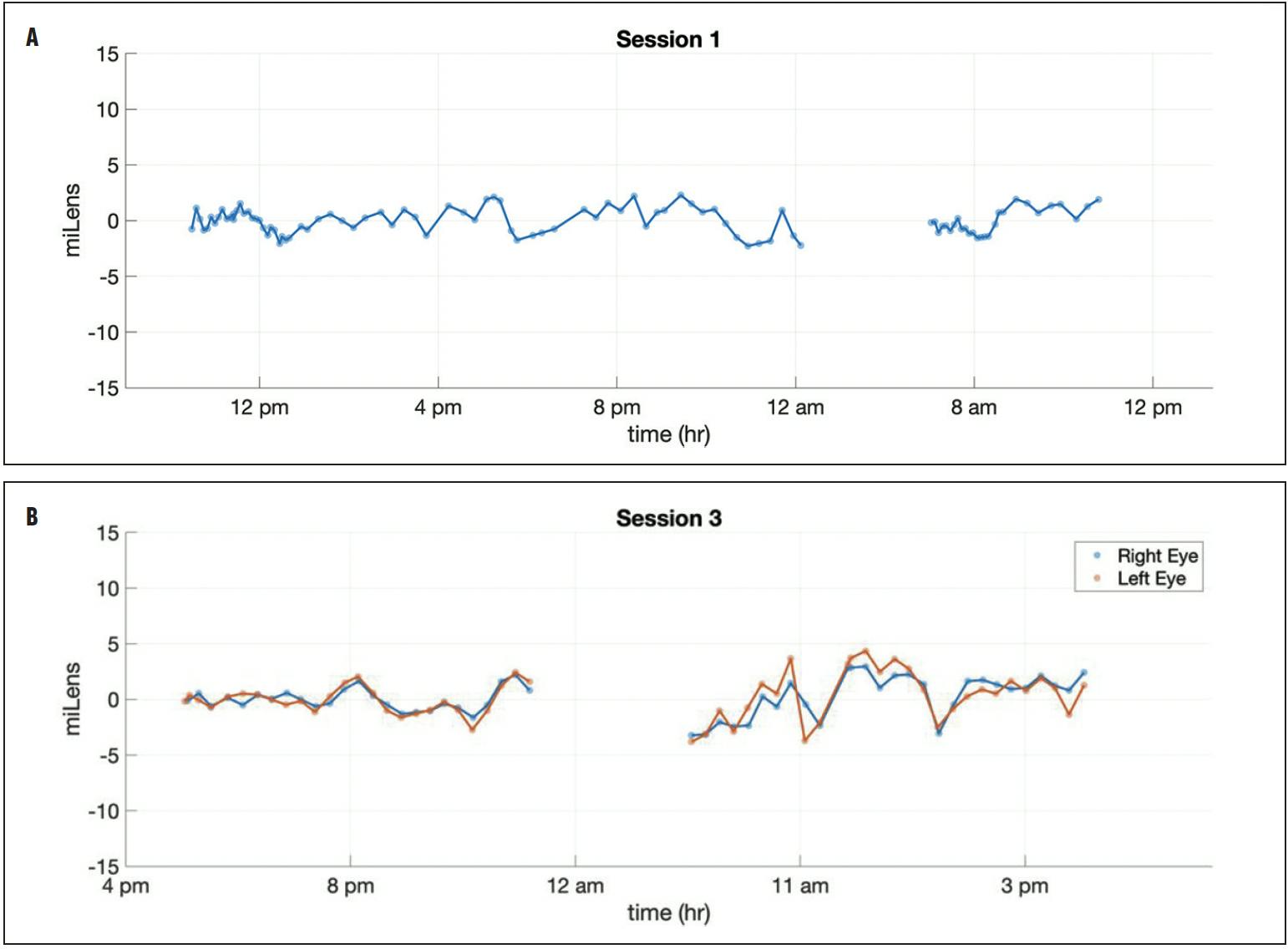
Figure 3. A diurnal IOP graph for a healthy patient wearing the miLens and using the miLens IQ software shows IOP fluctuations within 5 miLens units of baseline values in one eye (A) and both eyes (B).
The study found that 78% of the miLens readings were within ±2 mm Hg of the GAT readings (P < 6 x 10-11) and 70% of the miLens readings were within ±2 mm Hg of the RBT readings (P < 10-11). Overall, the miLens system provided IOP estimates that were consistent with GAT and RBT IOP values. The study also showed that the device was well tolerated. All participants completed the study, and no major adverse events were reported.
NEXT STEPS
Glaucoma is a chronic disease for which optimal therapy depends on the accurate and timely detection of progression. Early diagnosis and treatment are essential to prevent morbidity and minimize the condition’s impact on patients’ quality of life. Detecting potentially harmful elevated peak IOP with continuous IOP monitoring can therefore be valuable to optimize treatment to prevent progression. Technologies such as remote diurnal IOP monitoring systems and contact lens tonometers have the potential to provide dynamic IOP monitoring that could allow more personalized decision-making in patient care and optimized treatment plans.
Despite advances in glaucoma management, there remains a dearth of reliable methods to assess treatment compliance, determine target IOP, and monitor disease progression. This is where microfluidic contact lenses could make a significant difference. This technology is of particular interest for patients who are unable to provide home tonometry data, for example due to work or physical limitations. It could also facilitate remote IOP monitoring, which could become key as the role of telemedicine in patient care grows. Overall, microfluidic contact lenses offer an exciting opportunity to make continuous IOP monitoring accessible to at-risk populations. Future randomized controlled trials are required to provide more information on the safety, efficacy, and efficiency of such devices and their role in the clinic.
1. Quaranta L, Katsanos A, Russo A, Riva I. 24-hour intraocular pressure and ocular perfusion pressure in glaucoma. Surv Ophthalmol. 2013;58(1):26-41.
2. Scott AT, Kanaster K, Kaizer AM, et al. The utility of iCare HOME tonometry for detection of therapy-related intraocular pressure changes in glaucoma and ocular hypertension. Ophthalmol Glaucoma. 2022;5(1):85-93.
3. Molaei A, Karamzadeh V, Safi S, Esfandiari H, Dargahi J, Khosravi MA. Upcoming methods and specifications of continuous intraocular pressure monitoring systems for glaucoma. J Ophthalmic Vis Res. 2018;13(1):66-71.
4. Wasilewicz R, Varidel T, Simon-Zoula S, Schlund M, Cerboni S, Mansouri K. First-in-human continuous 24-hour measurement of intraocular pressure and ocular pulsation using a novel contact lens sensor. Br J Ophthalmol. 2020;104(11):1519-1523.
5. Chen GZ, Chan IS, Leung LKK, Lam DCC. Soft wearable contact lens sensor for continuous intraocular pressure monitoring. Med Eng Phys. 2014;36(9):1134-1139.