Ophthalmology offers a wide array of career paths, with two prominent options being private practice and academic medicine. Although both require dedication to patient care and a desire to advance the field, they differ significantly in terms of work environment, responsibilities, and professional opportunities. Deciding between these paths requires careful consideration of your personal goals, values, and preferences. This article explores some potential pros and cons of private practice and academic careers in ophthalmology to help you make this crucial choice.
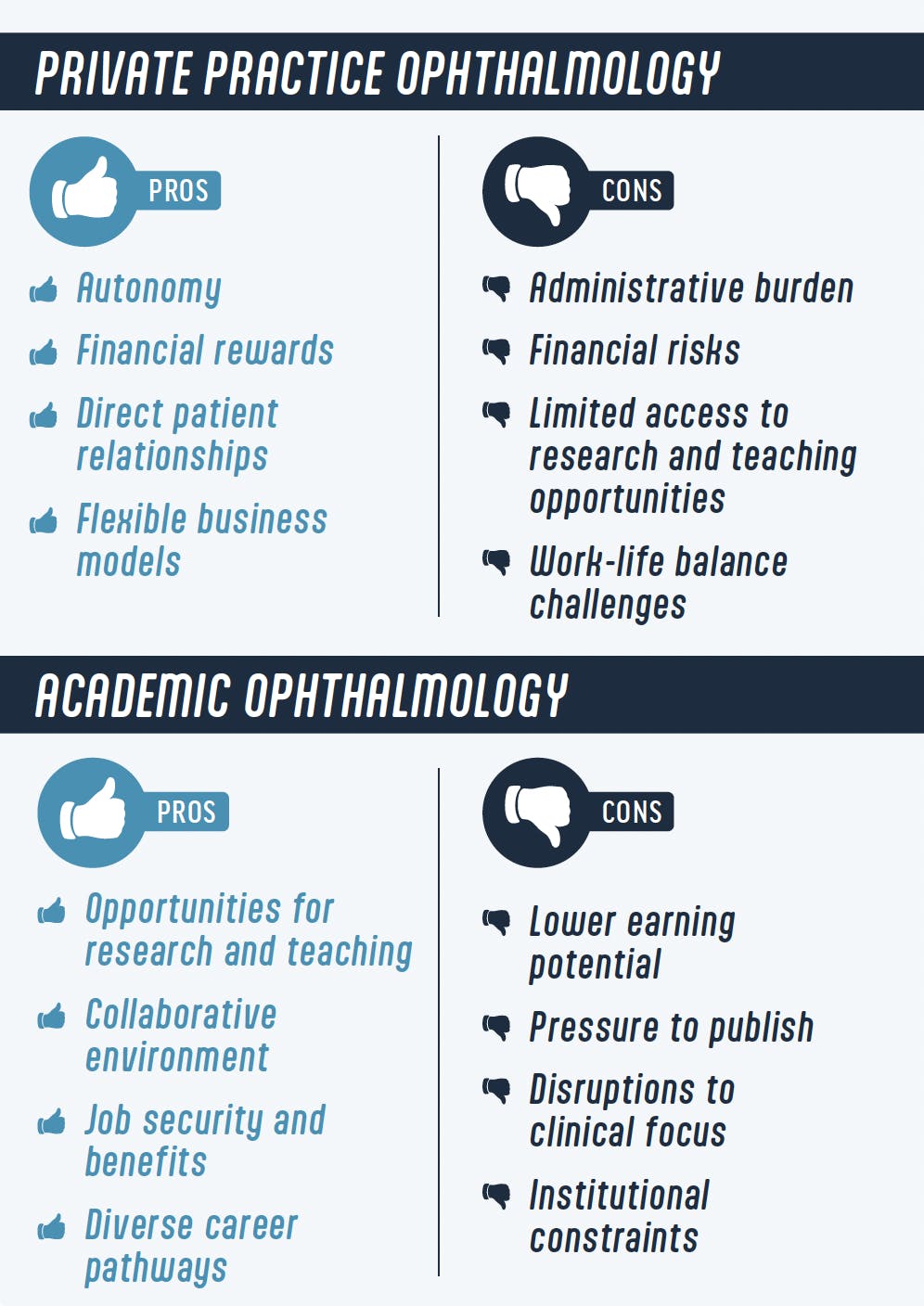
PRIVATE PRACTICE OPHTHALMOLOGY
Pros
Autonomy. Ophthalmologists in private practice often have greater control over their schedules, patient load, and the way they deliver care. They can tailor their practice to their clinical interests, such as focusing on cataract surgery, refractive surgery, or glaucoma care.
Financial rewards. Private practice in ophthalmology can be lucrative, especially for subspecialists. With laser vision correction and premium cataract surgery, for example, ophthalmologists can enjoy significant income potential as their practice grows.
Direct patient relationships. Private practice allows ophthalmologists to build long-term relationships with their patients, fostering trust and continuity of care. This can be particularly rewarding for clinicians who manage chronic conditions such as glaucoma.
Flexible business models. Private practitioners have more freedom to explore innovative business models, such as ownership in an ambulatory surgery center, or adapt quickly to new technologies, such as the Light Adjustable Lens (RxSight).
Cons
Administrative burden. Running a private ophthalmology practice comes with all the responsibilities of managing a business. Tasks such as billing, staffing, equipment maintenance, and regulatory compliance are time-consuming and can be a source of stress.
Financial risks. Starting or maintaining a private practice involves a significant financial investment in equipment, office space, and staff as well as risks tied to fluctuations in patient demand.
Limited access to research and teaching opportunities. Private practitioners may have fewer opportunities to engage in research, academic teaching, and mentorship, which could limit career diversification and intellectual stimulation.
Work-life balance challenges. The demands of managing a practice and ensuring its profitability can require long working hours and potentially affect personal well-being.
ACADEMIC OPHTHALMOLOGY
Pros
Opportunities for research and teaching. Academic positions in ophthalmology provide a chance to engage in groundbreaking research, teach medical students and residents, and contribute to advances in the field. For example, faculty may lead studies on new surgical techniques or emerging treatments for retinal diseases.
Collaborative environment. Academic institutions foster collaboration with other experts, which can create a stimulating and supportive professional environment. Multidisciplinary approaches to patient care and research are often more accessible in academic settings.
Job security and benefits. Academic careers typically offer stable salaries, comprehensive benefits, and job security, particularly for those in tenure-track positions. Another advantage is access to institutional resources and state-of-the-art technology.
Diverse career pathways. Physicians in academia can diversify their roles by combining clinical practice with research, teaching, and administrative responsibilities, such as leading a residency program or serving on committees.
Cons
Lower earning potential. Academic salaries are generally lower than those in private practice, particularly for early-career ophthalmologists. However, some institutions may offer incentives such as research grants and administrative stipends.
Pressure to publish. The “publish or perish” culture in academic medicine can be stressful because it requires frequent output of high-quality research from ophthalmologists to maintain or advance their careers.
Disruptions to clinical focus. Balancing research, teaching, and clinical work can be a challenge. Academic ophthalmologists often juggle multiple responsibilities, which can detract from time spent on direct patient care.
Institutional constraints. Working within a large institution can mean less autonomy and more bureaucratic hurdles compared to private practice. Decisions about clinical operations or research funding may be out of the physician’s control.
ADDITIONAL FACTORS TO CONSIDER
Career goals. For those who aspire to innovate through research, develop new surgical techniques, or educate future ophthalmologists, academia may be the more fulfilling career path. Those who value independence and a strong clinical focus might prefer private practice.
Financial priorities. Consider the income potential and financial risks associated with each path. Private practice offers higher earning potential but with greater financial responsibility, whereas academia provides stability and institutional support.
Work-life balance. Academic roles typically offer more predictable hours, whereas private practice can have a more demanding schedule. However, private practice may come with greater flexibility, especially for those who own their practice.
Professional interests. For those who are passionate about teaching and research, academic medicine is likely to be a good fit. For those who prefer to focus on clinical care and building patient relationships, private practice may be more appealing.
CONCLUSION
Choosing between private practice and academic medicine in ophthalmology is a deeply personal decision with significant implications for both the professional and personal aspects of your life. Both career options play crucial roles in advancing ophthalmic care by ensuring an overall balance in the field among patient treatment, innovation, and education. By weighing the pros and cons of each path, you can align your choice with your aspirations and values.