Pediatric angle-closure glaucoma (ACG) is a rare but serious condition that may be associated with ocular or developmental anomalies. Although open-angle glaucoma is a more common cause of elevated IOP in the pediatric population, clinicians should maintain a high index of suspicion for angle closure because of its potential to cause severe visual impairment and its unique management. This article reviews causes of angle closure that should be considered in any child presenting with elevated IOP.
RETINOPATHY OF PREMATURITY
Retinopathy of prematurity (ROP) may lead to angle closure through the forward displacement of the lens-iris diaphragm, caused by retrolental fibrous tissue.1 Irrespective of treatment, increasing stage of ROP is associated with higher rates of secondary glaucoma. One study of patients with ROP found a 1.67% rate of glaucoma development by 6 years of age.2 Gonioscopy data were not available for this cohort, but 58% of glaucomatous eyes were noted to have shallow anterior chambers.2
The use of laser photocoagulation may additionally predispose patients with ROP to develop angle closure. Lanis et al observed narrower anterior chamber angles and increased myopia in patients who had undergone retinal laser photocoagulation compared to a preterm control group.3 Angle closure after retinal laser therapy typically occurs within weeks of treatment.4 However, we reported one case of a 9-year-old patient with iridocorneal adhesions after unilateral laser treatment for ROP; this patient presented with a sudden increase in IOP necessitating placement of a glaucoma drainage implant (Figure 1).5
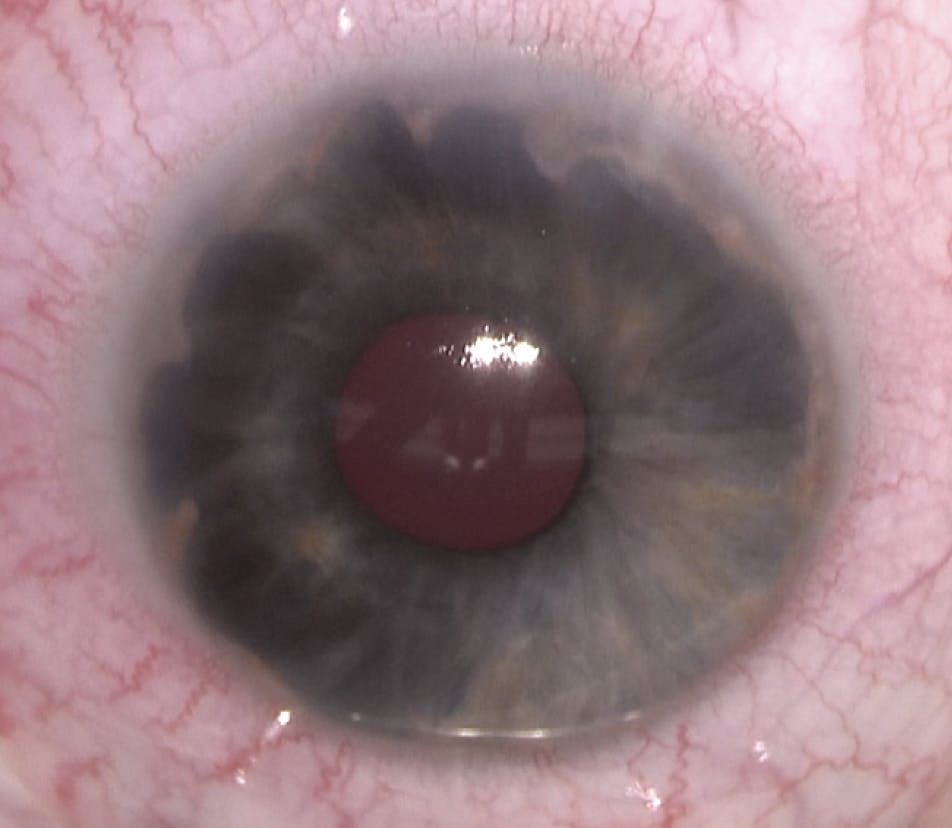
Figure 1. Angle closure due to iridocorneal adhesions after unilateral laser treatment for ROP in a 9-year-old patient.
Patients who have undergone laser treatment for ROP should be monitored throughout their lives for anterior segment complications.6
IRIS CYSTS
Iris cysts can be associated with elevated IOP due to a number of mechanisms, including mucogenic glaucoma after cyst rupture, pigment dispersion, and secondary angle closure.7-11
Peripheral pigment epithelial cysts are the most common type of iris cyst seen in the pediatric population.12 These cysts may be detected as a bulging of the peripheral iris on slit-lamp examination or with ultrasound biomicroscopy (UBM). Although the majority of these lesions are not progressive, if large or extensive, they can lead to angle closure.12 In this situation, laser peripheral iridotomy (LPI) is often the first-line treatment, with incisional glaucoma surgery or argon LPI reserved for refractory cases.10,11
In contrast, iris stromal cysts are found on the anterior surface of the iris and can grow to occlude the pupil. If progression occurs, treatment may involve aspiration of the cyst with light cryotherapy over the site of the collapsed cyst or en block surgical removal.12,13 Although these cysts typically grow slowly, we cared for a 6-month-old infant whose iris stromal cyst grew over an observed period of 2 weeks to such a large size that it obstructed the entire pupil and caused acute angle closure (Figure 2). The pupillary block was relieved with a surgical peripheral iridectomy followed by cyst excision.13
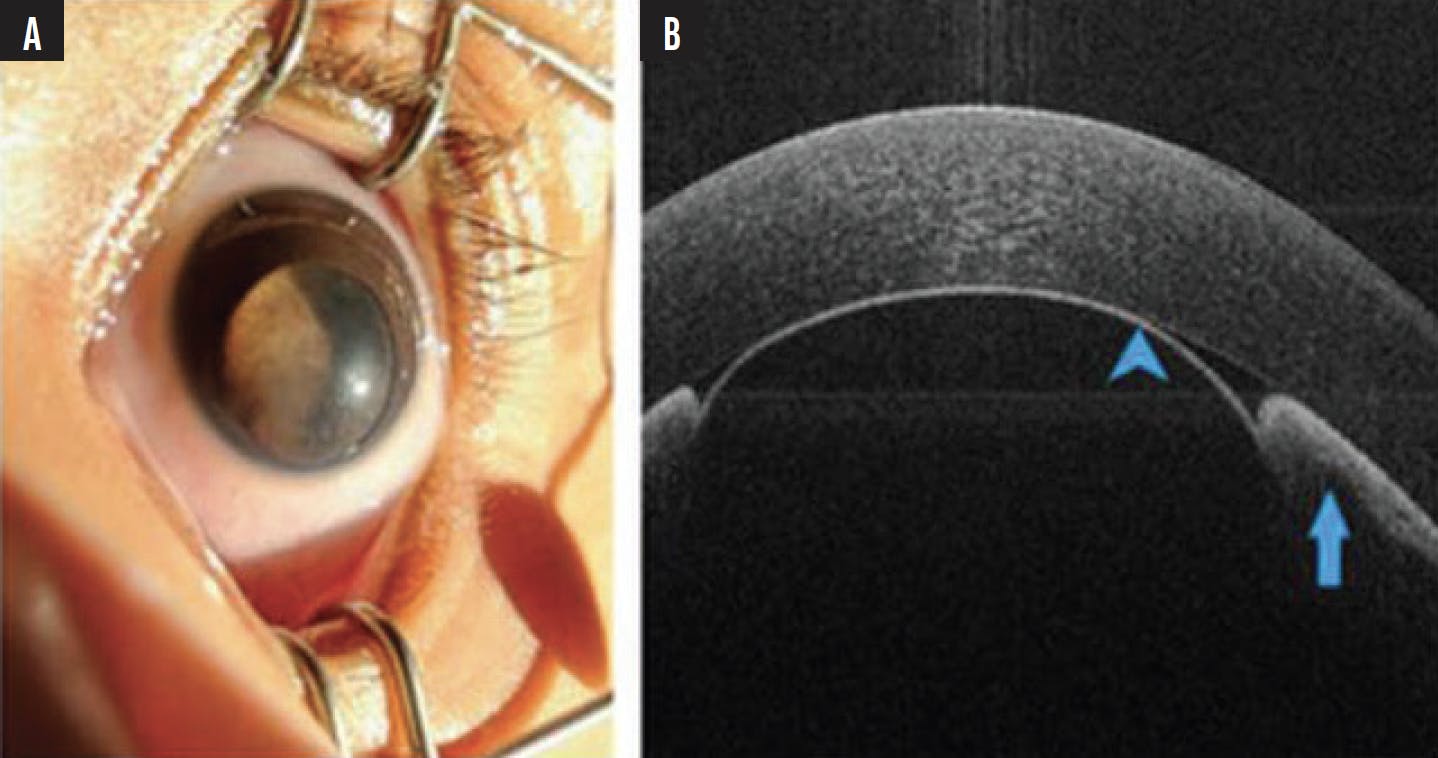
Figure 2. An external photograph of a 6-month-old patient with an iris stromal cyst causing pupillary block and shallowing of the anterior chamber (A). Anterior segment OCT (Leica Biosystems) shows that the cyst (arrowhead) and iris (arrow) are both in contact with the corneal endothelium, with a small portion of aqueous remaining adjacent to the cyst (B). Reprinted with permission from Santos and Lee.13
UVEITIS
Uveitis can lead to glaucoma development in approximately 25% of pediatric cases, making it a major cause of ocular morbidity in this population.14 Angle closure in uveitis can be caused by both anterior and posterior synechiae formation, with the latter occurring in approximately 18% to 33% of pediatric cases.15-17 Treatment approaches include medical therapy, surgical peripheral iridotomy, and incisional glaucoma surgery/goniosynechiolysis.18 LPI in eyes with uveitic angle closure has a high rate of early failure and may aggravate intraocular inflammation.19 For all patients with uveitic glaucoma, control of the underlying inflammation is critical to long-term management.
Postoperative inflammation in pediatric patients may also lead to significant synechial changes even in children without underlying inflammatory disorders. This was demonstrated by a recent case at our institution in which a 6-month-old infant developed synechial closure between the pupillary margin and the anterior lens capsule following cataract extraction and, subsequently, pupillary block. A limited examination in the clinic showed buphthalmos and corneal edema, raising concern for glaucoma following cataract surgery, which is typically characterized by an open angle. Slit-lamp biomicroscopy under anesthesia, however, demonstrated an iris bombe appearance, and UBM confirmed the abnormal iris configuration and posterior synechiae consistent with pupillary block (Figure 3). The patient underwent posterior synechiolysis and anterior vitrectomy to address the underlying etiology of their glaucoma.
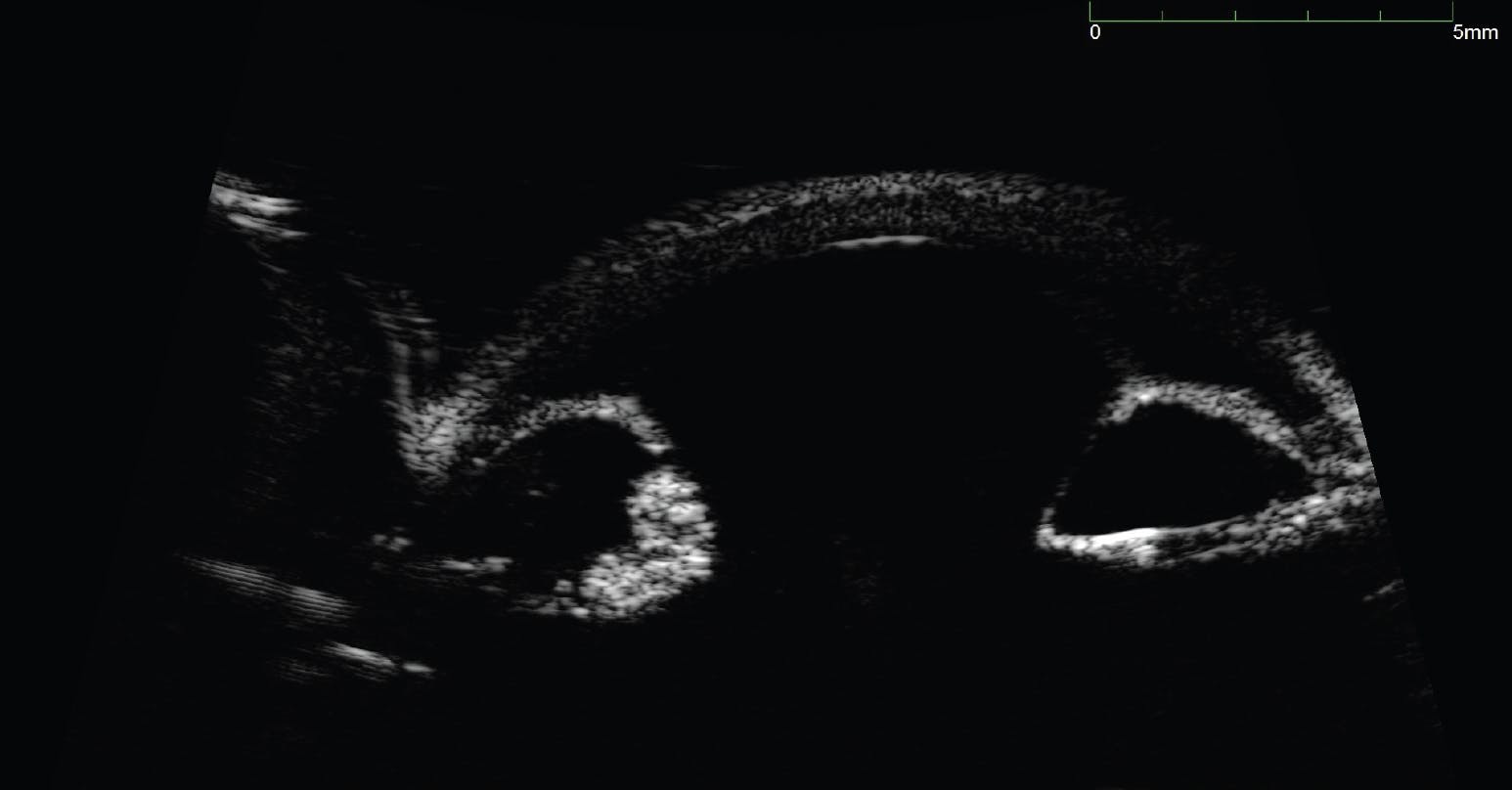
Figure 3. UBM of an aphakic infant with elevated IOP after the removal of a congenital cataract shows iris bombe and complete synechial closure between the iris and anterior capsule, leading to pupillary block.
ANTERIOR SEGMENT DYSGENESIS
A study by Gao et al identified anterior segment dysgenesis as the most common cause of angle closure in patients younger than 20 years of age. The most frequently observed etiologies included Axenfeld-Rieger syndrome, Peters anomaly, microcornea, aniridia, and congenital ectropion uveae. It is important to note that, owing to significant alterations in anterior chamber and trabecular meshwork anatomy, these eyes may also exhibit features of open-angle glaucoma.20
NANOPHTHALMOS
Nanophthalmos is characterized by an abnormally short (< 20 mm) axial length in an eye that is otherwise normal.21 The condition is often associated with a normally sized crystalline lens, which leads to significant crowding and shallowing of the anterior chamber. In a study of children with nanophthalmos, Agarkar et al found that 20% had occludable angles requiring intervention.22 Treatment can include medical therapy, LPI, or cataract surgery.23 Because these eyes are at heightened risk for uveal effusion, prophylactic sclerostomy at the time of intraocular surgery may reduce the risk of postoperative complications.24
OTHER CAUSES
Other uncommon causes of angle closure in pediatric patients include iridocorneal endothelial syndrome, microspherophakia, persistent fetal vasculature, neovascularization of the angle, intraocular masses, bestrophinopathy, retinitis pigmentosa, and the use of certain medications such as topiramate.11,20,25-28
SUMMARY
Although rare, ACG in pediatric patients is a potentially sight-threatening condition that requires prompt recognition and intervention. A careful examination and imaging modalities such as UBM and anterior segment OCT can be instrumental in diagnosing ACG. Early detection of this condition is crucial because management may differ from the treatment of open-angle etiologies of glaucoma in children, which may present in a similar fashion.
1. Shaikh N, Kumawat D, Chandra P, et al. Glaucoma in retinopathy of prematurity: a review. Surv Ophthalmol. 2025;70(5):930-941.
2. Bremer DL, Rogers DL, Good WV, Tung B, Hardy RJ, Fellows R. Glaucoma in the Early Treatment for Retinopathy of Prematurity (ETROP) study. J AAPOS. 2012;16(5):449-452.
3. Lenis TL, Gunzenhauser RC, Fung SSM, et al. Myopia and anterior segment optical coherence tomography findings in laser-treated retinopathy of prematurity eyes. J AAPOS. 2020;24:86.e1-86.e7.
4. Trigler L, Weaver RG Jr, O’Neil JW, Barondes MJ, Freedman SF. Case series of angle-closure glaucoma after laser treatment for retinopathy of prematurity. J AAPOS. 2005;9(1):17-21.
5. Su CJ, Gilman C, Lee AR, Agner SC. Headache with migrainous features caused by delayed onset secondary angle closure glaucoma following laser treatment for retinopathy of prematurity. Ann Child Neurol Soc. 2024;2:176-177.
6. Ajjarapu A, Dumitrescu A. Delayed anterior segment complications after the treatment of retinopathy of prematurity with laser photocoagulation. Front Ophthalmol (Lausanne). 2023;3:1270591.
7. Chang TC, Huang LY, Cavuoto KM. Mucogenic glaucoma in a child. Am J Ophthalmol Case Rep. 2017;5:85-89.
8. Shabto JM, Price KW, Allen JC, Craven C, Jones JK, Wells J. Spontaneous rupture of secondary iris inclusion cyst causing acute glaucoma and other ocular sequelae. Digit J Ophthalmol. 2022;28(6):26-30.
9. Harpster SN, Flettner JG, Mick AB. Case report: sequelae of bilateral iris pigment epithelial cysts masquerading as primary pigmentary glaucoma. Optom Vis Sci. 2019;96:71-75.
10. Badlani VK, Quinones R, Wilensky JT, Hawkins A, Edward DP. Angle-closure glaucoma in teenagers. J Glaucoma. 2003;12:198-203.
11. Ritch R, Chang BM, Liebmann JM. Angle closure in younger patients. Ophthalmology. 2003;110:1880-1889.
12. Shields JA, Shields CL, Lois N, Mercado G. Iris cysts in children: classification, incidence, and management. The 1998 Torrence A Makley Jr Lecture. Br J Ophthalmol. 1999;83:334-338.
13. Santos MC, Lee AR. Iris stromal cyst in a 6-month-old with rapid progression to angle closure. J Glaucoma. 2020;29:e113-e115.
14. Gautam Seth N, Yangzes S, Thattaruthody F, et al. Glaucoma secondary to uveitis in children in a tertiary care referral center. Ocul Immunol Inflamm. 2019;27:456-464.
15. Sardar E, Dusser P, Rousseau A, Bodaghi B, Labetoulle M, Kone-Paut I. Retrospective study evaluating treatment decisions and outcomes of childhood uveitis not associated with juvenile idiopathic arthritis. J Pediatr. 2017;186:131-137.
16. Keino H, Watanabe T, Taki W, et al. Clinical features of uveitis in children and adolescents at a tertiary referral centre in Tokyo. Br J Ophthalmol. 2017;101;406-410.
17. Dajee KP, Rossen JL, Bratton ML, Whitson JT, He YG. A 10-year review of pediatric uveitis at a Hispanic-dominated tertiary pediatric ophthalmic clinic. Clin Ophthalmol. 2016;10:1607-1612.
18. Sng CCA, Barton K. Mechanism and management of angle closure in uveitis. Curr Opin Ophthalmol. 2015;26:121-127.
19. Betts TD, Sims JL, Bennett SL, Niederer RL. Outcome of peripheral iridotomy in subjects with uveitis. Br J Ophthalmol. 2020;104:8-10.
20. Gao F, Wang J, Chen J, Wang X, Chen Y, Sun X. Correction to: etiologies and clinical characteristics of young patients with angle-closure glaucoma: a 15-year single-center retrospective study. Graefes Arch Clin Exp Ophthalmol. 2021;259:2389-2390.
21. Gedde SJ, Chen PP, Muir KW, et al. Primary angle-closure disease preferred practice pattern. Ophthalmology. 2021;128(1):P30-P70.
22. Khan AO. Nanophthalmos in children: morphometric and clinical characterization. J AAPOS. 2020;24:259.
23. Rajendrababu S, Shroff S, Uduman MS, Babu N. Clinical spectrum and treatment outcomes of patients with nanophthalmos. Eye (Lond). 2021;35:825-830.
24. Rajendrababu S, Babu N, Sinha S, et al. A randomized controlled trial comparing outcomes of cataract surgery in nanophthalmos with and without prophylactic sclerostomy. Am J Ophthalmol. 2017;183:125-133.
25. Liu X, Li J, Lin S, et al. Evaluation of the genetic association between early-onset primary angle-closure glaucoma and retinitis pigmentosa. Exp Eye Res. 2020;197:108118.
26. Hung MC, Chen YY. Association between retinitis pigmentosa and an increased risk of primary angle closure glaucoma: a population-based cohort study. PLoS One. 2022;17:e0274066
27. Peng DW. Retinitis pigmentosa associated with glaucoma. Article in Chinese. Zhonghua Yan Ke Za Zhi. 1991;27:262-264.
28. Burgess R, Millar ID, Leroy BP, et al. Biallelic mutation of BEST1 causes a distinct retinopathy in humans. Am J Hum Genet. 2008;82(1):19-31.