CASE PRESENTATION
A 56-year-old man presents for an evaluation. The patient has a family history of primary open-angle glaucoma (POAG). Specifically, his father has a cup-to-disc ratio of 0.90 OD and 0.95 OS, visual field testing has shown a small central island in each eye, and his severe POAG warrants filtration surgery.
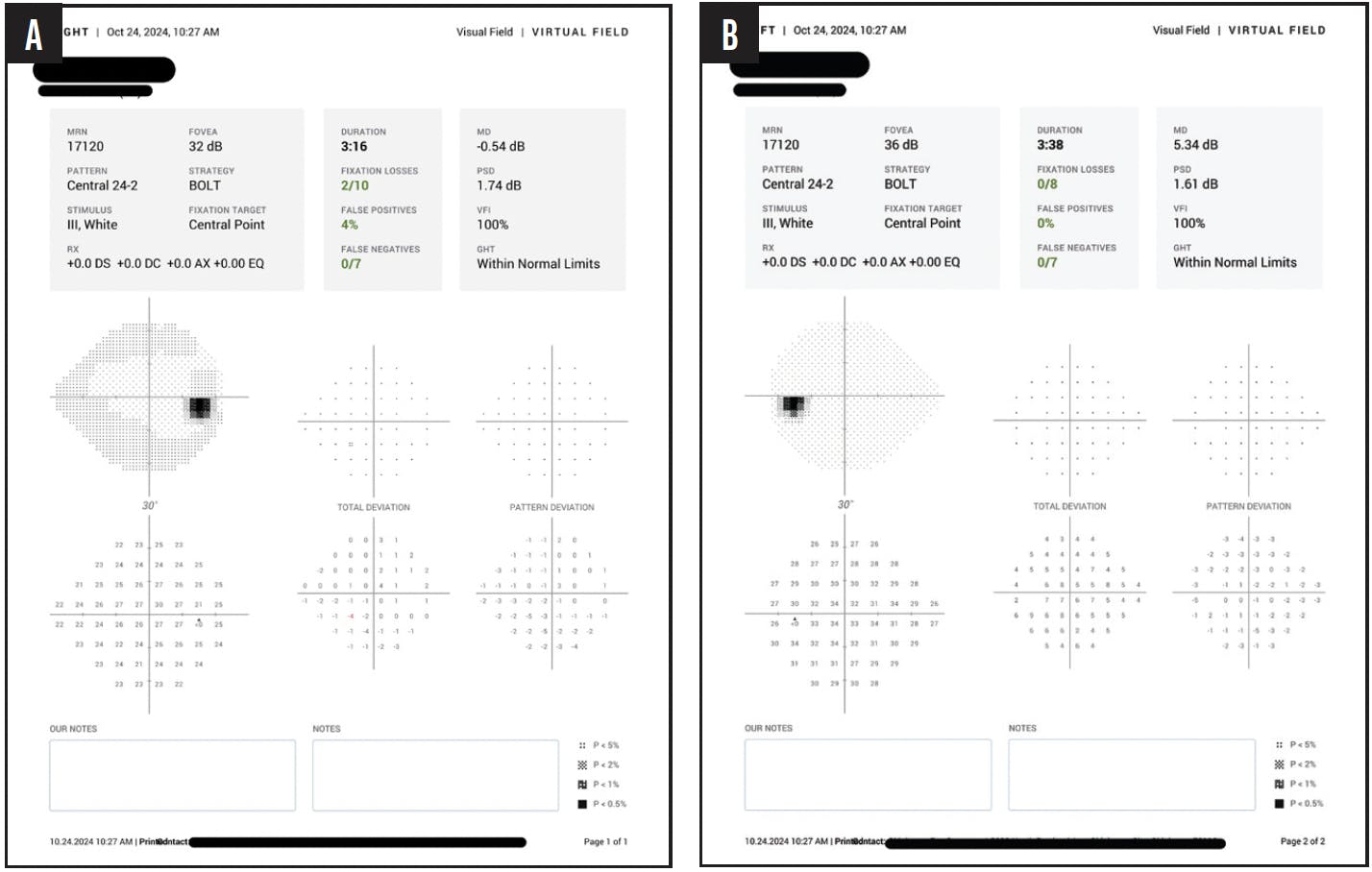
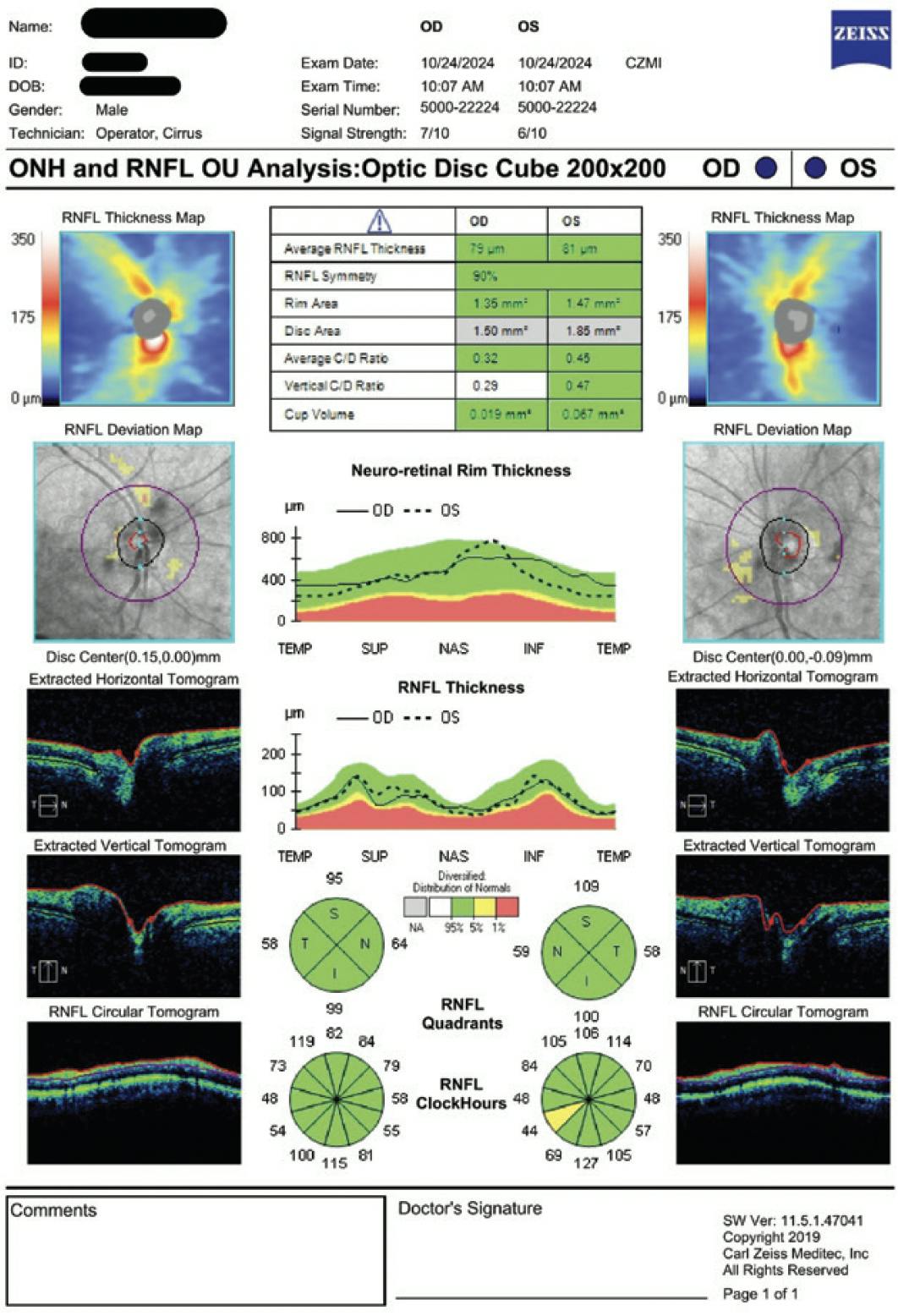
Upon examination, the patient’s IOP is 22 mm Hg OD and 24 mm Hg OS with Goldmann applanation tonometry. Central corneal thickness (CCT) measurements are 580 µm OD and 587 µm OS. His manifest refraction is -1.00 D OD and -1.75 D OS. No optic nerve cupping is observed, the angles are open, the anterior segment is normal in appearance, and the visual fields are full (Figure 1). OCT imaging finds a normal retinal nerve fiber layer (RNFL) thickness in each eye, and ganglion cell analysis is normal (Figures 2 and 3).
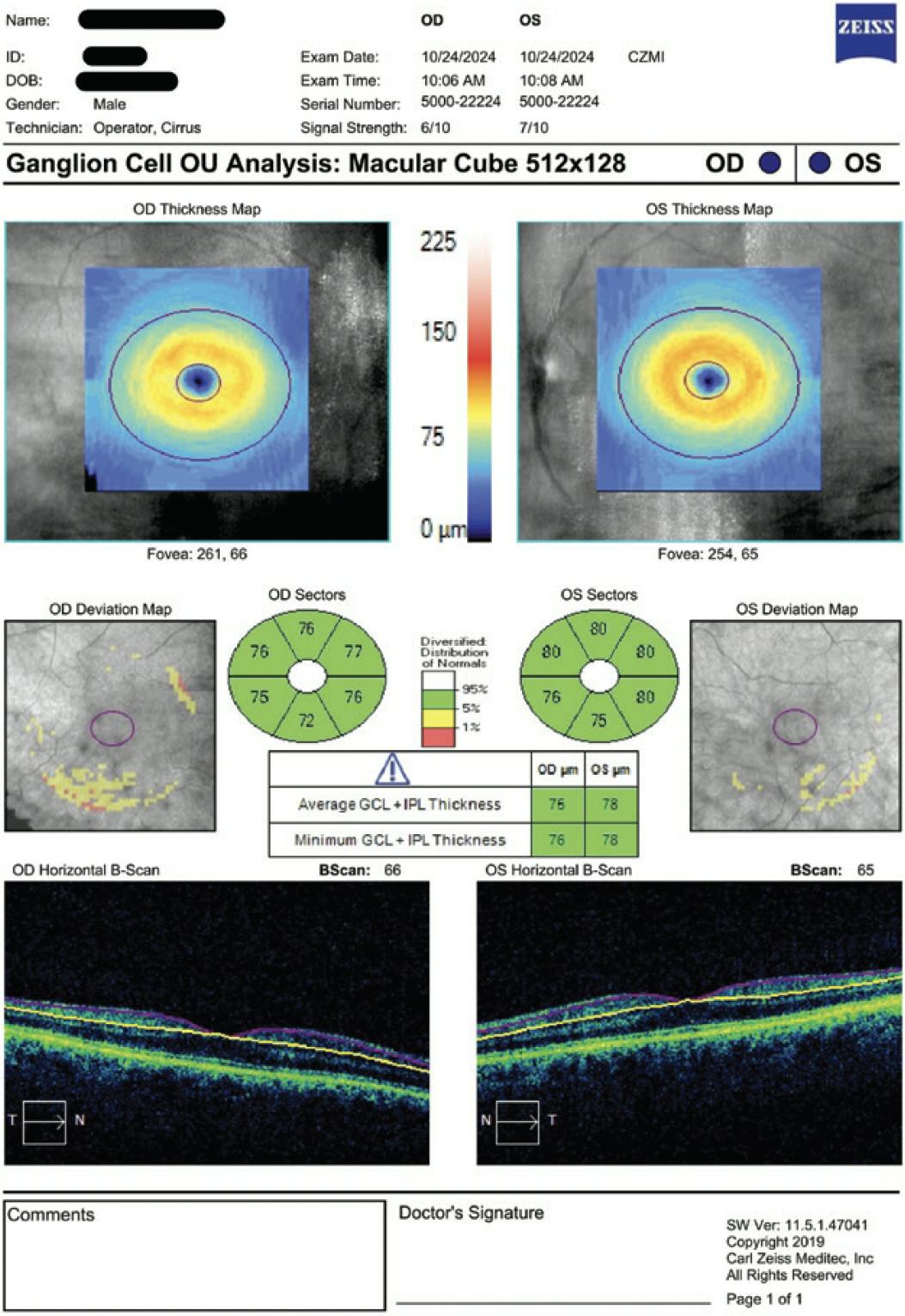
How would you proceed? How would you counsel the patient about future RNFL loss and his risk of disease progression?
—Case prepared by Steven R. Sarkisian Jr, MD
JAMES D. BRANDT, MD
The patient has mild ocular hypertension and a family history of severe glaucoma. In the Ocular Hypertension Treatment Study (OHTS), family history was not predictive for the development of glaucoma,1 but family history was determined by interview only, likely diluting the real risk in a situation like this one. When counseling the patient, I would give serious weight to his father’s confirmed advanced disease.
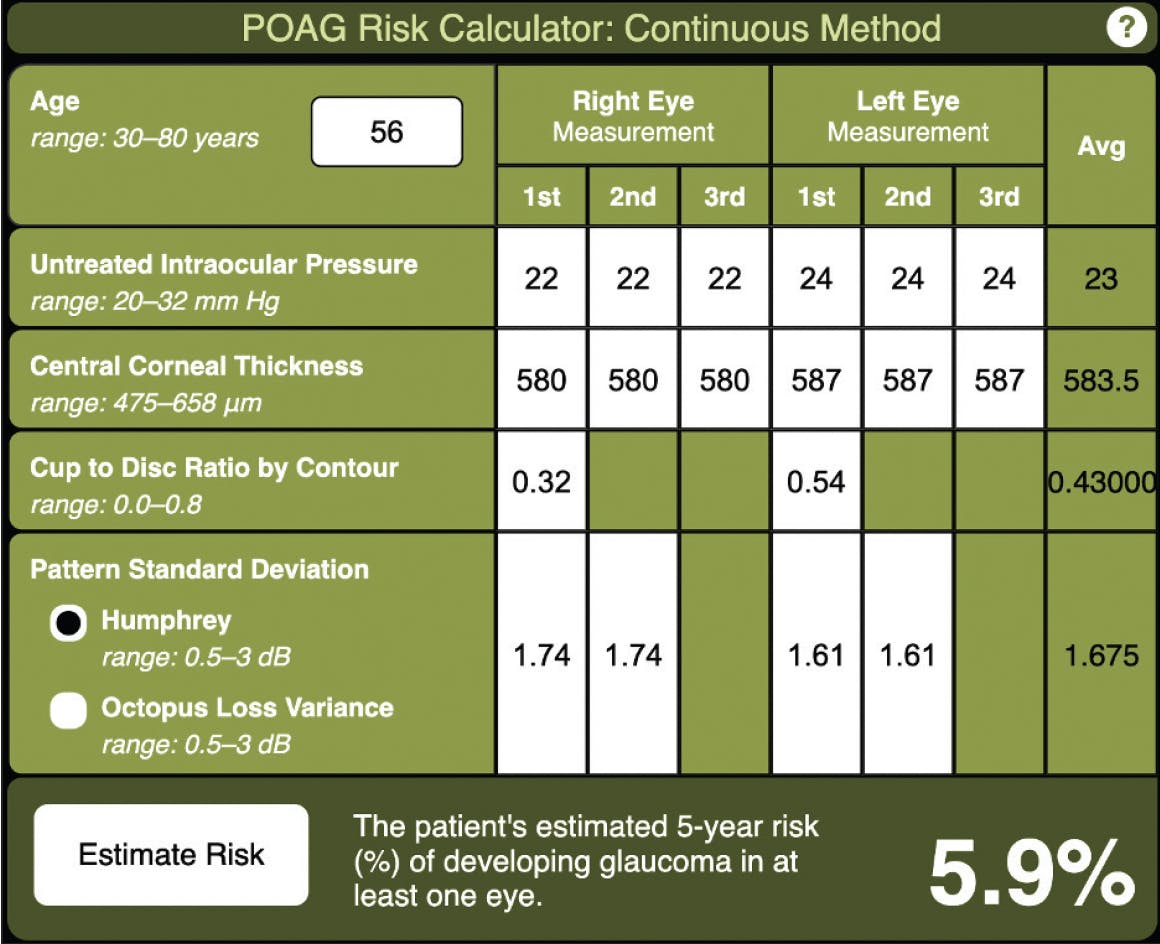
Entering the patient’s data into the OHTS-EGPS (European Glaucoma Prevention Study) risk calculator2 yields a predicted 5-year risk of developing glaucoma of 5.9% (Figure 4; to access risk calculators, click here). This places the patient in the lowest risk tertile of the OHTS, a group that did not benefit from treatment and few of whom developed glaucoma during 20 years of follow-up. For most patients at this low level of risk, I usually recommend annual or even biennial monitoring with visual field testing and OCT. Ultimately, the choice between treatment and observation is the patient’s. Given his family history, I would not dissuade him if he wants to start treatment.
Polygenic risk scores (PRSs) are a new tool for evaluating disease risk across medicine.3,4 In glaucoma, a high PRS has been associated with higher severity,5 earlier disease onset,6 and early trabeculectomy.7 A PRS generated from DNA samples of the OHTS participants enhanced both the positive and negative predictive value of the OHTS risk calculator.8,9
Several groups are developing accredited PRSs for glaucoma. These include one from Seonix Bio (SightScore) that is now commercially available. It is my expectation that generating a PRS will soon become part of the initial glaucoma workup for glaucoma patients and suspects.
BAC T. NGUYEN, MD
The decision whether to intervene is not clear. On the one hand, the patient has elevated IOP and a first-degree family member who has severe vision loss due to glaucoma. On the other hand, the patient’s optic nerves have a normal appearance, the corneas are thick, and the results of OCT imaging, ganglion cell analysis, and visual field testing are essentially normal. A reasonable argument could be made to monitor the patient, to initiate topical medical therapy, or to perform first-line selective laser trabeculoplasty.
Cases like this one demonstrate the role of genetic testing in guiding physicians’ decision whether to intervene and how aggressive to be with treatment and follow-up. Myocilin predictive genetic testing and other genetic risk assessment scores can identify high-risk patients and allow early intervention to prevent vision loss.
The patient would undergo a genetic risk assessment to determine his PRS (SightScore). The results would guide my decision to recommend observation or IOP-lowering therapy.
BILLY PAN, MD
The patient’s IOPs fall at the low end of those in the OHTS—landmark research that continues to provide valuable guidance on management.10
Aside from his high-normal IOP and family history of glaucoma, the findings are reassuring. His CCT measurements are greater than average, which may be associated with a reduced risk of glaucoma according to the OHTS.10 The CCT should be accounted for in IOP readings, with a compensatory reduction of 1 to 2 mm Hg. The patient’s refractive state is mild, the examination findings are normal, and diagnostic test results are relatively encouraging. Not noted is the race or ethnicity of the patient.
I would counsel him with some of the classic OHTS findings. Although study participants who were treated had a 60% lower incidence of glaucoma, the cumulative frequency of developing POAG was only 9.5% in the observation group.10 Glaucoma is a highly heritable disease, but the genetics are complex. Depending on the patient’s curiosity about his level of risk, glaucoma panel genetic testing could be suggested.
After counseling him, I would allow the patient to decide whether to start treatment. Whatever his choice, close monitoring and visits once or twice a year are warranted.
WHAT I DID: STEVEN R. SARKISIAN JR, MD
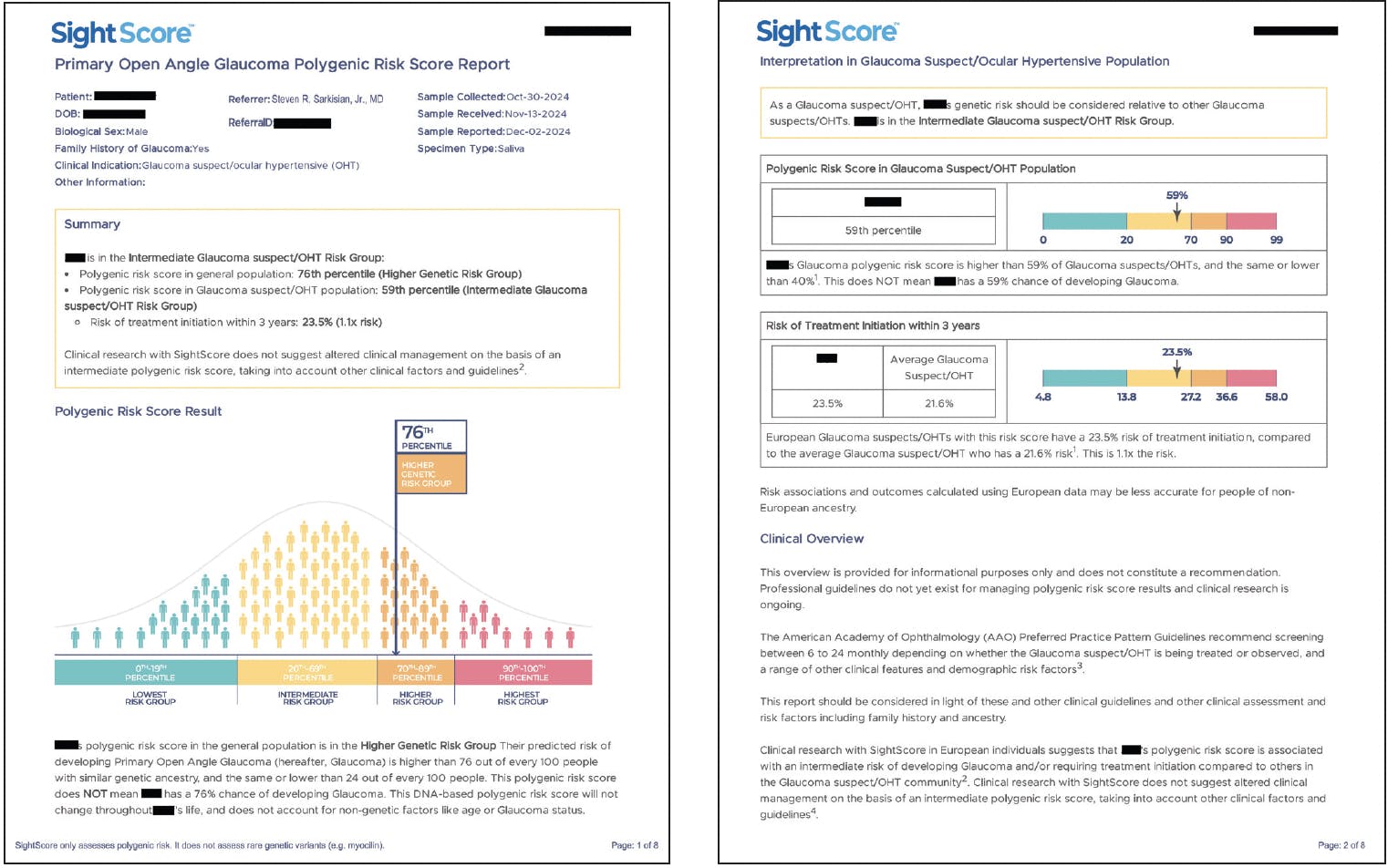
Given the patient’s significant family history, I desired a better understanding of his risk of progression to glaucoma. Clinicians’ and researchers’ understanding of glaucoma genetics has grown over the years but, until recently, was not commercialized for normative use in the treatment of glaucoma. Dr. Brandt elucidates the patient’s risk of progression based on the OHTS data and currently available genetic testing. The Seonix Bio test entails a simple cheek swab, and the results are available in 6 to 8 weeks. My patient’s SightScore placed him in the 76th percentile (Figure 5). Given this PRS and after some discussion, he decided to undergo primary direct selective laser trabeculoplasty (Voyager, Alcon) in each eye.
This case demonstrates a major shift in the way we physicians should be diagnosing and treating glaucoma suspects, patients with OHT, and even those already diagnosed with glaucoma. For example, if a patient with mild to moderate POAG has a low PRS, I might be inclined to follow up with them every 6 to 9 months rather than every 4 months. If instead they have a high PRS, visits might occur more frequently, or the target IOP might be lower. Every clinician has patients they see once or twice a year who are under observation only because they have sustained no glaucomatous damage (like the patient in this case) but who should probably be reevaluated given the availability of genetic testing.
1. Gordon MO, Beiser JA, Brandt JD, et al. The Ocular Hypertension Treatment Study: baseline factors that predict the onset of primary open-angle glaucoma. Arch Ophthalmol. 2002;120(6):714-720; discussion 829-830.
2. Ocular Hypertension Treatment Study Group; European Glaucoma Prevention Study Group; Gordon MO, Torri V, Miglior S, et al. Validated prediction model for the development of primary open-angle glaucoma in individuals with ocular hypertension. Ophthalmology. 2007;114(1):10-19.
3. Polygenic Risk Score Task Force of the International Common Disease Alliance. Responsible use of polygenic risk scores in the clinic: potential benefits, risks and gaps. Nat Med. 2021;27(11):1876-1884.
4. Wang Y, Tsuo K, Kanai M, Neale BM, Martin AR. Challenges and opportunities for developing more generalizable polygenic risk scores. Annu Rev Biomed Data Sci. 2022;5:293-320.
5. Qassim A, Souzeau E, Siggs OM, et al. An intraocular pressure polygenic risk score stratifies multiple primary open-angle glaucoma parameters including treatment intensity. Ophthalmology. 2020;127(7):901-907.
6. Marshall HN, Mullany S, Han X, et al. High polygenic risk is associated with earlier initiation and escalation of treatment in early primary open-angle glaucoma. Ophthalmology. 2023;130(8):830-836.
7. Marshall HN, Hollitt GL, Wilckens K, et al. High polygenic risk is associated with earlier trabeculectomy in patients with primary open-angle glaucoma. Ophthalmol Glaucoma. 2023;6(1):54-57.
8. Sekimitsu S, Ghazal N, Aziz K, et al. Primary open-angle glaucoma polygenic risk score and risk of disease onset: a post hoc analysis of a randomized clinical trial. JAMA Ophthalmol. 2024;142(12):1132-1139.
9. Singh RK, Zhao Y, Elze T, et al. Polygenic risk scores for glaucoma onset in the Ocular Hypertension Treatment Study. JAMA Ophthalmol. 2024;142(4):356-363.
10. Kass MA, Heuer DK, Higginbotham EJ, et al. The Ocular Hypertension Treatment Study: a randomized trial determines that topical ocular hypotensive medication delays or prevents the onset of primary open-angle glaucoma. Arch Ophthalmol. 2002;120(6):701-713; discussion 829-830.
_1754918026.png?auto=compress,format)