KEY TAKEAWAYS
- Misdiagnosis of angle closure is a recurring problem.
- Laser peripheral iridotomy alone is often inadequate in the phacomorphic phenotype.
- Endocyclophotocoagulation may be underutilized in patients with angle closure.
A 34-year-old man with a known history of high hyperopia (manifest refraction of +3.00 +1.25 x 087º OD and +4.25 +1.50 x 078º OS) was referred to our practice after a colleague recognized that a presumed nonhealing corneal abrasion with a ruptured bullae in the patient’s left eye was acute angle-closure glaucoma (ACG).
On presentation, the patient’s visual acuity was 20/20 OD and 20/200 OS. The IOP measured 11 mm Hg OD and 48 mm Hg OS. A slit-lamp examination revealed a severely edematous cornea in the left eye with large, ruptured epithelial bullae—the telltale sign of prolonged extreme pressure. The anterior chamber of both eyes was markedly shallow. The view of the posterior segment of the left eye was obstructed by a hazy cornea.
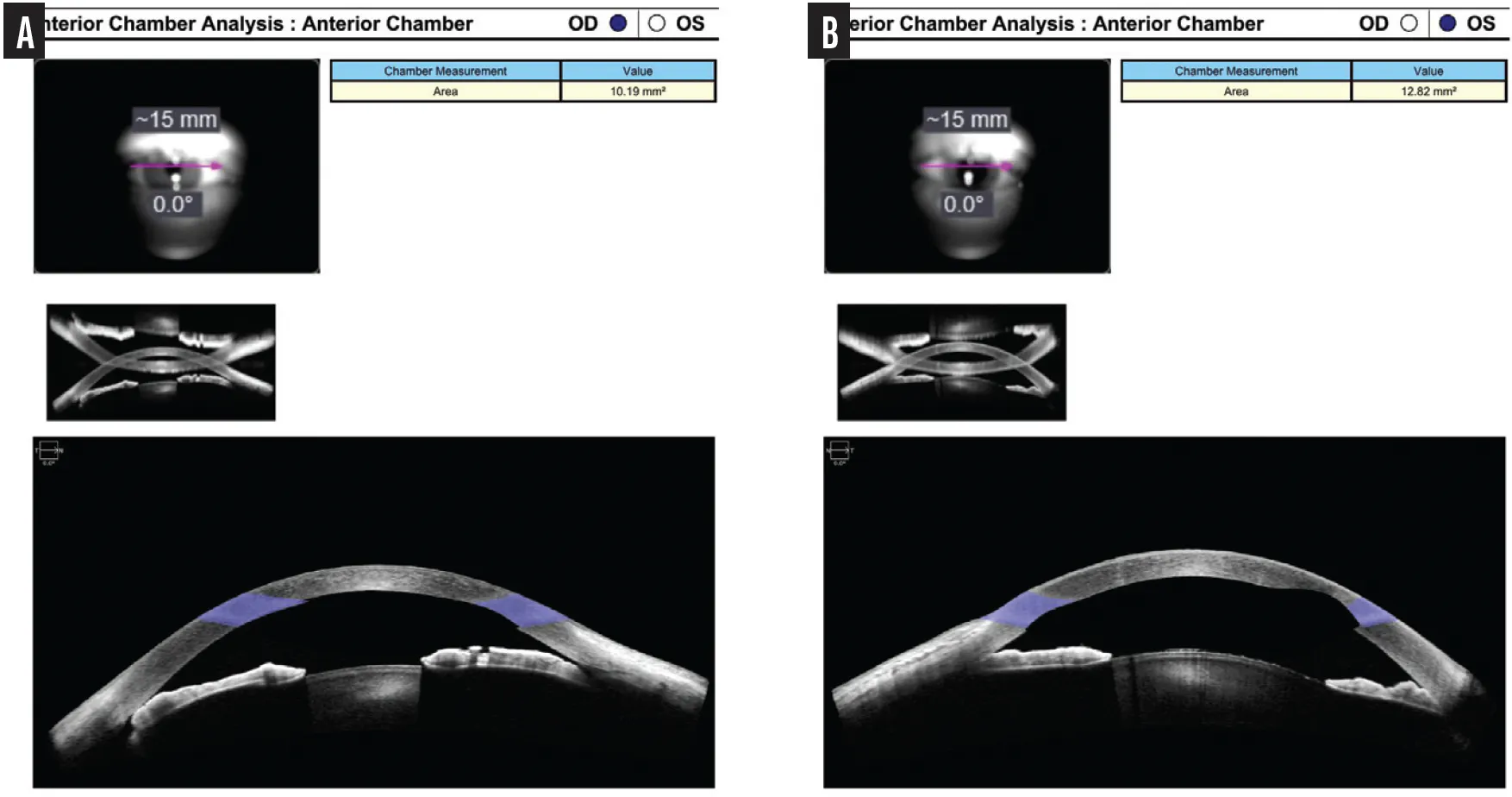
Gonioscopic visualization was limited by corneal edema, but anterior segment OCT confirmed what the slit-lamp findings suggested: critically shallow anterior chamber anatomy bilaterally and appositional angle closure in the left eye (Figure 1). Biometry told the rest of the anatomic story: Axial length was 20.31 mm OD and 20.59 mm OS, and lens thickness was 4.05 mm OD and 4.56 mm OS. This patient had a short, crowded eye with a larger lens than is typical for his age.
ACUTE MANAGEMENT
The highest priority was IOP reduction. I performed an anterior chamber paracentesis in the left eye, which decreased the IOP to between 10 and 12 mm Hg. The patient was kept for 1 hour of observation and then began therapy with a fixed combination of dorzolamide and timolol administered twice daily, brimonidine twice daily, prednisolone acetate four times daily, and acetazolamide extended release 500 mg twice daily. Given his severe corneal edema, a laser peripheral iridotomy (LPI) was deferred because attempting laser treatment through a bullous cornea with a swollen iris carries a risk of inadequate burn delivery and poor visualization.
The next day, the cornea had cleared enough to proceed with laser therapy. An LPI was performed on the left eye. Given the symmetric anatomy of the right eye (grade 1 angle on gonioscopy and the same hyperopic profile), I performed a prophylactic LPI on the right eye the following day. After the LPI, the anterior chamber of the left eye was shallow, and the IOP was 18 mm Hg. Gonioscopy confirmed a mostly closed angle in the left eye and a grade 1 angle in the right eye. Due to the IOP response after the LPI and poor tolerance, we opted to stop the acetazolamide.
Over the next 2 to 3 weeks, the cornea progressively cleared. The bullae persisted and improved, but the IOP was trending upward, having increased to 31 mm Hg OS off acetazolamide. The IOP decreased to 15 mm Hg when acetazolamide use was temporarily resumed; the patient was amenable to dealing with the short-term side effects.
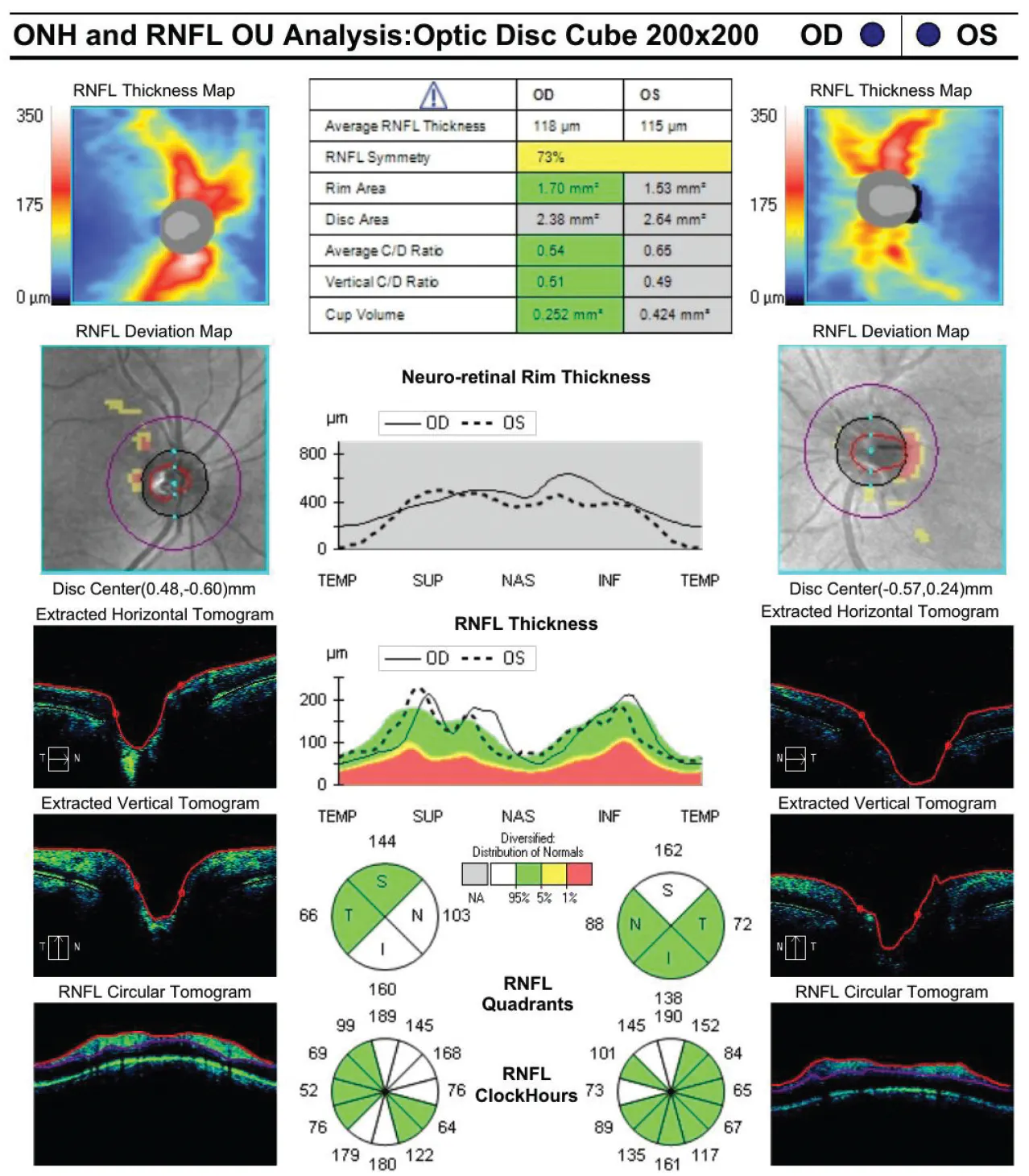
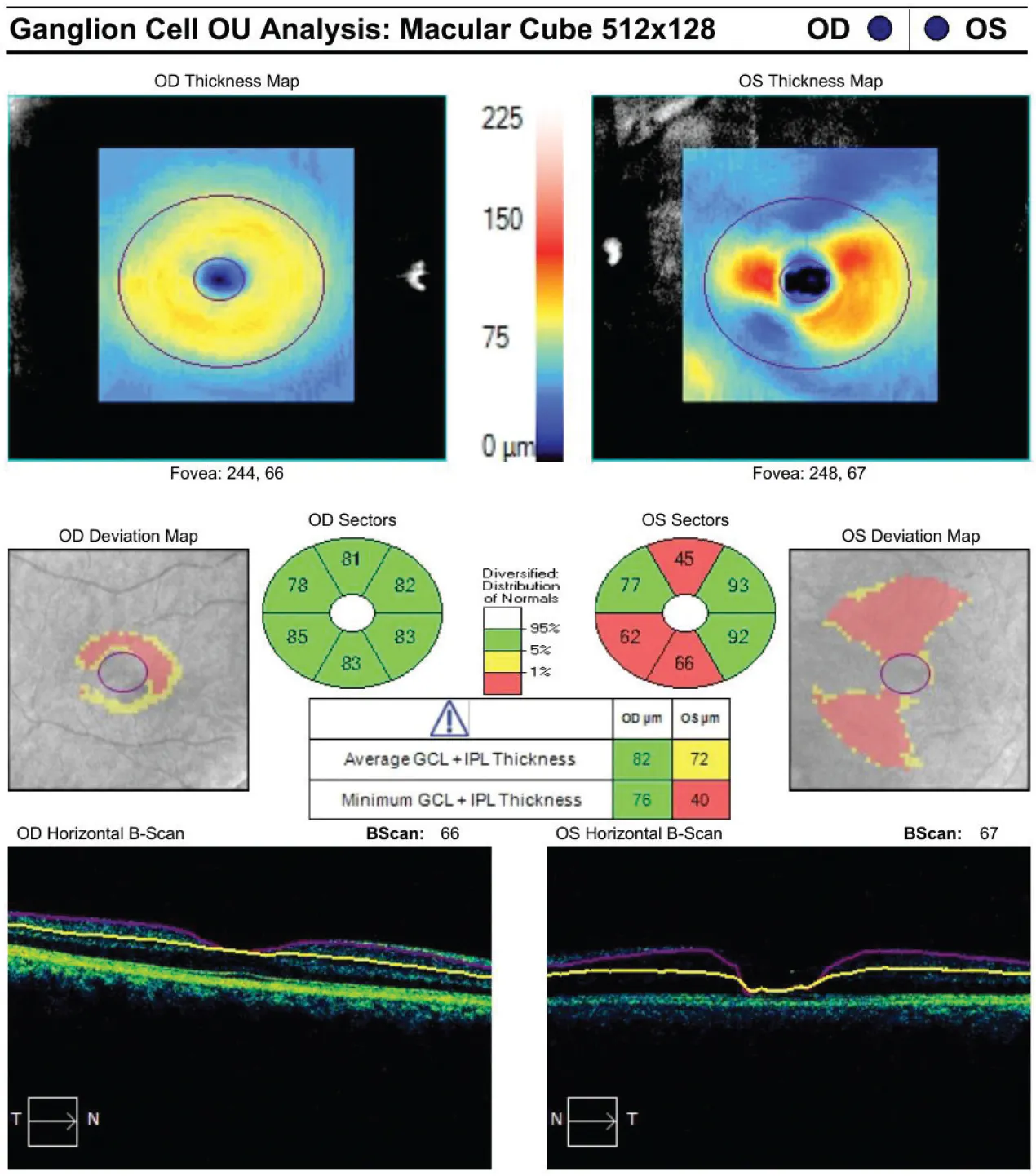
Once the cornea was clear enough for reasonable testing and a posterior segment examination, the patient was noted to have no retinal nerve fiber layer (RNFL) loss and asymmetric cup-to-disc ratios of 0.5 OD and 0.65 OS. OCT confirmed no RNFL loss and no thinning of the ganglion cell or inner plexiform layer in the right eye but possible RNFL loss and early ganglion cell loss in the left eye; however, image quality was poor due to the healing cornea (Figures 2 and 3). For a patient who had been in sustained angle closure for 3 weeks with a severely elevated IOP, this was a fortunate outcome. The nerve was somehow spared significant structural damage.
The problem was that, when treatment with acetazolamide was stopped, the IOP rose to the mid-30s mm Hg in the left eye. A patent LPI would not stabilize his pressure. The outflow system had been under extreme mechanical stress for weeks. Gonioscopy showed persistent synechial closure in the left eye despite the iridotomy.
THE DECISION POINT: FILTRATION VERSUS AN ANATOMY-FIRST APPROACH
Historically and traditionally, a patient with acute ACG, a synechially closed angle despite an LPI, and elevated IOP uncontrolled on maximally tolerated medical therapy has generally received a trabeculectomy, and it remains an excellent option. However, I let this patient’s anatomy guide my surgical decision-making.
His angle closure was not primarily a trabecular meshwork failure but anatomic compression. Both of his eyes had short axial lengths. In the left eye, the thick crystalline lens sat too anteriorly, and the ciliary body had driven the iris forward until the angle was gone. The Early Lens Extraction for the Treatment of Primary Angle-Closure Glaucoma (EAGLE) trial established that lens extraction is superior to LPI as first-line therapy for primary ACG. Patients undergoing clear lens extraction were approximately 10 times more likely to achieve drop-free IOP control at 36 months compared to those managed with LPI alone.1
For eyes with angle closure and persistent synechial disease after iridotomy, published data have shown a meaningful IOP reduction after lens extraction combined with endocyclophotocoagulation (ECP). One series of chronic angle-closure patients treated with phacoemulsification, goniosynechialysis, and 300º ECP reported a decrease in mean IOP from 18.2 mm Hg preoperatively to 12.8 mm Hg at 6 months postoperatively, with the medication burden cut nearly in half.2 More recent published case series validated canaloplasty combined with trabeculotomy using the Omni Surgical System (Sight Sciences) in patients with primary angle closure, showing that targeting Schlemm canal and the collector channel system, not just the angle anatomy, can yield sustained IOP reduction in this population.3
The combined approach I settled on was (1) phacoemulsification with IOL implantation to remove the primary structural driver, (2) ECP to reduce aqueous production and, critically, what I think of as a reverse endocycloplasty (the thermal effect on the ciliary processes relieves ciliary body tension and deepens the peripheral angle),4 and (3) canaloplasty with the Omni Edge device (Sight Sciences) to reestablish conventional outflow through Schlemm canal and the collector channel system. This approach addressed all three mechanisms simultaneously through clear corneal incisions and spared the conjunctiva.
For this young patient with limited structural damage, I wanted to preserve every future surgical option. Creation of a bleb would have meant decades of bleb care and related risks and the shadow of endophthalmitis hanging over every future visit. If this anatomy-first approach had not worked, filtration surgery was still an option.
SURGICAL APPROACH
Surgery went smoothly overall, although the intraoperative findings underscored what a few weeks of extreme IOP can do to an eye. The lens was soft, as expected, and phacoemulsification was straightforward. The eye had developed extensive posterior synechiae between the iris and lens capsule, requiring careful iris stretching maneuvers. More notable was the degree of zonular laxity. Sustained angle closure had compromised the zonular integrity, and a capsular tension ring was required before IOL implantation. From there, cataract surgery continued without complication, and the IOL was placed in the bag without difficulty.
Next, I performed approximately 300º ECP with settings of 150 mW on continuous delivery. I routinely perform an intracameral injection of 0.1 mL dexamethasone at the end of ECP to blunt the early postoperative inflammatory response, along with intracameral antibiotic prophylaxis, which is our standard for cataract surgery.
With the lens removed and the view of the angle now showing visible angle structures, OVD (ProVisc, Alcon) was injected to break the peripheral anterior synechiae with viscogoniosynechialysis. Canaloplasty was then performed with the Omni Edge. A single clear corneal approach allowed catheterization and viscodilation of Schlemm canal. At the end of the case, the angle structures were directly visible with gonioscopy for the first time since the patient’s presentation. The change in angle depth was immediate and dramatic—from a sliver preoperatively to an identifiable trabecular meshwork and scleral spur.
OUTCOMES
At 1 week postoperatively, the anterior chamber was deep and quiet. The corneal edema, particularly in the region of the original bullae, lingered for several weeks, which was expected given the duration of the initial attack, but resolved progressively. Prednisolone was tapered over 6 to 8 weeks, and the fixed combination of dorzolamide and timolol was tapered to once daily and then discontinued. At that point, the IOP was in the low teens.
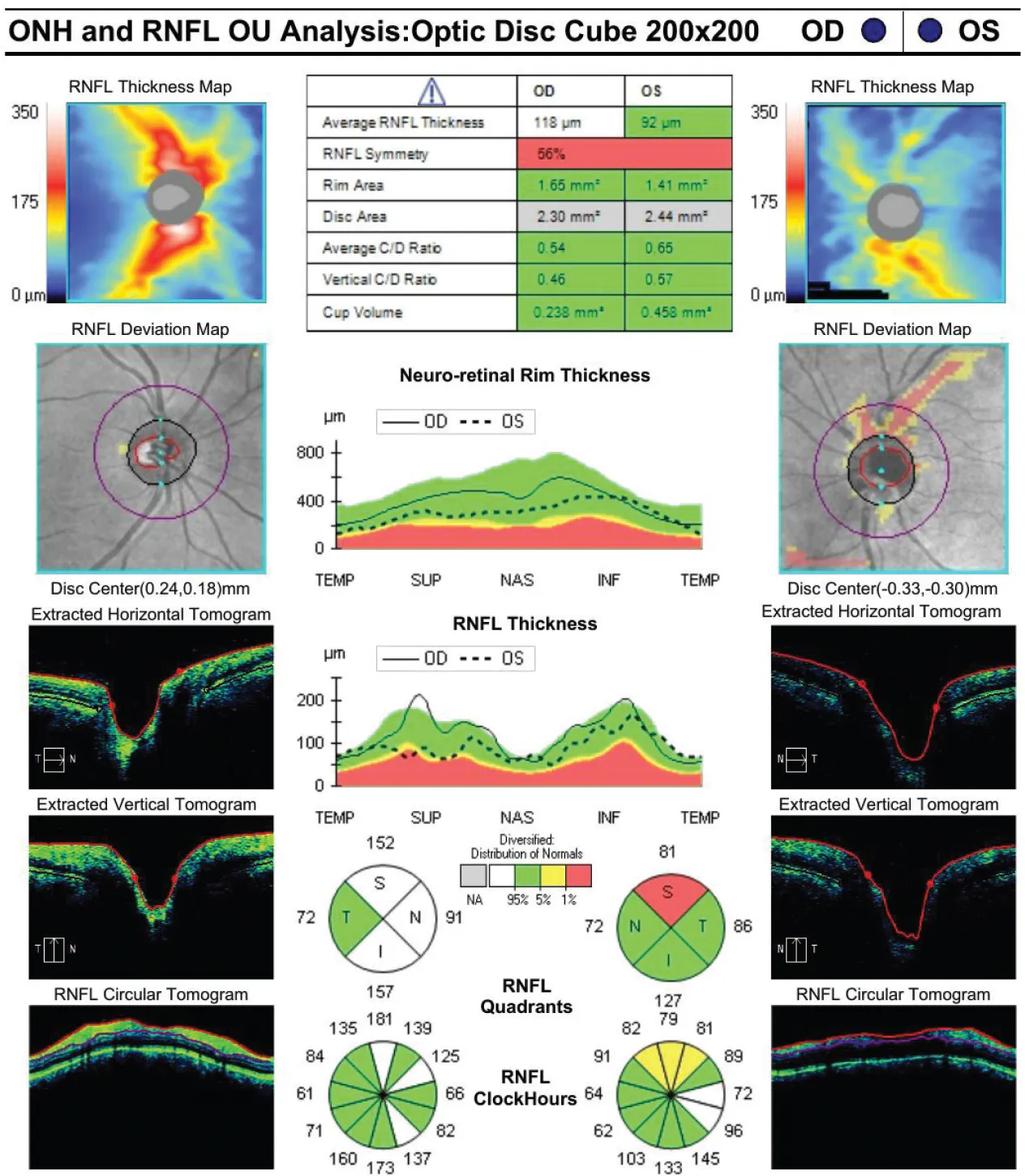
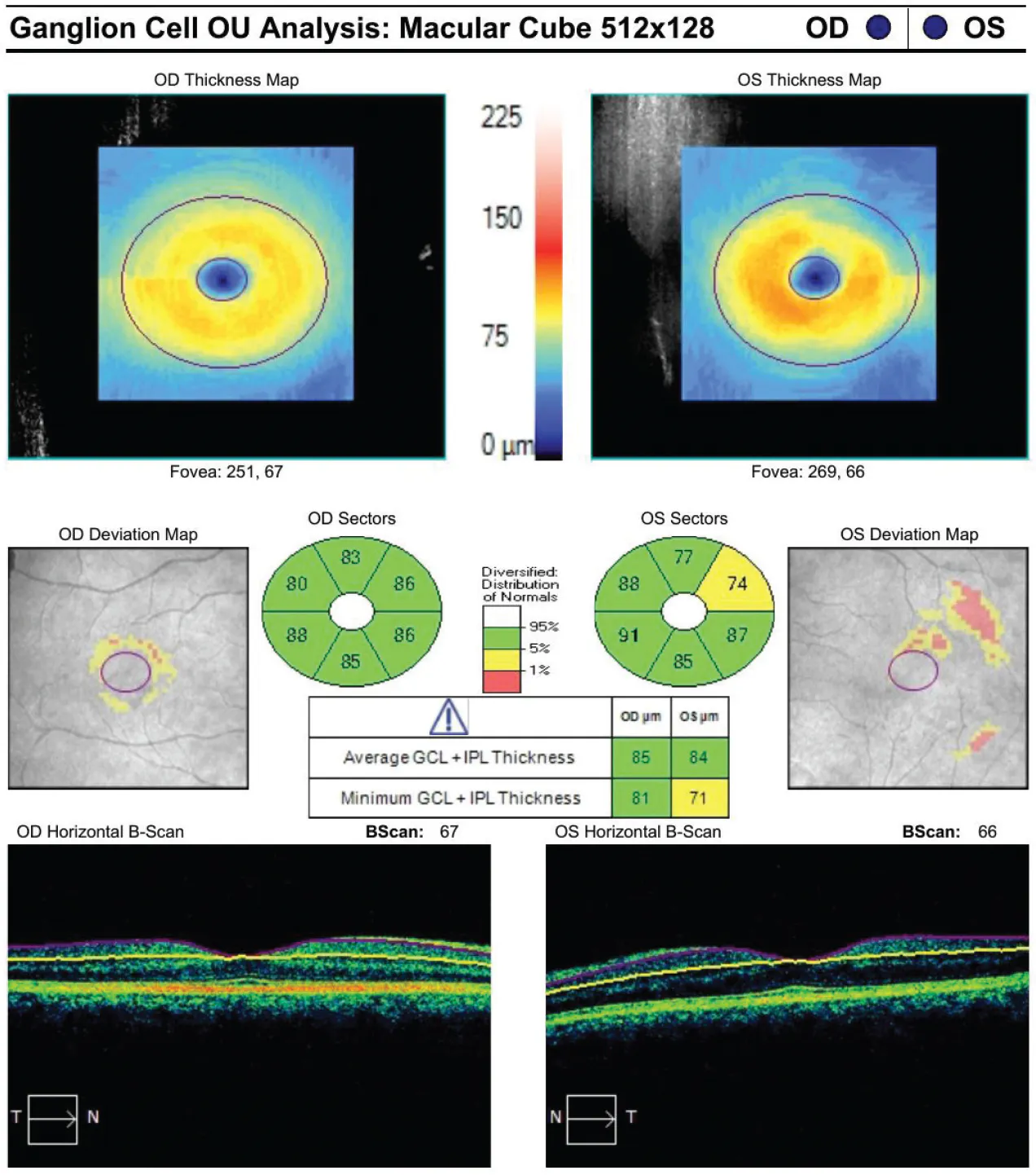
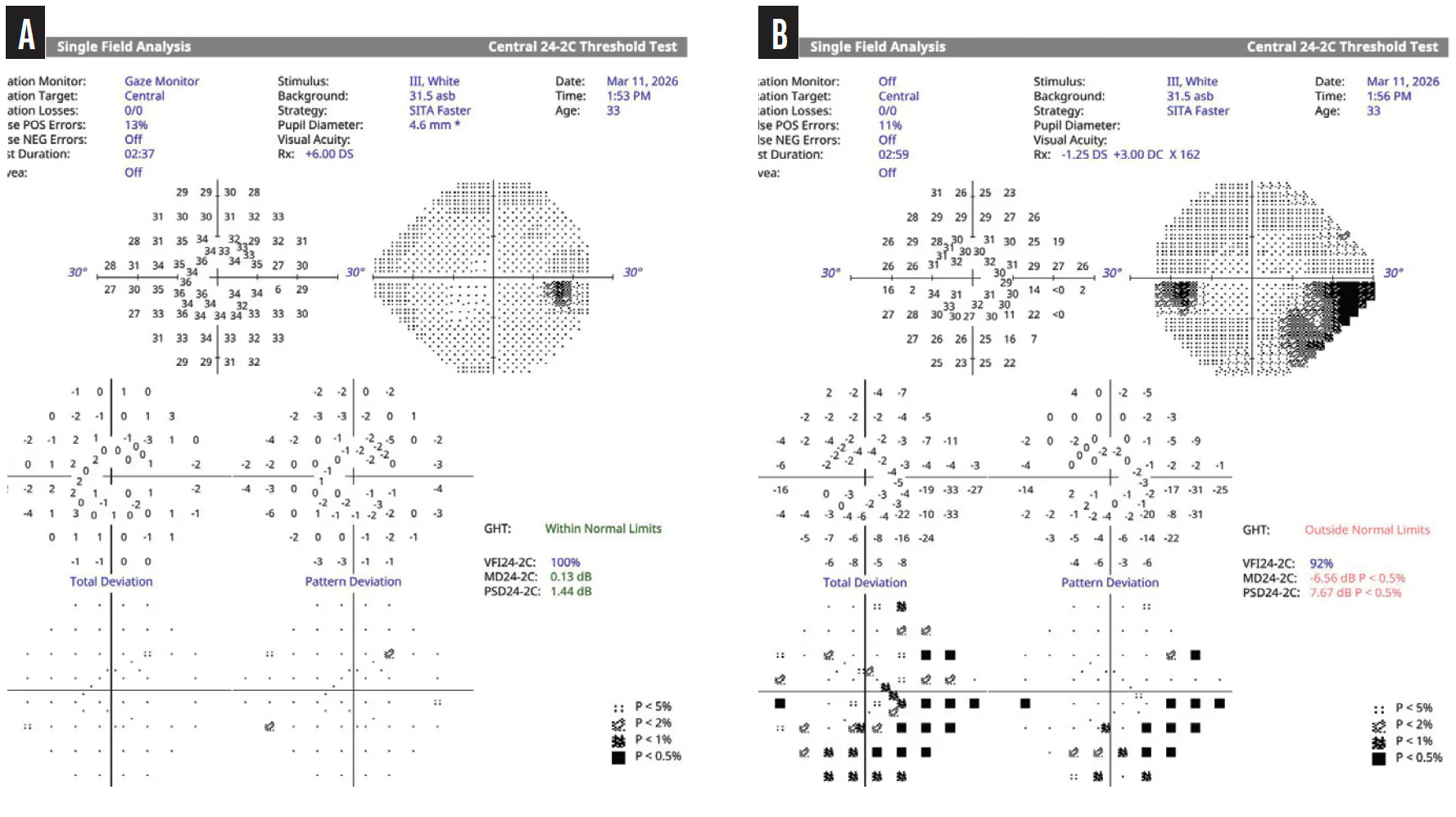
At 6 months postoperatively, the patient has discontinued all medications. His UCVA is 20/25 OS, and the IOP is 13 mm Hg. The anterior chamber is deep. He has some iris irregularities (ischemic sequelae from the initial attack) but is otherwise doing extremely well. His postoperative OCT showed superior RNFL thinning and mild superior ganglion cell loss in the left eye (Figures 4 and 5). This correlates with an inferior nasal step in the left eye, as seen on his visual field tests (Figure 6). It is not surprising he has some RNFL thinning and visual field loss. However, considering the delay in treatment and prolonged IOP elevation, I would venture to say he is relatively lucky.
THE FELLOW EYE—A CONVERSATION IN PROGRESS
The right eye remains under observation with a patent LPI and a grade 1 angle on gonioscopy. The IOP is in the midteens on no medication. The anatomy is concerning: It has the same short axial length and thick lens profile as the left eye. The patient’s induced anisometropia is becoming increasingly difficult for him to tolerate now that his left eye’s refraction is close to plano.
Our discussions have focused on clear lens extraction with ECP for the right eye. There is a risk of a spontaneous acute angle-closure event in this eye due to his anatomy, and his inability to comfortably tolerate the refractive disparity between his eyes is accelerating the timeline. For a 34-year-old, extracting a healthy crystalline lens is not a trivial decision, but in this situation, it may be the most appropriate one.
KEY TAKEAWAYS
This case demonstrates a few guiding principles for me.
First, misdiagnosis of angle closure is a recurring problem. A young patient in pain with a hazy cornea should raise red flags. A quick IOP check and look at the depth of the anterior chamber would have flagged the problem; 3 weeks of sustained elevated IOP in a young patient had the potential to lead to a lifetime of profound vision loss.
Second, LPI alone is often inadequate in the phacomorphic phenotype. The iridotomy addressed the pupillary block but could not reverse lens-driven crowding. In a short eye with a thick lens, the lens is the problem, and its removal is the most direct solution the EAGLE data support.
Third, ECP in angle closure is underutilized. Beyond aqueous suppression, the endocycloplasty effect (ciliary body relaxation and posterior rotation) directly addresses angle anatomy. This mechanism is particularly relevant in angle closure because ciliary body position is part of the pathology.
Finally, preservation of the conjunctiva matters, especially in young patients who may need additional procedures. By addressing the anatomy first with a minimally invasive approach, unmedicated IOP control was achieved. Should he require trabeculectomy or tube shunt surgery decades from now, no bleb was created, and no tissue was sacrificed.
1. Azuara-Blanco A, Burr J, Ramsay C, et al; EAGLE study group. Effectiveness of early lens extraction for the treatment of primary angle-closure glaucoma (EAGLE): a randomised controlled trial. Lancet. 2016;388(10052):1389-1397.
2. Izquierdo Villavicencio JC, Agudelo Arbelaez N, et al. Primary outcomes of patients with chronic angle-closure glaucoma treated with combined phacoemulsification, visco-goniosynechialysis, and endocyclophotocoagulation. J Ophthalmol. 2019;2019:6378489.
3. Mueller A, Malley CE, Berzack S, et al. Canaloplasty and trabeculotomy combined with phacoemulsification for primary angle-closure glaucoma: a single-surgeon case series. Cureus. 2024;16(5):e60549.
4. Alaghband P, Rodrigues IAS, Goyal S. Phacoemulsification with intraocular implantation of lens, endocyclophotocoagulation, and endoscopic-goniosynechialysis (PIECES): a combined technique for the management of extensive synechial primary angle closure glaucoma. J Curr Glaucoma Pract. 2018;12(1):45-49.