


Key Takeaways
- Glaucoma care delivery is a contributor to environmental waste in health care, but small changes can lead to a more sustainable practice.
- Glaucoma specialists can consider transitioning to reusable devices, limiting excess packaging, reducing pharmaceutical waste, and taking steps to decrease the transportation required for patient care.
- The Ophthalmic Instrument Cleaning and Sterilization Task Force supports the use of topical drugs in multidose containers on multiple patients and continuing use until the labeled expiration date.
Health care delivery often comes with the undesirable side effect of excess waste, both in the clinic and the OR. Glaucoma care is no exception. However, small, incremental changes can go a long way toward creating a more environmentally sustainable glaucoma practice.
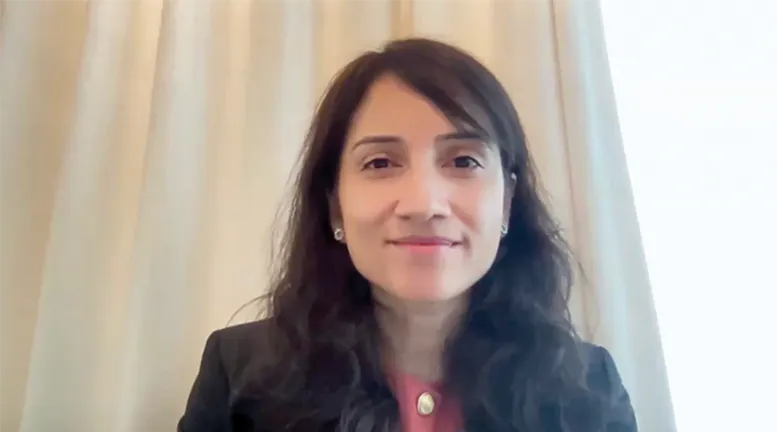
“As the disease burden of glaucoma rises, so [does] the number of glaucoma patient clinic visits, procedures, and surgeries,” Aakriti Garg Shukla, MD, of Columbia University Irving Medical Center in New York, said in a recap of her presentation on the topic of sustainability at the 2026 AGS Annual Meeting (see Sustainability Efforts in Glaucoma Practice). “Because we see patients frequently and operate often, glaucoma specialists have an outsized opportunity to make a meaningful impact.”
Glaucoma specialists commonly perform procedures that entail the use of single-use instruments, packaging, and pharmaceuticals as well as disposable attire. When safe and appropriate, they can consider transitioning to reusable devices and reducing excess packaging, Dr. Shukla said.
EyeSustain, a coalition of ophthalmic organizations working to improve sustainability in ophthalmology, has published position papers to call on industry to prioritize the development of multiuse supply options and for regulatory agencies to facilitate, review, and approve these products. These options include reusable phaco cassettes1 and electronic instructions for use.2
REDUCING TOPICAL DRUG WASTE
Pharmaceutical waste increases the cost and carbon footprint of ophthalmic surgery as well as the risk of drug shortages. Currently, there are nearly 200 drug shortages in medicine, including several affecting ophthalmic medications, said Dr. Shukla. At the same time, ophthalmologists discard a significant number of medications after a single use. Approximately $150 in unused or partially used medications are discarded per cataract surgery.3 With 4.2 million cataract cases performed annually in the United States, that amounts to approximately $620 million in wasted medication every year, Dr. Shukla said.
The Ophthalmic Instrument Cleaning and Sterilization (OICS) Task Force, which includes representatives of the ASCRS, AAO, AGS, and Outpatient Ophthalmic Surgery Society, supports multidose topical drop use in perioperative settings when sterile technique is followed.3 In a 2020 OICS survey, 98% of the ophthalmologist respondents said they were willing to consider or were already using eye drops from multidose bottles on multiple perioperative patients, and 42% were using IOP-lowering medications on multiple patients from multidose containers. A 2021 survey of ambulatory surgery centers found that most were using multidose bottles on multiple patients, but only 12% said they continued using them until the labeled expiration date.3
The OICS consensus recommendations support the use of topical drugs in multidose containers on multiple patients and using them until the labeled expiration date if proper guidelines are followed. In addition, when applicable, patients should be able to take partially used medications home for postoperative use, the task force said.3
SUSTAINABILITY IN THE CLINIC
Sustainability efforts can also be applied to the clinic workflow, suggested Dr. Shukla. Transportation to and from clinics and pharmacies is a significant contributor to environmental waste. To reduce the transportation required for patient care, clinicians can do the following:
- Consider conducting same-day postoperative evaluations when appropriate to reduce the number of patient clinic visits;
- Provide 90-day medication prescriptions to reduce pharmacy trips for patients; and
- Allow for home IOP monitoring to reduce travel for patients with stable glaucoma or suspected glaucoma.
CONCLUSION
Sustainability and excellent glaucoma care are not mutually exclusive. With the right steps, a more environmentally sustainable practice can be achieved.
“Small changes can have a meaningful impact when applied across thousands of visits and surgeries,” Dr. Shukla said.
Glaucoma specialists are usually playing the long game, Dr. Shukla added. Caring for patients with glaucoma entails many patient encounters over many years. If it is possible to preserve a patient’s vision for 30 years, it is also possible to preserve the systems that deliver this care.
Watch it Now
1. Chang DF, Findl O, Hovanesian JA, McCabe CM, Repka MX. Unmet need for multiuse phacoemulsification machine products: multisociety position paper. J Cataract Refract Surg. 2026;52(2):117-123. doi:10.1097/j.jcrs.0000000000001832
2. Schehlein EM, Hovanesian J, Shukla AG, Talley Rostov A, Findl O, Chang DF. Reducing ophthalmic surgical waste through electronic instructions for use: a multisociety position paper. J Cataract Refract Surg. 2024;50(3):197-200. doi:10.1097/j.jcrs.0000000000001381
3. Palmer DJ, Robin AL, McCabe CM, Chang DF. Reducing topical drug waste in ophthalmic surgery: multisociety position paper. J Cataract Refract Surg. 2022;48(9):1073-1077. doi:10.1097/j.jcrs.0000000000000975
