Topics
Business
Innovation
Laser
Medical
Practice
Research
Surgical
Training
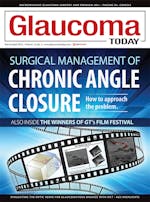
How to approach the problem.
View Issue
Sponsored by IRIDEX
View Insert
In This Issue
Steven D. Vold, MD,Chief Medical Editor
Helen Kornmann, MD, PhD, and Joseph F. Panarelli, MD
The latest research findings from the 25th annual meeting of the American Glaucoma Society, held February 26 to March 1, 2015, in Coronado, California.
Geoffrey T. Emerick, MD
An ophthalmologist from India visits four renowned teaching institutes to broaden his perspective on glaucoma education, surgery, and technology.
Ganesh Venkataraman, MBBS, MS, DNB
Refractive errors and glaucoma can be approached as comorbidities that can be treated together.
Joel M. Solano, MD, and John P. Berdahl, MD
Optic nerve assessment contributes to the clinician's ability to detect glaucoma.
Murray Fingeret, OD
Jason Bacharach, MD
Anton Kolomeyer, MD, PhD
Section Editors: Soosan Jacob, MS, FRCS, DNB, and Jonathan S. Myers, MD
An overview of some major issues.
Harry Quigley, MD
A combination of techniques can yield a clear picture.
Robert M. Feldman, MD
When is this treatment warranted?
Shuchi Patel, MD
Nicholas P. Bell, MD and Garry P. Condon, MD
Laser treatment remains a mainstay of management.
Shan Lin, MD
Cataract surgery is an effective treatment that saves patients from the complications of trabeculectomy.
Reay H. Brown, MD
A safer option for patients with a cataract and uncontrolled glaucoma.
Marlene R. Moster, MD, and Wanda D. Hu, MD
Choose a surgical approach based on the contributing mechanism and stage of the disease.
Sarwat Salim, MD
There is plenty of interest but relatively few drugs in advanced-stage development.
Gary D. Novack, PhD
How to use the Internet to reinforce the doctor-patient therapeutic alliance.
Ivan Goldberg, AM, MBBS (Syd), FRANZCO, FRACS
Subscribe
Stay up to date all on all things Glaucoma by signing up to receive our print publication or subscribe to our email alerts.