While gaining control of IOP is a primary goal of any glaucoma intervention, reducing or eliminating the need for repeated instillation of medications can be of tremendous benefit. When this is achievable, we are making treatment more convenient for patients, which may impact their quality of life. As practitioners, we talk often about helping patients gain control of the disease, which typically refers to slowing and stopping progression. Perhaps there is rationale to think about expanding this sentiment to “helping patients gain control of the treatment of their disease” as well. In the following case, we present a patient who was a participant in the INN-005 Clinical Trial under the care of Dr. Brandt. From the patient’s perspective, she had a very comfortable postoperative experience and she was happy to be able to discontinue her glaucoma medications after receiving surgery.
Baseline Examination
- Patient referred to UC Davis in late 2014 by a community ophthalmologist with advanced POAG (OD>OS).
- Previous ocular history included trabeculectomy (2012) that had failed and a Baerveldt glaucoma implant (2015).
- Current medications included dorzolamide/timolol BID (OS) and travoprost ophthalmic solution QHS (OU).
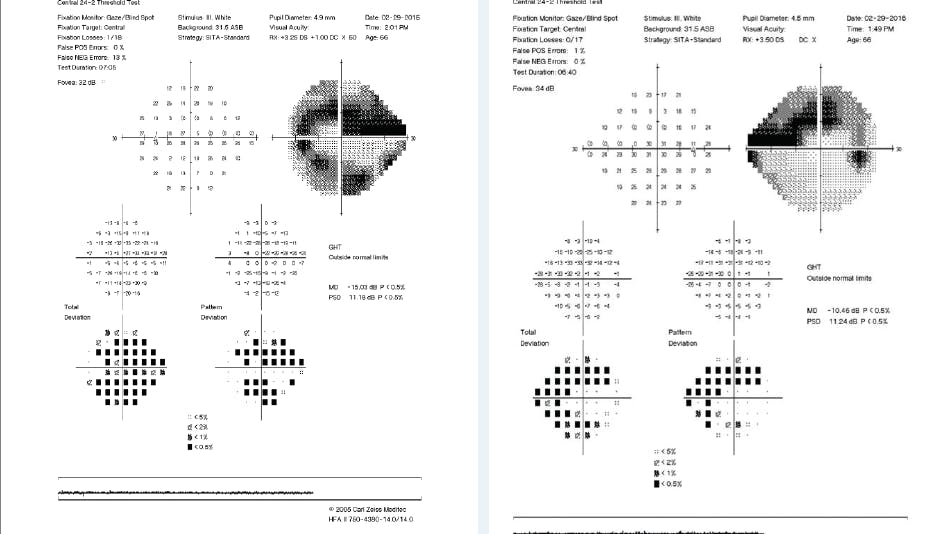
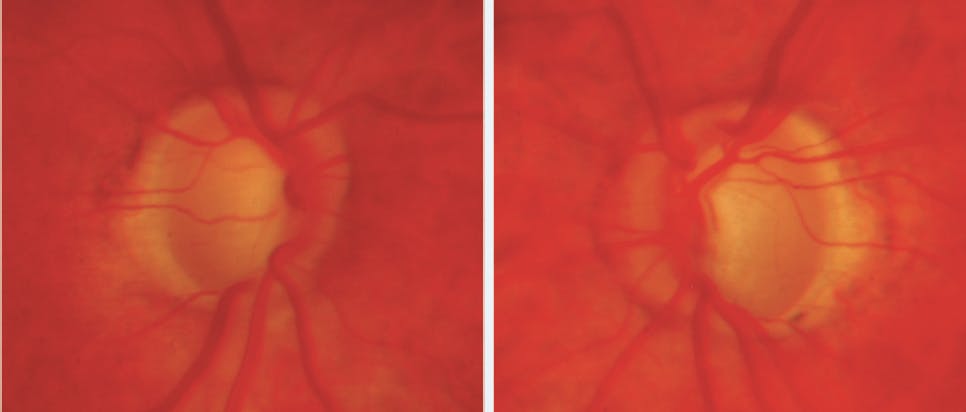
- By 2016 the glaucoma in her left eye had worsened despite maximum medical therapy. On examination, IOP in the left eye was 18 mm Hg and imaging confirmed advanced glaucomatous damage in both eyes, with the left eye demonstrating more severe damage (Figures 1 and 2).
- Surgery was recommended in what was her better-sighted eye. She was invited to participate in the INN-005 MicroShunt pivotal clinical trial.
Surgery and Follow-Up
- The patient was scheduled for surgery in March 2016. She was randomly assigned in the operating room to undergo implantation of the MicroShunt.
- She has done well postoperatively. She had cataract surgery in both eyes (OD, December 2020; OS, January 2021), which was performed by the community ophthalmologist.
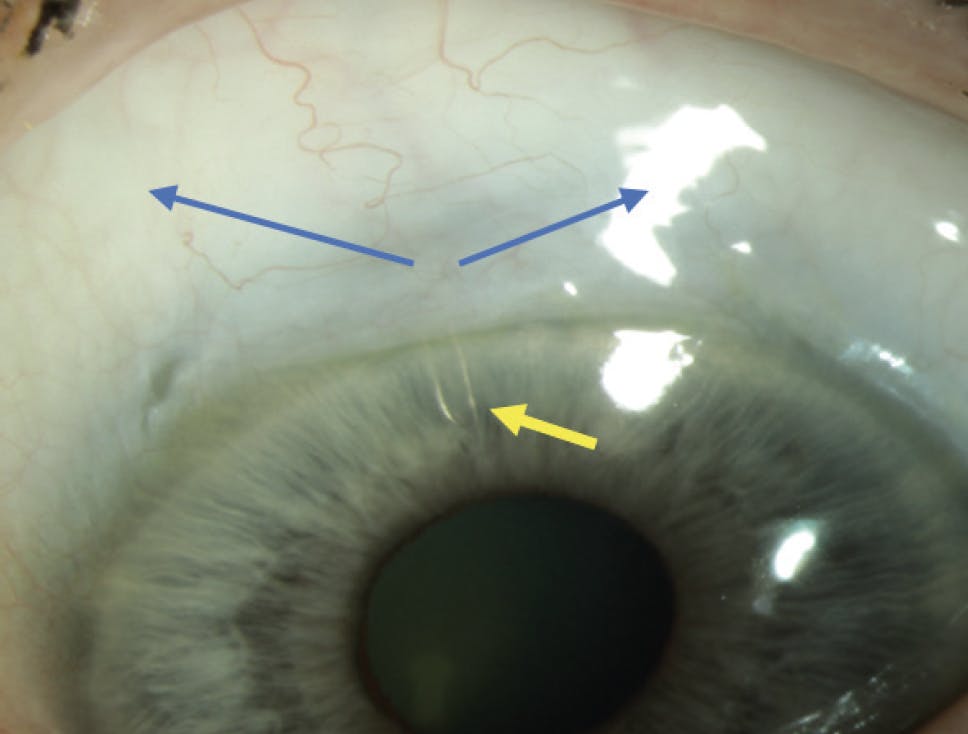
- At a 2-year postoperative visit, the bleb appeared healthy, displaying a low profile with minimal vascularity (Figure 3).
- The patient returned 5 years postoperatively for a scheduled visit per the INN-005 Study Protocol. At the time of examination, her VA was 20/30 in the left eye despite advanced visual field loss encroaching on fixation. Her IOP at 5 years was 14 mm Hg in both eyes on no medications in the left (MicroShunt) eye and travoprost + dorzalamide/timolol in the right (Baerveldt) eye. Visual fields have been stable.