The management of chronic neurodegenerative diseases such as glaucoma, age-related macular degeneration (AMD), Alzheimer disease, Parkinson disease, and stroke is complicated by a similar set of challenges. These diseases cause significant disability, owing in part to their late diagnosis, the absence of appropriate screening tests, ineffective monitoring, and a lack of early clinical endpoints.
Patients with neurodegenerative diseases progress slowly and are followed over long periods of time. Reliable indicators are therefore needed to measure disease progression and efficacy of treatment. In glaucoma, the gold standard for diagnosis is visual field testing. Visual field defects, however, can take years to develop, by which point at least 30% of the eye’s retinal ganglion cells (RGCs) may be lost. This inability to identify early disease is estimated to translate to about a 10-year delay in the diagnosis of glaucoma.1 Diagnostic delays affect patients with other neurodegenerative diseases as well. Parkinson disease is diagnosed only once a patient presents with symptoms, by which point 70% of dopaminergic receptors have typically been lost.2 With Alzheimer disease, the time between the start of the disease process and the development of memory loss is reported to be about 20 years.3
The detection of apoptosis and cell stress is a promising strategy for detecting neurodegenerative disease before irreversible damage occurs and for monitoring treatment response ahead of existing endpoints. This article reviews a novel retinal biomarker—the Detection of Apoptosing Retinal Cells (DARC)—and the potential for this to function as a surrogate endpoint in glaucoma and other conditions.
BIOMARKERS AND ENDPOINTS
A biomarker is a characteristic that can be objectively measured and evaluated as an indicator of normal biological processes, pathogenic processes, or pharmacologic response to a therapeutic intervention. A clinical outcome is defined as a characteristic or variable that reflects how a patient feels, functions, or survives. A surrogate marker is used as a predictor of a clinical outcome; for example, blood pressure is the surrogate of stroke (the true clinical endpoint).4
In ophthalmology, we are looking for surrogate markers of visual function loss. We know that RGC apoptosis is the earliest event in the development of glaucoma, and peak apoptosis occurs in early stages of the disease. Apoptosis identification may therefore be key to early treatment and prevention of vision loss in glaucomatous eyes.
APOPTOSIS AND DARC
In early apoptosis and cell stress, the cell membrane changes its structure: Phosphatidylserine (PS) moves from the inside to the outside of the cell, serving as the cell's "eat me" signal for resident phagocytes. This process of PS externalization is reversible, allowing sick or stressed cells to return to a healthy state if appropriately targeted by treatment.
DARC uses a fluorescent-labeled annexin V protein, administered via intravenous injection, to identify apoptosis. Annexin V binds to exposed PS with high affinity, and individually labeled cells are visualized as white spots on retinal images captured with standard imaging equipment. DARC technology allows the opportunity to not only monitor disease activity (DARC count) but also treatment efficacy (reduction of DARC count).
PRECLINICAL ENDPOINTS AND ALGORITHMS
My colleagues and I have worked to validate this concept and show that DARC can be used as a clinical biomarker to determine disease activity.5 Preclinically, we evaluated the use of DARC in several animal models of disease.6-23 Our initial objective was to show that DARC would do what we predicted, so the first endpoint assessed was RGC death. Using whole retina mount immunostaining and an automated script for RGC counting, we were able to determine a DARC count and try to correlate that with the endpoint of RGC loss.
In a study using a partial optic nerve transection (pONT) animal model, DARC was used to compare the direct application of Schwann cells with intravitreal Schwann cell delivery and evaluate the effects of these approaches on RGC apoptosis and loss.20 With DARC, we were able to show that the direct application of Schwann cells prolonged RGC survival. We found that we could visualize RGC apoptosis with DARC (Figure 1) and that the analysis of the DARC count in vivo corroborated findings of RGC count in ex vivo histology.
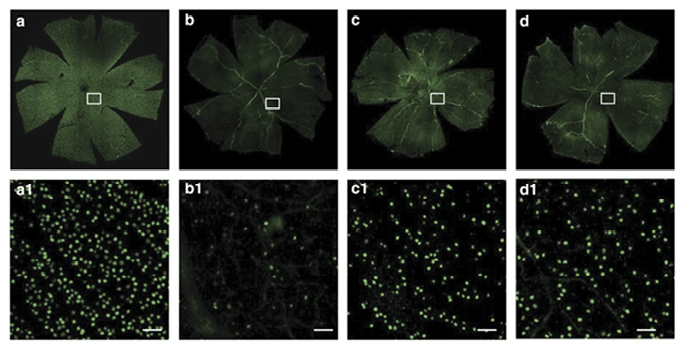
Figure 1. Normal retina (A), pONT retina (B), pONT retina with direct application of Schwann cells to injured optic nerve sheath (C), pONT retina with intravitreal Schwann cell delivery (D). Corresponding areas of high-magnification images at 21 days following pONT (A1, B1, C1, and D1). Using DARC, a substantial loss of RGCs was noted in the pONT-only retina (B and B1), compared with the normal retina (A and A1). Direct application of Schwann cells (C and C1) clearly reduced RGC loss. This increase in RGC survival was also seen in eyes treated with intravitreal Schwann cell delivery (D and D1).
In a study of a rat model of ocular hypertension,14 we showed that the DARC count was significantly reduced by treatment with coenzyme Q10 (CoQ10) and that translated to increased RGC survival, thereby validating DARC as a surrogate of RGC counts (Figure 2). In another investigation, topical nerve growth factor was assessed to be neuroprotective in pONT using DARC and RGC counts; the results of the RGC density corroborated indications of RGC cell loss provided by in vivo DARC imaging.24
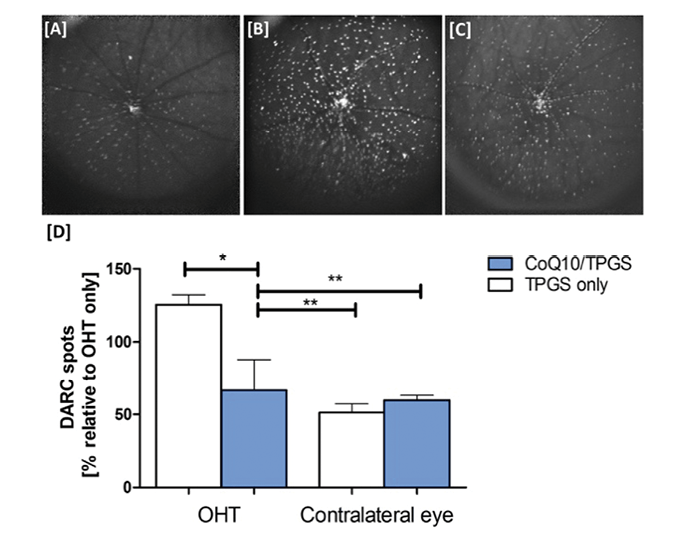
Figure 2. In vivo detection of apoptotic retinal cells using DARC revealed CoQ10 was significantly neuroprotective in a model of ocular hypertension. A DARC image from rats treated with CoQ10/α-tocopherol polyethylene glycol succinate (TPGS) exhibited fewer apoptotic retinal cells (A) than eyes receiving TPGS-only micelles (B) or OHT-only eyes (C). CoQ10/TPGS treatment was found to significantly reduce the DARC spot count (D).
With these validations, we then went a step further to assess whether DARC was predictive of changes in the brain. We found that, in a rotenone-induced animal model of Parkinson disease, DARC could detect the loss of dopaminergic cells in the eye 90 days before it could be detected in the brain.22 Additionally, in a triple-transgenic model of Alzheimer disease, DARC was predictive of a therapeutic effect of a novel curcumin nanoparticle formulation before the effect could be observed in the brain.25
In a rabbit model of wet AMD, a human VEGF was delivered to cause vessel leakage and angiogenesis. White DARC spots were observed along the vascular streak only in the eyes with VEGF, illustrating endothelial cell stress (Figure 3). When these eyes were treated with an anti-VEGF agent, a reduction in the DARC count was observed. This investigation further validated DARC as a biomarker of angiogenesis-related retinal diseases such as wet AMD and diabetic eye diseases.
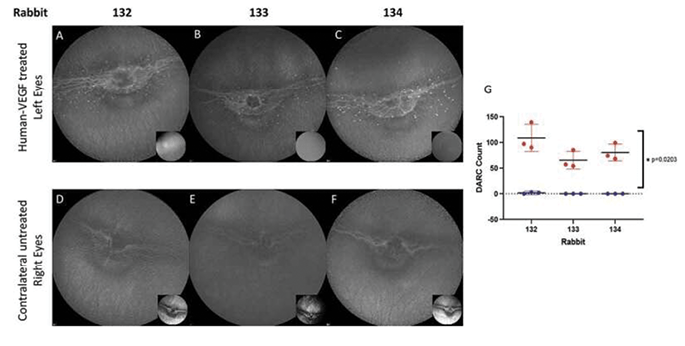
Figure 3. DARC identified the earliest changes of endothelial activity in a rabbit model of angiogenesis.
CLINICAL ENDPOINTS AND ALGORITHMS
Moving DARC into clinical trials has involved significant collaboration between the Wellcome Trust, University College London, Imperial College Ophthalmic Research Group, and Western Eye Hospital. A large team and generous funding have allowed us to take DARC from the preclinical stage to phase 1 and phase 2 clinical trials.
Phase 1 Clinical Trial
The phase 1 clinical trial represented the first time the fluorescently labeled annexin (ANX776) was given to a human, so the primary objective was to evaluate the safety and tolerability of ANX776 using DARC.27 The secondary objective was to determine the efficacy of DARC and the difference in DARC count between healthy control eyes and glaucomatous eyes. A total of 16 patients were included, eight with glaucoma and eight without. The findings in the glaucoma cohort, although small, were encouraging and suggested that DARC could be used to predict which patients were going to progress.
Phase 2 Clinical Trial
No adverse events occurred in the phase 1 clinical trial, so we increased the size of the study cohort for the phase 2 clinical trial.5 This study (N = 113) included 73 patients with glaucoma (n = 20), AMD (n = 19), optic neuritis (n = 18), or Down syndrome (n = 16) as well as 40 healthy control eyes. Study eyes received an intravenous administration of 0.4 mg ANX776, and central images of the optic nerve head and macula were recorded at baseline, 15 minutes, 2 hours, and 4 hours after administration.
Five masked observers reviewed 906 anonymized retinal images that were randomly displayed on the same computer and under the same lighting conditions. We had assumed it would be easy to count the DARC spots; however, we found disagreement among the trained observers. In hindsight, this is not too surprising: Clinicians tend not to agree in the best of times, but particularly on something new such as how to define a DARC spot.
We then decided to explore the use of machine learning with a convolutional neural network (CNN).28 Anonymized DARC images were acquired from 40 healthy control patients and 20 patients with glaucoma who were enrolled in the phase 2 clinical trial. The CNN-aided algorithm was trained and validated using manual counts from control patients and then tested on glaucomatous eyes.
We found that the algorithm had 97.0% accuracy, 91.1% sensitivity, and 97.1% specificity to spot detection when compared with manual grading of 50% controls. The algorithm was next tested on glaucomatous eyes, both stable and progressing as determined by OCT retinal nerve fiber layer measurements at 18 months. The algorithm demonstrated 85.7% sensitivity and 91.7% specificity in these eyes. A significantly higher DARC count was seen in the glaucomatous eyes that were progressing versus those with stable disease. The positive predictive value of DARC was 100% for predicting glaucomatous progression. All patients who had a DARC count greater than 30 had experienced glaucomatous progression by 18 months. The number of baseline topographically correspondent abnormal sectors on OCT retinal nerve fiber layer and Bruchs membrane opening minimum rim width imaging significantly increased in patients whose glaucoma progressed versus those whose disease was stable.
In an upcoming glaucoma validation study, we will be evaluating DARC as a measure of latanoprost treatment efficacy, DARC for predicting disease progression at 2 years, and test-retest of DARC. In the meantime, a company called Novai has been developing DARC technology and is now collaborating with multiple pharmaceutical companies to test drug efficacy in glaucoma among other conditions.
In the phase 2 clinical trial, we were also able to analyze 29 eyes with AMD. These patients had DARC only once at baseline, but, because they were being treated for wet AMD and therefore seen in the clinic regularly, we were able to follow up with substantial OCT information. We found that a DARC spot at baseline was predictive of a new area of exudation about 36 months later. Further, patients with a DARC count greater than five ultimately developed new lesions. Although larger validation studies are required, this finding shows the potential of DARC as a biomarker of wet AMD.
We are also investigating the role of DARC in predicting the progression of geographic atrophy (GA).30 In our phase 2 study, we found that DARC was predictive of the direction of GA growth (Figure 4).5 Additionally, when we looked at all eyes with growing GA, patients with a DARC count greater than 10 went on to develop larger areas of rapid growth.
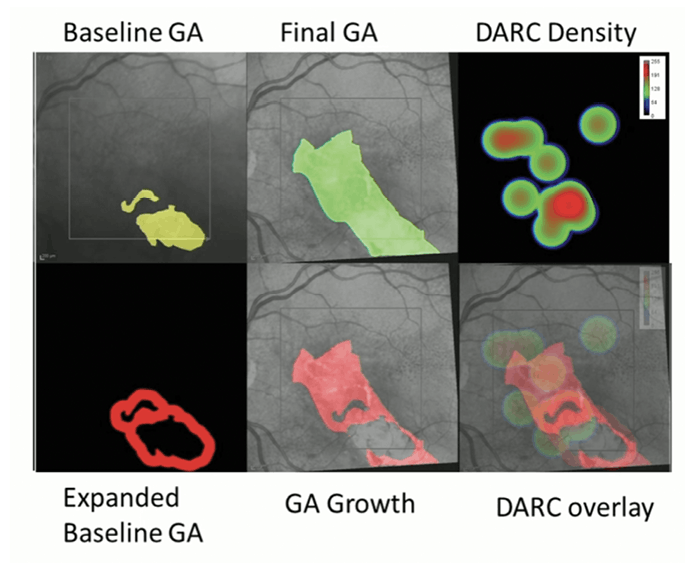
Figure 4. In a phase 2 clinical trial, DARC was conducted at baseline in a cohort of patients with GA. DARC was predictive of the direction of GA growth over time (red indicating a DARC hotspot).
We will soon be conducting a study to explore the use of DARC as a predictor of macular atrophy and to assess wet AMD treatment. We are also working with pharmaceutical companies to explore the use of DARC in AMD and diabetic retinopathy studies as an exploratory endpoint and as a measure of treatment efficacy. Hopefully more data will allow us to put this forward as a technology that can be used not only as an exploratory endpoint but ultimately as a clinical endpoint.
FUTURE DIRECTIONS
The DARC metrics that we are evaluating include DARC count, DARC density, DARC spatial map, and DARC morphology and signal (Figure 5). We are also working to develop an intranasal formulation of DARC, which would be less invasive for patients, allow rapid entry into the retina, and potentially require a smaller dosage, thereby reducing cost. If DARC is to be used as a screening test, it must eventually be noninvasive, applicable, sensitive, and specific.
Ultimately, DARC could play a role in multiple diseases by helping to:
- Measure the impact of a treatment or intervention by assessment of disease activity;
- Identify nonresponders to existing and new interventions; and
- Stratify patients in clinical trials, resulting in the creation of enriched cohorts, consisting of those with the highest risk of disease progression.
In several spaces, these benefits will be particularly valuable as the number of patients increases worldwide due to the aging population.
1. Ahmad SS. An introduction to DARC technology. Saudi J Ophthalmol. 2017;31(1):38-41.
2. El-Agnaf OM, Salem SA, Paleologou KE, et al. Detection of oligomeric forms of alpha-synuclein protein in human plasma as a potential biomarker for Parkinson’s disease. FASEB J. 2006;20(3):419-425.
3. Selkoe DJ, Hardy J. The amyloid hypothesis of Alzheimer’s disease at 25 years. EMBO Mol Med. 2016;8(6):595-608.
4. Yap TE, Normando EM, Cordeiro MF. Redefining clinical outcomes and endpoints in glaucoma. Exp Rev Ophthalmol. 2018;13(2):113-127.
5. Cordeiro MF, Hill D, Patel R, Corazza P, Maddison J, Younis S. Detecting retinal cell stress with DARC: progression from lab to clinic. Prog Retin Eye Res. 2022;86:100976.
6. Cordeiro MF, Guo L, Luong LGV, et al. Real-time imaging of single nerve cell apoptosis in retinal neurodegeneration. Proc Natl Acad Sci U S A. 2004;101(36):13352-13356.
7. Guo L, Moss SE, Alexander RA, Ali RR, Fitzke W, Cordeiro MF. Retinal ganglion cell apoptosis in glaucoma is related to intraocular pressure and IOP-induced effects on extracellular matrix. Invest Ophthalmol Vis Sci. 2005;46(1):175-182.
8. Guo L, Salt TE, Maass A, et al. Assessment of neuroprotective effects of glutamate modulation on glaucoma-related retinal ganglion cell apoptosis in vivo. Invest Ophthalmol Vis Sci. 2006;47(2):626-633.
9. Yap TE, Davis BM, Guo L, Normando EM, Cordeiro MF. Annexins in glaucoma. Int J Mol Sci. 2018;19(4):1218.
10. Guo L, Salt TE, Luong V, et al. Targeting amyloid-beta in glaucoma treatment. Proc Natl Acad Sci U S A. 2007;104(33):13444-13449.
11. Salt TE, Nizari S, Cordeiro MF, Russ H, Danysz W. Effect of the AB aggregation modulator MRZ-99030 on retinal damage in an animal model of glaucoma. Neurotox Res. 2014;26(4):440-446.
12. Galvao J, Elvas F, Martins T, Cordeiro MF, Ambrosio AF, Santiago AR. Adenosine A3 receptor activation is neuroprotective against retinal neurodegeneration. Exp Eye Res. 2015;140:65-74.
13. Nizari S, Guo L, Davis DM, et al. Non-amyloidogenic effects of a2 adrenergic agonists: implications for brimonidine-mediated neuroprotection. Cell Death Dis. 2016;7(12):e2514.
14. Davis BM, Tian K, Pahlitzsch M, et al. Topical coenzyme Q10 demonstrates mitochondrial-mediated neuroprotection in a rodent model of ocular hypertension. Mitochondrion. 2017;36:114-123.
15. Davis BM, Pahlitzsch M, Guo L, et al. Topical curcumin nanocarriers are neuroprotective in eye disease. Sci Rep. 2018;8(1):11066.
16. Schmitz-Valckenberg S, Guo L, Maass A, et al. Real-time in vivo imaging of retinal cell apoptosis after laser exposure. Invest Ophthalmol Vis Sci. 2008;49(6):2773-2780.
17. Schmitz-Valckenberg S, Guo L, Cheung W, Moss SE, Fitzke FW, Cordeiro MF. [In vivo imaging of retinal cell apoptosis following acute light exposure]. Ophthalmologe. 210;107(1):22-29.
18. Normando EM, Tilley M, Guo L, Cordeiro MF. Imaging in dry AMD. Drug Discov Today. 2013;10(1):e35-e41.
19. Cordeiro MF, Guo L, Luong V, et al. Real-time imaging of single nerve cell apoptosis in retinal neurodegeneration. Proc Natl Acad Sci U S A. 2004;101(36):13352-13356.
20. Guo L, Davis B, Nizari S, et al. Direct optic nerve sheath (DONS) application of Schwann cells prolongs retinal ganglion cell survival in vivo. Cell Death Dis. 2014;5(10):e1460.
21. Cordeiro MF, Guo L, Coxon KM, et al. Imaging multiple phases of neurodegeneration: a novel approach to assessing cell death in vivo. Cell Death Dis. 2010;1(1):e3.
22. Normando EM, Davis BM, De Groef L, et al. The retina as an early biomarker of neurodegeneration in a rotenone-induced model of Parkinson’s disease: evidence for a neuroprotective effect of rosiglitazone in the eye and brain. Acta Neuropathol Commun. 2016;4(1):86.
23. Galvao J, Davis B, Tilley M, Normando E, Duchen MR, Cordeiro MF. Unexpected low-dose toxicity of the universal solvent DMSO. FASEB J. 2014;28(3):1317-1330.
24. Guo L, Davis BM, Ravindran N, et al. Topical recombinant human nerve growth factor (rh-NGF) is neuroprotective to retinal ganglion cells by targeting secondary degeneration. Sci Rep. 2020;10(1):3375.
25. Shamsher E, Guo L, Davis BM, et al. Curcumin nanoparticles are neuroprotective in a mosue model of Alzheimer’s disease. Paper presented at: the ARVO Annual Meeting. April 28 to May 2, 2019; Vancouver, BC. Abstract 4889.
26. Corazza P, Maddison J, Bonetti P, et al. Predicting wet age-related macular degeneration (AMD) using DARC (detecting apoptosing retinal cells) AI (artificial intelligence) technology. Expert Rev Mol Diagn. 2021;21(1):109-118.
27. Cordeiro MF, Normando EM, Cardoso MJ, et a. Real-time imaging of single neuronal cell apoptosis in patients with glaucoma. Brain. 2017;140(6):1757-1767.
28. Normando EM, Yap TE, Maddison J, et al. A CNN-aided method to predict glaucoma progression using DARC (detection of apoptosing retinal cells). Expert Rev Mol Diagn. 2020;20(7):737-748.
29. Wei W, Southern J, Zhu K, Li Y, Cordeiro MF, Veselkov K. Deep learning to detect macular atrophy in wet age-related macular degeneration using optical coherence tomography. Sci Rep. 2023;13(1):8296.