PEARLS FOR MICROSCOPE POSITIONING
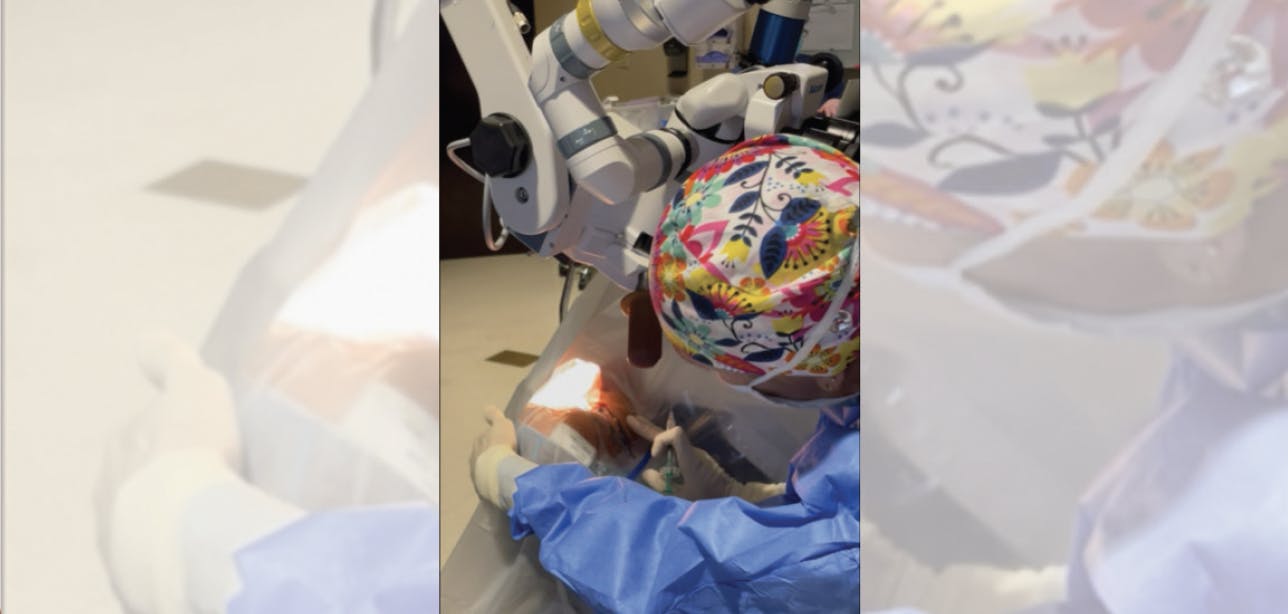
Becoming a MIGS expert requires mastery of angle visualization via microscope rotation and patient head positioning. One of the best pearls I can extend to a new MIGS user is first to tilt the microscope until the light moves from the operative eye to the nonoperative eye and then rotate the patient’s head toward the light. In my experience, these two simple steps get the scope and the patient into the proper position for en face visualization of the angle 95% of the time.
PEARLS FOR HYDRUS PLACEMENT
Before placing the Hydrus Microstent (Alcon), I fill the eye with a cohesive OVD to widen the angle and thereby enhance visualization of the anatomy. Next, I ensure that I can visualize all angle structures before inserting the stent injector into the eye.
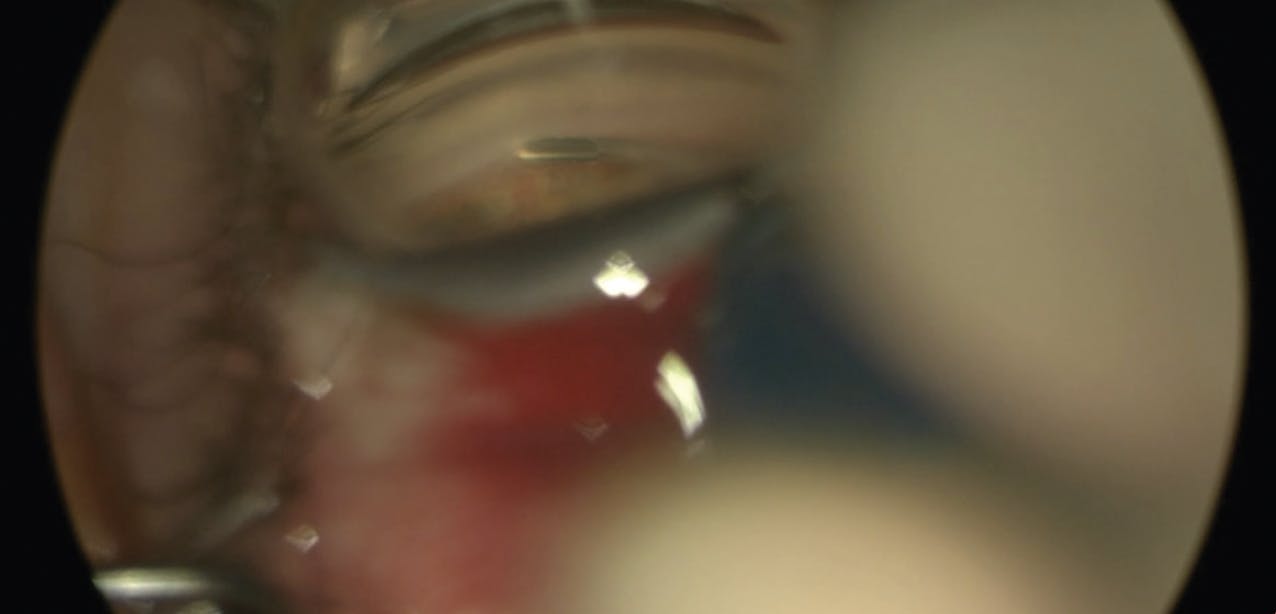
Once visualization is achieved, I use the stent injector to create a microgoniotomy. This nick through the trabecular meshwork (TM) confirms my correct location in Schlemm canal (the canal usually has a pearlescent shine). With the tip of the injector pointed slightly upward and the back of the injector directly against the TM, I begin to release the Hydrus.
Once the initial window of the Hydrus is in the canal, I flatten the injector to be parallel to the canal and release the remainder of the stent. If the stent is not fully seated in the canal, the tip of the injector is the perfect tool for manipulating the final location of the Hydrus. Bonus tip: Trypan blue can be used to highlight the location of the TM and better identify angle anatomy in initial cases.
PEARLS FOR ISTENT INFINITE PLACEMENT
As with any MIGS procedure, a great view of the angle must be achieved before the placement of an iStent Infinite (Glaukos). Once visualization is achieved, the iStent Infinite injector is inserted into the anterior chamber; this injector differs from previous iStent models in that it has a retractable sleeve (known as the introducer), which prevents OVD egress from the wound.
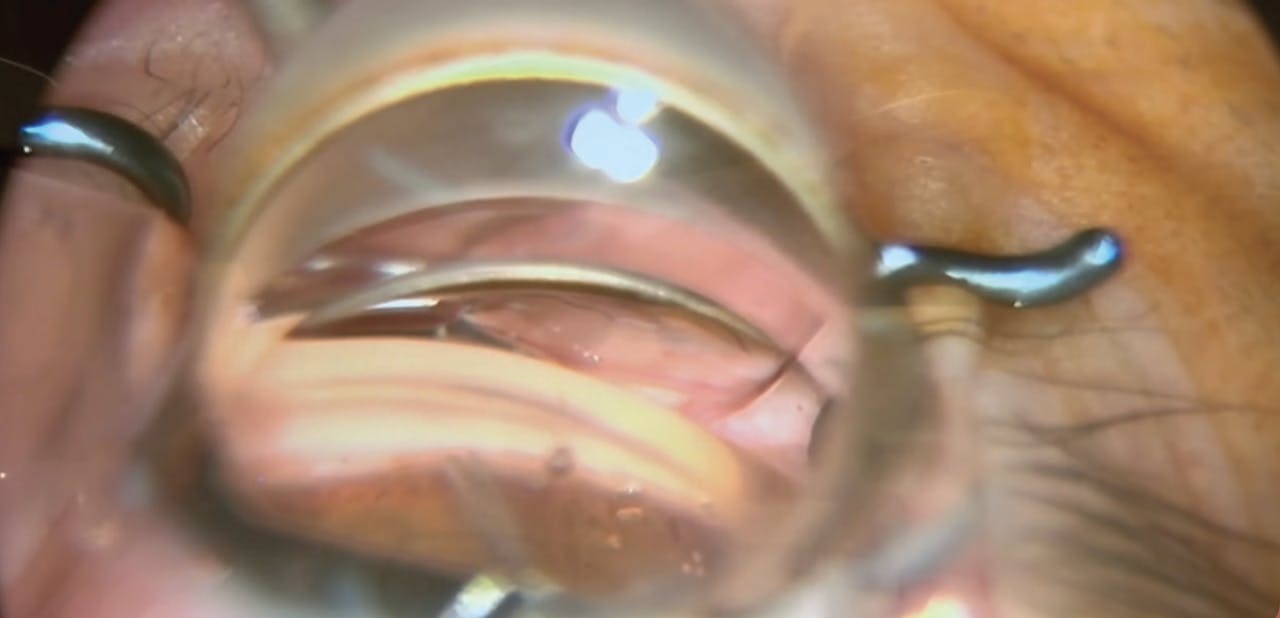
When placing the first stent, I target the TM directly across from the wound. This location is usually the easiest for stent placement. Next, I place the injector tip against the TM with the guidewire perpendicular to the angle without bias and create a slight dimple. I depress and hold the stent delivery button and then slowly remove the injector from the stent site. If the stent is not fully embedded in Schlemm canal, the stent delivery button can be pressed again to repeat the stent placement process.
To engage the next stent, the purple singulator button is pushed. Then, I rotate the handpiece right and left to place the remaining two stents.